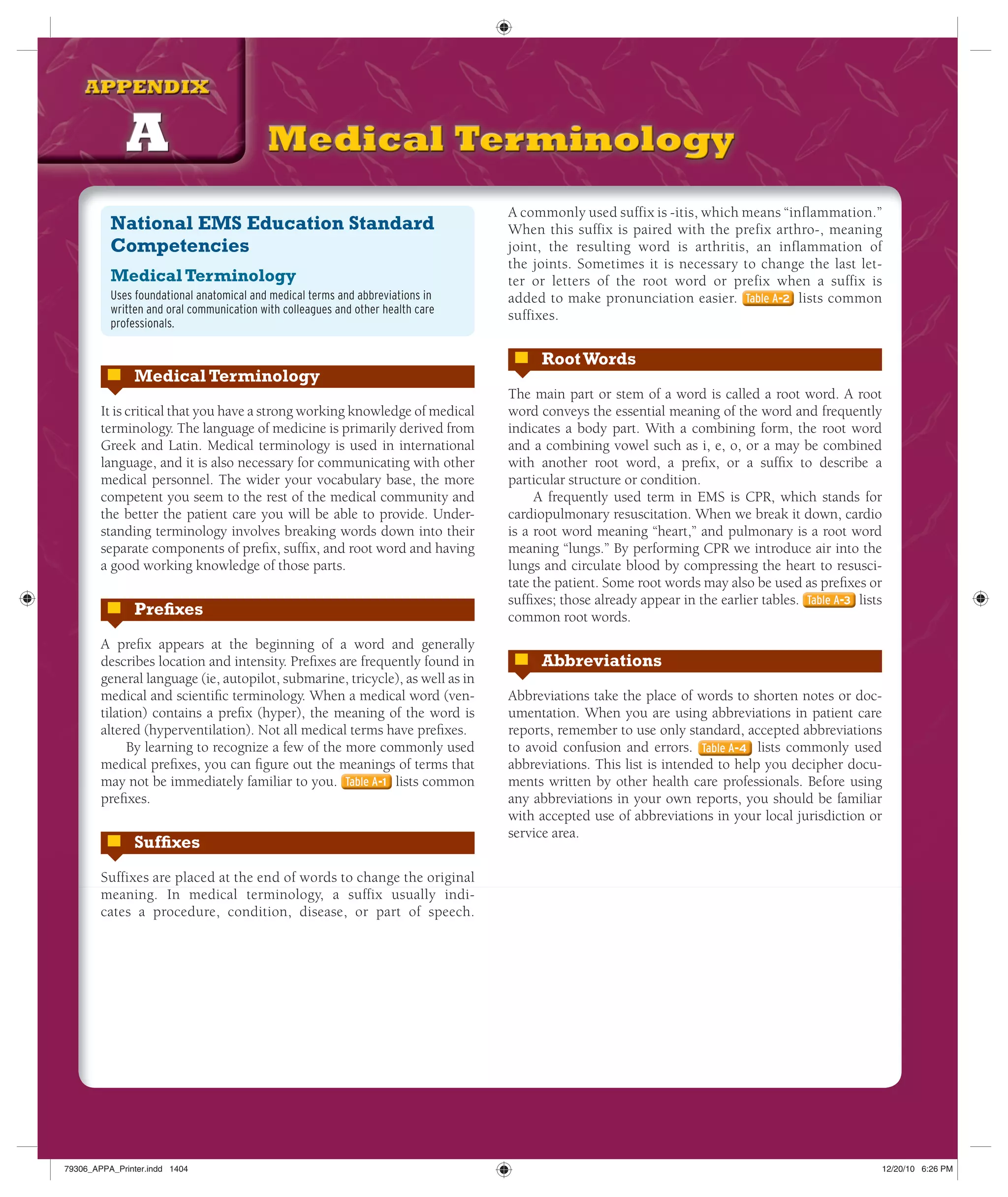
Medical terminology is a specialized, systematic language used by healthcare professionals to communicate precisely about the human body, diseases, procedures, and treatments. This language is primarily built upon a foundation of Greek and Latin word parts—roots, prefixes, and suffixes—that function like building blocks to create complex descriptions. By understanding the underlying logic of these components, one can decipher thousands of clinical terms without needing to memorize every individual word.
In 2026, despite the integration of advanced artificial intelligence and automated translation tools in clinical settings, a fundamental grasp of medical terminology remains the cornerstone of patient safety, accurate charting, and inter-professional collaboration. Whether you are a student, a patient, or a healthcare administrator, mastering this lexicon ensures that critical health information is conveyed without ambiguity.
The Linguistic Framework of Medical Language
To understand "all medical terms," one must first understand that medical language is not a collection of random names but a structured system of morphology. Most terms are constructed from four distinct types of word parts: the word root, the prefix, the suffix, and the combining vowel.
The Word Root: The Core Meaning
The word root is the essential foundation of a medical term. It usually refers to a body part, organ, or system. For instance, the root cardi always refers to the heart, while nephr refers to the kidney. A single term may have more than one root; for example, gastroenterology contains two roots: gastr (stomach) and enter (intestines).
The Prefix: Modifying the Foundation
The prefix is added to the beginning of a word root to modify its meaning. Prefixes typically indicate location, time, number, or status. For example, the prefix poly- (meaning many) can be added to neur (nerve) and -itis (inflammation) to create polyneuritis, which describes inflammation of many nerves. In contrast, mononeuritis would involve only one.
The Suffix: Defining the Condition or Procedure
The suffix is found at the end of a word and usually indicates a procedure, condition, disorder, or disease. Understanding suffixes is often the fastest way to determine the general "category" of a medical term. If a word ends in -ectomy, it always involves surgical removal (e.g., appendectomy). If it ends in -itis, it always involves inflammation.
The Combining Vowel
The combining vowel, usually the letter "o," is used to make the word easier to pronounce. It connects a root to a suffix or a root to another root. The rule is generally consistent: a combining vowel is used if the suffix begins with a consonant, but dropped if the suffix begins with a vowel. For example, in cardiology, the "o" connects the root cardi to the suffix -logy.
Etymology: Why Greek and Latin?
The historical dominance of Greek and Latin in medical terminology is not accidental. Greek was the language of the earliest organized Western medicine, pioneered by figures like Hippocrates and Galen. Latin later became the universal language of science and scholarship in Europe.
Generally, Greek roots are used to describe physiology, diseases, and conditions (e.g., nephritis), while Latin roots are used to name anatomical structures (e.g., renal). This dual-language system persists into 2026 because it provides a "dead" language foundation—meaning the meanings of the roots do not change over time as "living" languages do. This stability is vital for international medical standards like the International Classification of Diseases (ICD-11), maintained by the World Health Organization.
Essential Prefixes and Suffixes in Clinical Practice
To navigate medical documentation, one must recognize the most common modifiers. The following table provides a reference for frequently encountered word parts that appear in thousands of combinations.
| Word Part | Type | Meaning | Clinical Example |
|---|---|---|---|
| A- / An- | Prefix | Without, lacking | Anemia (lack of blood/hemoglobin) |
| Hyper- | Prefix | Excessive, high | Hypertension (high blood pressure) |
| Hypo- | Prefix | Deficient, low | Hypoglycemia (low blood sugar) |
| Dys- | Prefix | Painful, difficult | Dyspnea (difficult breathing) |
| Tachy- | Prefix | Fast | Tachycardia (fast heart rate) |
| Brady- | Prefix | Slow | Bradycardia (slow heart rate) |
| -itis | Suffix | Inflammation | Arthritis (joint inflammation) |
| -osis | Suffix | Abnormal condition | Dermatosis (skin condition) |
| -pathy | Suffix | Disease | Neuropathy (nerve disease) |
| -megaly | Suffix | Enlargement | Hepatomegaly (enlarged liver) |
| -scopy | Suffix | Visual examination | Colonoscopy (viewing the colon) |
| -plasty | Suffix | Surgical repair | Rhinoplasty (nose repair) |
Anatomical Direction and Orientation
Medical terms also encompass the language of "mapping" the human body. This ensures that a surgeon in 2026, reading a report from a radiologist, knows exactly where a lesion or injury is located relative to other structures.
- Anterior (Ventral): Toward the front of the body.
- Posterior (Dorsal): Toward the back of the body.
- Superior (Cranial): Toward the head or upper part of a structure.
- Inferior (Caudal): Away from the head or toward the lower part.
- Proximal: Nearer to the center of the body or the point of attachment.
- Distal: Farther from the center of the body or point of attachment.
- Medial: Toward the midline of the body.
- Lateral: Away from the midline of the body.
For example, the elbow is distal to the shoulder but proximal to the wrist. These terms are absolute and do not change regardless of whether a patient is standing, sitting, or lying down (the "anatomical position").
Systems-Based Terminology Breakdown
A practical way to master medical terms is to categorize them by body systems. Each system relies on a specific set of roots.
Cardiovascular System
The cardiovascular system focuses on the heart and blood vessels. Key roots include cardi/o (heart), angi/o (vessel), arteri/o (artery), and phleb/o (vein).
- Myocardial Infarction: Myo (muscle) + cardi (heart) + al (pertaining to). Infarction refers to tissue death due to lack of blood.
- Angiography: The process of recording (imaging) blood vessels.
Neurological System
This system covers the brain, spinal cord, and nerves. Roots include encephal/o (brain), myel/o (spinal cord), and neur/o (nerve).
- Encephalopathy: A broad term for any disease of the brain.
- Neuralgia: Neur (nerve) + algia (pain), describing nerve-related pain.
Musculoskeletal System
This includes bones (oste/o), muscles (my/o), joints (arthr/o), and cartilage (chondr/o).
- Osteoporosis: Osteo (bone) + porosis (porous condition), where bones become brittle.
- Arthrocentesis: Arthro (joint) + centesis (surgical puncture to remove fluid).
Respiratory System
Focuses on the lungs (pulmon/o or pneum/o) and airways (bronch/o).
- Pneumothorax: Pneumo (air) + thorax (chest), commonly known as a collapsed lung.
- Bronchoscopy: Using a scope to view the bronchial tubes.
Diagnostic and Procedural Terminology
Beyond anatomy and disease, medical terms describe how doctors find and fix problems. These terms often rely heavily on suffixes.
Diagnostic Suffixes: These help identify the nature of an illness.
- -gram: A record or picture (e.g., Electrocardiogram).
- -graphy: The process of recording (e.g., Mammography).
- -opsy: To view (e.g., Biopsy).
Surgical Suffixes: These describe the action taken during an operation.
- -tomy: To cut into or make an incision (e.g., Phlebotomy).
- -stomy: To create a new permanent opening (e.g., Colostomy).
- -ectomy: To surgically remove (e.g., Gastrectomy).
- -desis: To bind or fuse (e.g., Arthrodesis).
According to the National Institutes of Health (NIH), precision in these procedural terms is essential for reducing medical errors, as a "tomy" and a "stomy" describe very different surgical outcomes.
Eponyms and Modern Evolutions
Medical terminology is not static. Eponyms are terms named after a person, such as Parkinson’s disease (James Parkinson) or Alzheimer’s disease (Alois Alzheimer). However, in 2026, there is a continued global shift toward using descriptive terms rather than eponyms. This move is intended to make the language more intuitive. For example, some clinicians prefer using "Trisomy 21" instead of "Down Syndrome" because the former describes the actual genetic cause of the condition.
Furthermore, the rise of genomic medicine has introduced a new layer of terminology involving gene sequences and molecular markers. These terms often use alphanumeric codes (e.g., BRCA1) which, while not derived from Latin, follow their own rigorous systematic naming conventions established by the HUGO Gene Nomenclature Committee.
The Importance of Precision and Accuracy
The use of "all medical terms" serves a higher purpose than just professional shorthand; it is a tool for clinical safety. Misreading a single prefix or suffix can lead to catastrophic errors. For instance, hypocalcemia (low calcium) and hypercalcemia (high calcium) require opposite treatments. Similarly, intercellular (between cells) and intracellular (within cells) change the entire context of a biological process.
Professional medical transcriptionists and coders use these terms to translate clinical notes into codes for insurance and research. Accuracy in this field ensures that hospital statistics are reliable and that patients receive appropriate reimbursement for their care. For those seeking to verify specific terms, the Merck Manuals remains a gold-standard resource for professional-grade medical definitions and context.
Frequently Asked Questions
What is the most common root word in medical terminology?
While there isn't a single "most common" root, cardi/o (heart), gastr/o (stomach), and path/o (disease) are among the most frequently utilized across various specialties. These roots form the basis of hundreds of secondary terms and diagnostic codes.
Why do some medical terms sound like regular words but have different meanings?
This is often due to "false cognates" or historical shifts. For example, "acute" in common English means "sharp" or "intense," but in medical terms, it specifically refers to a condition with a rapid onset and a short duration, regardless of its severity. Conversely, "chronic" refers to a long-term condition.
Is it necessary for patients to learn medical terminology?
While patients do not need to be fluent, understanding basic prefixes like "hyper-" and "hypo-" and suffixes like "-itis" can help them better understand their own diagnoses and laboratory results. This literacy empowers patients to ask more informed questions during consultations.
How has AI changed medical terminology in 2026?
AI has primarily changed how we access and translate terminology. Modern electronic health records (EHRs) now use AI to suggest the most accurate standardized terms (like those in SNOMED CT) while a doctor is typing. However, the human provider must still understand the underlying concepts to verify that the AI's suggestions are clinically appropriate for the specific patient case.
What is the difference between a sign and a symptom in medical terms?
A sign is an objective finding that can be measured or observed by a healthcare provider (e.g., a fever of 102°F or a rash). A symptom is a subjective experience reported by the patient (e.g., feeling dizzy or having a headache). Terminology differentiates these to help in the diagnostic process.
Practical Recommendations for Mastering Medical Terms
For those looking to build a working knowledge of medical language, the most effective approach is to focus on word-part analysis rather than rote memorization.
- Break it down: When you encounter an unfamiliar term, divide it into its prefix, root, and suffix.
- Learn by system: Focus on one body system at a time (e.g., learning all urinary system roots before moving to the skin).
- Use Flashcards: Traditional or digital flashcards remain the most effective tool for memorizing the specific meanings of Greek and Latin roots.
- Verify with Authoritative Sources: Always use reputable medical dictionaries or institutional resources like the National Library of Medicine (NLM) to confirm meanings, as internet-based "layman" definitions can sometimes miss the clinical nuance required for medical accuracy.
By treating medical language as a logical code rather than an intimidating vocabulary, you can effectively communicate and understand "all medical terms" encountered in the modern healthcare environment.