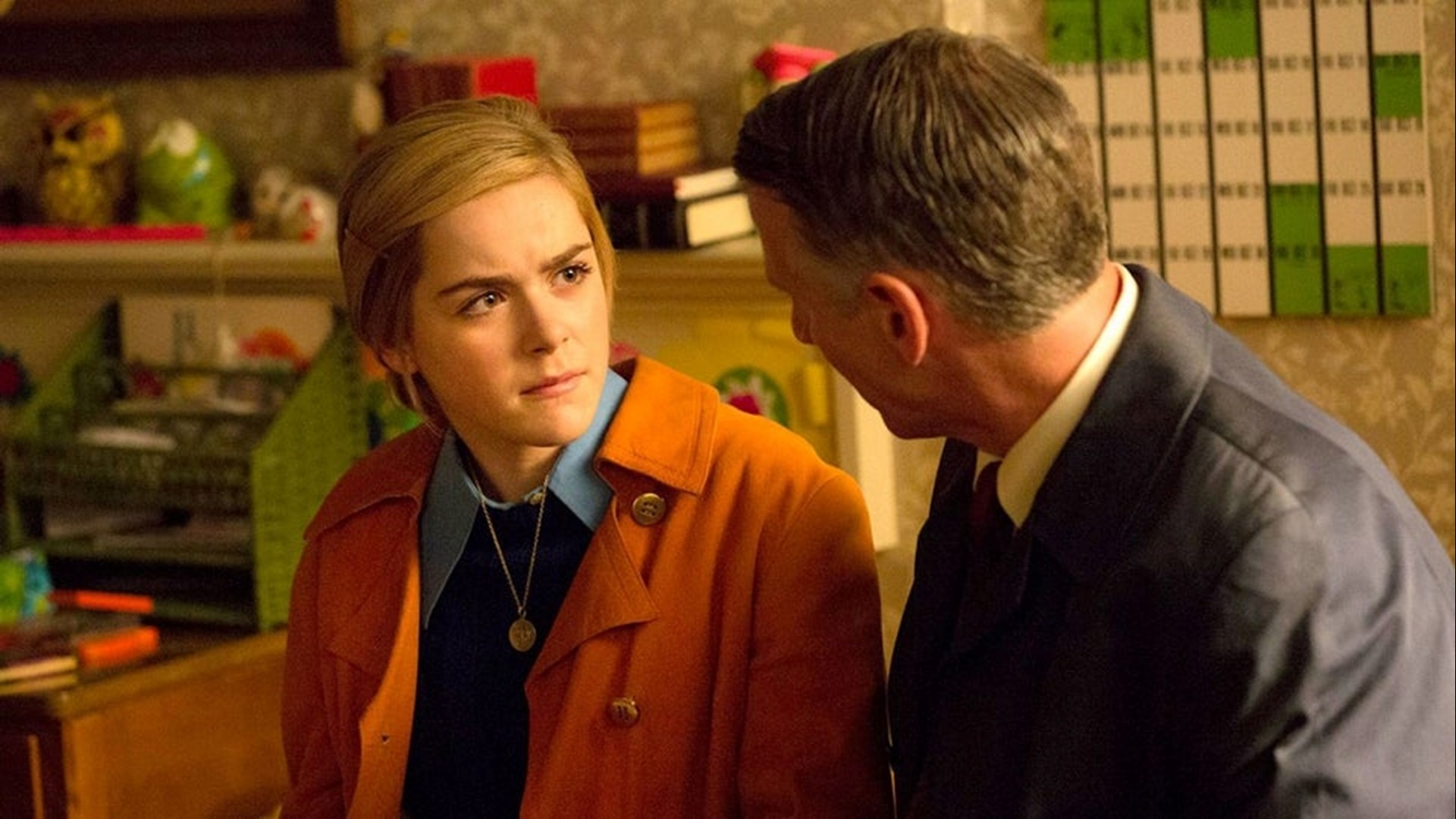
Alison Brie played Trudy Campbell (née Vogel) in the critically acclaimed AMC drama series Mad Men from 2007 to 2015. Appearing in 36 episodes across all seven seasons, Brie portrayed the poised, ambitious, and resilient wife of advertising executive Pete Campbell, transforming a traditional 1960s suburban housewife into one of the show's most dynamic supporting characters.
Character Overview: Who Was Trudy Campbell?
Trudy Campbell was introduced in the first season of Mad Men as the young, bubbly fiancée—and soon wife—of Pete Campbell (played by Vincent Kartheiser), an ambitious junior account executive at the Sterling Cooper advertising agency. Coming from a wealthy, well-connected Upper East Side family headed by her father, Tom Vogel (Joe O'Connor), Trudy embodied the ideal mid-century debutante: polished, socially adept, impeccably dressed, and deeply invested in the social elevation of her household.
Unlike many portrayals of 1960s suburban wives who were depicted purely as victims of domestic confinement, Trudy possessed a keen intelligence, clear boundaries, and an active sense of agency. While she initially adhered to traditional post-war gender expectations—focusing on home decor, social entertaining, and starting a family—she demonstrated a sharp understanding of corporate politics and social maneuvering.
Throughout the narrative, Trudy served as a crucial foil to Pete. Where Pete was often anxious, entitled, and reckless, Trudy was composed, pragmatic, and socially gifted. Her character provided a vivid lens into the lives of upper-middle-class women navigating the rapid cultural shifts of the 1960s, balancing traditional marital expectations with personal dignity.
| Character Profile | Details |
|---|---|
| Character Name | Trudy Campbell (née Vogel) |
| Actor | Alison Brie |
| Series Duration | 2007–2015 (Seasons 1–7) |
| Episode Count | 36 episodes (Recurring Guest/Special Guest) |
| Family Origin | Wealthy Manhattan family (Father: Tom Vogel) |
| Primary Residences | Upper East Side, Manhattan / Cos Cob, Connecticut |
| Key Relationships | Pete Campbell (Husband/Ex-Husband), Tammy (Daughter) |
Season-by-Season Character Arc and Key Storylines
Seasons 1 and 2: Young Marriage, Ambition, and Fertility Struggles
In the earliest episodes of Mad Men, Trudy's storyline revolved around establishing her domestic life with Pete in their Manhattan apartment and navigating early marital tension. From the outset, Trudy showed a desire to advance Pete’s career, often taking initiative in ways Pete found both helpful and emasculating.
A major emotional arc during these early seasons was the couple's difficulty conceiving a child. Faced with infertility, Trudy pursued medical evaluations and expressed an interest in adoption. This created friction with Pete, who felt personal shame and institutional pressure regarding his ability to produce an heir. During this phase, Brie portrayed Trudy with a mix of buoyant optimism and vulnerable sorrow, highlighting the quiet desperation felt by women of that era whose social worth was tied to motherhood.
Seasons 3 and 4: Motherhood, Suburban Life, and Professional Maneuvering
By Season 3, Trudy’s father, Tom Vogel, became directly involved in Pete's professional life. Recognizing Pete's desire to secure major accounts, Trudy helped facilitate a business relationship between Pete and her father, who was an executive at Secor Laxatives. This move proved pivotal for Pete's leverage at Sterling Cooper, illustrating how Trudy used her family’s wealth and social capital to bolster her husband's standing.
In Season 4, Trudy gave birth to their daughter, Tammy. Following the birth, the family relocated from Manhattan to the suburbs of Cos Cob, Connecticut. While Pete resented the commute and felt isolated from the vibrancy of New York City, Trudy embraced her role as a suburban matriarch, managing their estate and organizing community events with characteristic efficiency.
Timeline of Key Character Milestones:
- [Season 1] Marries Pete Campbell; struggles with infertility pressures.
- [Season 3] Uses family connections (Tom Vogel) to aid Pete's corporate career.
- [Season 4] Gives birth to daughter Tammy; moves to Cos Cob, Connecticut.
- [Season 5] Maintains grace amidst suburban isolation; experiences Pete's growing detachment.
- [Season 6] Catches Pete in an affair; enforces strict separation/divorce terms.
- [Season 7] Reclaims personal independence; reconciles with Pete before moving to Wichita.
Seasons 5 and 6: Infidelity, Boundaries, and Separation
As Pete's mid-life existential crisis deepened in Seasons 5 and 6, his infidelities became more overt and destructive. Despite Trudy's efforts to maintain a warm home environment—evidenced in episodes like "Signal 30," where she hosted a dinner party for Pete’s colleagues—Pete initiated affairs with local suburban neighbors and city acquaintances.
Trudy's defining moment occurred in Season 6 ("To Have and to Hold"). After discovering that Pete had maintained a pied-à-terre in Manhattan for his illicit affairs and brought an affair close to home, Trudy refused to endure the public humiliation that many women of her era felt forced to accept. She did not fall into passive despair; instead, she laid down non-negotiable boundaries, kicking Pete out of their home while insisting on maintaining appearances for their daughter and social circle.
Season 7: Independence, Resolution, and Reconciliation
In the final season, set against the backdrop of the late 1960s, Trudy re-entered the dating scene as a single mother, experiencing the social double standards applied to divorced women at the time. Despite Pete's lingering jealousy and unsolicited commentary on her suitors, Trudy remained firm in her independence.
However, in the series finale arc ("Person to Person"), Pete received a lucrative executive job offer from Learjet, based in Wichita, Kansas. Recognizing that Pete had matured and grown past his chronic discontent, Trudy agreed to reconcile. The series left Trudy and Pete reunited as a family, preparing to start a new life outside the high-pressure environment of New York advertising.
Strategic Brilliance and Cultural Dynamics
Trudy Campbell stood out in Mad Men because she navigated mid-century patriarchy using tactical charm and social intelligence. Rather than resisting the social structures of the 1960s head-on, she mastered their rules to protect her household's status and security.
1. Social Capital as a Business Asset
In the 1960s corporate world, an executive's spouse was frequently evaluated as part of the total executive package. Trudy recognized this dynamic early on. She was an exceptional hostess who understood how to manage group dynamics, put clients at ease, and project an image of prosperity.
When Pete struggled to secure accounts at Sterling Cooper Draper Pryce, Trudy did not hesitate to draw upon her father's influence. By bringing the Secor Laxatives account to the firm, she effectively saved Pete's career position during a delicate agency transition.
2. The Counterpoint to Betty Draper
Trudy is frequently compared to Betty Draper (Janice "Betty" Hofstadt), played by January Jones. While both were wealthy, attractive white women raised in traditional environments, their responses to domestic isolation differed significantly:
- Betty Draper: Internalized her frustration, leading to profound melancholy, emotional retreat, and indirect rebellion. She often felt trapped by the domestic expectations placed upon her.
- Trudy Campbell: Retained an action-oriented mindset. She approached domesticity and social climbing as active projects requiring strategy, organization, and firm boundaries.
3. Emotional Maturity vs. Executive Dysfunction
Pete Campbell was characterized throughout Mad Men by a persistent sense of entitlement and insecurity, frequently comparing himself to Don Draper. Trudy served as Pete’s emotional anchor. While Pete reacted impulsively to setbacks, Trudy consistently counseled patience, diplomacy, and practical planning. Her refusal to tolerate his infidelity in Season 6 demonstrated that her devotion was contingent on mutual respect, not blind submission.
Alison Brie’s Dual Success: Balancing Mad Men and Community
One of the most remarkable aspects of Alison Brie’s tenure on Mad Men was that she performed the role while simultaneously starring in a lead role on a network television comedy.
From 2009 to 2015, Brie played Annie Edison on NBC's ensemble comedy Community. Filming a high-density, multi-camera comedy alongside a meticulously detailed period drama presented severe scheduling and artistic challenges:
| Dimension | Trudy Campbell (Mad Men) | Annie Edison (Community) |
|---|---|---|
| Genre | Period Drama | Meta/Absurdist Sitcom |
| Broadcaster | AMC | NBC / Yahoo! Screen |
| Primary Trait | Poised, Strategic Spouse | Neurotic, Overachieving |
| Role Status | Recurring Guest Star | Main Ensemble Lead |
| Performance Style | Subtle, Subtext-Driven | High-Energy, Comedic Timing |
Managing both shows demonstrated Brie’s extraordinary versatility. On Community, she delivered fast-paced comedic dialogue and physical comedy; on Mad Men, she delivered nuanced, emotionally restrained dramatic performances that fit Matthew Weiner’s strict stylistic requirements. This dual visibility accelerated her career, establishing her as one of the most versatile actresses of her generation and paving the way for her lead roles in GLOW, Bojack Horseman, and film productions.
Comparative Analysis: Key Female Characters in Mad Men
To understand Trudy Campbell’s unique space within the narrative of Mad Men, it is helpful to contrast her profile against the show's other central female figures:
| Character | Social Background | Primary Sphere of Influence | Relationship to Domesticity | End-of-Series Resolution |
|---|---|---|---|---|
| Trudy Campbell | Wealthy Upper East Side | Home, Suburban Social Circles, Family Business Connections | Embraces domestic management; demands respect and structural boundaries. | Reconciles with Pete; moves to Wichita for a fresh corporate start. |
| Peggy Olson | Working-Class Brooklyn | Sterling Cooper Office / Creative Copywriting | Rejects traditional domesticity; prioritizes career achievement. | Becomes Copy Director; begins a relationship with Stan Rizzo. |
| Joan Holloway | Middle-Class Regional | Agency Administration / Account Management | Balances traditional femininity with corporate leadership. | Founds her own independent film production company. |
| Betty Draper | Main Line Pennsylvania Elite | Suburban Household / High Society | Conforms to domestic expectations, resulting in deep disillusionment. | Pursues a psychology degree before dying of lung cancer. |
Standout Episodes for Alison Brie as Trudy Campbell
While Alison Brie appeared as a recurring guest actor rather than a contractual series regular, her appearances yielded several of the series' most memorable scenes.
1. "The My Way" & "The Charleston" Moments ("Souvenir," Season 3, Episode 8)
One of the most celebrated lighthearted scenes in Mad Men occurs during a party at Peter and Trudy’s apartment. Pete and Trudy perform a synchronized, perfectly rehearsed Charleston dance for their guests. The scene highlights their shared social ambition and synchronized public persona, showing how seamlessly they operated as a unit when working toward common social goals.
2. "Signal 30" (Season 5, Episode 5)
This episode focuses heavily on Pete's growing discontent with suburban life in Connecticut. Trudy hosts a dinner party featuring Don Draper, Megan Draper, and Ken Cosgrove. Brie portrays Trudy's effortlessness as a hostess while subtle cracks appear in her marriage. Her calm demeanor during a domestic plumbing crisis contrasts sharply with Pete's escalating frustration and fragile ego.
3. "To Have and to Hold" (Season 6, Episode 4)
This episode features Brie's strongest dramatic work in the series. Upon discovering Pete’s apartment in the city used for infidelity, Trudy confronts him directly. She does not scream or throw objects; instead, she delivers a cold, clear ultimatum:
"I let you have your apartment in the city because I thought it was for work... But you brought it home. You violated our neighborhood... I will not stand for this."
Brie's performance during this confrontation showcased Trudy’s self-respect and refusal to be publicly humiliated, marking a turning point in Pete’s personal downfall.
4. "Person to Person" (Season 7, Episode 14)
In the series finale, Pete presents Trudy with an opportunity to rebuild their family in Kansas, supported by his new executive role at Learjet. Brie plays Trudy’s initial skepticism transitioning into tentative hope. The scene provides a satisfying emotional conclusion to a relationship that spent seven seasons undergoing intense pressure and evolution.
Critical Reception and Character Legacy
Television critics consistently praised Alison Brie’s performance throughout Mad Men’s seven-season run. Critics noted that Brie elevated what could have been a minor, one-dimensional trope—the nagging or superficial suburban wife—into a multi-dimensional, sympathetic, and formidable presence.
- Reinterpretation of the Mid-Century Wife: Scholars and television critics pointed out that Trudy represented a realistic segment of 1960s women who found empowerment within traditional social structures rather than through modern workplace careers or radical activism.
- Fan Reception: Trudy became a fan favorite due to her sharp wit, loyalty, unyielding dignity, and stylish wardrobe (designed by costume designer Janie Bryant).
- Industry Impact: Brie's performance proved that a recurring character appearing in only a handful of episodes per season could leave a lasting impression on a prestige drama series.
Frequently Asked Questions
How many episodes of Mad Men was Alison Brie in?
Alison Brie appeared in 36 episodes of Mad Men across all seven seasons between 2007 and 2015. Although she was never listed in the main opening credits, she was a major recurring guest star throughout the series.
Why wasn't Alison Brie a main cast member on Mad Men?
Alison Brie remained a recurring guest star primarily because of her concurrent contractual commitment to NBC's comedy series Community, where she was a series regular playing Annie Edison. Matthew Weiner and the producers of Mad Men accommodated her scheduling to keep Trudy Campbell active in the narrative.
Why did Trudy and Pete get back together in the series finale?
Trudy reconciled with Pete because Pete demonstrated genuine remorse, emotional growth, and a desire to break away from the toxic environment of New York advertising. Pete offered her a clean break in Wichita, Kansas, with a prestigious executive position at Learjet, satisfying Trudy's desire for family unity and financial security.
Who played Trudy Campbell's father in Mad Men?
Trudy Campbell's father, Tom Vogel, was played by actor Joe O'Connor. Tom Vogel played an important role in the storyline by helping Pete Campbell secure major accounts, such as Secor Laxatives, which altered Pete's career trajectory at Sterling Cooper.
Did Alison Brie win any awards for her role in Mad Men?
As part of the ensemble cast of Mad Men, Alison Brie won two Screen Actors Guild (SAG) Awards for Outstanding Performance by an Ensemble in a Drama Series (in 2009 and 2010).
Summary and Key Takeaways
Alison Brie’s performance as Trudy Campbell remains one of the standout supporting roles in modern television history. Far from a passive observer of her husband's corporate ambitions, Trudy was an active strategist, a devoted mother, and a woman of deep dignity who refused to tolerate disrespect.
Through her work across 36 episodes of Mad Men, Brie demonstrated remarkable dramatic range while concurrently starring in NBC's Community, cementing her reputation as an exceptionally versatile actor. Trudy Campbell's journey from a naive Upper East Side debutante to a self-assured, independent woman reflects the complex, changing realities of American women during the 1960s.