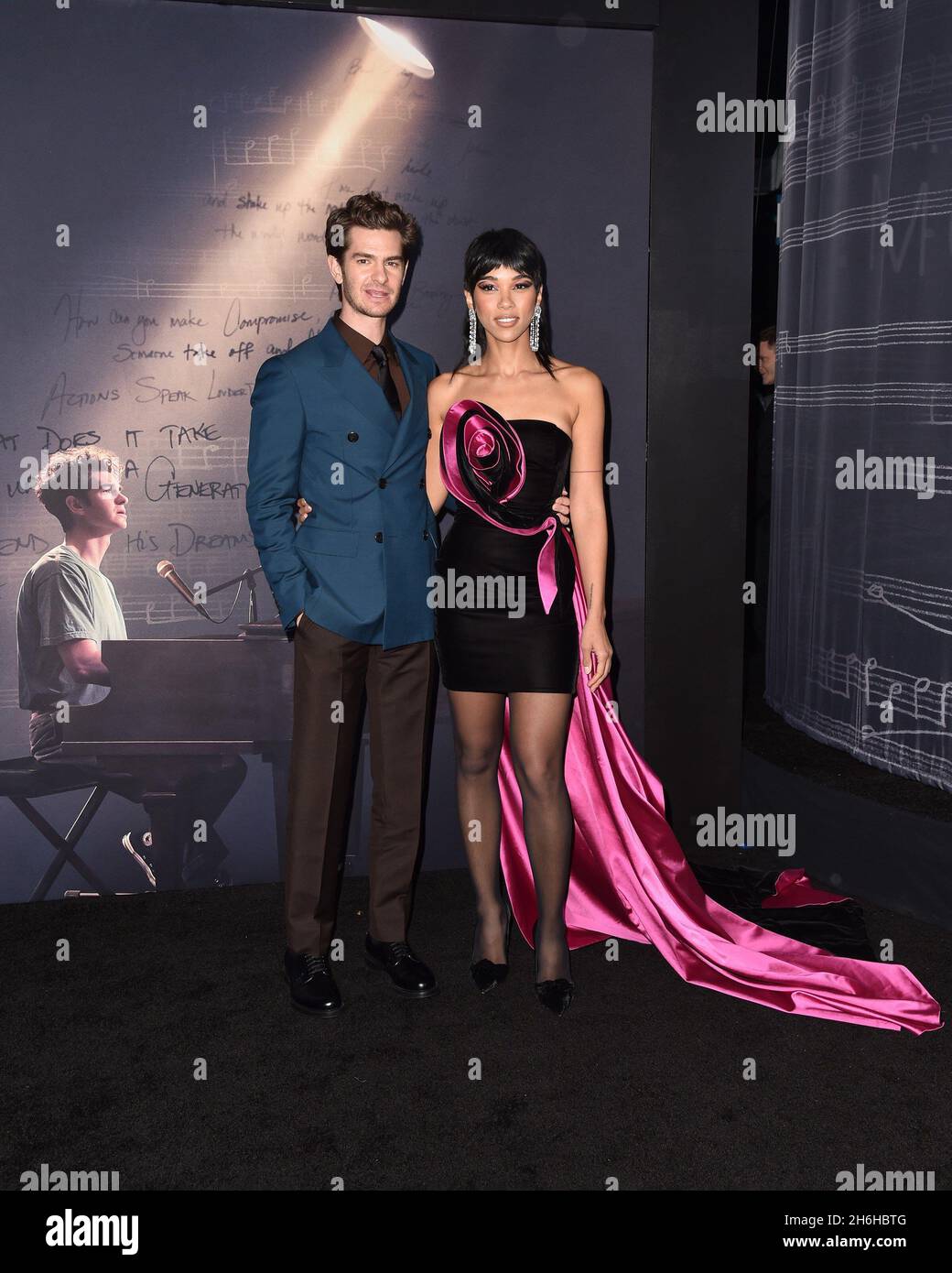
In Lin-Manuel Miranda’s 2021 directorial debut Tick, Tick... BOOM!, Alexandra Shipp portrays Susan Wilson, the girlfriend of the musical’s protagonist, Jonathan Larson. As a dancer and choreographer navigating her own professional transitions, Susan provides a grounded, poignant counterpoint to Larson’s frenetic creative obsession, serving as a critical emotional anchor throughout the film’s exploration of artistic struggle and mortality.
Background and Character Significance
Tick, Tick... BOOM! is a film adaptation of the autobiographical musical by Jonathan Larson, the late creator of the landmark Broadway production Rent. While the film centers on Larson—played by Andrew Garfield—as he approaches his 30th birthday while struggling to finalize his musical Superbia, the character of Susan Wilson acts as the audience’s window into the personal costs of that ambition.
Alexandra Shipp was cast as Susan Wilson to bring a sense of maturity and pragmatism to the role. In the narrative, Susan is a former professional dancer who is contemplating moving away from New York City to pursue a more stable career in teaching. This internal conflict—the desire for a life beyond the grind of the arts—directly clashes with Larson’s singular focus. Shipp’s performance highlights the tension between supporting a partner’s dream and recognizing when that dream has become a detriment to the health of the relationship.
Analyzing the Performance and Creative Choices
Alexandra Shipp’s portrayal of Susan is often cited by critics for its subtlety. Unlike the more flamboyant musical numbers that define much of the film’s pacing, Shipp’s scenes are frequently intimate and conversational. She brings a grounded energy that contrasts sharply with the frantic, nervous intensity that Andrew Garfield brings to the role of Jonathan.
One of the most defining sequences for the character occurs during the song "Therapy," a duet that serves as a comedic yet biting depiction of the communication breakdown between the couple. Here, Shipp balances the exhaustion of being with a partner who is constantly "at work" with the genuine affection she still holds for Larson. Her physicality as a former dancer is utilized in the staging, lending a grace to her performance that emphasizes her background, even as she attempts to step away from the professional stage.
Historical Context of the Source Material
To understand Susan Wilson, one must look at the real-life figure she represents. The character is based on a composite of several women in Jonathan Larson’s life, primarily his long-term partner at the time he was writing the original Tick, Tick... BOOM! monologue. By weaving these experiences into one character, the film allows for a focused exploration of the "lost years" of an artist.
Shipp’s performance was essential in translating the 1990s setting of the original stage musical to a modern cinematic audience. While the stage show often leaned into the raw, punk-rock energy of the era, the film adaptation, under Miranda’s direction, added layers of visual storytelling. Shipp’s wardrobe, hair, and movement were carefully curated to reflect the aesthetics of 1990 New York, grounding the film in its specific historical time and place.
The Dynamics of Artistic Ambition vs. Partnership
A recurring theme in the film is the fragility of relationships when one partner is consumed by an all-encompassing goal. Alexandra Shipp’s Susan is not merely the "supportive girlfriend"; she is an individual with her own agency and desires. Her decision to eventually leave for the Berkshires serves as a necessary wake-up call for Larson.
Throughout the film, the interaction between Shipp and Garfield explores the threshold where ambition turns into selfishness. Shipp portrays the quiet frustration of being an afterthought in her own relationship. For viewers, this dynamic provides the moral tension of the story: it forces the audience to ask whether Larson’s eventual success with Rent was worth the personal sacrifices he made along the way. Shipp’s nuanced delivery ensures that Susan is never presented as a villain, but rather as a human being choosing to prioritize her own well-being over a lifestyle that no longer serves her.
Comparison of Character Archetypes in Musical Biopics
In the landscape of musical biographies, the role of the partner is often marginalized or reduced to a secondary plot point. Alexandra Shipp’s work in Tick, Tick... BOOM! avoids this trap through several key directorial and performance choices.
| Feature | Typical Supporting Role | Alexandra Shipp's Susan Wilson |
|---|---|---|
| Character Agency | Often passive or supportive | High; makes independent life choices |
| Relatability | Idealized or romanticized | Grounded in career stress and doubt |
| Musicality | Peripheral to main numbers | Integrated into thematic duets |
| Narrative Arc | Exists only for the protagonist | Has a clear, distinct resolution |
This table illustrates why Shipp’s performance is frequently analyzed by film students and theater enthusiasts alike. By giving Susan a clear trajectory—from dancer to teacher—the film ensures that her presence is not just a reflection of Jonathan’s genius but a vital piece of the film’s commentary on the "starving artist" narrative.
Critical Reception and Audience Impact
Upon the film’s release in 2021, Shipp’s performance received significant attention for its ability to navigate the complex emotional requirements of a musical biopic. The film as a whole was lauded for its editing and direction, but the chemistry between the leads was frequently pointed out as the engine of the film.
Shipp’s portrayal resonates particularly with audiences who have faced the difficult crossroads of choosing between a career in the arts and the desire for personal stability. Her performance serves as a reminder that the cost of creative success is often measured in the relationships that are strained or lost in the process.
Frequently Asked Questions
Was the character of Susan Wilson based on a real person? Yes, Susan is largely based on a real-life woman who was Jonathan Larson’s partner during the early 1990s. In the original stage show, she is referred to as Susan, though the character is a composite representing different relationships Larson experienced during that period of his life.
Did Alexandra Shipp perform her own singing in the film? Yes, like the rest of the cast, Alexandra Shipp performed her own vocals for the musical numbers in the film. Her background in theater helped her integrate seamlessly into the high-energy ensemble of the production.
How does Susan’s perspective change the narrative of the film? Susan serves as the "voice of reason." Without her perspective, the film would be purely a celebratory look at artistic obsession. Susan represents the reality check that forces the audience to consider the human cost of greatness, making the film's conclusion more bittersweet.
Is Tick, Tick... BOOM! a faithful representation of the original musical? The film is a highly faithful adaptation in terms of music and themes, though it expands the scope of the original one-man-show format. By adding characters like Susan into full-blown scenes, the film adds emotional depth that the original stage monologue only touched upon through narration.
Why is Susan moving to the Berkshires such a pivotal moment? Her move represents the end of her attempt to mold her life around Jonathan’s, and her refusal to wait for him to choose her over his career. It is the moment that forces Jonathan to confront the possibility that his pursuit of his musical might leave him with nothing else.
Final Recommendations for Viewers
For those interested in the craft of acting or the history of musical theater, re-watching Tick, Tick... BOOM! with a focus on Susan’s scenes can provide a new understanding of the film’s emotional core. Rather than focusing solely on the high-energy musical sequences, pay close attention to the non-verbal cues and quiet dialogues shared between Shipp and Garfield. These moments represent the heavy lifting of the character work, demonstrating how an actor can bring depth to a role that is often categorized simply as the "supporting" partner.
If you are looking for further context on the life of Jonathan Larson, consider pairing this viewing with the documentary Jonathan Larson: No Day But Today or revisiting the original Rent musical, as these materials provide the necessary background to fully appreciate the sacrifices alluded to in Shipp’s performance.