As of 2026, the ALDI expansion into Manhattan represents a pivotal shift in the grocery retailer’s urban strategy, moving beyond its initial East Harlem anchor to establish a broader presence in high-density neighborhoods. This growth is driven by a multi-year $9 billion national investment plan aimed at bringing the discount model to premium real estate markets where consumer demand for value has reached an all-time high.
The Strategic Evolution of ALDI in the Manhattan Market
The journey of ALDI into the heart of New York City was once considered a logistical impossibility by industry analysts. For decades, the German-based discount giant focused on suburban "flyover" regions and outer-borough residential areas where large footprints and ample parking were readily available. However, by 2026, the narrative has shifted entirely. The expansion into Manhattan is no longer a pilot program; it is a core pillar of ALDI’s North American growth strategy.
ALDI’s entry into Manhattan began in earnest at the East River Plaza in East Harlem. This location served as a laboratory for the company to test whether its "no-frills" model—characterized by a limited selection of private-label goods and a high-efficiency checkout process—could survive the astronomical rents and complex delivery requirements of Manhattan. The success of the East Harlem store proved that Manhattanites, regardless of income level, were increasingly price-sensitive and willing to trade the "experience" of high-end grocers for the transparency and savings offered by ALDI.
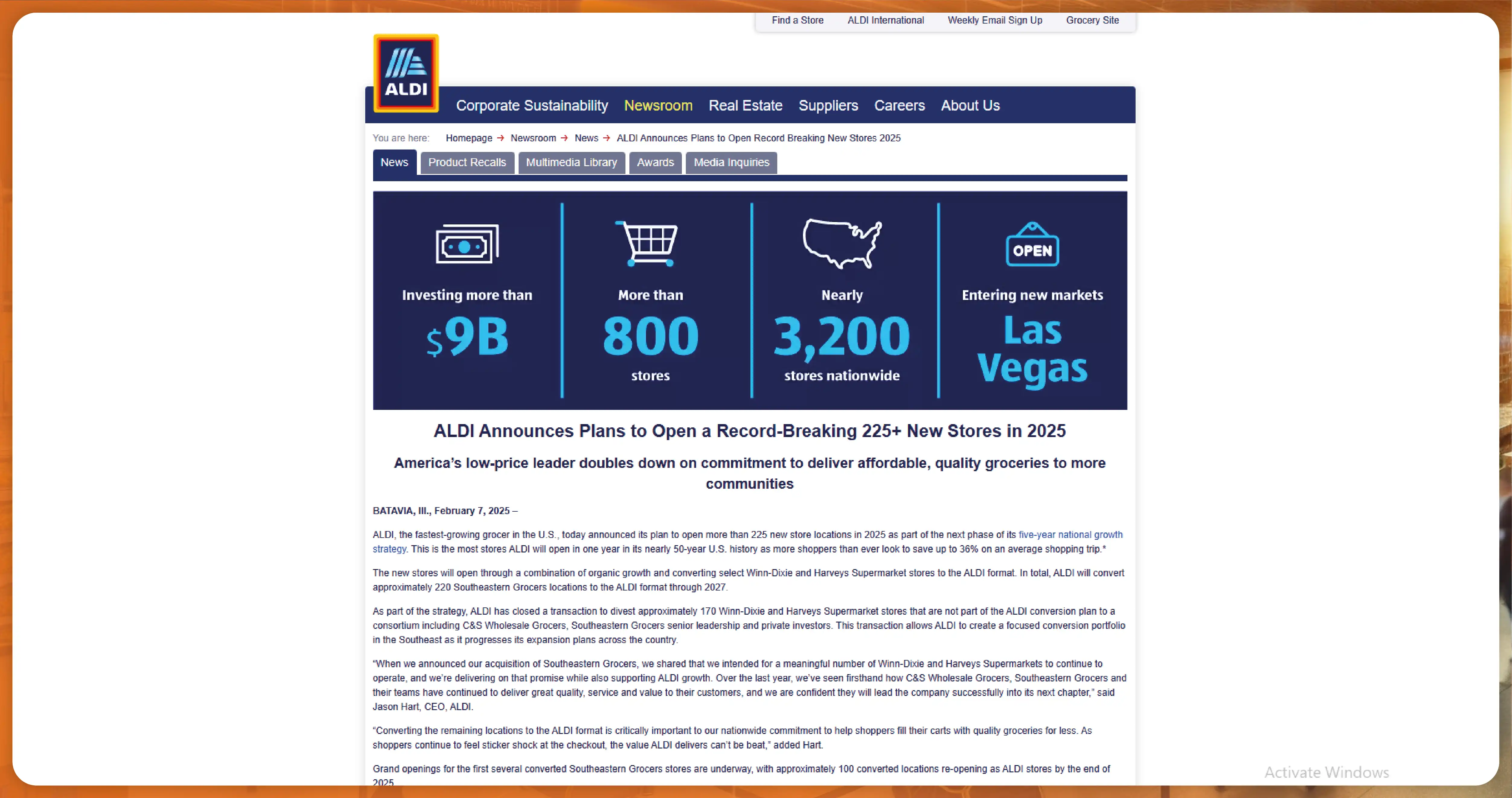
In 2024, ALDI announced a massive plan to add 800 stores across the United States by the end of 2028. A significant portion of this investment was earmarked for the Northeast, specifically targeting the "grocery deserts" and high-cost corridors of New York City. By 2026, we are seeing the fruits of this labor as the brand secures smaller, more flexible retail spaces that were previously occupied by struggling traditional department stores or pharmacies.
Neighborhood Analysis: Where ALDI is Planting Roots
The Manhattan expansion is characterized by a "neighborhood-first" approach. Unlike suburban stores that draw from a 10-mile radius, a Manhattan ALDI must be accessible via public transit and foot traffic.
Upper Manhattan and Harlem
Harlem remains the stronghold for ALDI in Manhattan. The East 117th Street location continues to be one of the highest-volume stores in the region. However, expansion has moved westward and northward. New sites near the 125th Street transit hub have allowed ALDI to capture the commuting population. These stores are designed with verticality in mind, often utilizing two-story layouts that are uncommon in the traditional ALDI footprint but necessary for the Upper Manhattan skyline.
The Upper West Side and Morningside Heights
The demographic shift in 2025 and 2026 saw ALDI eyeing the Upper West Side. With a high concentration of students, young professionals, and families, this area provides the perfect "middle-market" opportunity. The challenge here has been real estate competition. ALDI has successfully navigated this by moving into the "lower-level" retail spaces of new residential developments, where they can maintain a 12,000 to 15,000 square foot floor plan without the visibility premium of a ground-floor storefront.
Potential for Midtown and Lower Manhattan
While the core of the 2026 expansion focuses on residential Upper Manhattan, there is significant movement toward Chelsea and the Lower East Side. These locations represent a departure from the "grocery desert" mission and an entry into direct competition with established players like Whole Foods and Trader Joe's. The strategy here involves a "curated" inventory that emphasizes organic produce and the "ALDI Finds" section to attract the trend-conscious Manhattan shopper.
Overcoming the Challenges of Urban Grocery Logistics
Operating a discount grocery store in Manhattan is a feat of engineering and supply chain management. ALDI’s success in this expansion is predicated on solving three major issues: inventory frequency, delivery constraints, and waste management.
- High-Frequency Deliveries: In a suburban ALDI, a single large trailer might deliver goods once a day. In Manhattan, the lack of storage space means stores must receive smaller, more frequent deliveries. ALDI has optimized its regional distribution centers in New York and New Jersey to utilize smaller box trucks that can navigate Manhattan’s narrow streets and strict unloading zones.
- The "Last Mile" Efficiency: ALDI’s model relies on speed. In Manhattan, this means the checkout process must be even faster than the national average. By 2026, many Manhattan ALDI locations have implemented advanced self-checkout kiosks alongside traditional belted lanes to handle the high volume of "basket shoppers" (those buying 10 items or fewer) who dominate the city’s grocery landscape.
- Space Optimization: A standard ALDI store is roughly 12,000 square feet. In Manhattan, every inch is scrutinized. You will find narrower aisles and taller shelving units than in suburban counterparts. The "quarter-for-a-cart" system is also adapted; many Manhattan shoppers do not use carts, so ALDI has invested in high-durability hand baskets that are specifically designed for the "commuter shop."
Comparison of Manhattan Grocery Options in 2026
To understand why the ALDI expansion is so significant, it is helpful to compare it against the other major players in the Manhattan market.
| Feature | ALDI (Manhattan) | Trader Joe's | Whole Foods | Traditional Bodega |
|---|---|---|---|---|
| Primary Value | Lowest Price / Efficiency | Unique Products / Culture | Organic / Premium Experience | Convenience / Proximity |
| Private Label % | ~90% | ~80% | ~30% | <5% |
| Store Size (Avg) | 12,000 - 15,000 sq ft | 15,000+ sq ft | 25,000+ sq ft | <2,000 sq ft |
| Checkout Speed | Very High | Moderate (Long Lines) | Moderate | High |
| Fresh Produce | Focused / Essential | Broad / Pre-packaged | Extensive / Bulk | Limited |
| Cart Requirement | Quarter Deposit (if used) | Free | Free | None |
The "ALDI Finds" Phenomenon in an Urban Context
One of the most surprising drivers of the Manhattan expansion has been the "ALDI Finds" aisle—often referred to by fans as the "Aisle of Shame." This section features rotating, non-food items ranging from kitchen appliances to home décor and seasonal apparel.
In a city where space is at a premium, Manhattan shoppers have shown a surprising appetite for these limited-time offers. For ALDI, this section serves as a powerful marketing tool. It creates a "treasure hunt" atmosphere that encourages repeat visits in a market where brand loyalty is notoriously fickle. In 2026, the Manhattan stores have tailored these finds to urban living, focusing on foldable furniture, indoor gardening kits, and high-efficiency organization tools that resonate with apartment dwellers.
Economic and Community Impact
The expansion of ALDI into Manhattan is not just a corporate victory; it has tangible socio-economic implications for the city.
Addressing Food Insecurity
Large swaths of Manhattan, particularly in the northern reaches, have historically been underserved by affordable grocery chains. The presence of ALDI provides a critical alternative to high-priced convenience stores and bodegas, which often lack fresh produce. By keeping prices low—often 40% lower than traditional supermarkets—ALDI increases the purchasing power of SNAP (Supplemental Nutrition Assistance Program) recipients and low-income families.
Employment Opportunities
Each new Manhattan store creates approximately 30 to 50 jobs. ALDI is known for offering wages that are significantly higher than the industry average for retail associates, along with comprehensive benefits. In the 2026 labor market, this has made ALDI a preferred employer in the retail sector, contributing to local neighborhood stability.
Sustainability Goals
As part of the expansion, ALDI has committed to several green initiatives tailored for NYC. This includes the elimination of plastic shopping bags (a transition that preceded state mandates but remains a core brand identity) and the use of natural refrigerants in all new Manhattan locations. The compact nature of these stores also results in a smaller carbon footprint per square foot compared to massive flagship supermarkets.
Why ALDI is Winning the "Grocery War" in Manhattan
The primary reason ALDI is successfully expanding while other chains are retracting is its operational discipline. ALDI does not try to be everything to everyone. It does not have a pharmacy, a deli counter, or a floral department. This lack of complexity allows the company to maintain incredibly low overhead.
In Manhattan, where labor and electricity costs are among the highest in the world, the ALDI model is uniquely resilient. By asking customers to bag their own groceries and return their own carts, ALDI reclaims labor hours that are then reinvested into price reductions. Furthermore, the reliance on private labels means ALDI is not at the mercy of the pricing whims of major national brands. They control the supply chain from the factory to the shelf.
Future Outlook: Manhattan 2027 and Beyond
As we look past 2026, the trajectory for ALDI in Manhattan remains aggressive. There are ongoing discussions regarding "ALDI Go" technology—fully autonomous checkout systems—which would further revolutionize the Manhattan shopping experience by eliminating checkout lines entirely.
The company is also expected to explore "micro-fulfillment" centers in Manhattan to support the growing demand for grocery delivery via third-party apps. While the physical store remains the heart of the business, the ability to deliver ALDI-priced goods to a Fifth Avenue apartment in under 30 minutes is the next frontier.
FAQ: Shopping at ALDI in Manhattan
Does ALDI in Manhattan carry the same products as suburban stores?
Yes, the core inventory of ALDI Manhattan stores is identical to suburban locations, featuring the same private-label brands like Simply Nature, LiveGf (gluten-free), and Specially Selected. However, the "ALDI Finds" section may be slightly smaller or more curated to fit the urban lifestyle of NYC residents.
Are prices higher in Manhattan ALDI stores compared to other states?
ALDI strives for price consistency across regions. While there may be slight fluctuations due to local taxes or specific NYC supply chain surcharges, ALDI remains significantly cheaper than its Manhattan competitors. The company uses a "uniform pricing" strategy to ensure that the value proposition remains intact even in high-cost areas.
Do I need a quarter for a cart in the Manhattan stores?
Yes, the signature quarter-deposit system for shopping carts is utilized in Manhattan locations that offer carts. This system ensures that carts are returned to the bay, reducing the need for staff to retrieve them from the street and keeping the sidewalks clear—a major concern for NYC storefronts.
Does ALDI in Manhattan offer delivery?
Yes, ALDI has partnered with major third-party delivery services to provide same-day grocery delivery across most of Manhattan. This has been a key component of their 2026 strategy to reach customers who live outside of walking distance from their physical locations.
Where can I find the latest ALDI locations opening in Manhattan?
The best way to track new openings is through the official ALDI store locator or by following NYC real estate development news. As part of the 2024-2028 expansion plan, ALDI frequently announces new leases six to twelve months before a grand opening.
Final Recommendations for Manhattan Shoppers
If you are planning to integrate ALDI into your Manhattan shopping routine in 2026, keep these tips in mind:
- Bring your own bags: Like all ALDI stores, the Manhattan locations do not provide free bags. Sturdy, reusable bags are essential for the trek back to your apartment.
- Shop mid-week: To avoid the heavy weekend crowds and to get the first pick of "ALDI Finds" (which usually drop on Wednesdays), try to visit on a Tuesday or Wednesday morning.
- Check the app: Download the ALDI app to see the "Weekly Specials" specifically for the Manhattan area, as these can help you plan your meals around the best available deals.
- Don't skip the private labels: Many ALDI private-label products are produced by the same manufacturers as national brands. Give them a try—most come with a "Twice as Nice" guarantee where ALDI will replace the product AND refund your money if you aren't satisfied.
The ALDI expansion is a clear signal that the Manhattan retail landscape is evolving toward value and efficiency. For the average New Yorker, this means more choices, lower bills, and a more sustainable way to manage the high cost of city living.