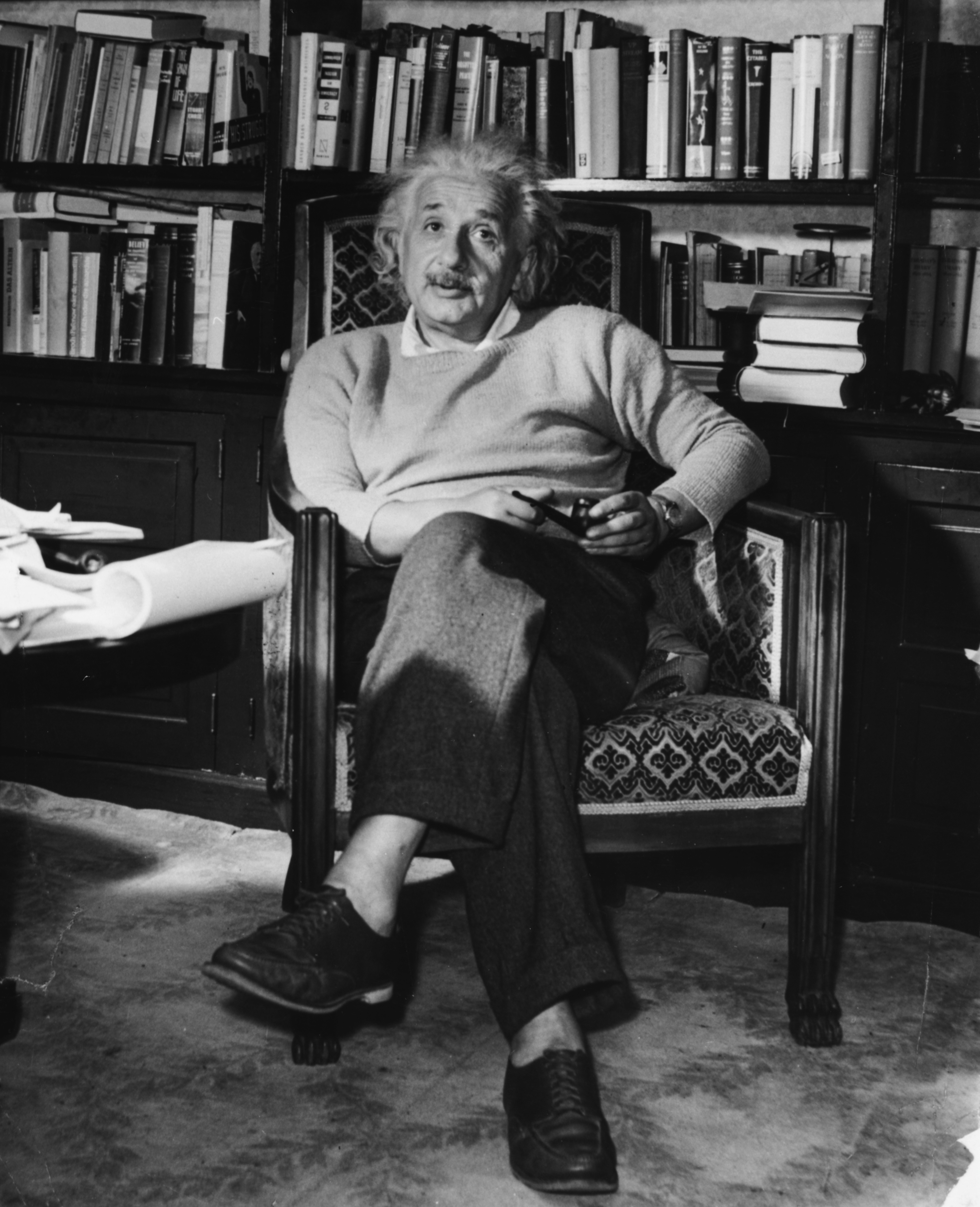
At the time of his death in 1955, Albert Einstein’s net worth was approximately $65,000, consisting mainly of cash, life insurance, and personal belongings. In 2026 inflation-adjusted terms, this equals roughly $760,000. However, his posthumous estate earns between $10 million and $20 million annually through licensing rights held by the Hebrew University of Jerusalem.
The Historical Context of Einstein’s Personal Wealth
Understanding Albert Einstein’s financial standing requires a look at his life through the lens of a 20th-century academic rather than a modern-day influencer or tech mogul. Despite being the world’s most famous scientist, Einstein never prioritized the accumulation of liquid wealth. His primary income sources were his academic salaries, book royalties, and his prestigious Nobel Prize award.
During his early career at the Swiss Patent Office, Einstein earned a modest living that barely supported his young family. His transition into the upper echelons of German academia brought higher pay, but the economic instability of the Weimar Republic and the subsequent rise of the Nazi party stripped him of many assets. When Einstein emigrated to the United States in 1933, he left behind most of his German property, which was subsequently confiscated by the state.
At the Institute for Advanced Study in Princeton, New Jersey, his starting salary was approximately $10,000 per year. For the 1930s, this was a substantial sum, equivalent to roughly $230,000 today. Einstein famously resisted efforts to increase his salary, preferring a modest lifestyle that allowed him to focus entirely on his research into unified field theory.
The Nobel Prize Payout and Divorce Settlement
One of the most significant financial events in Einstein’s life was the 1921 Nobel Prize in Physics. However, contrary to popular belief, this prize money did not contribute to his personal net worth at the time of his death.
In his 1919 divorce agreement with his first wife, Mileva Marić, Einstein contractually obligated himself to provide her with the full amount of the Nobel Prize money, should he eventually win it. He won the prize two years later. The funds, totaling approximately 121,572 Swedish kronor (about $32,000 in 1923), were placed in a trust for Mileva and their two sons, Hans Albert and Eduard.
While the prize money was intended for the care of his children and Mileva's living expenses, much of it was lost due to poor investments and the hyperinflation that gripped Europe between the World Wars. By the time Einstein settled in the United States, the financial legacy of the Nobel Prize had largely dissipated, leaving him to rely on his Princeton salary and ongoing royalties from his published works, such as The Meaning of Relativity.
Net Worth at the Time of Death (1955)
When Einstein passed away on April 18, 1955, his estate was relatively humble for a man of his global stature. The official valuation of his probate estate included:
- Cash and Bank Accounts: Approximately $25,000.
- Life Insurance Policies: Valued at roughly $10,000.
- Personal Property: Including his violin ("Lina"), his library, and scientific manuscripts, valued at $30,000.
- Real Estate: His home at 112 Mercer Street in Princeton, which he requested never be turned into a museum.
Einstein's will was a reflection of his personal loyalties. He left his manuscripts and intellectual property rights to the Hebrew University of Jerusalem, an institution he helped found. He provided for his stepdaughter, Margot Einstein, and his long-term secretary, Helen Dukas, giving them the right to live in his Princeton home and receive a portion of his modest liquid assets. His biological sons received smaller portions, as much of their financial support had been handled through the earlier Nobel Prize trust.
Inflation-Adjusted Valuation: 1955 vs. 2026
To understand Einstein’s wealth in a contemporary context, we must apply cumulative inflation rates. While $65,000 sounds meager today, it represented a comfortable, upper-middle-class existence in the mid-1950s.
| Financial Metric | 1955 Value (USD) | 2026 Adjusted Value (USD) |
|---|---|---|
| Annual Princeton Salary | $10,000 (avg) | ~$115,000 |
| Total Liquid Assets at Death | $35,000 | ~$410,000 |
| Total Estate Value (Probate) | $65,000 | ~$760,000 |
| Median Home Price (Princeton) | $18,000 | $1,200,000+ (Market Value) |
| Nobel Prize Funds (Transferred) | $32,000 | ~$550,000 |
The data shows that while Einstein was not a millionaire in his lifetime, his purchasing power allowed for a life free from financial hardship. His "wealth" was primarily tied up in his intellectual property, which would not see its true commercial potential realized until decades after his passing.
The Posthumous Licensing Goldmine
The most dramatic "reveal" regarding Albert Einstein’s net worth isn't what he had in the bank when he died, but what his name generates today. Since his death, Einstein has consistently ranked as one of the highest-earning deceased celebrities, often appearing on lists alongside Elvis Presley and Michael Jackson.
The Hebrew University of Jerusalem owns the rights to Einstein’s name and likeness. They have transformed his image—the wild hair, the tongue sticking out, and the "E=mc²" formula—into a global brand. Licensing deals are managed by professional agencies like Greenlight (part of Branded Entertainment Network).
Key Revenue Streams for the Einstein Estate:
- Consumer Products: The "Baby Einstein" brand, though now owned by Kids II, Inc., paid significant royalties to the estate for years.
- Advertising: Use of Einstein's image in campaigns for brands like Salesforce, Disney, and various tech companies.
- Apparel and Merchandising: T-shirts, mugs, and posters featuring his iconic portraits.
- Media and Publishing: Ongoing royalties from his scientific papers and personal letters.
Current estimates suggest that the estate generates between $10 million and $15 million annually in net profit. These funds are used by the Hebrew University to support scientific research and academic programs, fulfilling Einstein's wish that his legacy benefit the pursuit of knowledge.
Intellectual Property vs. Personal Fortune
It is essential to distinguish between Einstein’s personal fortune and the value of his intellectual property. In modern financial terms, Einstein’s "brand value" is estimated to be in the hundreds of millions of dollars. However, Einstein himself never viewed his identity as a commodity.
His manuscripts, which he left to the Hebrew University, are priceless. The original 1916 manuscript for the General Theory of Relativity is considered one of the most valuable documents in scientific history. In 2021, a 54-page manuscript co-authored by Einstein and Michele Besso, which contained preparatory work for the theory of general relativity, sold for $13 million at an auction in Paris. None of this wealth benefited Einstein personally; rather, it serves as a testament to the enduring market value of his genius.
Philanthropy and the Einstein Estate’s Impact
Einstein was a staunch advocate for humanitarian causes, and his financial decisions often reflected his values. During the 1930s and 40s, he donated significant portions of his income to help Jewish refugees escape Nazi-occupied Europe. He also used his influence to raise millions for the United Jewish Appeal and the Hebrew University.
The transition of his estate into a perpetual trust for the Hebrew University means that his "net worth" continues to grow in a collective sense. Instead of enriching a small group of heirs, his wealth supports:
- The Albert Einstein Archives in Jerusalem.
- The construction of research facilities.
- Scholarships for students in the sciences.
This philanthropic structure ensures that his financial legacy is as immortal as his scientific contributions.
Frequently Asked Questions
Was Albert Einstein a millionaire?
No, Albert Einstein was not a millionaire during his lifetime. His net worth at death was approximately $65,000. While he earned a high salary for an academic, his expenses, divorce settlement, and philanthropic donations kept his liquid assets modest.
Who inherited Albert Einstein's money?
His stepdaughter Margot Einstein and secretary Helen Dukas inherited his personal property and the right to live in his Princeton home. His intellectual property, manuscripts, and the future rights to his name were bequeathed to the Hebrew University of Jerusalem.
How much does the Einstein estate make today?
In 2026, the Einstein estate continues to earn an estimated $10 million to $20 million per year through licensing and branding deals managed by the Hebrew University of Jerusalem.
Did Einstein get money from the equation E=mc²?
Einstein did not receive royalties for the "use" of his formulas by other scientists. However, his publications explaining these theories earned him royalties, and his estate now earns significant income from the use of his formulas in branding and popular culture.
What happened to Einstein’s house in Princeton?
Einstein's house at 112 Mercer Street was left to his stepdaughter, Margot. He specifically requested that it not be turned into a museum. It remains a private residence, though it was added to the National Register of Historic Places in 1976.
Practical Takeaway: The Value of Intellectual Legacy
Albert Einstein’s financial history reveals a profound truth: personal wealth is often dwarfed by the value of a lasting intellectual legacy. While Einstein lived a comfortable but modest life, his decision to vest his intellectual property in an institution dedicated to learning has allowed his "net worth" to benefit humanity for over seven decades.
For those interested in preserving their own legacy, the Einstein model highlights the importance of a clear will and the strategic designation of intellectual property rights. By prioritizing the Hebrew University, Einstein ensured his work remained accessible to scholars while generating the funds necessary to preserve it.