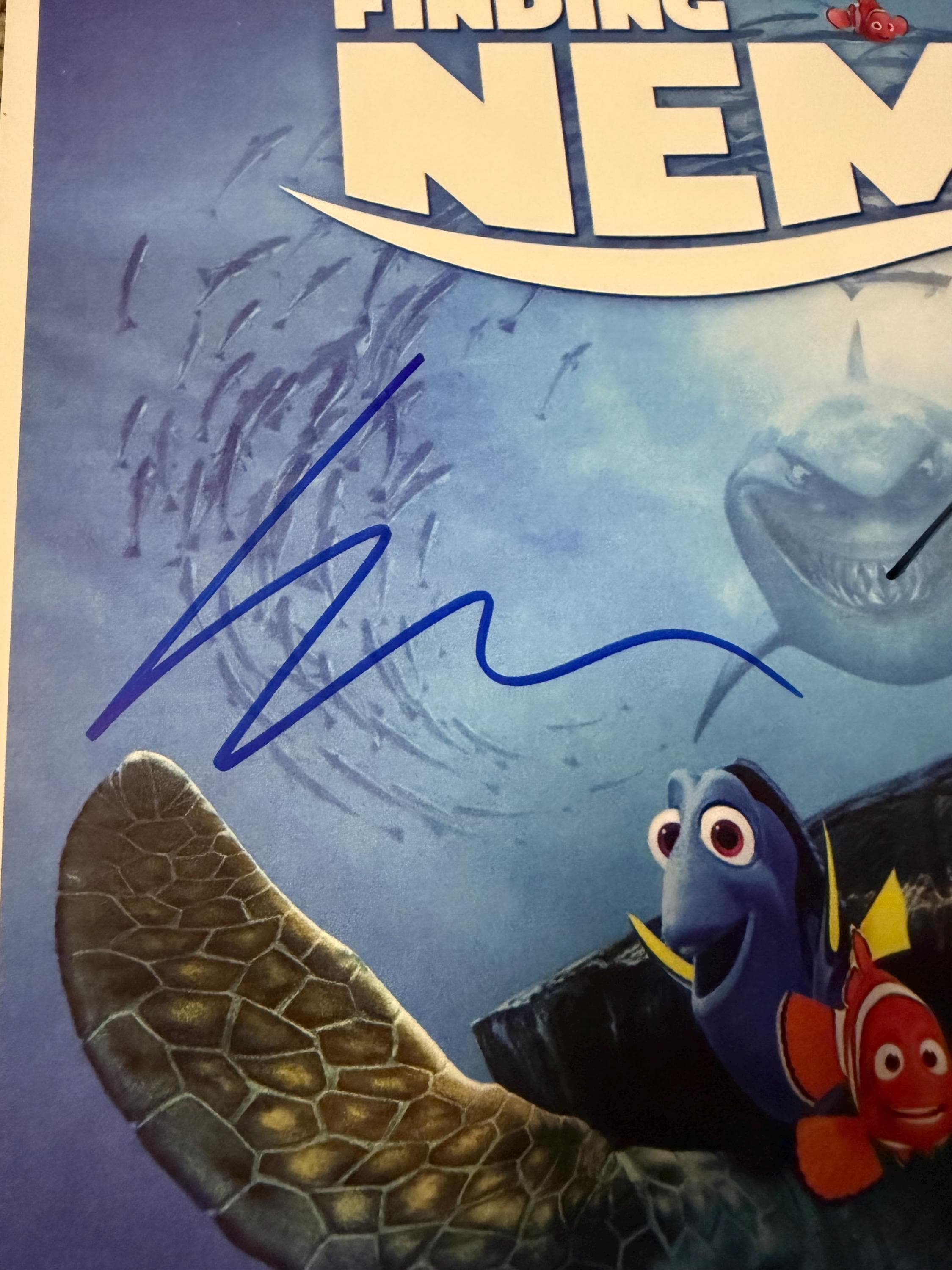
Albert Brooks provided the voice for Marlin, the anxious and fiercely overprotective clownfish protagonist in Pixar’s 2003 animated classic Finding Nemo and its 2016 sequel Finding Dory. His performance is celebrated for balancing high-strung comedic timing with the profound emotional depth required for the film’s exploration of grief and parenthood.
The Casting of Marlin: Why Albert Brooks?
When Pixar was developing Finding Nemo in the early 2000s, director Andrew Stanton faced a significant challenge in casting the lead role of Marlin. The character was written as a father paralyzed by the loss of his wife and most of his offspring—a tragedy that leaves him obsessive about the safety of his only surviving son, Nemo. In the wrong hands, this level of overprotectiveness could have come across as grating or unlikable to the audience.
Stanton specifically sought out Albert Brooks after hearing his performance in the 1996 film Mother. Brooks has long been recognized in Hollywood as a master of "intellectual neurosis." His ability to portray characters who are stressed, rambling, and deeply worried, yet fundamentally sympathetic, was exactly what the production needed. Brooks brought a unique "everyman" quality to the role of a reef-dwelling fish. His natural cadence—filled with self-corrections, stammers, and frantic energy—allowed Marlin to feel like a real parent dealing with real anxiety, rather than a caricature.
By the time Finding Nemo was released, Brooks was already an established Academy Award nominee (for Broadcast News) and a respected director. His transition into voice acting for a major Disney-Pixar production was a pivotal moment for the studio, reinforcing their trend of casting actors based on character fit rather than just celebrity status.
Character Archetypes and the Comedy of the "Not-Funny" Fish
One of the most brilliant aspects of Albert Brooks’ performance as Marlin is the inherent irony of the character's species. Marlin is a clownfish, a species traditionally expected to be funny. However, the running gag throughout the film is that Marlin is incapable of telling a joke correctly. This narrative choice allowed Brooks to lean into his comedic roots in a subversive way.
The Dynamics of Neurosis
Marlin serves as the "straight man" in a world filled with eccentric characters. Brooks’ performance highlights the contrast between Marlin’s rigid need for order and the chaotic nature of the ocean. This is most evident in his interactions with:
- Dory (Ellen DeGeneres): The chemistry between Brooks and DeGeneres is the engine of the film. While Dory represents pure instinct and short-term memory, Marlin represents over-calculation and traumatic memory. Brooks’ ability to sound exasperated without losing the audience's empathy is a testament to his vocal control.
- The Tank Gang: When Marlin is absent from the dentist’s office, his reputation precedes him. The irony is that while he sees himself as a failure, his journey across the ocean makes him a legend.
- Nemo: The relationship between Brooks and the young Alexander Gould (who voiced Nemo) had to feel authentic. Brooks’ voice shifts from sharp, panicked commands to soft, regretful whispers, capturing the complex spectrum of fatherhood.
Technical Execution: The Voice Acting Process at Pixar
Voice acting for a Pixar film is a multi-year commitment that differs significantly from traditional live-action filming. For Albert Brooks, voicing Marlin involved dozens of recording sessions where he was often alone in a booth, separated from his co-stars.
The Art of ADR and Improvisation
While Pixar scripts are meticulously written, the studio is famous for allowing actors to improvise to find the "soul" of a scene. Andrew Stanton encouraged Brooks to riff on his lines. Many of Marlin's most authentic moments—the small stutters, the frantic asides, and the mutterings under his breath—were born from Brooks’ improvisational instincts.
Technically, the animators would then use these voice recordings to inform the character’s "acting." Marlin’s facial expressions, the darting of his eyes, and the frantic movement of his fins were all designed to match the specific rhythm of Albert Brooks’ speech. If Brooks sounded particularly squeezed or breathless in a line, the animators would reflect that physical tension in the fish’s body.
Handling the Opening Sequence
The emotional anchor of Brooks' performance is established in the first five minutes of the film. The scene where Marlin loses his wife, Coral, and their eggs required Brooks to pivot from joyful expectation to devastating loss. This sequence is notoriously one of the saddest in Disney history. Brooks’ voice in the immediate aftermath—gentle, hallowed, and trembling—sets the stakes for the rest of the movie. It explains why he is the way he is, ensuring the audience stays on his side even when he is being overly harsh to Nemo later on.
Finding Dory: Returning to the Reef in 2016
Thirteen years after the original film, Albert Brooks reprised his role in Finding Dory. As of 2026, the sequel remains a masterclass in how to evolve a character while maintaining their core identity. In the sequel, Marlin is no longer the central protagonist, but his growth is evident.
In Finding Dory, Marlin has to learn a different kind of lesson: empathy for those who think differently. Because he has spent years being the "fixer" for Nemo, he initially struggles with Dory’s disability (her short-term memory loss). Brooks portrays a more seasoned, perhaps slightly more tired version of Marlin. The performance is less about the frantic fear of loss and more about the frustration of a caretaker.
The transition between the two films is seamless. Despite the decade-long gap in real-world time, Brooks’ voice had aged gracefully into the role, providing a sense of continuity that was essential for the sequel's massive commercial and critical success.
Comparison of Marlin's Role Across the Franchise
The following table outlines the key differences in Marlin's character arc and the production context between the two major films where Albert Brooks voiced the character.
| Feature | Finding Nemo (2003) | Finding Dory (2016) |
|---|---|---|
| Primary Goal | Finding and rescuing his son, Nemo. | Supporting Dory in her quest for her parents. |
| Marlin's Internal Conflict | Overcoming debilitating fear and trauma. | Learning patience and trusting Dory’s instincts. |
| Vocal Tone | Frantic, high-pitched, and high-energy. | More grounded, cynical, yet ultimately loyal. |
| Key Relationship | Marlin and Dory (The meeting of opposites). | Marlin and Nemo (The partnership as a team). |
| Box Office Success | ~$871 Million (Original Release) | ~$1.028 Billion |
| Critical Reception | Won Academy Award for Best Animated Feature. | Nominated for numerous BAFTA and Annie Awards. |
The Legacy of Marlin in the History of Animation
Albert Brooks' work as Marlin changed the landscape for how "dad" characters are portrayed in animation. Before Finding Nemo, many fathers in animated films were either distant authority figures or bumbling comic relief. Marlin was different; he was a deeply flawed, traumatized, and anxious individual whose love for his son was his only compass.
Influence on Later Pixar Characters
The success of Marlin paved the way for other complex father figures in the Pixar universe, such as Bob Parr (The Incredibles) and even characters like Carl Fredricksen in Up. Brooks proved that an audience—including children—could connect with a character who was visibly struggling with mental and emotional burdens, provided the performance was rooted in honesty.
Cultural Impact
"P. Sherman, 42 Wallaby Way, Sydney" is a line etched into the collective memory of a generation, largely due to the frantic, repetitive way Brooks delivered it. His performance turned a simple address into a mantra of hope. Furthermore, Marlin's journey has been cited by child psychologists as a helpful tool for discussing "helicopter parenting" and anxiety with families.
Exploring Albert Brooks' Career Beyond the Ocean
While Marlin is perhaps his most globally recognized role, Albert Brooks’ career is vast. Understanding his other work provides context for why he was so successful as Marlin.
- Directing and Writing: Brooks wrote and directed films like Real Life, Lost in America, and Defending Your Life. These films often explore the same themes found in Finding Nemo: the fear of failure, the absurdity of modern life, and the search for safety.
- Dramatic Prowess: In 2011, Brooks played a terrifying villain in Drive. This demonstrated his range—going from the lovable, worried fish to a cold-blooded mobster—showing that his voice is a highly versatile instrument.
- The Simpsons: Before Marlin, Brooks was a frequent guest star on The Simpsons, voicing iconic characters like Hank Scorpio and Jacques the bowling instructor. These roles served as a training ground for his transition into full-length animated features.
Frequently Asked Questions
Did Albert Brooks voice Marlin in the Finding Nemo video games?
No, in most spin-off media and video games, Marlin is voiced by Jess Harnell. While Pixar prefers their original actors for the films, the rigorous schedules and costs of top-tier talent like Brooks often lead to the use of professional "voice matches" for interactive media and secondary merchandise.
Why did it take so long for Albert Brooks to return for a sequel?
The gap between 2003 and 2016 was primarily due to Pixar’s internal creative process. Director Andrew Stanton did not want to make a sequel until he had a story that felt necessary. Once the concept for Finding Dory—focusing on Dory’s origins—was solidified, Brooks was one of the first actors contacted to return.
Was Albert Brooks the first choice for the role of Marlin?
Actually, William H. Macy originally recorded the voice for Marlin in the very early stages of production. However, according to director Andrew Stanton, the initial version of the film felt too "heavy." Brooks was brought in to inject the character with a lighter, more comedic neurosis that balanced the film's darker themes.
Does Albert Brooks have a background in stand-up comedy?
Yes, Albert Brooks began his career as a stand-up comedian in the late 1960s and early 1970s. His comedy was meta and experimental, often satirizing the entertainment industry itself. This background in timing and delivery was crucial for Marlin’s dialogue, particularly the failed joke-telling scenes.
Is Marlin a clownfish in real life?
Yes, Marlin and Nemo are Ocellaris clownfish. Albert Brooks’ performance even captures some real-world biological behaviors—clownfish are known to be territorial and rarely stray far from their anemone, which mirrors Marlin’s initial fear of the open ocean.
Final Recommendation for Viewers
If you haven't revisited Finding Nemo or Finding Dory recently, it is worth watching them specifically with an ear for Albert Brooks’ vocal nuances. Pay close attention to the scenes where Marlin is talking to himself; these moments of internal monologue showcase Brooks’ unique ability to make neurosis feel both funny and heartbreaking. For those interested in the craft of acting, comparing Marlin to Brooks' live-action role in Broadcast News reveals the consistent "anxious intellectual" thread that has made him one of the most distinctive voices in American cinema.