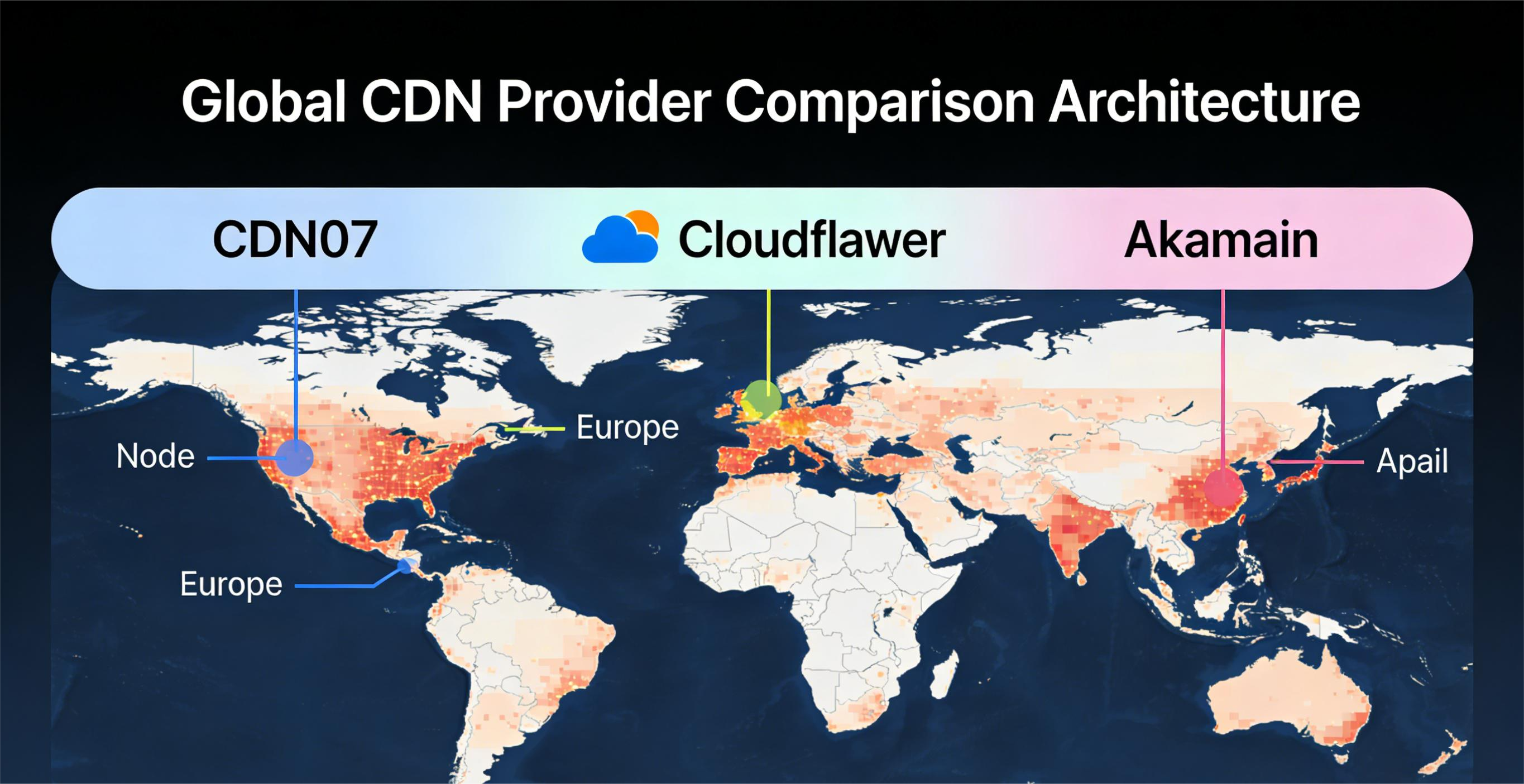
In 2026, the primary competitors to Akamai in the CDN and cloud security sectors are Cloudflare, Fastly, Amazon CloudFront, and specialized security providers like Imperva. While Akamai maintains a lead in raw edge capacity and high-end enterprise security, Cloudflare offers superior integrated developer tools, and Fastly provides specialized, programmable edge logic for high-performance applications.
For over two decades, Akamai has been the gold standard for Content Delivery Networks (CDNs). However, as we move through 2026, the boundary between simple content delivery and sophisticated cloud security has effectively vanished. Organizations no longer look for a "fast" network; they look for a "secure" network that can also deliver content at the edge. Akamai’s competition is no longer just other delivery networks, but a sophisticated ecosystem of edge computing platforms and Web Application and API Protection (WAAP) suites.
The Evolution of the Akamai Ecosystem
Akamai’s dominance was built on its massive, globally distributed footprint of servers. By placing content physically closer to the end-user, Akamai reduced latency and buffered the impact of traffic spikes. As security threats evolved from simple volumetric Distributed Denial of Service (DDoS) attacks to sophisticated API scraping and zero-day exploits, Akamai pivoted to become a security-first company. Their acquisitions, such as Linode for cloud computing and Guardicore for microsegmentation, have created a broad portfolio.
Despite this expansion, several key competitors have emerged, each carving out specific niches or disrupting Akamai’s traditional enterprise strongholds. These competitors generally fall into three categories: modern edge platforms, hyperscale cloud providers, and specialized security vendors.
1. Cloudflare: The Integration Leader
Cloudflare remains Akamai’s most direct and aggressive competitor in 2026. While Akamai began as a CDN and added security, Cloudflare was built from the ground up as a "Connectivity Cloud" that prioritizes ease of use and integrated services.
Technical Architecture and Network Design
Unlike Akamai’s traditional DNS-based mapping, which routes users to specific edge servers, Cloudflare utilizes a Border Gateway Protocol (BGP) Anycast network. This means every data center in Cloudflare’s network can announce the same IP address, allowing the internet’s own routing protocols to direct the user to the nearest available node. This architecture simplifies deployment and enables near-instant configuration changes across the entire global network.
Security and Developer Tools
Cloudflare’s security suite, which includes WAF, DDoS protection, and Bot Management, is frequently cited for its superior user interface compared to Akamai’s historically complex Control Center. Furthermore, Cloudflare Workers—a serverless execution environment—allows developers to run JavaScript, Rust, or C++ at the edge with virtually no "cold start" latency. This has made Cloudflare the preferred choice for modern DevOps teams who require high agility.
Key Competitive Differences
- Onboarding Speed: Cloudflare can be deployed in minutes by changing DNS records, whereas Akamai often requires a more involved professional services engagement.
- Pricing Transparency: Cloudflare has pioneered predictable, flat-rate pricing models for enterprise security, contrasting with Akamai’s more traditional (and often opaque) usage-based billing.
- Zero Trust Adoption: Cloudflare One has gained significant traction as a replacement for traditional VPNs, competing directly with Akamai’s Enterprise Access Protector.
2. Fastly: The Programmability Specialist
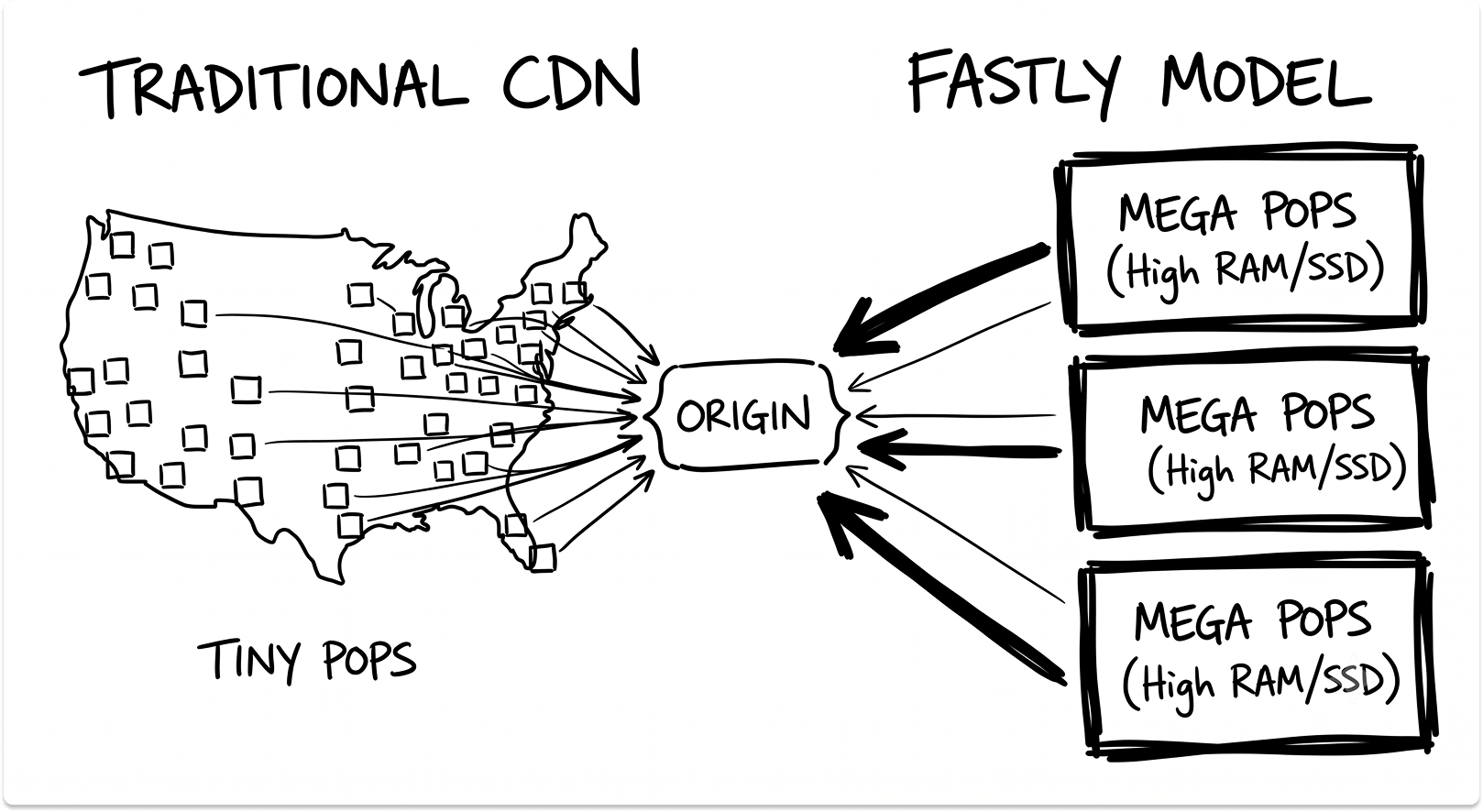
Fastly has positioned itself as the high-performance alternative for organizations that need absolute control over their edge logic. In 2026, Fastly is particularly dominant among media companies, e-commerce giants, and real-time data platforms.
Real-Time Observability and Purging
One of Fastly’s primary advantages is its "Instant Purge" capability. While Akamai has improved its cache invalidation speeds over the years, Fastly can purge content globally in approximately 150 milliseconds. This is critical for dynamic content like sports scores, stock prices, or inventory levels that change every second.
Compute@Edge
Fastly’s Compute@Edge platform provides a highly secure, sandbox-based environment for running code at the edge. By utilizing WebAssembly (Wasm), Fastly allows developers to write complex logic that executes with significantly more memory and CPU resources than standard serverless functions. This makes it a formidable competitor for Akamai’s EdgeWorkers.
Security Focus
While Fastly’s security portfolio was once considered thinner than Akamai’s, their acquisition of Signal Sciences bolstered their WAAP capabilities significantly. Their security approach focuses on "Next-Gen WAF," which utilizes threshold-based blocking rather than traditional signature-based rules, leading to fewer false positives.
3. Hyperscale Competitors: Amazon CloudFront and Azure Front Door
For enterprises already deeply embedded in a specific cloud provider's ecosystem, the native CDN and security tools are the most logical competitors to Akamai.
Amazon CloudFront (AWS)
CloudFront is the natural choice for AWS users. Its primary competitive advantage is its deep integration with AWS Shield (for DDoS protection) and AWS WAF. In 2026, the synergy between CloudFront and other AWS services (like Lambda@Edge and S3) makes it difficult for Akamai to win over "AWS-first" shops. The unified billing and IAM (Identity and Access Management) roles simplify operations for large IT departments.
Microsoft Azure Front Door
Azure Front Door combines CDN capabilities with global load balancing and integrated WAF. For enterprises running on Microsoft 365 and Azure, Front Door provides a "turnkey" solution for accelerating application performance. Its integration with Microsoft Sentinel for security analytics gives it an edge in the corporate enterprise space where Microsoft’s security stack is already prevalent.
4. Specialized Security Vendors: Imperva and Edgio
While the "Big Three" (Akamai, Cloudflare, Fastly) dominate the headlines, specialized players continue to offer competitive alternatives for specific use cases.
- Imperva (Thales): Imperva remains a top choice for organizations that prioritize deep security over broad content delivery. Their Web Application and API Protection (WAAP) is often rated higher for its ability to handle complex application-layer attacks and database security.
- Edgio: Formed from the merger of Limelight Networks and EdgeCast, Edgio focuses heavily on high-bitrate video delivery and large-scale media distribution. They compete with Akamai primarily on price and throughput for streaming services and gaming downloads.
Comparative Feature Analysis: Akamai vs. Top Competitors
The following table compares the 2026 status of Akamai against its primary rivals across key technical and operational metrics.
| Feature | Akamai | Cloudflare | Fastly | AWS CloudFront |
|---|---|---|---|---|
| Primary Strength | Global Scale & Security Depth | Ease of Use & Integrated SASE | Edge Programmability | AWS Ecosystem Integration |
| Network Architecture | DNS-Based Mapping | BGP Anycast | BGP Anycast | Hybrid Anycast/DNS |
| Purge Speed | Seconds to Minutes | Under 5 Seconds | < 200 Milliseconds | Seconds to Minutes |
| Security Suite | Highly Sophisticated (App & API Protector) | Comprehensive (Cloudflare One) | Next-Gen WAF (Signal Sciences) | AWS WAF & Shield |
| Edge Computing | EdgeWorkers (V8 Engine) | Workers (V8 Isolates) | Compute@Edge (Wasm) | Lambda@Edge / Functions |
| Pricing Model | Custom/Enterprise Contract | Transparent/Tiered | Usage-Based | Pay-as-you-go |
| Best For | Global Enterprises & Gov | SMBs to Large Enterprise | Developers & High-Perf Apps | Existing AWS Customers |
Decision Factors: How to Choose an Alternative
Choosing between Akamai and its competitors in 2026 depends on several technical and organizational prerequisites.
Performance vs. Programmability
If your primary goal is to reduce latency for a global user base with relatively static content, Akamai’s sheer volume of edge nodes often wins. However, if your application requires complex logic to run at the edge—such as A/B testing, personalized headers, or image manipulation on the fly—Fastly or Cloudflare are often better suited due to their developer-centric toolsets.
Security Depth vs. Breadth
Akamai’s security suite is incredibly deep, offering granular controls that satisfy the most stringent compliance requirements (e.g., PCI-DSS Level 1, FedRAMP). For a large bank or a government agency, this depth is non-negotiable. Conversely, for a fast-growing SaaS company, Cloudflare’s "broad" security approach—where WAF, Zero Trust, and Email Security are all managed from a single pane of glass—is often more valuable for operational efficiency.
Operational Overhead
One of the most frequent reasons companies move away from Akamai is the "Akamai tax"—not just the financial cost, but the operational cost of managing a complex system. Akamai configurations can be notoriously difficult to version control and test in staging environments. Competitors like Cloudflare and Fastly have prioritized "Infrastructure as Code" (IaC) support, making it easier to manage configurations via Terraform or GitHub actions.
Implementation and Migration Considerations
Migrating away from Akamai or a competitor is a significant undertaking that requires careful planning. In 2026, the industry has moved toward Multi-CDN strategies to avoid vendor lock-in and maximize uptime.
- Traffic Steering: Utilize a global load balancer (like NS1 or Citrix) to distribute traffic between Akamai and a competitor. This allows you to compare performance in real-time.
- Configuration Mapping: Since WAF rules do not translate 1:1 between providers, a manual audit of security policies is required. You cannot simply "export" Akamai rules into Cloudflare.
- Edge Logic Porting: Code written for Akamai EdgeWorkers will need to be refactored for Cloudflare Workers or Fastly’s Compute@Edge due to differences in runtime environments and available APIs.
Common Mistakes in Vendor Selection
A frequent error is choosing a CDN based solely on a "ping test" or raw latency numbers. In the modern landscape, security efficacy and developer productivity are often more impactful on the bottom line than a 10ms difference in Time to First Byte (TTFB).
Another mistake is overlooking the cost of egress. While many CDN providers have joined the "Bandwidth Alliance" to reduce or eliminate data transfer costs between cloud providers and the CDN, these agreements vary. Always calculate the total cost of ownership (TCO), including the costs of moving data from your origin (e.g., Google Cloud) to the CDN edge.
FAQ
Is Cloudflare actually faster than Akamai in 2026?
Speed is subjective and depends on the geographic distribution of your users. While Akamai often has more servers in remote locations, Cloudflare's Anycast architecture often results in faster routing and lower latency for the "middle mile" of the internet.
Can I use multiple CDNs at once?
Yes, many enterprises use a Multi-CDN strategy. This involves using Akamai for high-value security assets and a provider like Fastly or Cloudflare for static content delivery to optimize costs and provide redundancy.
Does Akamai still lead in DDoS protection?
Akamai remains a leader in mitigating massive, multi-terabit DDoS attacks due to its enormous network capacity (over 350 Tbps). However, Cloudflare and AWS have significantly closed the gap, and for 99% of organizations, any of these providers can handle the largest attacks currently seen in the wild.
How does the pricing of Akamai compare to its competitors?
Akamai typically uses a high-touch, contract-based pricing model which can be more expensive for smaller companies. Cloudflare and AWS offer more flexible "pay-as-you-go" models, though costs can scale rapidly with high traffic volumes.
Recommendation for 2026
If you are a large-scale enterprise with a heavy focus on regulatory compliance and need the most extensive global footprint available, Akamai remains the premier choice. However, if your organization prioritizes developer agility, rapid deployment, and a unified security/networking stack, Cloudflare is the most formidable alternative. For those needing extreme performance and programmable edge logic, Fastly should be the primary consideration.
Before making a final decision, conduct a "Proof of Concept" (PoC) focusing not just on delivery speeds, but on the ease of integrating security rules and the visibility provided by the platform’s logging and analytics suites.