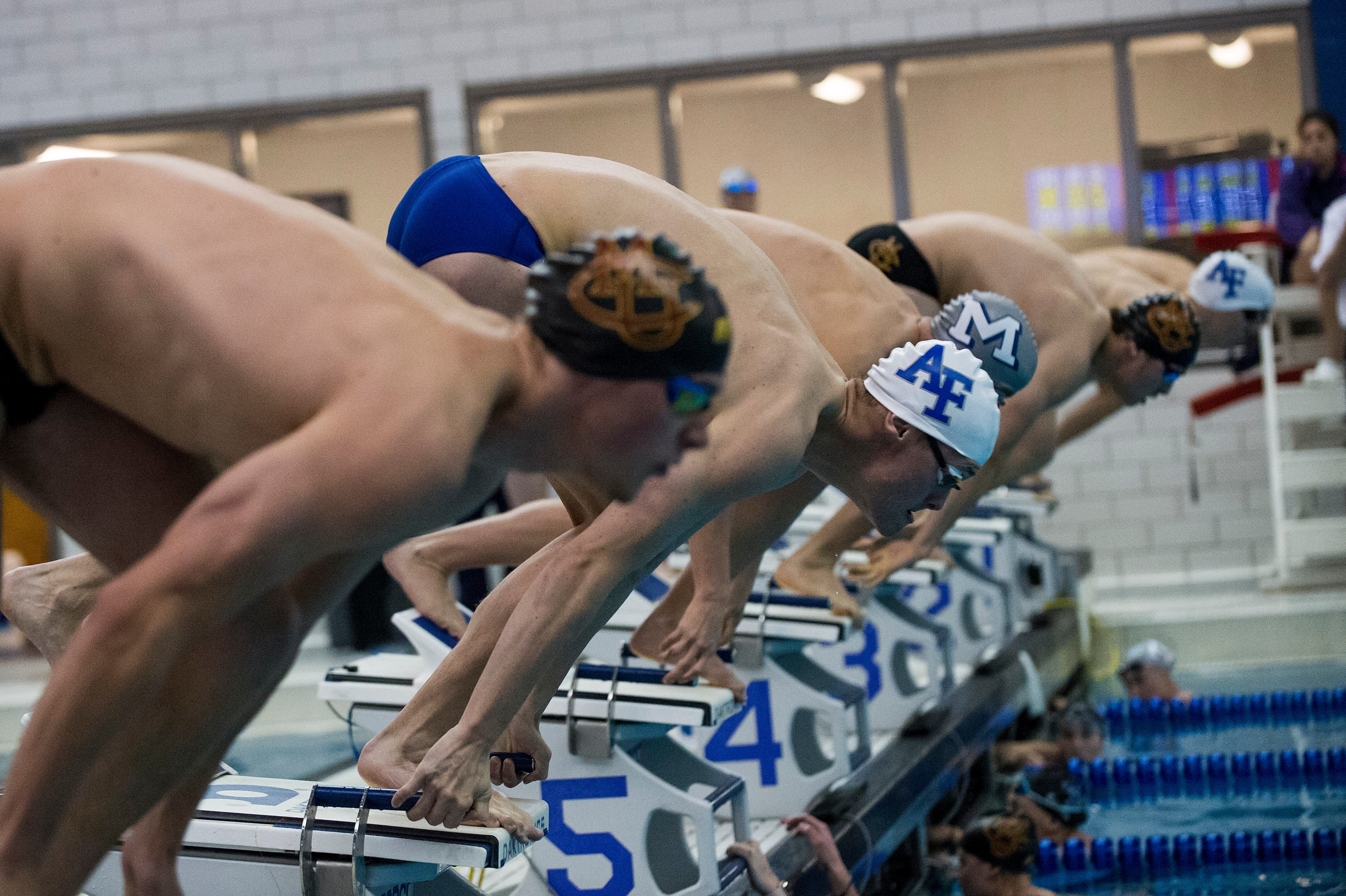
The primary swimming facility at the United States Air Force Academy (USAFA) is the Cadet Natatorium, located within the expansive Cadet Gymnasium complex. This world-class aquatic center serves as the hub for NCAA Division I competitive swimming and diving, mandatory cadet water survival training, and recreational fitness for the Academy community. As of 2026, it remains one of the premier high-altitude aquatic training venues in the United States.
Introduction to the Cadet Natatorium
The swimming facilities at the Air Force Academy are not merely for recreation; they are essential components of military readiness and athletic excellence. Located in Colorado Springs, Colorado, the Academy sits at an elevation of approximately 7,258 feet. This high-altitude environment makes the Cadet Natatorium one of the most challenging and prestigious training locations for swimmers and divers globally.
The facility is primarily designed to support the "Falcon" swimming and diving teams, as well as the rigorous Physical Education (PE) curriculum required for every cadet. While the Academy is a military installation with restricted access, the Natatorium occasionally hosts major regional and national aquatic events, bringing the public into contact with this impressive engineering feat.
Technical Specifications and Facility Layout
The Cadet Natatorium is a massive structure engineered to handle the needs of over 4,000 cadets and multiple intercollegiate teams. The facility is divided into several specialized areas to accommodate different aquatic disciplines simultaneously.
The Competition Pool
The centerpiece of the Natatorium is the Olympic-sized 50-meter pool. It features state-of-the-art movable bulkheads, allowing the staff to reconfigure the water space into two 25-yard courses or one 50-meter course depending on the season and the specific requirements of the NCAA or USA Swimming.
- Lanes: The pool can be configured for 8 to 10 wide lanes for long-course competition or up to 20 lanes for short-course training.
- Depth: The pool maintains a consistent depth suitable for high-speed racing and flip turns, generally ranging from 7 to 14 feet.
- Water Volume: Containing over one million gallons of water, the pool utilizes advanced UV filtration and automated chlorination systems to maintain water clarity and hygiene despite heavy daily usage.
The Diving Well
Separate from the main racing lanes is a dedicated diving well. This area is specifically designed for high-performance springboard and platform diving. It is equipped with:
- Two 1-meter and two 3-meter Duraflex springboards.
- A full concrete diving tower with platforms at 5, 7.5, and 10 meters.
- A "bubbler" or air-sparger system, which releases a cushion of air bubbles into the water to soften the impact for divers practicing new, complex maneuvers.
The Water Survival Pool
Beyond the main competition area, the Cadet Gymnasium houses secondary aquatic spaces used primarily for the "Water Survival" and "Basic Swim" courses. These areas are designed to simulate challenging environments that pilots and aircrews might face in emergency scenarios.
Access and Eligibility Requirements
As a secure military installation, the Air Force Academy swimming pool is not open to the general public for walk-in use. Access is strictly controlled by Department of Defense (DoD) regulations and Academy-specific policies.
Authorized Users
As of 2026, the following groups typically have access to the Cadet Natatorium and surrounding gym facilities:
- Cadets: Priority access for training, classes, and intercollegiate athletics.
- Active Duty Personnel: Military members stationed at USAFA or nearby bases (Peterson SFB, Schriever SFB, Fort Carson).
- Retired Military: Those with a valid DoD retiree ID card.
- DoD Civilians: Employees working on the installation.
- Dependents: Family members of the above groups, though specific "open swim" hours are often restricted.
Visitor Access for Events
The public may access the Natatorium during sanctioned NCAA swim meets or high school championships. Visitors must enter through the North Gate (Exit 156 off I-25) and present a valid government-issued photo ID. All vehicles are subject to search, and guests must proceed directly to the Cadet Area parking lots as directed by security forces.
The Role of Altitude in Performance
One cannot discuss the Air Force Academy swimming pool without addressing the physiological impact of altitude. At 7,258 feet, there is significantly less oxygen available per breath compared to sea-level facilities.
For the Air Force Falcons swim team, this provides a distinct "home-field advantage." Training at this elevation increases red blood cell count and improves the efficiency of oxygen transport in the body. When Academy swimmers travel to sea-level competitions, they often experience a significant boost in endurance. Conversely, visiting teams often struggle with recovery and "gasping" during the first few days of competition at the Academy.
| Feature | Specification / Detail |
|---|---|
| Elevation | 7,258 Feet (High Altitude) |
| Pool Length | 50 Meters (Olympic Standard) |
| Configuration | Movable Bulkheads (50m, 25m, 25y) |
| Diving Heights | 1m, 3m, 5m, 7.5m, 10m |
| Filtration | UV and High-Rate Sand Filtration |
| Primary Use | NCAA Competition, Cadet Water Survival |
| Capacity | Spectator seating for approx. 1,000 |
Cadet Water Survival: The "Drownproofing" Legacy
Every cadet at the Air Force Academy must pass a series of rigorous swimming requirements. This is not just about fitness; it is a critical survival skill for future officers who may find themselves operating over water.
PE 110 and PE 111
The Physical Education department utilizes the pool for mandatory courses. Freshmen (Fourth-Class Cadets) who cannot meet basic swimming benchmarks are placed in remedial swimming. However, the most famous—and feared—course is Water Survival.
In this program, cadets must learn to:
- Swim long distances in full flight suits and boots.
- Tread water for extended periods without using their hands.
- Abandon ship by jumping from the 10-meter diving platform (simulating a jump from a carrier or sinking vessel).
- Utilize their clothing as flotation devices.
These sessions are held in the Natatorium under the watchful eye of expert instructors and lifeguards to ensure safety while pushing cadets to their physical and mental limits.
Intercollegiate Athletics and the Falcons
The Air Force Academy is a member of the Mountain West Conference (women) and the Western Athletic Conference (men) for swimming and diving. The Natatorium has hosted numerous conference championships and serves as a recruiting tool for the Academy.
The facility includes high-speed underwater cameras and motion-capture technology used by coaches to analyze the mechanics of a swimmer’s stroke or a diver’s rotation. This technical depth allows the Falcons to compete at the highest levels of the NCAA, often senting athletes to the Olympic Trials.
Maintenance and Operational Standards
Maintaining a million-gallon facility at a military academy requires meticulous attention to detail. The USAFA Civil Engineering squadron and contracted facility managers oversee the Natatorium’s operations.
Water Quality and Temperature
The competition pool is typically maintained at a "racing temperature" of 78 to 80 degrees Fahrenheit. This is cooler than recreational pools, as it prevents athletes from overheating during intense exertion. The diving well is often kept slightly warmer (82 to 84 degrees) to keep divers' muscles limber while they wait between rounds.
Structural Integrity
In 2026, the facility continues to undergo periodic renovations to update the timing systems, scoreboard electronics (currently utilizing large-scale LED displays for real-time split tracking), and HVAC systems. Proper ventilation is critical in an indoor pool to prevent the buildup of chloramines, which can irritate the lungs of high-performance athletes.
Common Challenges and Troubleshooting
Security Entry Issues
A common problem for visitors or new staff is navigating the security gates. The Academy may transition to "FPCON" (Force Protection Condition) levels that restrict all non-essential access. Before traveling to the pool for a meet, it is vital to check the official USAFA website for current gate status and visitor policies.
Altitude Sickness
Visiting swimmers often experience "Acute Mountain Sickness" (AMS). Symptoms include headache, nausea, and fatigue. The Academy medical staff recommends increased hydration and arrive 2-3 days early for acclimatization when possible.
Scheduling Conflicts
Because the pool serves three distinct masters—Athletics, Academics (PE), and Military Training—scheduling is incredibly tight. Recreational swimmers should always consult the "Cadet Gymnasium Master Schedule" to avoid showing up during a closed military training block.
Frequently Asked Questions
Can the public buy a membership to the Air Force Academy pool?
No. Unlike a local YMCA or municipal center, the USAFA swimming pool does not sell public memberships. Access is a privilege reserved for the military community and authorized DoD personnel. Public access is limited to spectating at organized events.
How deep is the diving well at the Air Force Academy?
The diving well is approximately 14 to 16 feet deep. This depth is required to safely accommodate divers jumping from the 10-meter platform, ensuring they do not make contact with the bottom after a high-velocity entry.
Is the Air Force Academy pool indoor or outdoor?
The Cadet Natatorium is an entirely indoor facility. Given the harsh winters and unpredictable weather in Colorado Springs, an indoor facility is necessary to ensure year-round training capability for the cadets.
What are the "Jump" requirements for cadets?
As part of their Water Survival training, cadets must jump from the 10-meter (33-foot) platform. This is designed to build confidence and simulate an emergency egress from an aircraft or ship. While daunting, it is a supervised and mandatory part of the curriculum.
Are there swimming lessons for children at the Academy?
The Academy's 10th Force Support Squadron (FSS) occasionally offers youth swim lessons or "Falcon Swim Club" programs for the children of active-duty members and staff. These are generally not open to the civilian public outside the military community.
Conclusion and Next Actions
The Air Force Academy swimming pool is more than a place for laps; it is a crucible where future leaders are tested and where elite athletes hone their craft against the resistance of thin air. For those authorized to use the facility, it offers some of the best aquatic conditions in the Rocky Mountain region.
If you are a visitor planning to attend a swim meet at the Natatorium, your next action should be to verify the current installation access requirements. Ensure you have a valid ID and allow at least 30 minutes for gate security processing. For cadets and staff, staying updated on the gym's digital schedule remains the best way to maximize training time in this premier facility.