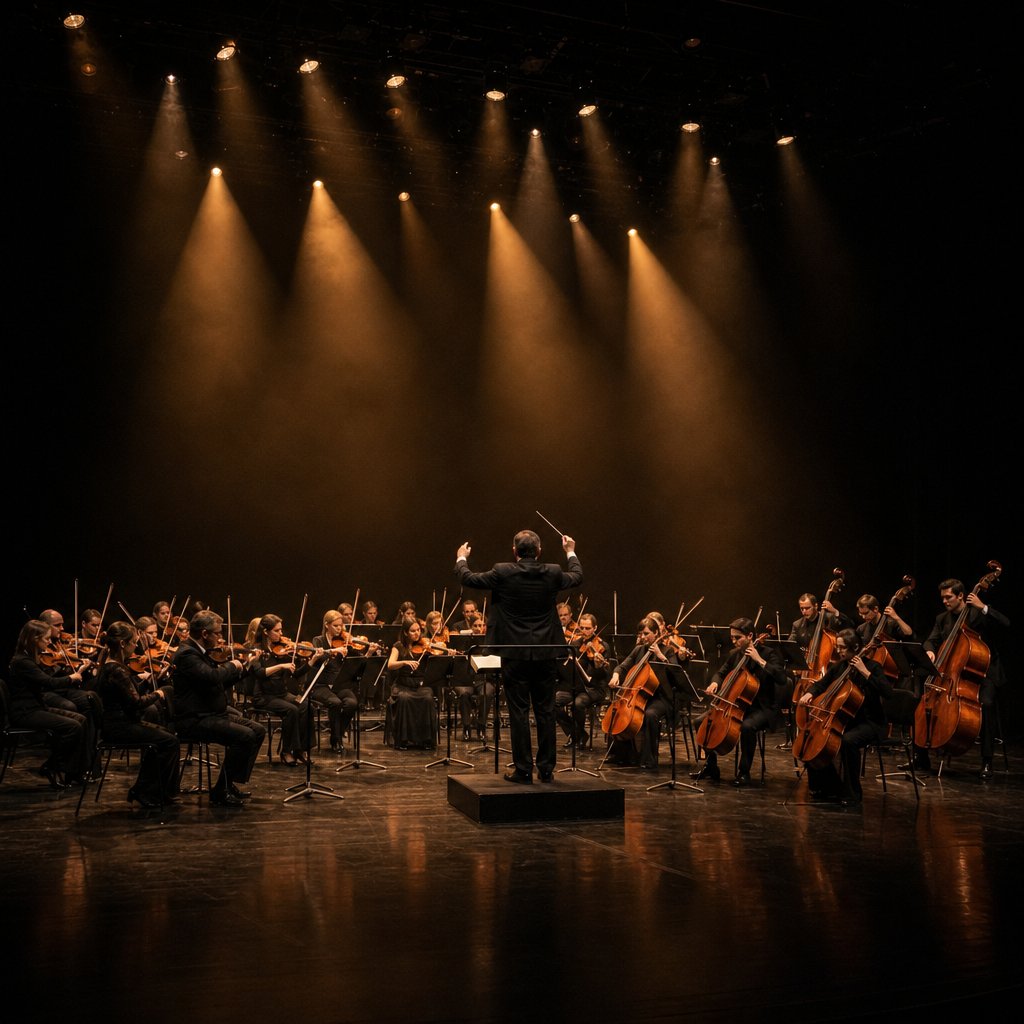
In music, adagio is an Italian tempo marking that translates to "at ease" or "leisurely." It directs performers to play at a slow, stately speed, typically falling between 66 and 76 beats per minute (BPM). Beyond mere pulse speed, adagio implies a serene, expressive, and lyrical character that emphasizes sustained tone and fluid phrasing.
What Is Adagio? Etymology and Core Definition
The word adagio stems from the Italian phrase ad agio, which literally means "at ease," "with leisure," or "comfortably." When printed at the start of a musical score or movement, it serves two distinct purposes: it establishes the speed of the underlying pulse and sets the artistic mood of the piece.
In Western classical music notation, tempo markings derived from Italian became standard during the 17th century. Unlike purely mechanical indicators, these terms were designed to communicate human emotion and physical sensation. Adagio does not simply mean "slow"; it demands a comfortable, unhurried flow. It requires the performer to give notes room to breathe without allowing the musical phrase to collapse under its own weight.
Tempo Spectrum (Slowest to Moderate):
- Grave (20-40 BPM)
- Largo (40-60 BPM)
- Lento (45-60 BPM)
- ADAGIO (66-76 BPM)
- Andante (76-108 BPM)
- Moderato (108-120 BPM)
In the structure of multi-movement compositions—such as classical symphonies, string quartets, and sonatas—the adagio tempo frequently marks the second movement. Positioned between energetic opening and closing movements, an adagio movement offers an emotional centerpiece where composers explore intricate harmonies, rich textures, and deep expression.
Adagio BPM Range and Tempo Hierarchy
While modern digital metronomes provide exact numerical values, traditional tempo markings exist on a flexible spectrum. Historically, composers used adagio to convey an overall feeling rather than a rigid beat rate. However, modern music theory standardizes adagio at approximately 66 to 76 beats per minute (BPM).
To understand adagio fully, musicians must evaluate where it sits in relation to other slow and moderate Italian tempo markings.
Comparing Slow Tempo Markings
| Tempo Term | Italian Translation | Approximate BPM Range | Musical Character & Expression |
|---|---|---|---|
| Grave | Solemn, heavy | 20–40 BPM | Extremely slow, serious, solemn, and dark |
| Largo | Broad, spacious | 40–60 BPM | Slow and dignified with a broad, expansive feel |
| Lento | Slow | 45–60 BPM | Generally slow, quiet, and reflective |
| Adagio | At ease, leisurely | 66–76 BPM | Slow, lyrical, fluid, and expressive without drag |
| Andante | Walking pace | 76–108 BPM | Moderately slow, flowing, and steadily moving |
| Moderato | Moderately | 108–120 BPM | Moderate, balanced speed; neither fast nor slow |
Adagio vs. Largo
A common point of confusion for students is the distinction between adagio and largo. While both indicate slow movement, largo is slower and broader than adagio. Largo (meaning "broad" or "wide") demands a grand, weightier pulse, typically ranging between 40 and 60 BPM. Adagio, by contrast, moves slightly faster (66–76 BPM) and prioritizes lyrical ease over monumental weight.
Adagio vs. Andante
Andante means "at a walking pace" (76–108 BPM). While an adagio feels relaxed and contemplative, an andante maintains active forward momentum. If an adagio feels like taking a quiet rest or breathing deeply, an andante feels like taking a steady, deliberate stroll down a path.
Common Variations and Modifiers of Adagio
Composers frequently combine adagio with Italian adverbs and adjectives to refine both the speed and the expressive touch required for a passage.
ADAGIO VARIATIONS:
Adagietto (Slightly faster / lighter than Adagio)
Adagio sostenuto (Sustained, held out notes)
Adagio cantabile (Slow, in a singing style)
Adagio molto / Molto adagio (Very slow and expressive)
Adagio assai (Very slow, with great emphasis)
Adagietto: A diminutive form of adagio. It indicates a tempo that is slightly faster or lighter than a full adagio (often around 70–80 BPM). It can also refer to a brief slow movement.
Adagio sostenuto: Indicates that the slow tempo should be played with sustained, held-out notes. Performers must focus on uninterrupted tone production, seamless legato, and careful bow or breath distribution.
Adagio cantabile: Combines a slow tempo with a lyrical, "singing" style. The primary melody must stand out clearly above the accompaniment, mimicking the expressive flexibility of the human voice.
Adagio molto (or Molto adagio): Translates to "very slow." This pushes the tempo down toward the lower boundary of the adagio spectrum (around 60–66 BPM), demanding deep emotional commitment.
Adagio assai: Means "very adagio" or "slow enough." It signals to the performer that the slow pace should be observed strictly and given full weight.
Adagio non troppo: Means "slow, but not too much." This warning instructs the player not to let the pulse drag or stagnate.
Historical Context and Stylistic Evolution
The interpretation of adagio has evolved across different periods of music history. Factors such as instrument technology, acoustics, and regional traditions have shaped how fast or slow an adagio passage is performed.
- Baroque Era (Fluid, ornamental, flexible pulse)
- Classical Era (Structured, clear, lyrical centerpiece)
- Romantic Era (Expansive, rubato, intense emotion)
- 20th Century / Modern (Atmospheric, sustained, cinematic scoring)
The Baroque Period (c. 1600–1750)
In the Baroque music of Johann Sebastian Bach, Antonio Vivaldi, and George Frideric Handel, tempo markings were less about exact mechanical speed and more about mood (Affekt). An adagio in a Baroque sonata or concerto was often written in simple block chords or skeletal melodies. Composers expected performers to improvise elaborate ornamentation—such as trills, mordents, and turns—over the slow pulse. The tempo had to remain flexible enough to accommodate these decorative florid passages.
The Classical Period (c. 1750–1820)
During the Classical era, composers like Wolfgang Amadeus Mozart, Joseph Haydn, and early Ludwig van Beethoven formalized the structure of symphonies and chamber works. The adagio movement became a carefully balanced, highly structured space for lyrical expression. Clarity of line, symmetrical phrasing, and transparent textures were paramount. Metronomes were invented by Johann Maelzel near the end of this period (c. 1815), allowing composers like Beethoven to begin leaving precise numerical BPM markings on their scores.
The Romantic Period (c. 1820–1900)
In the Romantic era, emotional intensity expanded, and orchestra sizes grew dramatically. Composers like Johannes Brahms, Pyotr Ilyich Tchaikovsky, and Gustav Mahler pushed adagio movements to monumental lengths. The tempo became subject to rubato—the subtle accelerating and decelerating of tempo for expressive effect. An adagio in Romantic literature demanded rich string vibrato, massive dynamic ranges, and powerful harmonic tension.
20th Century to Present Day
Modern classical composers and modern film scorers use adagio to create cinematic atmosphere, stillness, or profound sorrow. Modern notation relies on exact metronome markings alongside descriptive English or Italian text. Modern recording technology has also highlighted how acoustic spaces influence tempo selection: a wet, resonant concert hall may require a slightly slower adagio to allow complex harmonies to clarify, while a dry studio environment permits a slightly more active tempo.
Famous Examples of Adagio in Classical Music
Several pieces in the classical canon are defined by their iconic adagio movements or exist as standalone slow masterworks.
| Composer & Piece | Musical Highlight |
|---|---|
| Samuel Barber: Adagio for Strings | Peak emotional tension & release |
| Beethoven: "Moonlight" Sonata | Adagio sostenuto; triplet arpeggios |
| Mozart: Clarinet Concerto (K.622) | Lyrical, singing solo woodwind |
| Mahler: Symphony No. 5 | Adagietto for strings and harp |
| Albinoni / Giazotto: Adagio in G | Melancholic organ & string line |
1. Samuel Barber – Adagio for Strings (Op. 11)
Originally composed as the second movement of his String Quartet No. 1 in 1936, Barber arranged this work for full string orchestra at the request of conductor Arturo Toscanini. The piece builds from a quiet, step-wise melody into a towering emotional climax before fading into silence. It has become one of the most recognized slow classical works in history, frequently performed at solemn state occasions and featured in major cinematic films.
2. Ludwig van Beethoven – Piano Sonata No. 14 (Moonlight Sonata), Op. 27 No. 2
The famous opening movement of this sonata is marked Adagio sostenuto. Beethoven explicitly instructs the pianist to play the entire movement with delicate pedal control, creating an atmospheric carpet of triplet arpeggios underneath a slow, haunting melody. The steady adagio tempo requires strict rhythmic control to prevent the rolling triplets from rushing.
3. Wolfgang Amadeus Mozart – Clarinet Concerto in A major, K. 622 (2nd Movement)
Mozart’s second movement, marked Adagio, showcases the singing quality (cantabile) of the solo clarinet. The tempo allows the soloist to sustain long, vocal lines over a light orchestral backdrop, emphasizing warm tone quality, precise breath management, and elegant ornamentation.
4. Gustav Mahler – Symphony No. 5 (4th Movement: Adagietto)
Scored strictly for solo harp and string section, this movement is marked Adagietto. Mahler composed it as a musical love letter to his wife, Alma. Though slightly faster than a standard adagio, its spacious tempo and expansive phrasing require deep string tone and expressive flexibility.
5. Tomaso Albinoni / Remo Giazotto – Adagio in G minor
Published by musicologist Remo Giazotto in 1958 (based on a fragment attributed to Baroque composer Tomaso Albinoni), this work features a walking bassline underneath a expressive organ and string melody. It serves as a classic textbook example of how a steady adagio tempo builds rich harmonic weight.
Adagio Beyond Concert Music: Ballet and Dance
Outside the realm of orchestral scores, the term adagio holds a specific, essential meaning in classical ballet practice and performance.
BALLET CLASS STRUCTURE:
- Warm-up / Barre
- Center Tendus
- ADAGIO
- Slow, sustained balance, partner lifts, and extensions
- Allegro / Jumps
In classical ballet, adagio refers to a series of slow, sustained movements performed during center work or within a classical duet (pas de deux).
- Classwork Adagio: Dancers execute slow movements such as développés, grand pliés, attitude, and arabesque positions. The focus is on balance, core control, alignment, extension, and smooth transitions between lines without visible strain.
- Pas de Deux Adagio: In a full ballet production (such as Swan Lake or The Nutcracker), the adagio is the slow section of the grand pas de deux. Here, the male dancer supports the ballerina as she performs slow turns, balances, and high lifts. The tempo must accommodate the physical mechanics of partner lifts and sustained balances.
Practical Performance Guide: Playing and Conducting an Adagio
Performing an adagio passage successfully is often more difficult than playing fast passages (allegro). At slow speeds, every flaw in intonation, tone, rhythm, and breath support becomes immediately noticeable to the listener.
| Wind & Brass | String Instruments | Keyboard & Piano |
|---|---|---|
| High air velocity & steady diaphragm pressure for support | Slow bow speed with constant contact point for richness | Arm-weight transfer & precise pedaling to avoid muddy tone |
1. Tone Support and Air Flow (Wind/Brass & Vocalists)
Playing slowly requires significantly more physical endurance and air control than playing quickly.
- Maintain core support: Do not decrease air speed just because the musical pulse is slow. Keep a steady column of pressurized air to maintain pitch stability and prevent sagging at the ends of long phrases.
- Plan breath points: Map out breathing spots carefully so phrases remain unbroken. Staggered breathing within sections helps maintain an uninterrupted wall of sound.
2. Bow Management (String Players)
String players face the challenge of drawing a slow, smooth bow across the string without creating sound cracks or volume drop-outs.
- Bow speed vs. bow weight: At slow tempos, reduce bow speed while maintaining proportional bow weight to keep the sound spinning.
- Contact point control: Move the contact point slightly closer to the bridge (sul ponticello) when sustaining long, louder adagio notes, or closer to the fingerboard (sulla tastiera) for softer, atmospheric passages.
3. Voicing and Weight Transfer (Pianists)
Pianos are percussive instruments; notes begin decaying the moment a key is struck. Sustaining a singing melody at an adagio tempo requires careful acoustic management.
- Arm weight over finger striking: Use the weight of the arm rather than sharp finger strikes to produce a deep, warm tone that decays slowly.
- Pedal control: Change the damper pedal precisely with harmonic shifts to prevent muddy resonances, while using half-pedaling techniques to sustain harmony smoothly.
4. Conducting an Adagio
For conductors, maintaining control over an adagio ensemble requires spatial clarity without dragging the beat.
- Subdivision: When tempos drop below 60 BPM, conduct using subdivision (e.g., splitting a 4/4 bar into an 8-beat pattern) to give the ensemble clear intermediate reference points.
- Legato gestures: Use smooth, fluid arm gestures with minimal sharp rebounds to signal smooth bow changes and sustained breath support to the musicians.
Frequently Asked Questions About Adagio Tempo
Is adagio faster or slower than andante?
Adagio is slower than andante. An adagio typically ranges between 66 and 76 BPM, representing an "at ease" or leisurely pace. An andante ranges between 76 and 108 BPM, representing a slightly faster, steadily moving "walking pace."
How fast is adagio in BPM?
On modern metronomes, adagio is generally marked between 66 and 76 beats per minute (BPM). However, depending on the musical era, score context, and individual conductor interpretations, adagio speeds can range from 55 to 76 BPM.
What is the difference between adagio and largo?
Largo is slower and broader than adagio. Largo translates to "broad" or "dignified" and falls between 40 and 60 BPM. Adagio moves slightly faster (66–76 BPM) and focuses on fluid, lyrical phrasing rather than expansive, heavy solemnity.
What does adagio mean in ballet?
In ballet, adagio refers to a series of slow, fluid movements executed to slow music. It focuses on developing balance, flexibility, strength, alignment, and controlled extensions during center practice or partnered duets (pas de deux).
What is the difference between adagio and adagietto?
Adagietto is a variation of adagio. It indicates a tempo that is slightly faster or lighter than a standard adagio (often around 70–80 BPM). It can also refer to a shorter slow piece or movement within a larger composition, such as the Adagietto from Gustav Mahler’s Symphony No. 5.
Summary and Next Steps for Musicians
Mastering the adagio tempo requires balancing mechanical precision with emotional expression. It is not merely a slow count on a metronome, but a comfortable, unhurried pace that allows melodies to sing and harmonies to resonate fully.
When preparing an adagio piece, keep these action steps in mind:
- Practice with a subdivided metronome: If practicing a slow 4/4 passage at 60 BPM, set your metronome to 120 BPM in eighth notes to ensure your subdivision is rock-solid and prevents dragging.
- Record your phrasing: Listen back to recordings of your practice sessions to check for pitch stability, smooth bow or breath transitions, and steady dynamic arches.
- Analyze the modifier: Check the score for modifiers like sostenuto, cantabile, or assai to adjust your touch, tone density, and expressive approach accordingly.