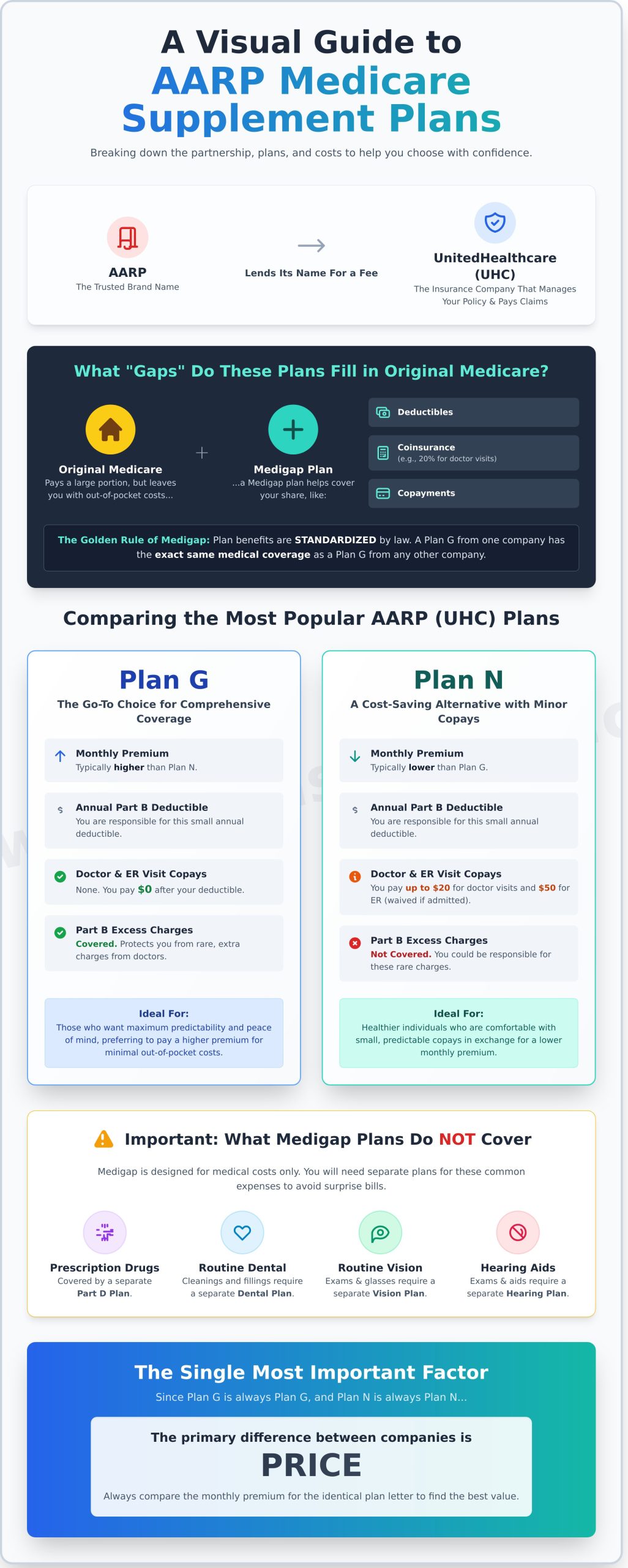
When individuals refer to an "AARP Part B supplement," they are generally describing a Medicare Supplement Insurance (Medigap) policy offered through AARP and managed by UnitedHealthcare. While Medicare Part B covers specific medical services like doctor visits and outpatient care, it does not pay for all out-of-pocket costs; a Medicare Supplement policy is designed to fill these coverage gaps, such as deductibles, coinsurance, and copayments.
Defining the Relationship Between Medicare and Supplement Policies
To understand how an AARP-branded supplement functions, one must first distinguish between Original Medicare and private insurance. Original Medicare consists of Part A (hospital insurance) and Part B (medical insurance). While Part B is essential for covering outpatient services, preventive care, and durable medical equipment, it typically requires the beneficiary to pay 20% of the Medicare-approved amount after the annual deductible is met. There is no annual out-of-pocket maximum in Original Medicare, meaning that without supplemental coverage, costs for major procedures or chronic treatments could theoretically become a significant financial burden.
A Medicare Supplement policy—often referred to as Medigap—is a private insurance plan standardized by the federal government. Insurance carriers, such as UnitedHealthcare, offer these plans under the AARP name. It is important to note that AARP itself is a membership organization and not an insurance company; the policies are underwritten by UnitedHealthcare Insurance Company or its affiliates. These plans exist to pay for the "gaps" in Original Medicare, essentially acting as a secondary payer that handles the portions of the bill that Part B leaves to the patient.
Standardized Medigap Plans Explained
The federal government mandates that Medicare Supplement plans be standardized, meaning that a Plan G offered by one carrier must provide the same basic benefits as a Plan G offered by another carrier within the same state. Because the benefits are standardized, the primary differentiator between policies is the premium cost, the financial stability of the insurer, and the quality of customer service.
As of 2026, there are several standardized plans available, typically labeled with letters ranging from A to N. Each letter denotes a different level of coverage:
- Plan A: Offers the most basic level of coverage, including coinsurance for Part A and Part B.
- Plan G: Currently one of the most popular options, this plan covers all Medicare-approved out-of-pocket costs except for the Medicare Part B deductible.
- Plan N: Requires some copayments for office visits and emergency room visits but generally has lower monthly premiums than Plan G.
When you purchase an AARP-endorsed supplement, you are selecting one of these standardized letter plans. The "AARP" branding signifies that the policy meets the criteria set by AARP for their members, but the underlying coverage remains consistent with federal standards for Medigap insurance.
Eligibility Requirements and Enrollment Windows
Eligibility for an AARP-branded Medicare Supplement policy requires two main criteria: you must be enrolled in both Medicare Part A and Medicare Part B, and you must generally be age 65 or older. While some states have specific laws that allow individuals under 65 with disabilities to purchase Medigap policies, federal rules prioritize the open enrollment window for those turning 65.
The most critical time to enroll is during your Medicare Supplement Open Enrollment Period. This period lasts for six months and begins on the first day of the month in which you are both 65 years of age or older and enrolled in Medicare Part B. During this specific window, you have a federal right to purchase any Medigap policy offered in your state without undergoing medical underwriting. This means the insurance company cannot deny you coverage or charge you higher premiums due to pre-existing health conditions.
If you miss this window, you may still apply for a supplement at any time, but you will likely be subject to medical underwriting. In most states, the insurance carrier can look at your health history and potentially deny your application or charge you significantly more based on your health status. Therefore, timing is the most important factor in securing a supplement policy at a stable rate.
Comparing Medicare Supplement Policies
When evaluating an AARP-endorsed policy against other providers, consider the following metrics to ensure you are making an informed decision:
| Feature | Medicare Supplement (Medigap) | Medicare Advantage (Part C) |
|---|---|---|
| Network | Use any doctor that accepts Medicare | Usually limited to plan networks |
| Referrals | Generally not required | Often required for specialists |
| Premium | Separate monthly premium | Often $0 or low monthly premium |
| Coverage | Fills gaps in Original Medicare | Bundles Part A, B, and usually D |
| Predictability | High, standardized across plans | Variable, determined by plan rules |
It is common for applicants to confuse Medigap with Medicare Advantage. While both relate to Medicare, they function in fundamentally different ways. A Medicare Supplement policy works alongside Original Medicare, allowing you to choose any provider in the country who accepts Medicare patients. Medicare Advantage plans, by contrast, replace Original Medicare and operate through managed care networks. You cannot have both a Medigap policy and a Medicare Advantage plan at the same time.
Financial Considerations and Premium Increases
When researching AARP-branded supplements, understand how premiums are calculated. Insurance companies generally use one of three rating methods:
- Community-Rated: Everyone in the same geographic area pays the same premium, regardless of age or health.
- Issue-Age-Rated: The premium is based on your age at the time you first buy the policy; it does not increase as you get older, though it may rise due to inflation or other factors.
- Attained-Age-Rated: The premium is based on your current age, meaning it will increase automatically as you get older.
AARP-endorsed plans managed by UnitedHealthcare typically use one of these structures depending on the state of residence. You should request an outline of coverage from the insurer to see how your specific policy handles future price increases. While AARP members may receive certain discounts or benefits, the primary factor in your ongoing costs will be the rating method employed by the insurance carrier.
Practical Steps to Securing Coverage
If you are preparing to enroll in a supplement, follow this sequence to ensure you navigate the process effectively:
- Verify Part B Status: Ensure your Medicare Part B effective date is confirmed via your Medicare card or the Social Security Administration.
- Review State Availability: Medigap plans vary by state. Use the official Medicare.gov plan finder tool to see which plans are available in your zip code.
- Check Medical Underwriting Status: If you are outside your initial Open Enrollment Period, prepare to answer health-related questions. Consult with a licensed agent if you have concerns about qualifying.
- Compare Plan Benefits: Decide which letter plan (e.g., Plan G vs. Plan N) best aligns with your budget and anticipated healthcare utilization.
- Submit Application: You can apply through the UnitedHealthcare/AARP website or by speaking with a licensed representative. Keep documentation of your application date for your records.
Frequently Asked Questions
Does an AARP supplement cover prescription drugs?
No. Standardized Medicare Supplement policies do not include prescription drug coverage. To obtain drug coverage, you must enroll in a standalone Medicare Part D prescription drug plan.
Can I change my Medigap plan later?
Yes, you can apply to switch your Medigap plan at any time. However, unless you qualify for a "guaranteed issue" right (such as moving out of a service area or losing other coverage), you will likely be subject to medical underwriting.
Do I need to be an AARP member to buy the plan?
Yes. To purchase an insurance policy endorsed by AARP, you are generally required to maintain an active membership with AARP. Check the specific enrollment requirements at the time of your application.
Will my premium increase every year?
It depends on the rating method used by the insurer in your state. Even with community-rated plans, insurance companies may increase premiums periodically to keep pace with rising medical costs, subject to state regulatory approval.
Does the plan cover me if I travel?
Most Medigap plans, including those offered through AARP/UnitedHealthcare, provide coverage for emergency medical care during travel outside the United States, subject to specific limits and deductibles defined by the plan.
Next Steps for Beneficiaries
Before moving forward, audit your current healthcare usage and anticipated needs. If you prioritize the flexibility of choosing your own doctors and want to avoid the administrative complexity of managed care networks, a Medicare Supplement policy is a standard choice. Visit the official Medicare website to generate a comparison report for the plans available in your specific location, and contact the insurance carrier directly to obtain a formal quote based on your age and residency. Securing your coverage during your initial open enrollment window remains the single most effective way to guarantee access to the benefits you need at the best available rate.