At nine months, infants undergo rapid cognitive and physical shifts, transitioning from sitting to crawling and refining the pincer grasp. Selecting toys that emphasize hand-eye coordination, spatial awareness, and gross motor development is essential for supporting these milestones while ensuring a safe, engaging environment for early childhood exploration and play.
The Developmental Landscape of a Nine-Month-Old
By the time a child reaches nine months, their world is expanding beyond the immediate reach of their arms. This is a pivotal age where several developmental milestones converge. According to the Centers for Disease Control and Prevention (CDC), most babies at this age can sit without support, move things from one hand to the other, and use their fingers to "rake" food or small objects toward them.
The year 2026 has seen a continued focus on "back-to-basics" play, where parents prioritize open-ended toys over passive screen-based entertainment. Neurologically, the nine-month-old brain is busy forming connections related to object permanence—the understanding that things continue to exist even when they cannot be seen. They are also beginning to understand cause and effect, noticing that their actions (like dropping a spoon) result in a specific reaction (a loud noise and a parent picking it up).
Physical development is equally intense. Many infants are "cruising"—shuffling along furniture—or preparing for their first independent steps. Consequently, the ideal toys for this stage are those that encourage movement, challenge fine motor skills, and provide tactile or auditory feedback to reinforce learning.
Criteria for Selecting Developmental Toys in 2026
When evaluating toys for a nine-month-old, safety and durability remain the primary concerns. However, in 2026, there is an increased emphasis on sustainable materials, such as FSC-certified wood and food-grade silicone, which are safer for infants who are still in the oral exploration phase.
Safety and Material Standards
At nine months, mouthing objects is a primary way of learning. Ensure all toys are free from bisphenol A (BPA), phthalates, and lead. Check for the "small parts" warning; any toy or component that can fit through a standard toilet paper roll is a potential choking hazard. Furthermore, check for battery compartments that are secured with screws to prevent access to button batteries, which are extremely dangerous if swallowed.
Engagement vs. Overstimulation
The best developmental toys are 90% child and 10% toy. This means the child does the work while the toy provides the medium. Toys with excessive lights, loud electronic voices, and automated movements can often lead to overstimulation or passive observation rather than active engagement. Look for items that require the child to push, pull, sort, or stack to achieve a result.
9 Must-Try Developmental Toys for Your 9-Month-Old
1. Activity Walkers and Push Toys
As infants begin to pull themselves up to a standing position, a sturdy push walker provides the necessary support for building leg strength and balance. Unlike traditional seated walkers (which the American Academy of Pediatrics advises against due to safety risks), push walkers allow the child to control their pace and develop the core stability required for independent walking.
Developmental Focus: Gross motor skills, balance, and coordination. How to Play: Place the walker a few feet away from your child while they are supported by a sofa. Encourage them to reach for the handle. As they grow more confident, they will begin to take intentional steps, learning how to navigate around obstacles.
2. Geometric Shape Sorters
The shape sorter is a classic for a reason. At nine months, a child might not yet have the precision to fit a star into a star-shaped hole, but they are beginning to understand the concept of "in and out." This toy introduces early mathematical concepts of geometry and spatial relationships.
Developmental Focus: Fine motor skills, problem-solving, and spatial reasoning. How to Play: Start by letting the child take the lid off and simply put the blocks in the bucket. As their dexterity improves, guide their hand to show how specific shapes align with specific holes. This builds the foundational cognitive maps used later for more complex logic.
3. Nesting Cups and Stacking Rings
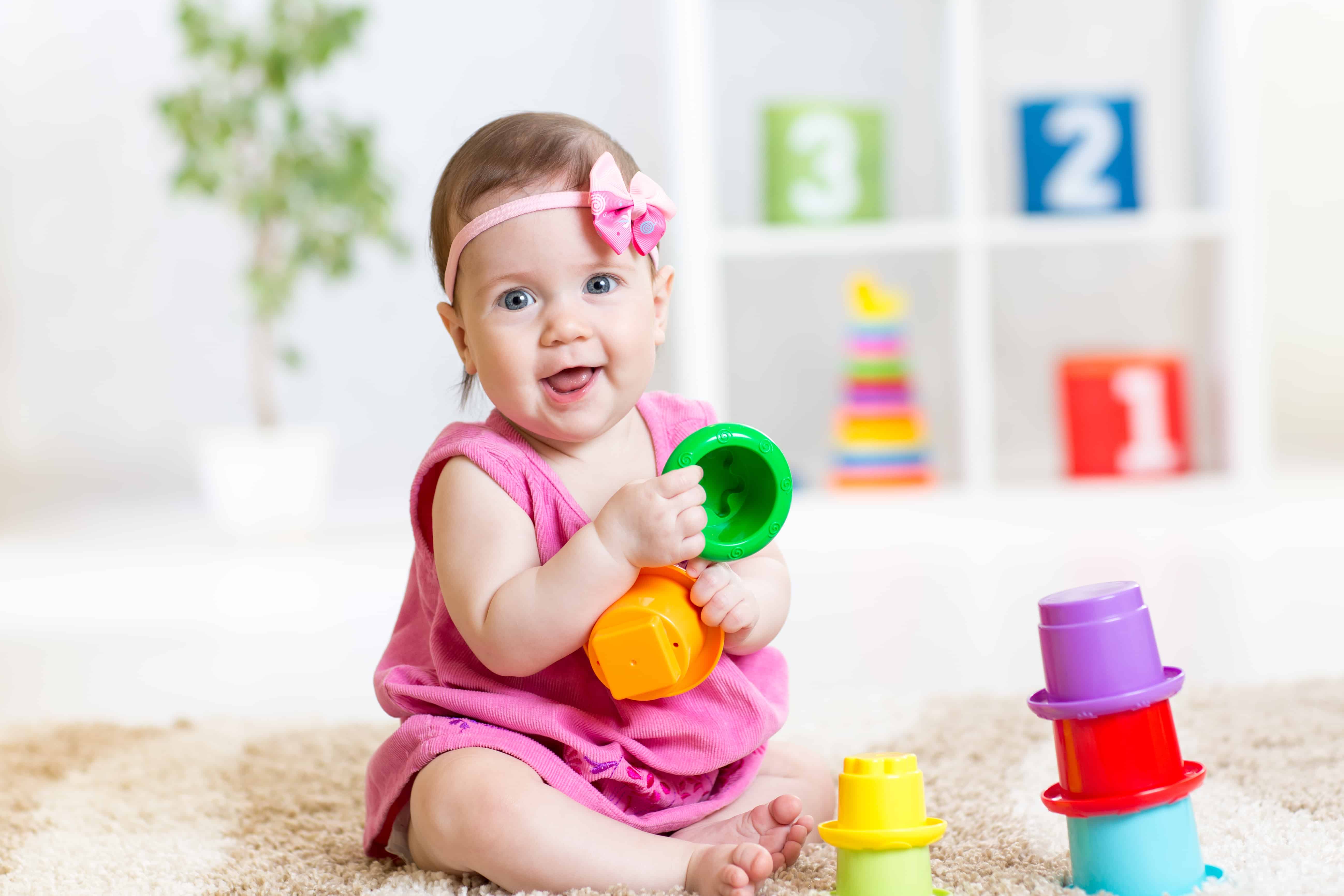
Nesting cups offer a multi-functional play experience. They can be stacked into a tower, nested inside one another, or used in water play. For a nine-month-old, the primary joy often comes from knocking down a tower that a caregiver has built, which is a significant lesson in cause and effect.
Developmental Focus: Size discrimination, sequencing, and hand-eye coordination. How to Play: Use words like "big," "small," "on top," and "underneath" while playing. This builds their receptive language—their ability to understand words before they can speak them. In the bath, these cups demonstrate how volume works as water flows from one to another.
4. Soft Play Crawl Tunnels
Since nine months is the peak "crawling" age for many infants, a collapsible fabric tunnel encourages physical exploration. Navigating a tunnel requires the child to plan their movements and provides a sense of enclosure that can be both exciting and comforting.
Developmental Focus: Gross motor skills, spatial awareness, and confidence. How to Play: Place a favorite toy at one end of the tunnel and encourage your child to crawl through to retrieve it. Peek-a-boo through the fabric walls can also help ease any anxiety about being in a semi-enclosed space.
5. Sensory Busy Boards
Busy boards (or "activity centers") feature various latches, buttons, gears, and textures. For a child refining their pincer grasp (using the thumb and forefinger), these boards offer the perfect "gym" for finger muscles.
Developmental Focus: Fine motor precision, tactile exploration, and sensory processing. How to Play: Show your child how to flick a switch or turn a gear. The resistance provided by these mechanical parts helps them calibrate the strength of their grip and the movement of their wrists.
6. Musical Instrument Sets
Instruments like maracas, drums, and xylophones allow infants to explore auditory stimulation. By nine months, babies are often "rhythmically inclined," bouncing or waving their arms to music. Providing them with tools to create their own sounds empowers them to explore the world of acoustics.
Developmental Focus: Auditory discrimination, rhythm, and bilateral coordination. How to Play: Play a song with a steady beat and model how to shake a maraca or tap a drum in time. This is not just about music; it’s about the brain’s ability to synchronize motor movements with external stimuli.
7. Textured Sensory Balls
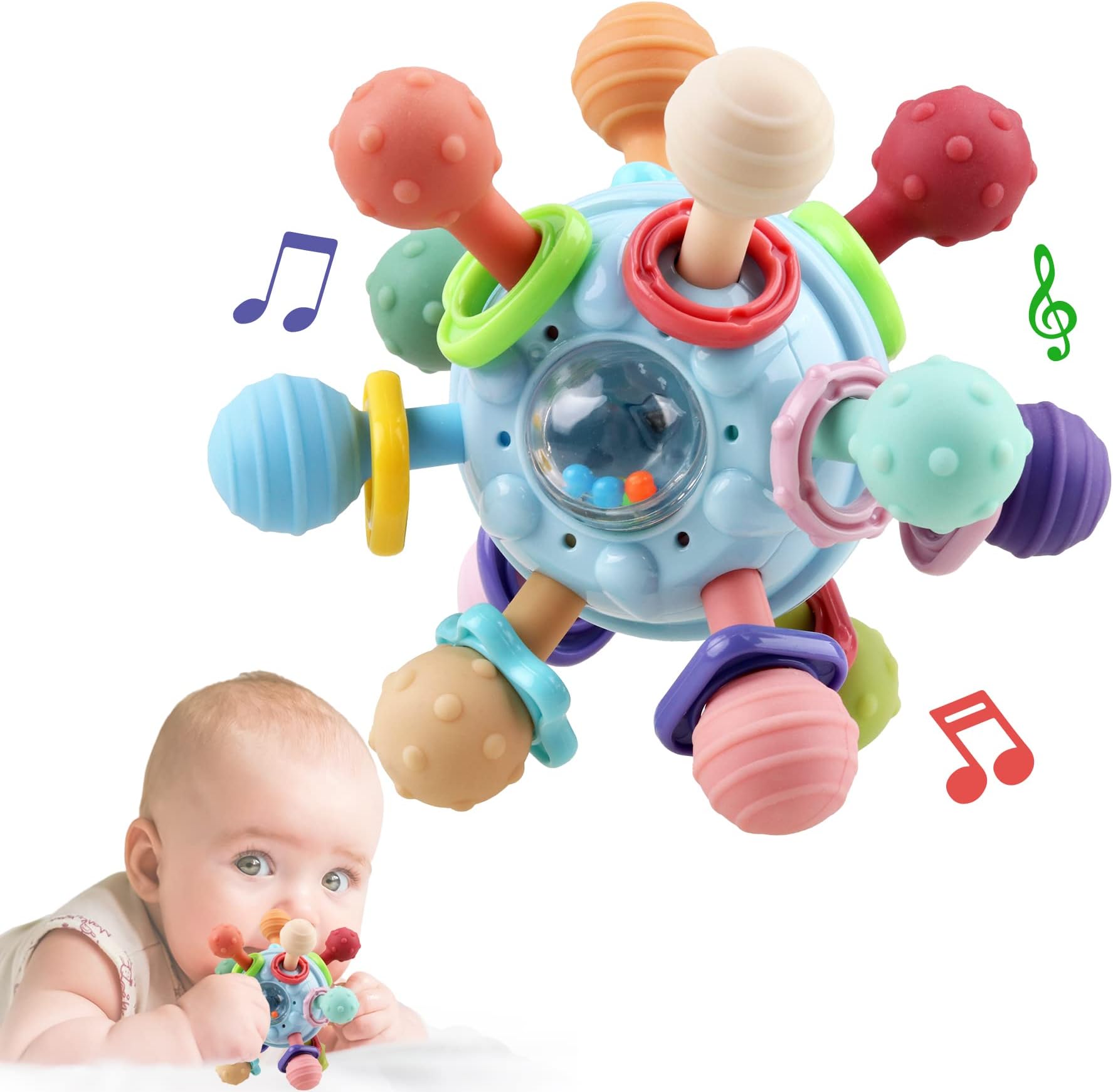
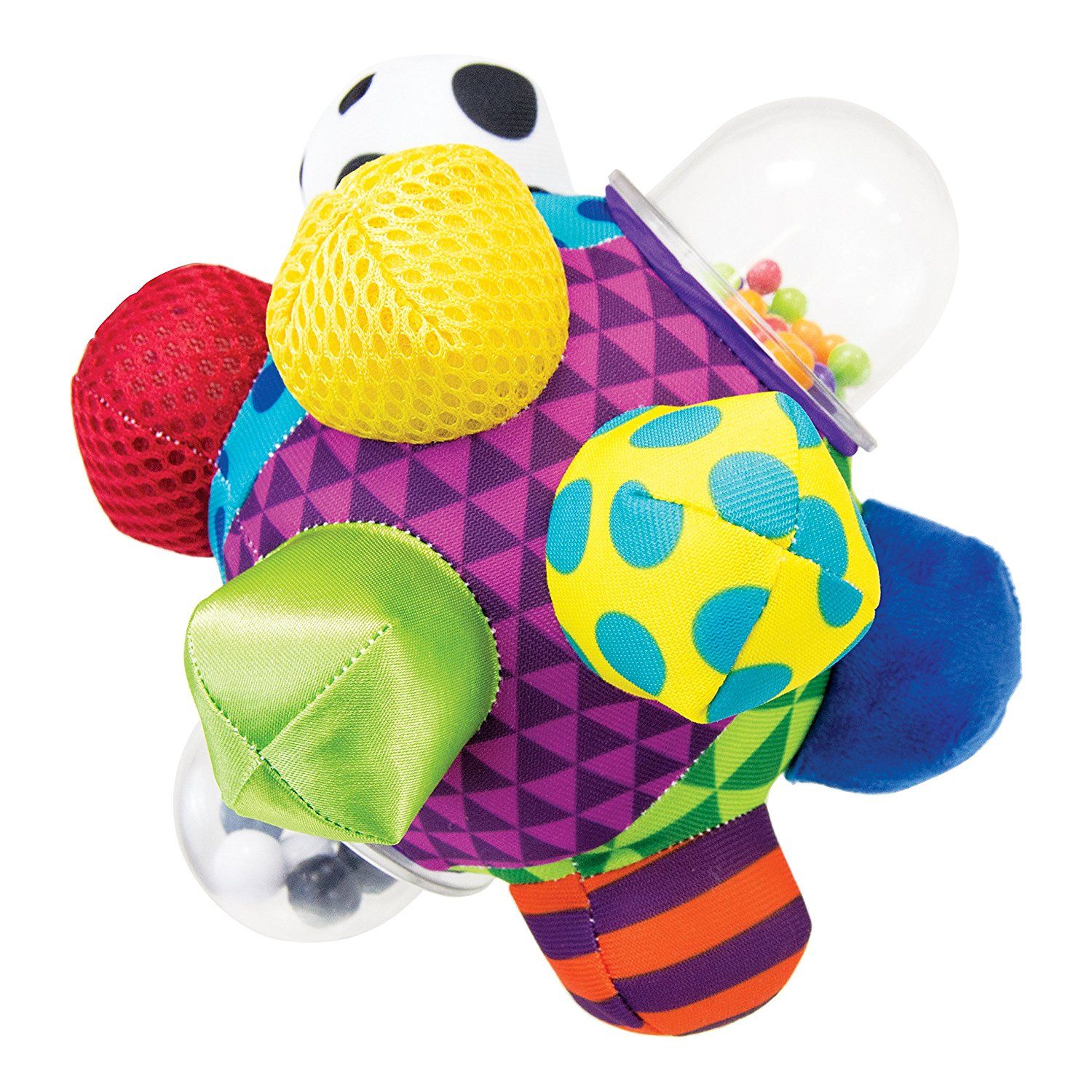
Not all balls are created equal. For a nine-month-old, balls with different textures (nubs, ridges, soft fabric, or firm rubber) provide varied tactile input. Balls encourage "tracking"—the ability of the eyes to follow a moving object—which is a critical precursor to reading and sports.
Developmental Focus: Visual tracking, tactile awareness, and crawling motivation. How to Play: Gently roll the ball across the floor. The child will likely attempt to crawl after it. This helps them learn to judge distance and speed while strengthening their neck and core muscles.
8. Pop-Up Cause and Effect Toys
These toys typically feature buttons, levers, or switches that, when manipulated, cause a character or object to pop up. At this age, the element of surprise is highly engaging. It reinforces the idea that an intentional action (pushing a button) leads to a predictable result.
Developmental Focus: Cognitive association, finger strength, and memory. How to Play: Initially, the child may need help reset the "pop-up" figures. As they repeat the action, they will begin to anticipate the surprise, which is a sign of developing memory and cognitive processing.
9. Interactive Touch-and-Feel Board Books
Early literacy starts long before a child can read. Board books with "touch-and-feel" patches (like faux fur, sandpaper, or silk) keep a nine-month-old engaged during storytime. These books help bridge the gap between physical play and language learning.
Developmental Focus: Language development, sensory integration, and bonding. How to Play: Point to the pictures and the textures. Describe the feeling: "The bunny is soft," or "The lizard is bumpy." This expands their vocabulary and associates reading with a pleasurable, multi-sensory experience.
Developmental Toy Comparison Table
The following table summarizes the primary benefits and safety considerations for each toy category discussed:
| Toy Category | Primary Milestone | Skills Developed | Safety Note |
|---|---|---|---|
| Push Walkers | Walking/Standing | Balance, leg strength | Use on level ground; avoid stairs. |
| Shape Sorters | Cognitive | Spatial reasoning, logic | Ensure shapes are too large to swallow. |
| Stacking Rings | Fine Motor | Sequencing, size grading | Check for rounded center posts. |
| Crawl Tunnels | Gross Motor | Navigation, confidence | Ensure mesh for ventilation/visibility. |
| Busy Boards | Fine Motor | Pincer grasp, dexterity | Ensure all parts are securely fastened. |
| Musical Sets | Sensory | Auditory processing, rhythm | Limit decibel levels for ear safety. |
| Sensory Balls | Gross/Visual | Eye tracking, tactile input | Avoid balls small enough to choke. |
| Pop-Up Toys | Cognitive | Cause and effect, memory | Watch for finger-pinch points in hinges. |
| Board Books | Language | Vocabulary, tactile mapping | Use thick "board" pages to prevent tearing. |
Common Mistakes to Avoid When Choosing Toys
One frequent mistake parents make is choosing toys intended for older children, thinking it will "fast-track" development. However, toys that are too complex can lead to frustration and a loss of interest. A nine-month-old needs toys that are challenging but achievable.
Another common pitfall is the reliance on electronic toys that "talk" to the child. Research, including studies cited by UNICEF, suggests that the most significant language gains happen through human-to-human interaction. A toy should be a tool for you to interact with your child, not a replacement for that interaction.
Finally, do not overlook the "household toy." Often, a whisk, a plastic mixing bowl, or a clean cardboard box provides as much developmental value as an expensive store-bought item. These objects encourage imaginative play and help the child understand the functions of everyday life.
How to Maximize Playtime for Learning
To get the most out of these toys, follow the "Observe, Wait, and Listen" (OWL) method. Instead of immediately showing your child how a toy works, give them a few minutes to explore it on their own. This builds independence and problem-solving skills. When they do look to you for help, model the action slowly and describe what you are doing.
Rotating toys is another effective strategy. Instead of having all nine types of toys available at once, bring out three or four and store the others. Every two weeks, swap them out. This makes "old" toys feel new again and prevents the child from becoming overwhelmed by too many choices.
Frequently Asked Questions
What is the most important toy for a 9-month-old?
There is no single "most important" toy, but if you had to choose one, a set of nesting cups or blocks is highly recommended. These are "open-ended" toys, meaning they can be used in dozens of different ways as the child grows, supporting everything from basic grasping to complex imaginative play.
Should I avoid plastic toys entirely in 2026?
Not necessarily. While wooden and silicone toys are popular for their sustainability, high-quality, BPA-free plastic toys are often more durable for water play and easier to sanitize. The key is ensuring the plastic is "food-grade" and free from harmful chemicals.
My 9-month-old isn't crawling yet; which toys will help?
If your child isn't crawling, focus on toys that encourage "tummy time" and reaching. Textured balls or moving toys that roll just out of reach can provide the motivation needed to start scooting or crawling. However, remember that every child develops on their own timeline.
How do I know if a toy is too advanced?
If your child repeatedly throws the toy, cries when playing with it, or ignores it completely after a few seconds, it may be too complex. Set it aside for a month and reintroduce it later. At nine months, their abilities change almost weekly.
Are "educational" tablets okay for a 9-month-old?
Current guidelines from the World Health Organization (WHO) and other pediatric bodies suggest zero screen time for children under 18 to 24 months (except for video chatting). Physical toys provide the tactile and 3D spatial feedback that a 2D screen cannot offer.
Final Recommendation
For parents looking to support their nine-month-old's journey, start with a versatile stacking set and a sturdy push walker. These two items cover the broadest range of developmental needs—from fine motor precision to the gross motor strength required for walking. Pair these with consistent, face-to-face interaction and "floor time" to create the most effective learning environment for your child in 2026.