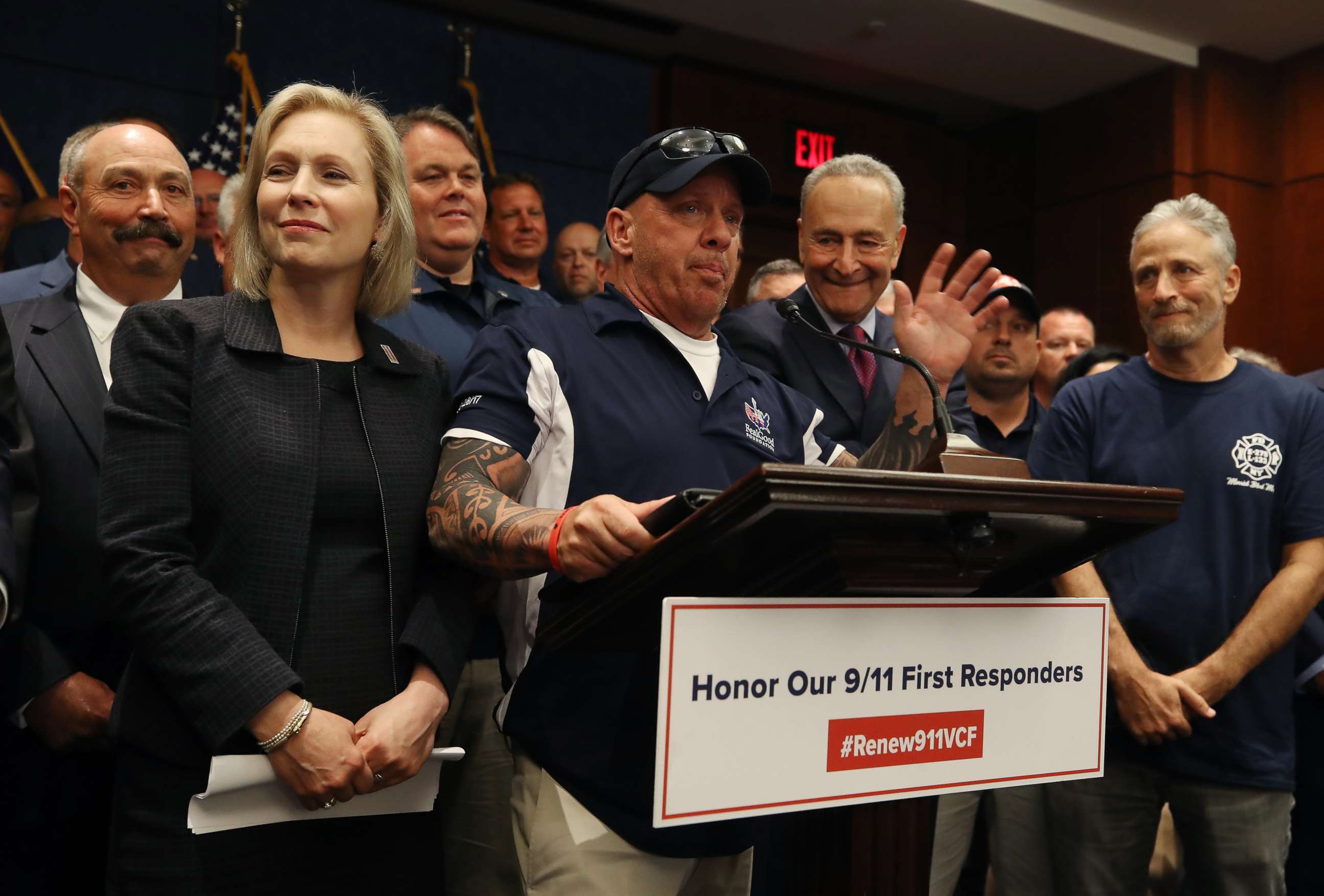
The most significant legislative vote regarding the 9/11 Victim Compensation Fund (VCF) occurred in July 2019, when Congress passed the "Never Forget the Heroes: James Zadroga, Ray Pfeifer, and Luis Alvarez Permanent Authorization of the September 11th Victim Compensation Fund Act." This landmark vote permanently authorized the fund, ensuring it remains funded and open for claims through October 1, 2090.
The 9/11 Victim Compensation Fund (VCF) represents one of the most complex and emotionally charged pieces of legislation in United States history. As of 2026, the fund stands as a permanent fixture of the federal government's commitment to those who suffered physical injury or death as a result of the September 11, 2001, terrorist attacks and the subsequent debris removal efforts. Understanding the history of the "9 11 victim compensation fund vote" requires looking at a series of legislative battles that transformed a temporary relief measure into a multi-generational support system.
The Legislative Evolution of the VCF
The journey to permanent funding was not a single event but a progression of several critical votes and reauthorizations. Each vote was driven by emerging medical data showing that 9/11-related toxins were causing delayed-onset illnesses, such as various cancers and respiratory diseases, long after the initial dust had settled.
The Original VCF (2001–2004)
The first iteration of the VCF was created via the Air Transportation Safety and System Stabilization Act, which was rushed to a vote just eleven days after the attacks. This version was designed primarily to provide financial assistance to the families of those killed in the attacks and those who suffered immediate physical injuries, while also protecting the airline industry from massive litigation. Kenneth Feinberg served as the Special Master, and the fund closed in 2004 after distributing approximately $7 billion.
The James Zadroga 9/11 Health and Compensation Act (2010)
By the late 2000s, it became clear that thousands of first responders and survivors were developing "latent" illnesses. Named after NYPD Detective James Zadroga, who died of respiratory disease linked to Ground Zero exposure, this act sought to reopen the VCF. The vote was contentious, facing significant opposition over its $7.4 billion price tag. However, after a successful push by advocates and a high-profile media campaign, it passed the Senate in December 2010 and was signed into law in early 2011.
The 2015 Reauthorization
The 2010 Act only authorized the VCF for five years. As the 2015 expiration approached, another critical vote was necessary. Congress voted to extend the VCF for another five years and the World Trade Center (WTC) Health Program for 75 years. While this was a victory, the VCF's funding remained capped, which eventually led to a crisis in 2019.
The Landmark 2019 Permanent Authorization Vote
The most pivotal "9 11 victim compensation fund vote" took place in July 2019. By early 2019, the VCF was running out of money. The Special Master at the time, Rupa Bhattacharyya, announced that because the fund was nearly exhausted, pending and future claim payouts would have to be cut by 50% to 70%.
This announcement triggered an intense lobbying effort led by first responders, survivors, and public figures like Jon Stewart. The most moving moment of this period was the testimony of Luis Alvarez, a retired NYPD detective suffering from terminal 9/11-related cancer, before the House Judiciary Committee.
The House of Representatives Vote
On July 12, 2019, the House of Representatives took up H.R. 1327. The vote was overwhelmingly in favor of permanent authorization, passing with a 402–12 margin. This lopsided victory reflected the immense public pressure and the undeniable evidence of the health crisis facing the 9/11 community.
The Senate Vote
The Senate followed suit on July 23, 2019. Despite some initial procedural delays regarding the bill's long-term budgetary impact, the Senate passed the bill (S. 546) with a 97–2 vote. President Donald Trump signed the "Never Forget the Heroes Act" into law on July 29, 2019.
This specific vote was revolutionary because it:
- Extended the claim filing deadline to October 1, 2090.
- Permanently funded the VCF, requiring the government to pay all eligible claims regardless of the total cost.
- Mandated the restoration of any prior awards that had been reduced due to the 2019 funding shortfall.
VCF Status and Operations in 2026
As we navigate 2026, the VCF operates under the permanent authorization established by the 2019 vote. The program is currently overseen by the Special Master, Allison Turkel, who was appointed in 2023. The VCF remains a separate entity from the WTC Health Program, although they work in tandem.
Registration vs. Filing a Claim
In 2026, it is vital for survivors and responders to understand the distinction between "Registration" and "Filing a Claim."
- Registration: This is the act of notifying the VCF that you are a potential claimant. It preserves your right to file a claim in the future. Registration deadlines are generally linked to the date a person's 9/11-related condition is certified by the WTC Health Program.
- Filing a Claim: This is the actual submission of medical and financial documentation to seek compensation. A claim can only be filed once a physical health condition has been certified.
Eligible Exposure Zones
The VCF covers individuals who were present in the "NYC Exposure Zone" between September 11, 2001, and May 30, 2002. This zone includes Manhattan south of Canal Street, as well as the areas in Brooklyn and along the debris removal routes. It also covers those present at the Pentagon and the Shanksville, Pennsylvania, crash sites.
Comparison of VCF Legislative Milestones
The following table summarizes the evolution of the VCF through its various legislative votes:
| Legislation | Year of Vote | Key Outcome | Funding Status |
|---|---|---|---|
| Original VCF (Air Transportation Act) | 2001 | Immediate relief for 2001-2004 | Fixed $7 Billion |
| James Zadroga Act (Initial) | 2010 | Reopened VCF for 5 years | Capped at $2.775 Billion |
| Zadroga Reauthorization | 2015 | Extended VCF to 2020 | Capped at $7.375 Billion |
| Never Forget the Heroes Act | 2019 | Permanent Authorization to 2090 | Unlimited / "Such sums as necessary" |
Eligibility Requirements in 2026
To receive compensation following the 2019 vote's implementation, a claimant must meet specific criteria. The VCF does not compensate for mental health conditions; it is strictly for physical illnesses and injuries.
- Presence at the Site: You must prove you were present at one of the 9/11 crash sites, in the NYC Exposure Zone, or along the debris removal routes during the eligible timeframe (Sept 11, 2001 – May 30, 2002).
- Certified Physical Condition: Your illness must be certified by the World Trade Center Health Program (WTCHP). The WTCHP is a separate program administered by the CDC and NIOSH that provides medical monitoring and treatment.
- Timely Registration: You must register with the VCF within the required timeframe after your condition is certified, or within two years of a loved one's death if filing a wrongful death claim.
Common Certified Conditions
In 2026, the list of covered conditions continues to evolve as new medical evidence emerges. Currently, the most common categories include:
- Cancers: Over 70 types of cancer, including skin (melanoma and non-melanoma), lung, prostate, breast, and various blood cancers like leukemia and lymphoma.
- Respiratory Issues: Asthma, Chronic Obstructive Pulmonary Disease (COPD), sleep apnea, and interstitial lung diseases.
- Digestive Disorders: Gastroesophageal Reflux Disease (GERD) and related chronic conditions.
- Traumatic Injuries: Burn, fractures, and head injuries sustained during the initial attacks or debris removal.
The Role of the Special Master and Award Calculations
The VCF "vote" in 2019 empowered the Special Master with the authority to ensure all claims are paid fully and consistently. Compensation is typically divided into two categories:
Non-Economic Loss (Pain and Suffering)
This compensates for the physical pain and emotional distress caused by the illness. For non-cancer conditions, the maximum award is generally $90,000. For cancer conditions, the cap is usually $250,000. These caps were established to ensure the fund remains sustainable while still providing significant support.
Economic Loss
This covers lost earnings, loss of benefits, and out-of-pocket medical expenses. For individuals who can no longer work due to their 9/11-related illness, economic loss can constitute a substantial portion of their total award. The 2019 legislation ensures that these calculations are based on fair market values and individual circumstances.
Frequently Asked Questions (FAQs)
1. Is it too late to file a VCF claim in 2026?
No, it is not too late. Thanks to the 2019 permanent authorization vote, the VCF is authorized to accept claims until October 1, 2090. However, you must adhere to registration deadlines. If you are newly diagnosed with a 9/11-related condition, you generally have two years from the date of certification by the WTC Health Program to register your claim.
2. What happens if I registered years ago but haven't filed a claim?
If you registered previously, your right to file a claim is preserved. You do not need to file the actual claim until you have a certified physical illness. In 2026, many people who registered in 2011 or 2015 are only just now filing claims because they have recently developed a covered condition.
3. Can I file a claim for a family member who has passed away?
Yes. The VCF allows for "Wrongful Death" and "Personal Representative" claims. If a loved one died from a 9/11-related illness, the representative of their estate can file a claim for compensation. There are specific deadlines for these claims, typically two years from the date of death, though the 2019 Act provided some "look-back" windows for older cases.
4. Does the VCF cover mental health conditions like PTSD?
No. While the World Trade Center Health Program provides treatment and monitoring for mental health conditions like Post-Traumatic Stress Disorder (PTSD), anxiety, and depression, the VCF is legally prohibited from providing financial compensation for mental health conditions alone. You must have a certified physical health condition to be eligible for a VCF award.
5. Do I need a lawyer to file a VCF claim?
While you are not required to have an attorney, many claimants choose to hire one due to the complexity of the documentation required. VCF legal fees are capped by law at 10% of the total award. In 2026, the VCF website (vcf.gov) provides extensive resources for those who wish to file on their own.
Moving Forward: Next Actions for Survivors and Responders
If you were present in Lower Manhattan or the other 9/11 sites during the eligible period, your most important action in 2026 is to ensure you are enrolled in the World Trade Center Health Program. Even if you feel healthy today, medical monitoring is the only way to ensure that any future illnesses are caught early and certified for potential VCF compensation.
The 2019 vote was a promise made by the United States government to "never forget" the sacrifices of the 9/11 community. By maintaining the VCF as a permanent program, the law recognizes that the health impacts of 9/11 will continue for decades. If you or a loved one are suffering, the VCF remains a vital resource for financial stability and justice.