An 8-figure net worth represents a financial position between $10,000,000 and $99,999,999. The fundamental formula is Total Assets minus Total Liabilities. However, achieving this milestone in 2026 requires a strategic combination of high-yield equity ownership, tax-efficient compounding, and disciplined risk management to move beyond simple high-income earnings into true generational wealth.
The Mathematical Core: Defining the 8-Figure Equation
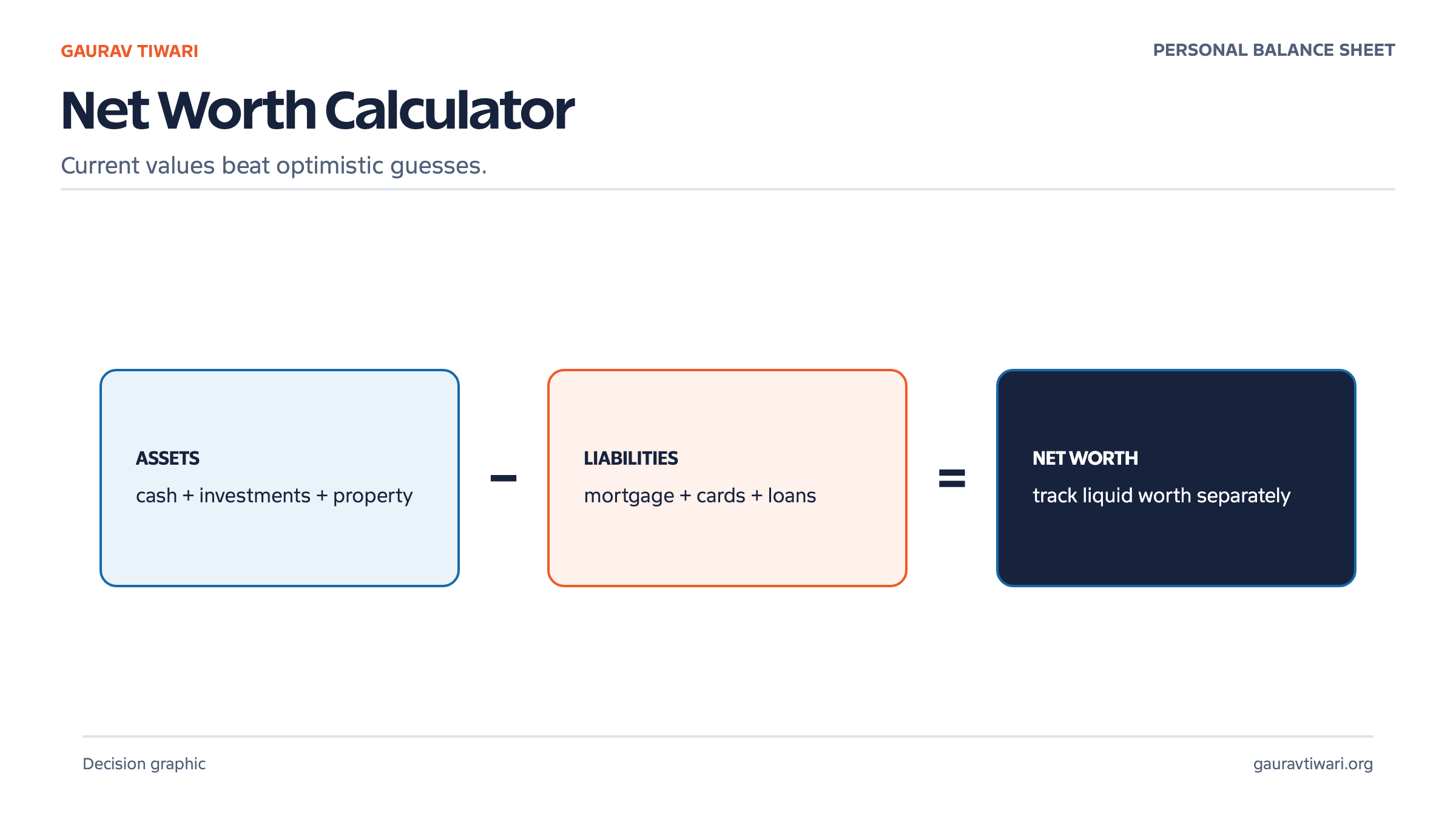
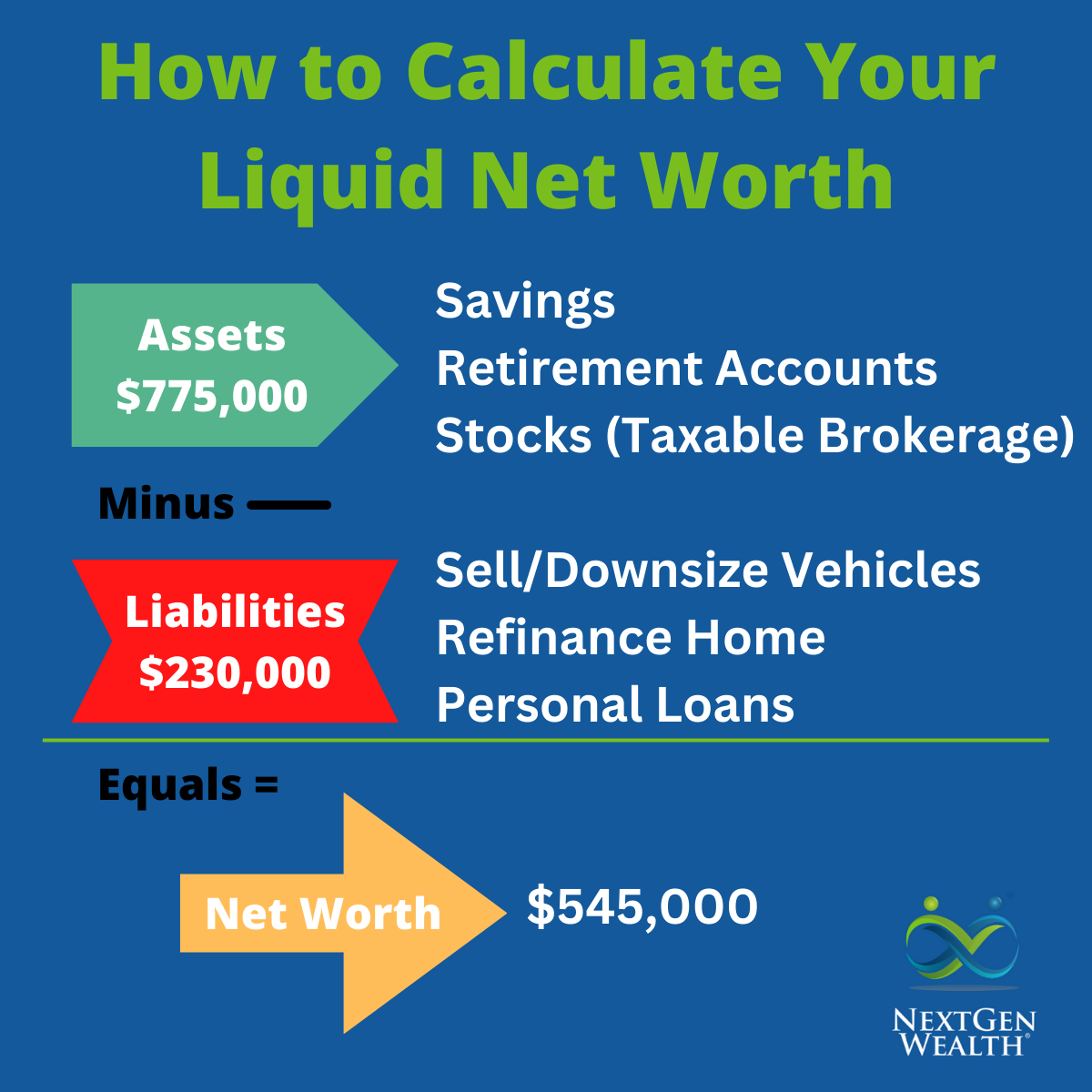
At its most basic level, the formula for net worth is a snapshot of an individual’s financial health at a specific point in time. For those aiming for the 8-figure mark, the calculation becomes more complex as assets shift from liquid cash and public equities to illiquid private business interests, commercial real estate, and sophisticated alternative investments.
The Standard Formula
Net Worth = (Sum of All Assets) - (Sum of All Liabilities)
To qualify as having an 8-figure net worth, the result of this equation must be at least $10,000,000. While the math is simple, the valuation of the components often requires professional appraisal.
Breaking Down Assets
In the context of 8-figure wealth, assets are generally categorized into three tiers:
- Liquid Assets: Cash, money market accounts, and highly liquid public stocks or bonds. In 2026, many high-net-worth individuals (HNWIs) maintain a higher-than-average cash position to capitalize on market volatility.
- Illiquid Investments: Private equity, venture capital, and closely held business interests. For many in the 8-figure range, the majority of their wealth is tied up in the valuation of a company they own or co-founded.
- Real Estate: Primary residences, secondary vacation homes, and commercial holdings. At the $10 million plus level, real estate often serves as both a lifestyle asset and a significant tax-shielding investment.
Understanding Liabilities
Liabilities are not merely "debts" at this level; they are often strategic tools. While consumer debt (credit cards, high-interest auto loans) is typically non-existent, 8-figure earners often utilize:
- Securities-Based Lines of Credit (SBLOC): Borrowing against a stock portfolio to maintain liquidity without triggering capital gains taxes.
- Mortgages on Appreciating Assets: Using low-interest debt to purchase real estate while keeping capital deployed in higher-yielding investments.
- Business Debt: Leverage used to scale operations or acquire competitors.
The Strategic Path: How 8-Figure Wealth is Built
Reaching a $10 million net worth is rarely the result of a high salary alone. While a physician or executive may earn $500,000 a year, the "8-figure formula" usually involves a catalyst—a mechanism that allows for exponential rather than linear growth.
The Power of Equity and Concentration
The most common "formula" for reaching 8 figures is concentration. While diversification is the key to preserving wealth, concentration is often the key to building it. This typically manifests as:
- Entrepreneurship: Building a business with an EBITDA (Earnings Before Interest, Taxes, Depreciation, and Amortization) that commands a high valuation multiple. For example, a service business with $2 million in annual profit and a 5x multiple results in a $10 million valuation.
- Early-Stage Investing: Allocating capital to startups or private placements that provide 10x to 50x returns over a decade.
- Executive Compensation: Stock options and Restricted Stock Units (RSUs) in high-growth technology or biotech firms.
The Compounding Velocity
By 2026, the velocity of compounding has been influenced by shifts in global markets and the democratization of private credit. To move from 7 figures ($1M+) to 8 figures, the "yield" on current assets must exceed the rate of inflation and lifestyle expenses. If an individual has $5 million invested with an 8% annual return, they are generating $400,000 in "passive" growth. When this is reinvested rather than spent, the path to $10 million shortens significantly.
Asset Allocation Comparison at Different Wealth Tiers
The way a person manages $1 million is fundamentally different from how they manage $20 million. As net worth enters the 8-figure range, the "formula" for allocation shifts toward capital preservation and tax efficiency.
| Feature | 7-Figure Wealth ($1M - $9M) | 8-Figure Wealth ($10M - $99M) | 9-Figure Wealth ($100M+) |
|---|---|---|---|
| Primary Goal | Growth and Retirement Security | Multi-generational Legacy | Institutional Influence/Philanthropy |
| Asset Mix | High concentration in public markets and primary residence | Mix of public equities, private equity, and commercial real estate | Heavily weighted in private holdings and family offices |
| Tax Strategy | Standard deductions, 401(k), IRA | Advanced trusts, tax-loss harvesting, QSBS | Private foundations, complex offshore/onshore structures |
| Role of Debt | Debt reduction is often a priority | Strategic leverage for liquidity | Infinite banking and sovereign-level credit |
| Advisory Needs | CPA and Financial Planner | Wealth Manager, Estate Attorney, Tax Strategist | Full Family Office and Legal Team |
Tax Efficiency: The "Hidden" Variable in the Formula
A person who earns $20 million but loses 50% to taxes and fees has the same net worth as someone who earns $12 million but retains 85%. In 2026, the 8-figure formula is as much about what you keep as what you make.
Qualified Small Business Stock (QSBS)
Under Section 1202 of the Internal Revenue Code, founders and early investors in certain C-corporations may be eligible to exclude up to $10 million (or 10 times their basis) in capital gains from federal taxes. This is a primary "accelerator" for tech entrepreneurs reaching 8-figure status.
Estate Planning and Trusts
Once an individual surpasses the $10 million mark, they approach the federal estate tax exemption limits (which are subject to legislative changes). To preserve the 8-figure formula for heirs, HNWIs often use:
- Grantor Retained Annuity Trusts (GRATs): To pass appreciation of assets to heirs tax-free.
- Irrevocable Life Insurance Trusts (ILITs): To provide liquidity for estate taxes without increasing the taxable estate.
- Charitable Lead/Remainder Trusts: To balance philanthropic goals with tax deductions.
The Impact of Inflation and Purchasing Power in 2026
In 2026, the "8-figure" designation carries a different weight than it did in the early 2000s. Due to the cumulative effect of inflation over the past several years, $10 million provides a high standard of living, but it no longer guarantees the "unlimited" lifestyle associated with ultra-high-net-worth status.
The New "Middle Class" of Wealth
Financial analysts now often refer to the $10M-$25M range as the "work-optional" tier. While this amount supports a luxurious lifestyle, it requires careful management. A 4% safe withdrawal rate on $10 million provides $400,000 in gross annual income. After taxes and the maintenance of high-end real estate, this income can be stretched thin by the standards of major global cities like New York, London, or Singapore.
Cost of Capital and Investment Hurdles
With interest rates having stabilized after the volatility of the early 2020s, the "hurdle rate"—the minimum return an investment must provide to be worth the risk—is higher in 2026. This means the 8-figure formula requires more active management than the "buy and hold" strategies of the previous decade.
Common Mistakes That Erase 8-Figure Progress
Building an 8-figure net worth is difficult, but maintaining it can be equally challenging. Several factors can cause a "wealth leak," preventing an individual from staying within the 8-figure bracket.
- Lifestyle Creep: As net worth grows, there is a temptation to acquire depreciating assets like yachts, private planes, or multiple high-maintenance estates. If the carrying costs of these assets exceed the portfolio's yield, the net worth formula will inevitably trend downward.
- Lack of Liquidity: Having a $50 million net worth is a liability if $48 million of it is tied up in a private company that cannot be sold. "Paper wealth" is vulnerable to market shifts and regulatory changes.
- Over-Leverage: Using too much debt to acquire assets can lead to a "margin call" scenario if asset values dip. Many 8-figure fortunes were lost in previous cycles because of excessive borrowing against real estate or stock portfolios.
- Inadequate Asset Protection: High net worth makes an individual a target for litigation. Failing to use LLCs, trusts, and umbrella insurance can result in a single legal judgment wiping out years of accumulation.
Practical Steps to Apply the Formula
For those currently in the 7-figure range looking to scale to 8 figures by the end of the decade, the following steps are essential:
- Audit Your Multiplier: Identify which of your assets has the potential for a 10x return. If your current path is purely salary-based, you must pivot toward equity or high-margin business ownership.
- Optimize Your Tax Shield: Consult with a tax strategist to ensure you are utilizing every available legal mechanism to reduce your effective tax rate. This includes looking at jurisdiction-specific benefits and specialized investment vehicles.
- Evaluate Your Leverage: Ensure that any debt you carry is "good debt"—low interest, tax-deductible where possible, and used to acquire appreciating assets.
- Protect the Downside: As you approach the 8-figure mark, shift a portion of your strategy from "aggressive growth" to "capital preservation." This ensures that a market correction does not reset your progress by a decade.
Frequently Asked Questions
What is the quickest way to reach an 8-figure net worth?
Statistically, entrepreneurship and equity ownership are the fastest routes. Most people with an 8-figure net worth reached it through a "liquidity event," such as selling a business, taking a company public, or being an early employee at a startup that achieved a high valuation. It is rarely achieved through traditional saving and investing from a W-2 salary alone unless that salary is in the seven-figure range for several decades.
Is $10 million considered "Ultra-High-Net-Worth"?
No. According to standard financial industry definitions, an individual with a net worth of $1 million to $5 million is "High-Net-Worth" (HNW). Those with $5 million to $30 million are generally considered "Very-High-Net-Worth" (VHNW). The "Ultra-High-Net-Worth" (UHNW) designation is typically reserved for those with a net worth of $30 million or more.
How much can I safely spend with an 8-figure net worth?
Using the traditional 4% rule, a $10 million portfolio could support a $400,000 annual withdrawal, adjusted for inflation. However, many wealth managers in 2026 recommend a more conservative 3% to 3.5% withdrawal rate for younger retirees or those with highly volatile asset mixes, which would equate to $300,000 to $350,000 per year.
How do taxes change when you hit the 8-figure mark?
The primary change is the shift from income tax to capital gains tax and the potential for estate/gift taxes. You also become subject to the Net Investment Income Tax (NIIT) and may face higher state-level taxes depending on your residency. Strategy shifts toward "tax-location" (placing specific assets in specific types of accounts) and utilizing charitable vehicles to offset gains.
Can you reach 8 figures through real estate alone?
Yes, real estate is a common path to 8 figures due to the power of leverage. By using a 20-25% down payment, an investor can control an asset worth four times their initial investment. Over time, as the property appreciates and the mortgage is paid down by tenants, the equity grows exponentially. This is often combined with 1031 exchanges to defer capital gains taxes indefinitely.
Next Actions for Wealth Accumulation
To move toward an 8-figure net worth, begin by calculating your current "True Net Worth" using an updated 2026 appraisal of all assets and liabilities. Once your baseline is established, identify your "Wealth Catalyst"—the specific investment or business venture that has the mathematical potential to bridge the gap between your current status and the $10 million mark. Finally, engage a multi-disciplinary team consisting of a wealth manager, a specialized tax CPA, and an estate attorney to ensure your growth is protected from unnecessary taxation and legal risk.