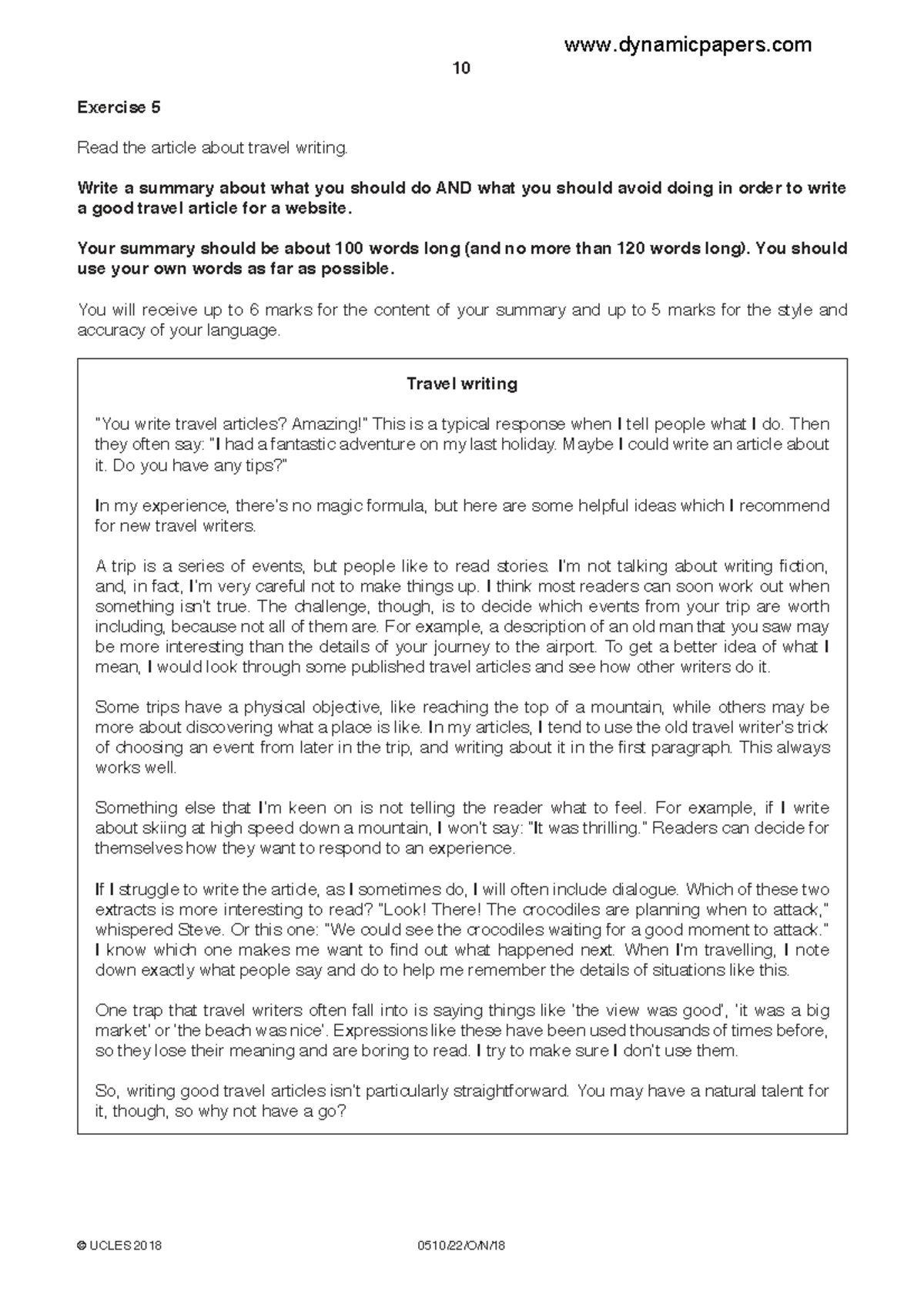
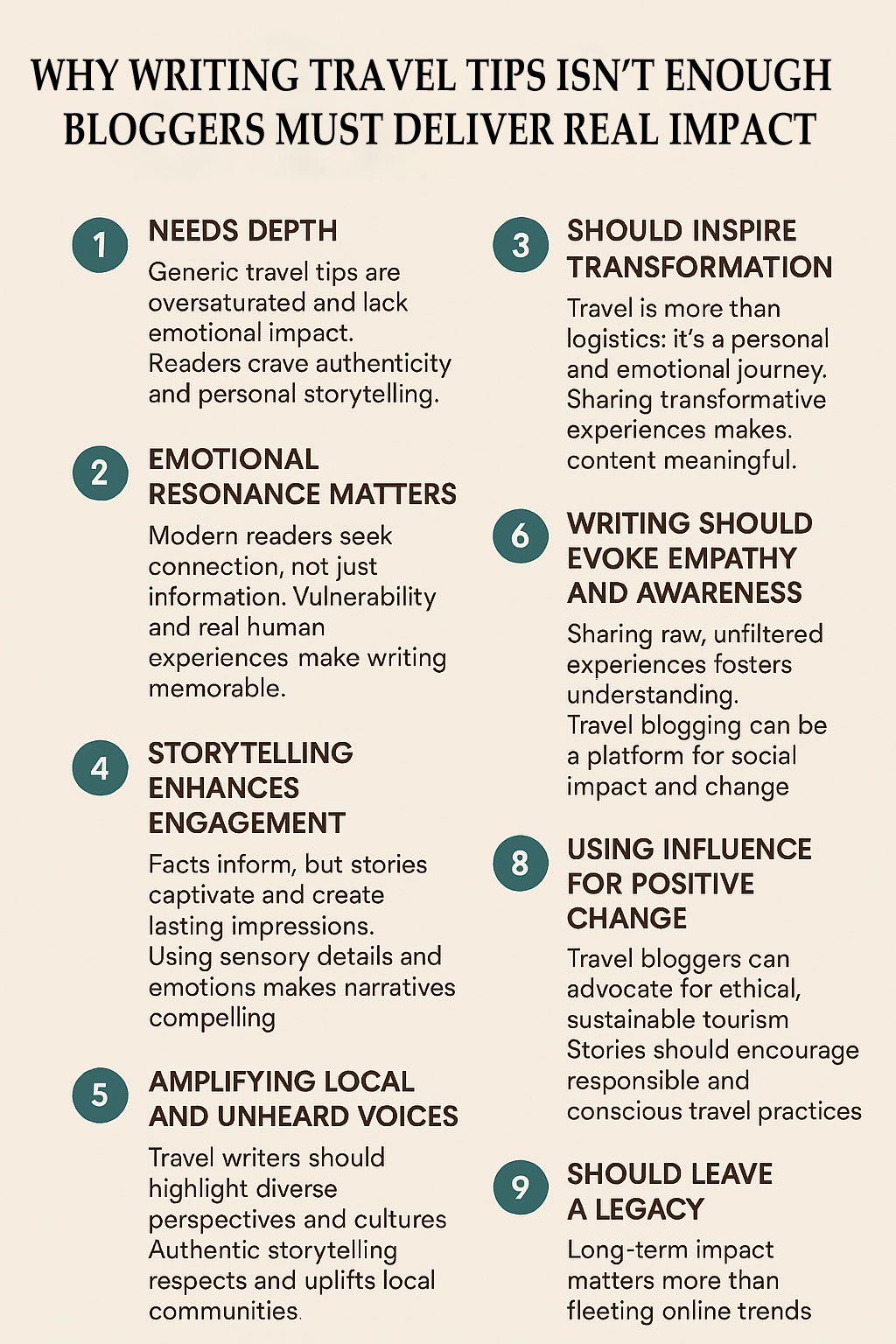
Crafting authentic travel stories requires moving beyond the surface-level observation of tourist landmarks to capture the nuanced, human, and sensory realities of a location. By prioritizing personal perspective, sensory detail, and ethical engagement with local cultures, writers can transform fleeting experiences into narratives that resonate deeply with readers, offering a genuine window into a destination’s character.
1. Cultivate the Art of Sensory Observation
Authenticity in travel writing is born from the ability to ground the reader in a specific time and place using the five senses. Many novice writers focus heavily on the visual—the colors of a sunset or the architecture of a cathedral—but a truly immersive story engages smell, sound, touch, and taste.
To improve your sensory toolkit, practice "sensory mapping" when you arrive at a new location. Before you reach for your camera or notebook, sit still for fifteen minutes. Document the specific sounds—is it the hum of motorbikes, the distant call to prayer, or the rhythmic chopping of vegetables in an open-air kitchen? Note the lingering scents, such as charcoal smoke, damp earth, or jasmine. When you integrate these details into your writing, you provide the reader with a textured experience that feels lived-in rather than observed from a distance.
2. Prioritize Human Connection Over Famous Landmarks
While landmarks provide necessary context, human interaction is the heartbeat of an authentic story. A travel piece that focuses solely on infrastructure often reads like a brochure. To write with depth, shift your focus toward the people who inhabit the landscape.
Seek out conversations that happen outside of commercial transactions. Instead of asking a guide for historical dates, ask a local shopkeeper or a street food vendor about their daily routine or their perspective on how their neighborhood has changed over the last decade. These interactions provide the emotional stakes for your story. When you include these voices, you move from being a detached observer to an active participant in a shared human experience. Remember to always ask for permission before documenting someone's life, and strive to represent their perspective with dignity and accuracy.
3. Embrace the "Negative Space" of Travel
Authenticity does not mean documenting every triumph or postcard-perfect moment. In fact, the most engaging travel stories often lean into the friction of the journey. If your trip was interrupted by a missed train, a torrential rainstorm that ruined your itinerary, or a language barrier that led to a comical misunderstanding, these are the moments that reveal the reality of travel.
Readers trust writers who admit that travel is often messy. By recording these "negative" moments, you strip away the polished perfection of social media curation. This vulnerability allows the reader to relate to your experience because it mirrors the unpredictability of their own lives. Do not over-dramatize these obstacles; simply state them as functional components of the trip that redirected your path and enriched your narrative.
4. Practice Diligent Research Beyond the Guidebook
While on-the-ground experience is essential, a truly authentic piece is bolstered by historical and cultural context. If you are writing about a specific region, take the time to understand its socio-political landscape, its culinary history, or the origins of its local festivals.
Use reputable sources such as academic journals, local historical society archives, or interviews with residents to verify facts. If you are describing a cultural practice, ensure you understand the "why" behind it. Avoiding superficial interpretations prevents you from perpetuating tired tropes or inaccuracies. When your narrative is rooted in a factual understanding of the destination, your personal observations gain weight and credibility.
5. Develop a Distinct Personal Voice
Authenticity is not just about what you saw, but how you perceived it. Two writers can visit the same city and produce entirely different stories because they bring different backgrounds, curiosities, and biases to the page. Do not attempt to write from a "neutral" or "objective" perspective; instead, lean into your subjective experience.
Ask yourself why a specific location captured your attention. Was it a childhood memory it evoked? A professional interest in urban planning or gastronomy? By weaving your personal history and motivations into the narrative, you create a unique lens. This perspective is what separates a generic blog post from a compelling piece of travel literature.
6. Practice Ethical Storytelling
Authenticity requires integrity. Ethical travel writing involves respecting the destinations and people you encounter. Avoid the "poverty tourism" trap, where you aestheticize hardship for the sake of a poignant narrative. Similarly, be cautious of adopting a "savior" tone or framing local traditions as "exotic" or "primitive."
When writing about a community, consider the power dynamic. Ask yourself: "Does this story give voice to the subject, or am I speaking over them?" Strive to include the perspectives of locals rather than presenting yourself as the sole expert. Authenticity in the modern era of 2026 relies on recognizing your position as a visitor and being mindful of the impact your words have on the perception of the cultures you visit.
7. Refine Through Rigorous Editing
The first draft of a travel story is often a sprawling collection of memories. The process of making it authentic happens during the edit. Remove the "fluff"—the excessive adjectives and the self-indulgent descriptions that do not move the story forward.
Check your narrative for flow and pacing. Ensure that the sensory details you included actually serve the narrative arc. If a description of a meal does not contribute to the reader's understanding of the culture or the journey, it may be better suited for a social media caption than a long-form article. A polished, concise story demonstrates respect for the reader's time and underscores the importance of the observations you have chosen to share.
Comparison of Writing Approaches
| Feature | Generic Travel Writing | Authentic Travel Writing |
|---|---|---|
| Focus | Famous landmarks and attractions | Local daily life and human stories |
| Perspective | Detached, objective observer | Subjective, personal participant |
| Sensory Data | Visuals (what it looks like) | Multi-sensory (sound, smell, touch) |
| Handling Flaws | Excluded or ignored | Included as part of the reality |
| Tone | Promotional and superlative | Balanced, reflective, and nuanced |
Frequently Asked Questions
How do I balance being a tourist with being a writer? Balance is achieved by stepping away from the "must-see" lists. Set aside "unstructured time" each day specifically for observation. By detaching from the pressure to see every monument, you allow yourself the space to notice the small, authentic details that make for compelling writing.
What should I do if I accidentally misrepresent a location? If you discover an error after publication, issue a correction immediately. If you are still in the drafting stage, fact-check your assumptions against local sources. Authenticity relies on a commitment to truth; acknowledging and correcting mistakes is a professional necessity.
Should I focus on my personal feelings or the destination? Focus on the intersection of the two. An authentic story is a dialogue between the traveler and the place. If you talk too much about yourself, it becomes a diary; if you talk too much about the place, it becomes a guide. The "sweet spot" is using your personal reaction to illuminate the destination’s character.
How do I write about cultures different from my own respectfully? Approach these topics with curiosity and humility. Research the history of the practice, listen more than you talk, and avoid making broad, sweeping generalizations. Focus on the specific individuals you interacted with rather than labeling an entire country with one trait.
How much research is enough? Research should serve the story, not bury it. You need enough context to ensure your observations are grounded in reality, but too much data can make a story feel like a textbook. Research until you feel confident that you understand the "why" behind the behaviors and landscapes you are describing.
Final Next Step
To begin your next travel project, identify one specific, seemingly mundane location—a quiet park, a transit hub, or a local market—and commit to spending two hours there without your phone. Record your sensory observations and one conversation with a stranger. Use these notes as the foundational material for your next story; this exercise is the quickest way to practice moving from a tourist perspective to an authentic writer's perspective.