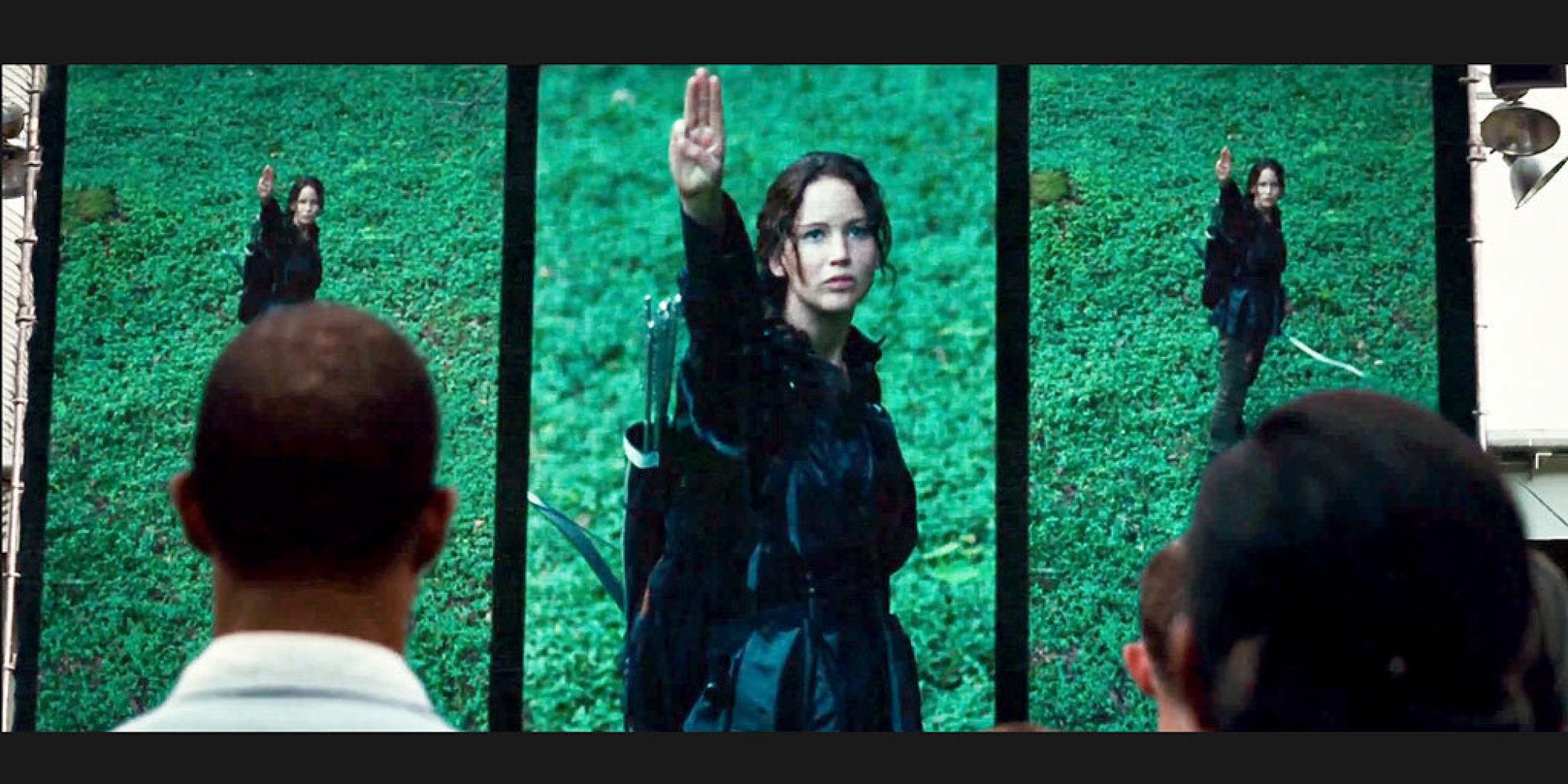
The ending of The Hunger Games: Mockingjay – Part 2 concludes the saga of Katniss Everdeen by subverting traditional "hero" tropes in favor of a gritty, realistic examination of war, trauma, and political cycles. The final sequence focuses on Katniss realizing that the rebellion’s leader, President Alma Coin, is simply a different side of the same tyrannical coin as President Snow. By choosing to execute Coin instead of Snow, Katniss breaks the cycle of the Hunger Games and secures a fragile, hard-won peace for Panem.
Released over a decade ago, the film's conclusion remains a cornerstone of dystopian cinema. As we look back in 2026, the thematic weight of these final scenes—from the tragedy at the Capitol gates to the quiet resilience of the Meadow—continues to resonate with audiences studying the intersection of media manipulation and revolutionary ethics.
1. The Parachute Bombing and the Death of Prim
The catalyst for the entire ending sequence is the horrific bombing outside President Snow’s mansion. As the rebels and Capitol citizens converge, silver parachutes—resembling the gift containers from the Games—descend upon a crowd of children. The first wave of explosions causes chaos, but it is the second wave, designed to kill the medics rushing in to help, that claims the life of Primrose Everdeen.
This moment is the ultimate irony of the series. Katniss’s entire journey began with a volunteer act to save her sister from the 74th Hunger Games. Prim’s death at the hands of what are later revealed to be Gale’s "trap" designs signifies the total loss of innocence. It forces the audience to confront the "total war" philosophy adopted by District 13. The realization that the rebels used the same psychological cruelty as the Capitol shatters Katniss's sense of purpose and sets the stage for her final transformation from a pawn of the rebellion to an independent actor.
2. Snow’s Revelation in the Rose Garden
Following the fall of the Capitol, Katniss finds a dying Coriolanus Snow in his greenhouse. In one of the most intellectually charged scenes of the franchise, Snow reveals the truth: the parachutes that killed Prim were not his, but President Coin’s. He explains that he was already prepared to surrender and had no reason to waste his remaining hovercraft on a group of children when he needed them for his own escape.
This interaction is pivotal because it utilizes Snow’s "honest" villainy to expose Coin’s "hidden" tyranny. Snow’s line, "My dear Miss Everdeen, I thought we’d agreed not to lie to each other," serves as the final piece of the puzzle for Katniss. It shifts the antagonist of the story. While Snow is the monster of the past, Coin is the monster of the future. This moment forces Katniss to choose between a known evil and a deceptive one, highlighting the film’s message that power itself, regardless of the banner it flies, is inherently corruptible.
3. The Vote for a Final Hunger Games
Before the scheduled execution of Snow, President Coin gathers the remaining Victors—Katniss, Peeta, Haymitch, Annie, Enobaria, Johanna, and Beetee—to propose a final Hunger Games involving the children of the Capitol’s elite. This scene is a litmus test for the moral state of the new government.
The divide among the Victors is telling:
- Peeta and Annie vote no, representing the hope for a truly new world.
- Johanna and Enobaria vote yes, fueled by a desire for vengeance.
- Katniss provides the deciding vote, saying, "I vote yes... for Prim."
To the casual observer, Katniss’s vote seems like a betrayal of her principles. However, it is a calculated move to gain Coin’s trust one last time. By siding with Coin, Katniss ensures she will be the one holding the bow at the execution. Haymitch, who knows Katniss better than anyone, recognizes the subtext and supports her choice, signaling that the "Mockingjay" is about to go off-script.
4. The Execution of President Coin
The climax of the film takes place in the Avenue of the Tributes. Katniss stands before a tied-up Snow, with Coin watching from the balcony above. Instead of aiming at the disgraced president, Katniss shifts her aim at the last second and kills President Coin.
This is the most significant moment of agency in Katniss Everdeen’s life. Throughout the series, she has been used by others: the Capitol used her as a "star-crossed lover," and District 13 used her as a propaganda tool. By killing Coin, she prevents a new era of the Hunger Games and stops a dictator who was willing to slaughter children to seize power. This act is not one of madness, as some in the film suggest, but one of radical political necessity. It is the only way to truly "break the clock" and end the cycle of violence that Panem has endured for 75 years.
5. The Death of Coriolanus Snow
In the immediate aftermath of Coin’s assassination, the crowd rushes the stage. Snow, seeing the poetic irony of Coin’s death, begins to laugh hysterically until he is swarmed by the mob. While the film doesn't show his body, it is clear that he is torn apart by the very people he oppressed for decades.
Snow’s death is a stark contrast to Coin’s. Coin died by a single, clean arrow—an execution by the state's chosen hero. Snow died at the hands of the collective rage of the citizens. This distinction is vital; it shows that while Katniss handled the political threat (Coin), the people of Panem handled the historical threat (Snow). It marks the definitive end of the "Old Panem" and the birth of a chaotic, yet free, Republic.
6. The Return to District 12 and the Buttercup Scene
After being pardoned (or rather, tucked away) by the new government, Katniss returns to the ruins of District 12. The most emotionally resonant moment of this sequence is her encounter with Prim’s cat, Buttercup. Katniss initially tries to scream at and shoo the cat away, but the realization that they are both mourning the same person—Prim—causes her to break down.
This scene is essential for the "technical depth" of the ending because it addresses the reality of Post-Traumatic Stress Disorder (PTSD). Katniss does not get a "happily ever after" in the traditional sense; she is a broken survivor in a broken home. The reconciliation with Buttercup represents her first step toward processing her grief. It acknowledges that while the war is won, the personal cost is permanent.
7. The Epilogue: The Meadow and "Real or Not Real"
The film concludes with an epilogue set years into the future. Katniss and Peeta are back in the Meadow, which is now lush and green rather than a coal-dusted wasteland. They have two children. As Katniss watches Peeta play with their son, she speaks to her infant daughter about the nightmares she still has.
The "Real or Not Real" game, which began as a way to help Peeta regain his memories after being hijacked by the Capitol, becomes the foundation of their relationship. When Peeta asks, "You love me. Real or not real?" and Katniss responds, "Real," it signifies the triumph of human connection over state-sponsored trauma. The ending is hopeful but grounded; Katniss admits that "there are much worse games to play," suggesting that while the Hunger Games are over, the struggle to remain "good" in a complex world is a lifelong endeavor.
Comparison of Key Differences: Book vs. Movie Ending
While the film remains largely faithful to Suzanne Collins's novel, several nuances in the ending were adjusted for the screen to emphasize visual storytelling.
| Element | Book Version (Mockingjay) | Movie Version (Part 2) |
|---|---|---|
| Katniss's Trial | Katniss is kept in solitary confinement for months and becomes suicidal. | The timeline is compressed; her confinement is brief and focused on her recovery. |
| Plutarch's Role | Plutarch Heavensbee testifies for Katniss and becomes a high-ranking official. | Due to Philip Seymour Hoffman’s passing, his role is concluded via a letter read by Haymitch. |
| The Final Vote | The vote is more clinical and highlights Katniss's mental instability. | The vote feels more like a strategic trap set by Katniss for Coin. |
| Gale's Departure | Gale gets a job in District 2; the separation is bitter and final. | Gale and Katniss have a final, silent look that conveys the same meaning without as much dialogue. |
| The Epilogue Tone | Much darker; focuses heavily on the "graveyard" beneath the Meadow. | More visual emphasis on the beauty of the Meadow, though the dialogue remains somber. |
Frequently Asked Questions
Why did Katniss kill Coin instead of Snow?
Katniss killed President Coin because she realized Coin was a mirror image of Snow. Coin had ordered the bombing of the children at the Capitol gates (including Prim) to turn the remaining Capitol supporters against Snow. Furthermore, Coin’s suggestion to hold a "symbolic" Hunger Games proved she intended to continue the cycle of violence rather than end it. By killing Coin, Katniss prevented another dictatorship from rising.
Did Gale actually kill Prim?
Gale did not personally drop the bombs, but he designed the strategy behind them. Earlier in the film, Gale and Beetee discussed a "two-stage" bomb trap: a small explosion to draw in medics and family, followed by a larger explosion to maximize casualties. When this exact strategy was used to kill Prim, the relationship between Katniss and Gale was irreparably broken. Gale admits he doesn't know for sure if it was his bomb, but the "taint" of the possibility is enough to end their bond.
What happened to the Hunger Games after the movie ended?
The Hunger Games were officially abolished. After Coin's death and Snow's demise, Commander Paylor (the rebel leader from District 8) was elected as the President of the new Republic of Panem. Under her leadership, the arenas were destroyed, and the games were replaced by a democratic system. The children of Panem, including the children of the Victors, grew up in a world where they would never have to fear the Reaping.
Why does Katniss end up with Peeta instead of Gale?
Katniss ends up with Peeta because he represents "the dandelion in the spring"—hope and rebirth. Gale, despite his loyalty, was too closely associated with the fire and destruction of the war. After Prim's death, Gale's presence served as a reminder of the violence that took her sister away. Peeta, who had suffered similarly at the hands of the Capitol, was the only one who could truly understand her trauma and help her find a way to live again.
What is the significance of the "Real or Not Real" game at the very end?
The game is a grounding technique used to combat the psychological "hijacking" (brainwashing) Peeta endured. By the end of the film, it symbolizes the truth-seeking nature of their relationship. In a world defined by propaganda, "Real or Not Real" is their way of anchoring themselves to the truth of their feelings and their history.
Final Recommendation for Fans
For those who have completed the film series and are looking for deeper context, the 2023 prequel The Ballad of Songbirds and Snakes (and its subsequent film adaptation) is essential reading/viewing. It provides the origin story of Coriolanus Snow and explains the philosophical roots of the Hunger Games, making the ending of Mockingjay Part 2 even more impactful. Understanding Snow’s youth reveals why he was so obsessed with "control" and why Katniss’s ultimate act of defiance was the only way to truly defeat his legacy.