Choosing the right 7 day weekly workout plan requires balancing individual fitness goals, recovery capacity, schedule constraints, and movement experience. By comparing popular routines—such as Push/Pull/Legs, Upper/Lower splits, Full Body protocols, and body-part specialization—exercisers can identify the structure that best drives sustainable muscle hypertrophy, strength gains, or cardiovascular health.
Structuring a 7-day week for physical training demands a careful equilibrium between stimulus and recovery. Because the human body adapts to exercise stress during periods of rest, simply training every day without a strategic plan often leads to central nervous system fatigue, overuse injuries, and diminished returns. Different weekly workout splits distribute volume and frequency in distinct ways, making certain frameworks superior for beginners, while others cater specifically to advanced bodybuilders or busy professionals with limited time.
Understanding Weekly Workout Splits: Core Concepts
Before evaluating specific 7-day protocols, it is essential to understand the core metrics that define any training program: frequency, volume, and intensity.
- Frequency refers to how often a specific muscle group or movement pattern is trained per week.
- Volume is the total amount of work performed, typically measured as sets multiplied by reps multiplied by weight.
- Intensity dictates how heavy the weight is relative to one's one-repetition maximum (1RM), or how close a set is taken to muscular failure.
Historically, body-part splits (often called "bro splits") dominated commercial gyms, dedicating an entire session to a single muscle group, such as chest day or back day. Modern exercise science, however, frequently favors higher frequency approaches where muscle groups are stimulated two to three times per week. This aligns with protein synthesis research, which shows that muscle protein synthesis elevated by resistance training typically returns to baseline within 48 hours. Consequently, waiting a full seven days to train a muscle again leaves potential growth on the table.
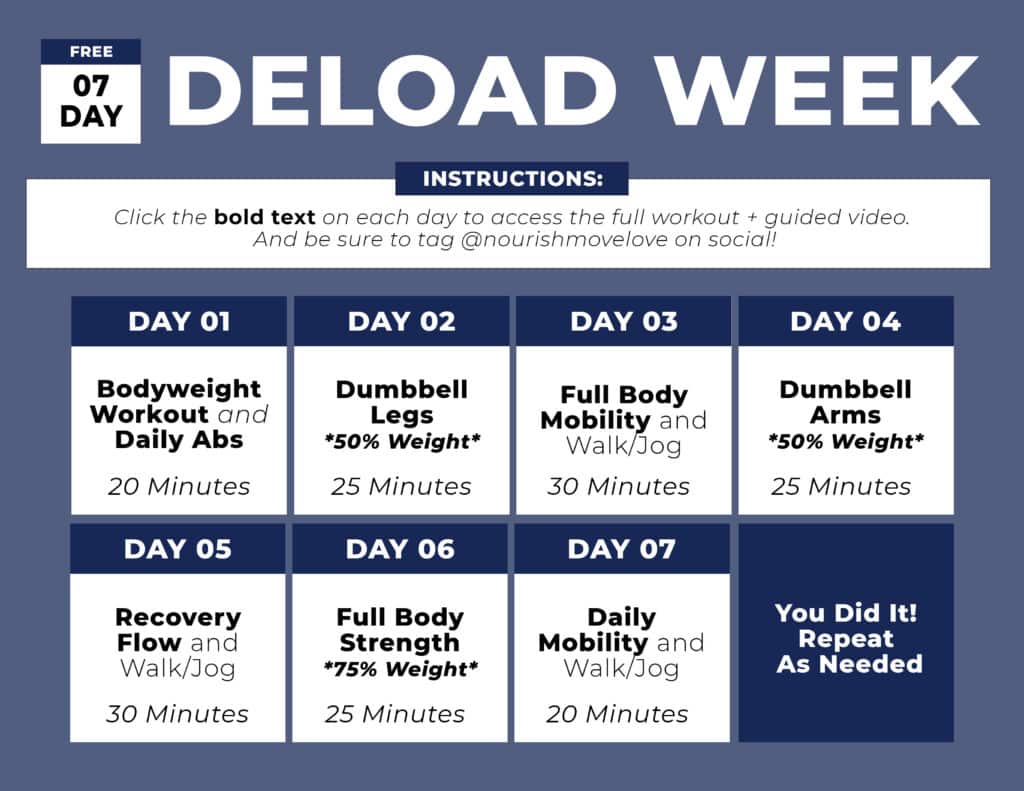
When designing or choosing a 7-day routine, individuals must also factor in active versus passive recovery. Even in a 7-day schedule, not every day should feature high-intensity resistance training. Integrating dedicated mobility work, low-intensity steady-state (LISS) cardio, or complete rest ensures that connective tissues recover alongside skeletal muscle.
Comparative Analysis of Popular 7-Day Workout Plans
To find the best weekly workout plan, one must weigh the trade-offs of the most time-tested training splits. Below is a comprehensive comparison of four primary frameworks adapted across a 7-day calendar.
| Workout Split | Weekly Frequency | Best Suited For | Primary Advantage | Main Disadvantage |
|---|---|---|---|---|
| Push/Pull/Legs (PPL) | 3 to 6 days | Intermediates & Advanced | Logical movement grouping, minimal overlap | Can require high weekly time commitment |
| Upper / Lower Split | 4 days | Beginners & Intermediates | Excellent balance of frequency and recovery | Less specialized focus for lagging body parts |
| Full Body Routine | 3 days | Time-crunched individuals, Beginners | Maximum efficiency, high movement frequency | High systemic fatigue per session |
| Bro Split (1 Body Part/Day) | 5 days | Bodybuilding purists, Advanced lifters | Extreme localized focus and pump | Low frequency per muscle group (once/week) |
Detailed Breakdown of Top 7-Day Frameworks
1. The Push/Pull/Legs (PPL) + Rest Framework
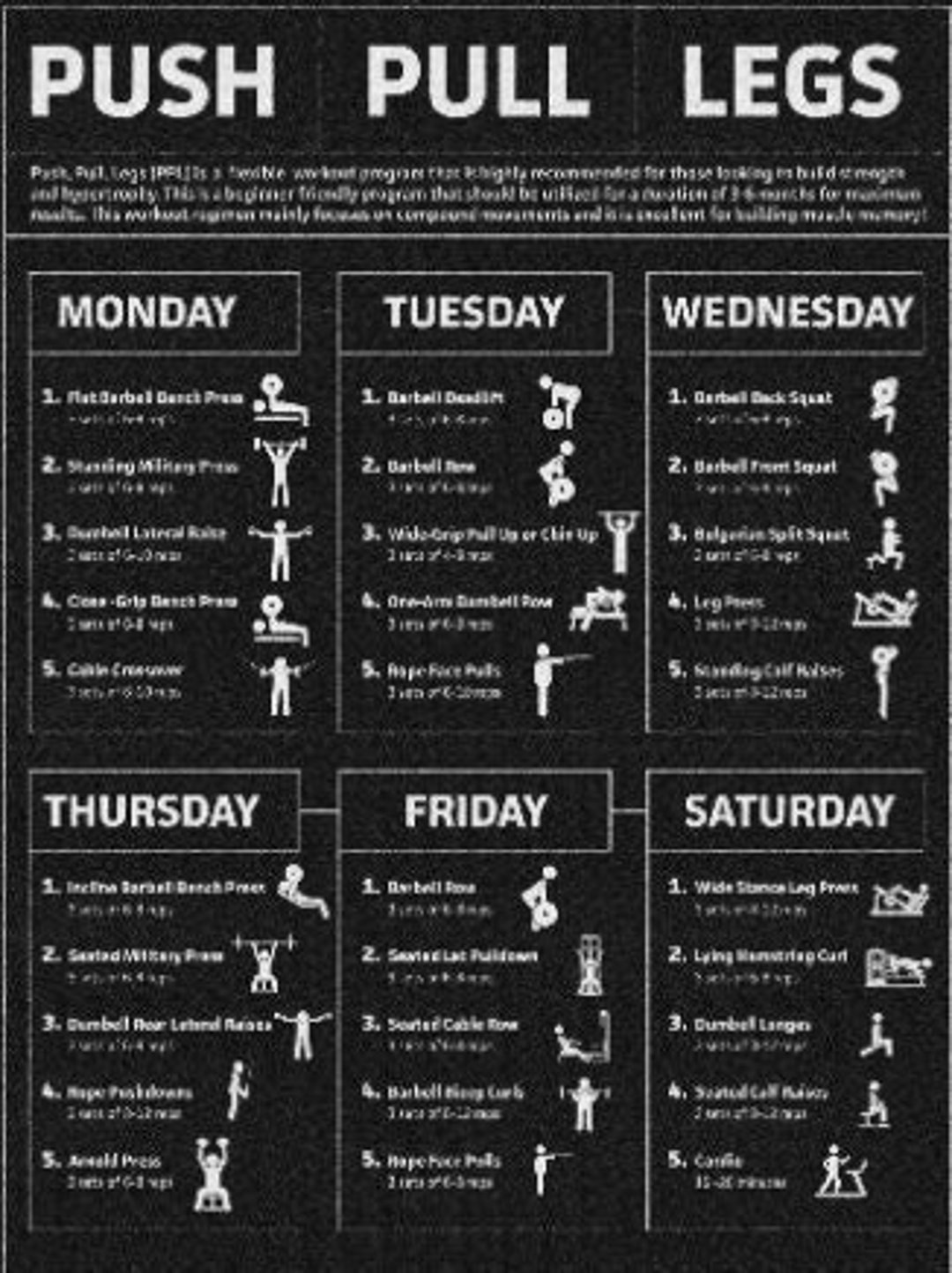
The Push/Pull/Legs split organizes exercises by mechanical function. Push days target the chest, shoulders, and triceps; pull days focus on the back, rear delts, and biceps; leg days cover the quadriceps, hamstrings, glutes, and calves.
When run on a 7-day cycle, an advanced lifter might run PPL twice, resulting in a 6-day training week with 1 rest day (e.g., Push, Pull, Legs, Push, Pull, Legs, Rest). Alternatively, a more sustainable intermediate schedule runs PPL with interspersed rest days (e.g., Push, Pull, Rest, Legs, Push, Pull, Rest). This structure prevents overlapping muscle fatigue; for example, your triceps are not heavily taxed the day before a heavy bench press session.
2. The Upper/Lower + Active Recovery Framework
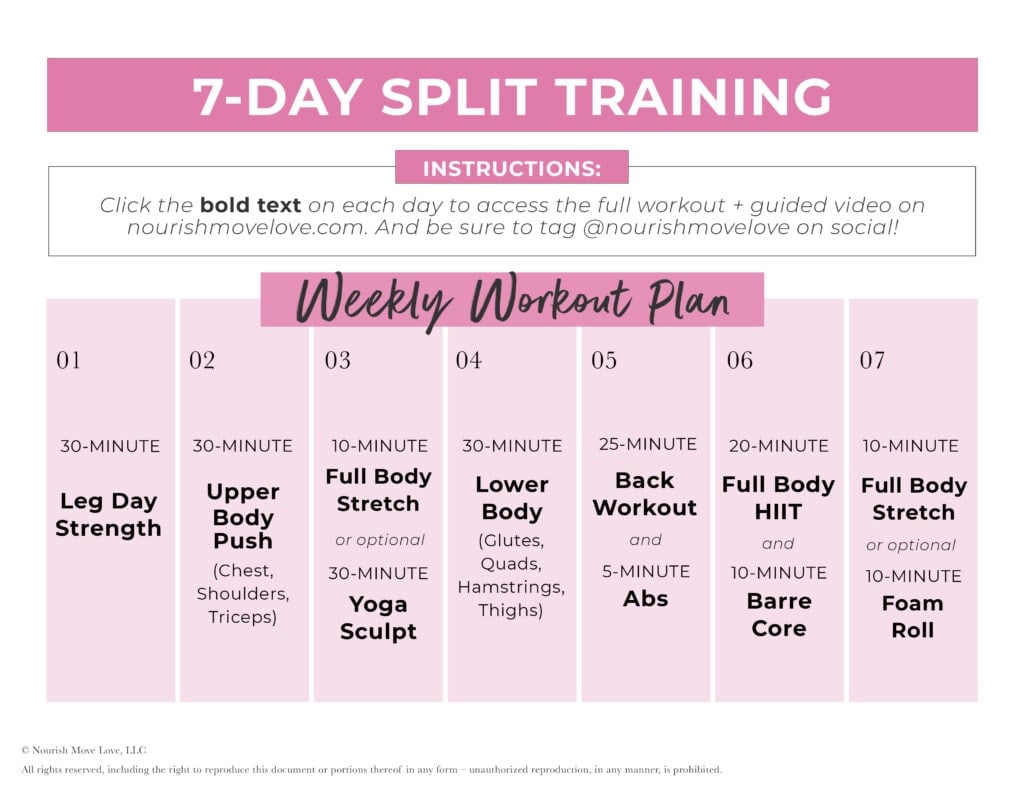
An Upper/Lower split divides the body into two halves, training the upper body one day and the lower body the next. A standard 7-day implementation looks like this:
- Monday: Upper Body A (Strength focus)
- Tuesday: Lower Body A (Strength focus)
- Wednesday: Active Recovery / Mobility
- Thursday: Upper Body B (Hypertrophy focus)
- Friday: Lower Body B (Hypertrophy focus)
- Saturday: Conditioning / LISS Cardio
- Sunday: Complete Rest
This configuration provides an ideal balance for individuals transitioning out of beginner phases. It hits every major muscle group twice per week while allowing ample time for systemic recovery.
3. The 3-Day Full Body + Conditioning Framework
For those with limited time or individuals whose primary goal is general health, sports performance, or fat loss, a 3-day full-body routine integrated into a 7-day week is highly effective.
- Monday: Full Body Resistance Training
- Tuesday: Zone 2 Cardio / Mobility
- Wednesday: Full Body Resistance Training
- Thursday: Active Recovery
- Friday: Full Body Resistance Training
- Saturday: Recreational Sport or Outdoor Activity
- Sunday: Complete Rest
By utilizing compound movements like squats, deadlifts, overhead presses, and rows during the three lifting days, trainees stimulate the entire musculature repeatedly without spending five or six days a week in the weight room.
Selecting the Right Plan Based on Experience and Goals
Choosing a workout plan is not a one-size-fits-all endeavor. Factors such as training age, daily stress levels, and specific physiological objectives dictate which weekly template will yield optimal results.
- Assess Goals & Time
- Beginner / Limited Time (2-3 days) -> Full Body Routine
- Intermediate / Balanced (4 days) -> Upper / Lower Split
- Advanced / High Volume (5-6 days) -> Push / Pull / Legs (PPL)
Beginners (0–1 Year of Consistent Training)
Beginners experience rapid neural adaptations and muscle growth from minimal volume. A 3-day full-body routine or a 4-day upper/lower split is ideal. Attempting a 6-day PPL routine as a novice often leads to excessive soreness, poor movement execution, and burnout.
Intermediates (1–3 Years of Consistent Training)
Intermediates require more volume to stimulate continued hypertrophy. An Upper/Lower split run across 4 days or a modified PPL routine with built-in rest days allows these lifters to manage fatigue while increasing working sets per muscle group.
Advanced Lifters (3+ Years)
Advanced trainees face the law of diminishing returns. They often require specialized volume and high-intensity techniques (such as drop sets, rest-pause, or RPE-based training) to force adaptation. A 6-day PPL schedule or an Arnold split (Chest/Back, Shoulders/Arms, Legs) becomes viable here, provided sleep, nutrition, and stress management are meticulously optimized.
Common Mistakes in 7-Day Workout Planning
Even with a well-designed template, exercisers frequently undermine their progress through structural and behavioral errors.
- Neglecting Recovery Days: Treating a 7-day week as an obligation to lift heavy for seven consecutive days guarantees overtraining. Tendons and ligaments recover more slowly than muscle tissue; failing to schedule rest leads to chronic joint inflammation.
- Chasing Junk Volume: Adding endless sets late in a workout when form breaks down does not stimulate growth. Quality of contraction matters more than sheer volume.
- Ignoring Nutrition and Sleep: No workout plan can compensate for chronic sleep deprivation or inadequate protein intake. Muscle repair relies heavily on caloric adequacy and sufficient restorative sleep cycles.
- Inconsistent Programming: Jumping between a full-body routine one week and an advanced PPL split the next prevents progressive overload, making it impossible to track strength improvements over time.
Frequently Asked Questions
How many days a week should I actually lift weights?
The ideal number of lifting days depends on your schedule and recovery capacity, but research generally supports 3 to 5 days of resistance training per week for the vast majority of people. This frequency provides enough stimulus to maximize muscle protein synthesis while leaving adequate days for rest and conditioning.
Can I do cardio on the same days as my resistance training?
Yes, you can combine cardio and weight training, but order matters. If your primary goal is muscle hypertrophy or strength, perform your resistance training first when your energy stores are full, followed by cardio. If endurance is your priority, reverse the order or separate the sessions by at least six hours.
What is the difference between a bro split and a PPL split?
A traditional "bro split" trains one muscle group per once a week across 5 days (e.g., chest on Monday, back on Tuesday). A Push/Pull/Legs (PPL) split groups muscles by movement patterns and typically trains each muscle group twice per week. Modern sports science generally favors the higher frequency of PPL.
How do I know if my workout plan is working?
The most reliable indicator of an effective training plan is progressive overload—meaning you are gradually lifting more weight, performing more repetitions with the same weight, or improving your execution and mind-muscle connection over successive weeks. Tracking your workouts in a logbook is essential for verification.
Is it necessary to take complete rest days, or is active recovery enough?
While active recovery—such as walking, swimming, or dynamic stretching—is beneficial for blood flow and mobility, incorporating at least one or two complete rest days per week where physical exertion is minimal is crucial for central nervous system recovery and long-term joint health.
Conclusion and Next Action
Selecting the best weekly workout plan ultimately hinges on honesty regarding your schedule, recovery capacity, and training age. To begin, audit your weekly calendar to determine how many consistent days you can dedicate to the gym without compromising sleep or work commitments. Choose one structured template—such as an Upper/Lower split or a Push/Pull/Legs routine—and commit to executing it consistently for at least 8 to 12 weeks while tracking your working weights and nutrition. Consistency and progressive overload will always trump the novelty of constantly switching routines.