Choosing the correct filament is the single most important decision for successful additive manufacturing, balancing mechanical strength, thermal resistance, aesthetic finish, and printing ease. Whether you are prototyping a quick mechanical clip, engineering an end-use production part exposed to outdoor elements, or crafting a detailed decorative figurine, matching your project requirements to the right polymer prevents print failures, wasted time, and material degradation.
Understanding 3D Printing Filaments: The Fundamentals
Before diving into material specifics, it is vital to understand how thermoplastics behave in fused deposition modeling (FDM) printing. Filaments are fed through a heated nozzle, melted, and deposited layer by layer. Each polymer features a unique glass transition temperature ($T_g$)—the point where the plastic becomes pliable—and a melting point where it flows freely.
Factors such as moisture absorption, shrinkage rates, and bed adhesion requirements vary dramatically between materials. Hygroscopic materials like Nylon and Polycarbonate absorb moisture from the air rapidly, leading to bubbling, stringing, and weak layer bonding if not dried properly. Conversely, materials like Polylactic Acid (PLA) are forgiving and rigid, making them ideal for beginners, while engineering-grade thermoplastics demand enclosed chambers and hardened steel nozzles.
Comprehensive 3D Printer Material Comparison Chart
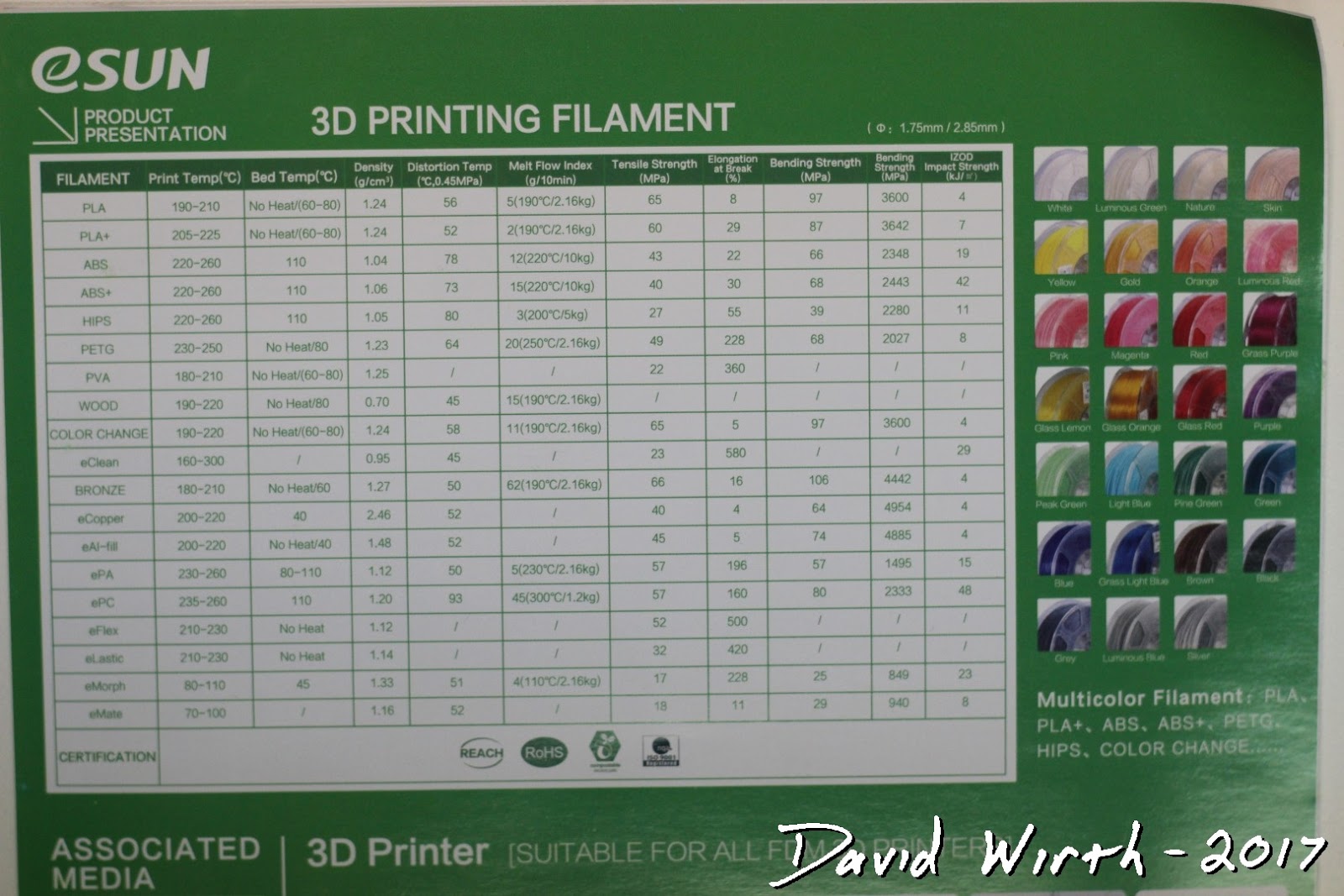
The following chart outlines the core technical properties, printing parameters, and ideal use cases for the most common 3D printer filaments available on the market.
| Material | Printing Temp (°C) | Bed Temp (°C) | Enclosure Required? | Tensile Strength | Layer Adhesion | Primary Use Cases |
|---|---|---|---|---|---|---|
| PLA (Polylactic Acid) | 190 - 220 | 0 - 60 | No | Moderate | High | Prototypes, miniatures, decorative models, low-stress parts |
| PETG (Polyethylene Terephthalate Glycol) | 230 - 250 | 70 - 80 | No | High | Very High | Mechanical parts, waterproof containers, functional brackets |
| ABS (Acrylonitrile Butadiene Styrene) | 220 - 250 | 90 - 110 | Yes (Recommended) | High | High | Automotive parts, durable enclosures, functional consumer goods |
| ASA (Acrylonitrile Styrene Acrylate) | 240 - 260 | 90 - 110 | Yes (Recommended) | High | High | Outdoor signage, UV-resistant housings, marine components |
| TPU (Thermoplastic Polyurethane) | 210 - 230 | 20 - 60 | No | Flexible | Very High | Phone cases, gaskets, vibration dampeners, wearable items |
| Nylon (Polyamide) | 240 - 280 | 70 - 100 | Yes | Very High | Exceptional | Gears, hinges, industrial bearings, heavy-duty snaps |
| Polycarbonate (PC) | 270 - 310 | 100 - 120 | Yes | Extreme | Moderate | High-heat housings, transparent protective shields, structural elements |
Detailed Breakdown of Common 3D Printing Materials
Polylactic Acid (PLA): The Beginner and Prototyping Standard
PLA remains the most widely used 3D printing filament due to its ease of use, low warping tendency, and pleasant, organic smell when melted (derived from corn starch or sugarcane). It prints successfully at lower temperatures without requiring a heated print bed or a specialized enclosure.
However, PLA has notable limitations. It possesses a low glass transition temperature (around 55°C to 60°C), meaning it will deform or sag if left in a hot car or exposed to direct, prolonged sunlight. It is also brittle under high-impact stress, making it unsuitable for heavy-duty mechanical loads.
Polyethylene Terephthalate Glycol (PETG): The Versatile Workhorse
PETG bridges the gap between the ease of printing associated with PLA and the mechanical toughness of ABS. It offers excellent layer adhesion, chemical resistance, and moderate flexibility. Because it absorbs minimal moisture compared to Nylon and is food-safe in its pure form (though printer nozzle contamination must be considered), PETG is a favorite for water-resistant prints and mechanical brackets.
PETG is prone to stringing and oozing due to its sticky nature when molten. Fine-tuning retraction settings and drying the filament thoroughly are necessary steps to achieve clean surface finishes.
Acrylonitrile Butadiene Styrene (ABS) and Acrylonitrile Styrene Acrylate (ASA): Engineering and Outdoors
ABS is a traditional engineering thermoplastic known for its toughness, impact resistance, and ability to be smoothed using acetone vapor. However, ABS shrinks significantly as it cools, leading to warping and cracking if printing on an open-frame printer. It also emits styrene fumes, requiring adequate room ventilation.
ASA is chemically similar to ABS but features an acrylic-based rubber structure, granting it superior UV resistance and weatherability. While ASA shares the same printing challenges as ABS—requiring high bed temperatures and enclosed environments—it will not degrade or yellow when exposed to direct sunlight over extended periods.
Flexible Filaments: Thermoplastic Polyurethane (TPU)
TPU offers rubber-like elasticity with shore hardness ratings typically ranging from 85A to 95A. It allows creators to produce flexible components like gaskets, protective phone cases, and drone parts.
Printing TPU requires careful hardware configurations. Direct-drive extruders manage flexible filaments much better than Bowden tube setups because the short distance between the feed gears and the melt zone prevents the filament from buckling or coiling inside the tube. Slow printing speeds (20–30 mm/s) are essential for consistent extrusion.
High-Performance Engineering Polymers: Nylon and Polycarbonate
Nylon and Polycarbonate represent the pinnacle of consumer and professional FDM printing capabilities.
- Nylon boasts incredible wear resistance, low friction coefficients, and high tensile strength. It is hydroscopic, meaning it absorbs ambient moisture aggressively; printing wet nylon results in bubbling and brittle layers. Dry boxes and active filament dryers are mandatory.
- Polycarbonate (PC) offers staggering thermal resistance (often withstanding temperatures over 110°C without deformation) and immense structural rigidity. It requires high nozzle temperatures (up to 310°C) and robust all-metal hotends, making it suitable for industrial tooling and end-use manufacturing aids.
Critical Selection Factors for Your Project
1. Mechanical Requirements
Assess whether your part needs to withstand tensile pulling, compressive weight, or impact shocks. For high-impact or load-bearing applications, choose PETG, ABS, or Nylon. For lightweight, decorative display models, standard PLA is more than sufficient.
2. Thermal Environment
Evaluate the operating temperature of your finished part. If the item will reside outdoors in summer or near machinery, avoid PLA. Opt instead for ASA, PETG, or high-temperature engineering plastics like Polycarbonate.
3. Printer Hardware Limitations
Match the filament to your machine's physical capabilities. Printing abrasive carbon-fiber-infused filaments or high-temperature polymers like PC requires an all-metal hotend, a hardened steel nozzle, a heated bed, and potentially a fully enclosed chamber. Attempting to print PC on a stock budget printer with a PTFE-lined hotend will degrade the PTFE tube, releasing toxic fumes and ruining the hotend assembly.
Frequently Asked Questions
Which 3D printer filament is the easiest to use for beginners?
PLA is universally recognized as the best filament for beginners. It requires lower printing temperatures, adheres easily to glass, PEI, or painter's tape print surfaces, and rarely warps, allowing new users to focus on learning slicing software and printer calibration without fighting material issues.
Can I print ABS or ASA without a heated enclosure?
While technically possible on small parts, printing ABS or ASA without an enclosure is strongly discouraged. As the extruded plastic cools, internal thermal stresses cause the corners of the print to lift off the build plate (warping) or split along layer lines. An enclosure traps ambient heat, keeping the cooling gradient gradual and uniform.
How do I store my 3D printing filaments properly?
Most filaments—especially Nylon, PETG, TPU, and PVA—are hygroscopic, meaning they absorb moisture from the air. Store unused spools in airtight plastic storage containers or vacuum-sealed bags packed with rechargeable silica gel packets. If a filament begins making popping sounds or producing stringy, rough prints, dry it in a dedicated filament dryer or food dehydrator at recommended temperatures before use.
Do I need a special nozzle for abrasive filaments like carbon fiber or glow-in-the-dark?
Yes. Composite filaments containing carbon fiber, glass fiber, glow-in-the-dark phosphorescent particles, or wood dust are highly abrasive. Standard brass nozzles will wear down and widen rapidly, ruining print tolerances. Always upgrade to hardened steel, tool steel, or ruby-tipped nozzles when printing abrasive composite materials.
Practical Recommendations
To maximize your success with any polymer listed in this 3D printer material comparison chart, always start by running a temperature tower and retraction test for every new brand or spool you open. Manufacturers vary slightly in their precise chemical makeup and optimal melting points. Verify your printer hardware specifications against the material's requirements before starting a print, and prioritize proper filament storage to maintain consistent mechanical performance across all your manufacturing projects.