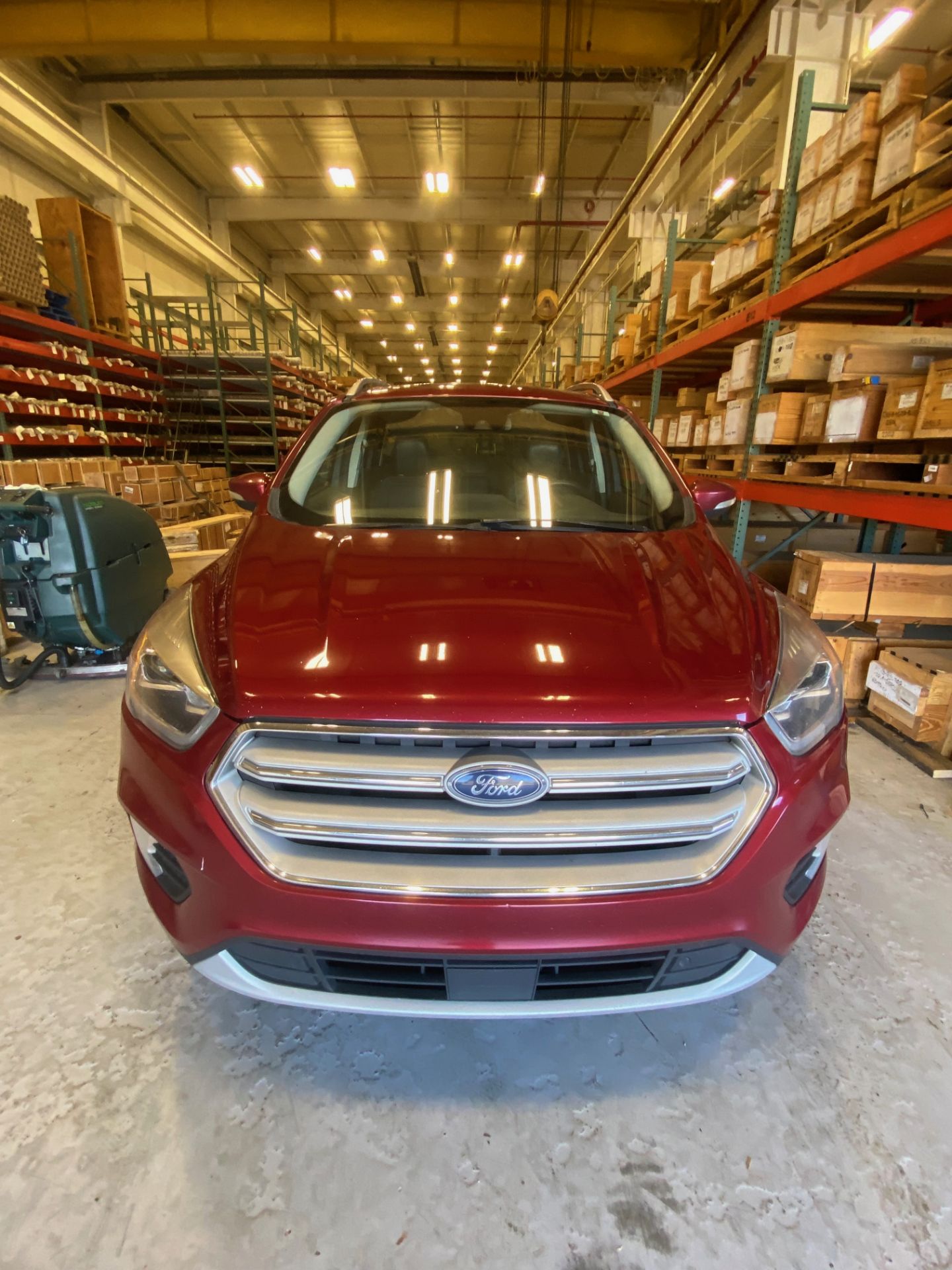
The 2019 Ford Escape AWD is a compact crossover SUV featuring Ford’s Intelligent All-Wheel Drive system, designed to enhance traction by monitoring road conditions and adjusting torque distribution between the front and rear wheels. This model year offers multiple engine configurations and trim levels, providing a balance of utility, everyday drivability, and weather-ready performance for diverse road surfaces.
Overview of the 2019 Ford Escape AWD Platform
The 2019 Ford Escape represents the final model year of the third generation, a platform characterized by its nimble handling and refined interior ergonomics. Unlike full-time four-wheel-drive systems found in traditional trucks, the Ford Intelligent All-Wheel Drive (AWD) is an "on-demand" system. It operates primarily in front-wheel drive under normal cruising conditions to conserve fuel but can transition to AWD in milliseconds when it detects wheel slip.
This generation of the Escape was engineered to prioritize accessibility for daily commuters while maintaining a level of capability suitable for gravel roads, snow, and rain-slicked pavement. Because it relies on electronic sensors to modulate power, the system is seamless; most drivers will not notice the transition between drive modes. Understanding this system is crucial for owners who intend to use the vehicle in climates with significant seasonal changes.
Engine Options and Powertrain Dynamics
The 2019 Ford Escape AWD was available with three distinct engine choices, each affecting the vehicle's driving character and fuel efficiency.
2.5L Duratec I-4
The base engine, typically found on the S trim, generally came in a front-wheel-drive configuration; however, prospective buyers should be aware that variations in fleet and regional markets occasionally complicate trim-level assumptions. It is a naturally aspirated engine, favored for its simplicity and lower initial purchase cost.
1.5L EcoBoost I-4
The 1.5L EcoBoost is the most common engine paired with AWD in the SE and SEL trims. Utilizing turbocharging and direct injection, this engine provides a balanced power curve. The Intelligent AWD system works in concert with this engine to provide stability during acceleration. Owners should note that the performance of the 1.5L is highly dependent on regular oil changes and the use of the manufacturer-recommended oil viscosity, as turbochargers generate significant heat and demand high-quality lubrication.
2.0L EcoBoost I-4
The 2.0L EcoBoost, often found in the Titanium trim, offers the most robust power output. For those who frequently drive in hilly terrain or require the vehicle to handle higher payloads, this engine provides a significant advantage. The AWD system in the 2.0L models is tuned to manage the increased torque more aggressively, which can improve driver confidence during highway passing maneuvers in less-than-ideal weather.
Intelligent All-Wheel Drive: How It Works
The core of the 2019 Ford Escape’s capability is its ability to process data from various sensors, including wheel speed, steering angle, and throttle position. Unlike mechanical 4WD systems that require a manual lever or switch to engage, the Intelligent AWD system is always active in the background.
- Slip Detection: Sensors monitor each wheel's rotational speed. If a wheel loses grip, the system automatically redirects torque to the wheel with more traction.
- Torque Vectoring Control: This feature enhances the AWD experience by applying small amounts of braking to the inside front wheel during a turn. This reduces understeer and helps the vehicle track more accurately through corners.
- Safety Integration: The system works in tandem with the vehicle's AdvanceTrac with Roll Stability Control (RSC) to maintain vehicle path if the electronic stability control detects a loss of control.
Comparison of Trim Levels and AWD Availability
Selecting the right trim is essential for ensuring your 2019 Ford Escape includes the specific features you require. While AWD was available on many trims, it was not always a standard inclusion across the entire lineup.
| Trim Level | Standard Drivetrain | AWD Availability | Typical Use Case |
|---|---|---|---|
| S | FWD | Not Available | Urban commute, low cost |
| SE | FWD | Optional | Balanced features, daily driver |
| SEL | FWD | Optional | Mid-range comfort, cold weather |
| Titanium | FWD | Optional | Premium tech, max performance |
Note: In some regions and specific model configurations, AWD may have been packaged as part of a "Cold Weather Package" or similar dealer-installed option.
Maintenance Requirements for the AWD System
The Intelligent AWD system is largely maintenance-free in terms of daily operation, but it is not immune to wear. Because the system utilizes a Power Transfer Unit (PTU) and a Rear Drive Unit (RDU), the fluids within these components are subject to thermal stress over time.
PTU and Rear Differential Fluid
While Ford’s maintenance schedule for the 2019 Escape historically focused on engine oil and transmission fluid, specialized shops and experienced owners recommend inspecting the PTU fluid every 60,000 to 80,000 miles. If the vehicle is used for towing or driving in mountainous regions, this interval should be shortened. The PTU is located near the hot exhaust system, which can accelerate the degradation of the lubricant over time.
Tire Health and Synchronization
Because the AWD system relies on wheel speed sensors to determine torque distribution, it is critical that all four tires are of the same brand, model, and tread depth. Using mismatched tires—or tires with vastly different wear patterns—can cause the AWD system to misinterpret data, potentially leading to unnecessary system stress or, in extreme cases, internal damage to the drivetrain.
Common Challenges and Troubleshooting
Even with a reliable system, owners may encounter specific issues. Being aware of these can help with early intervention.
Persistent "AWD Malfunction" Message
If an error message regarding the AWD system appears on the instrument cluster, it is most often caused by a faulty wheel speed sensor or a wiring issue rather than a total mechanical failure of the drive unit. A technician can use an OBD-II diagnostic tool to read the specific trouble code (DTC) to identify which corner of the vehicle is reporting the error.
Vibration at Highway Speeds
If you feel a vibration specifically when the vehicle is accelerating under load, it may point to the carrier bearing on the driveshaft or a worn CV joint. Since the AWD system is constantly sending power to the rear wheels, any imbalance in the rotating assembly becomes more noticeable under acceleration.
Frequently Asked Questions
1. Does the 2019 Ford Escape AWD require a special button to activate? No. The system is fully automatic and requires no input from the driver. It monitors road conditions continuously and shifts power as needed without the need for manual activation or "snow" modes.
2. How much does AWD affect fuel economy in the 2019 Escape? AWD models generally see a slight reduction in MPG compared to their FWD counterparts due to the added weight of the rear differential, driveshaft, and the mechanical drag of the system. On average, expect a difference of 1–2 MPG depending on engine choice.
3. Can I tow a trailer with my 2019 Ford Escape AWD? Yes, but you must adhere to the towing limits. Models equipped with the 2.0L EcoBoost engine and the Class II Trailer Tow Prep Package are rated for higher towing capacities than those without. Always consult your owner’s manual for the specific towing limit based on your vehicle's exact configuration.
4. Should I rotate my tires more frequently with an AWD model? Yes. To ensure the AWD system functions as designed and to avoid stress on the drivetrain, regular tire rotation is essential to keep tread wear uniform across all four tires. Aim for a rotation every 5,000 to 7,500 miles.
5. Is the 2019 Escape AWD suitable for off-roading? The 2019 Ford Escape is categorized as a crossover, not an off-road vehicle. While it is excellent for dirt roads, snow, and wet pavement, it lacks the ground clearance and low-range gearing required for serious rock crawling or deep trail driving.
Practical Guidance for Owners
If you currently own or are considering the purchase of a 2019 Ford Escape AWD in 2026, focus your attention on the vehicle’s service history. Ask for records of fluid changes. If you are buying a pre-owned unit, perform a thorough inspection of the undercarriage. Check for any signs of leakage around the Power Transfer Unit (PTU) located on the side of the transmission.
For daily operation, ensure your tires are maintained at the recommended pressures listed on the driver-side door jamb. In winter months, consider switching to dedicated winter tires; while the AWD system manages power distribution to help you get moving, the ability to stop and steer—the most critical aspects of safety—is determined entirely by the contact patch provided by your tires.
By following a strict maintenance schedule and keeping the drivetrain components properly lubricated, the 2019 Ford Escape AWD can serve as a dependable, versatile vehicle for various driving environments.