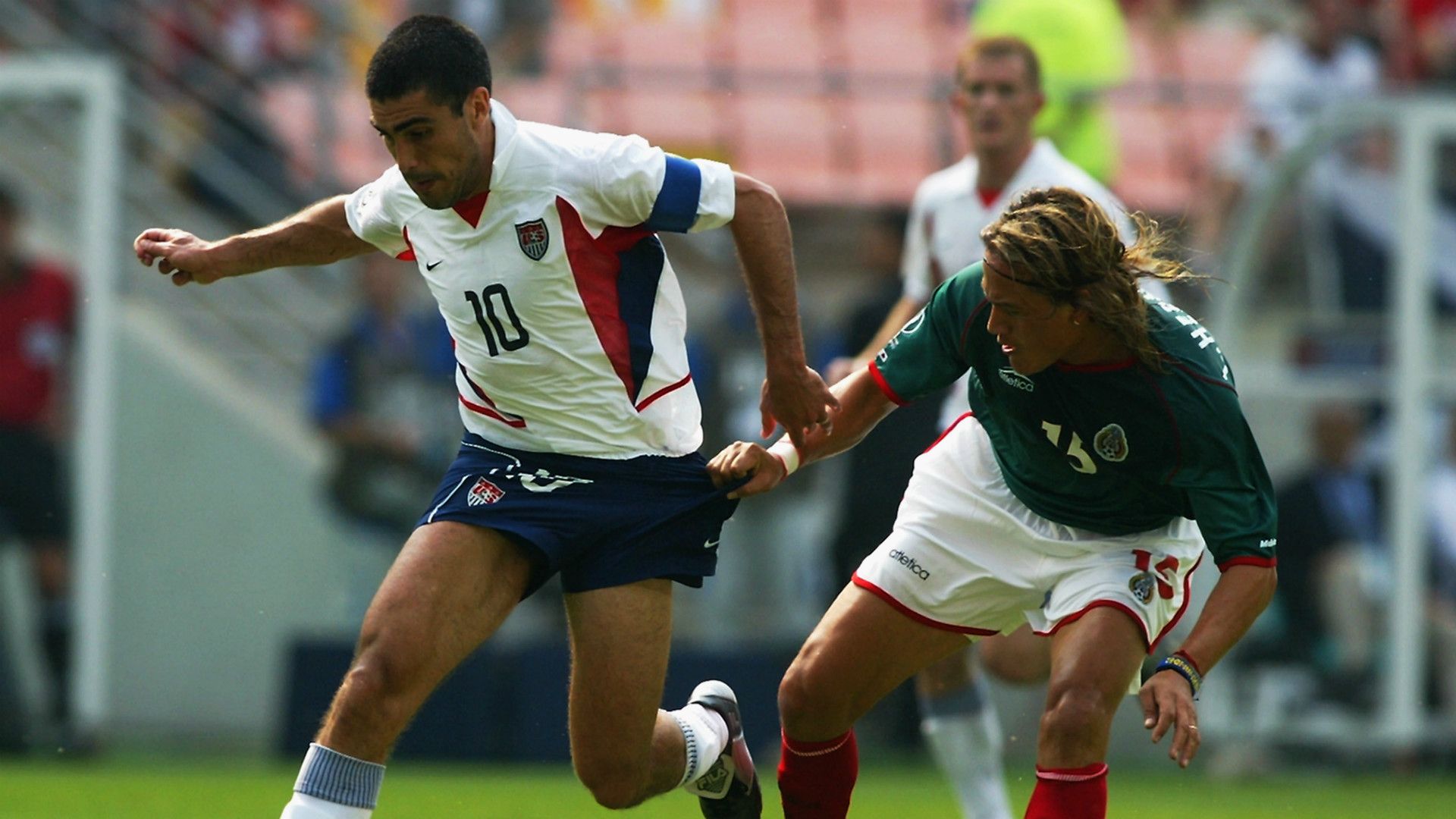
The historic 2002 FIFA World Cup Round of 16 match between the United States and Mexico represented the pinnacle of their fierce footballing rivalry, resulting in a 2-0 victory for the United States through goals by Brian McBride and Landon Donovan. This encounter remains the only time these two North American giants have faced each other on the grandest stage of international football, permanently altering the landscape of soccer in the CONCACAF region.
Historical Context of the USA vs. Mexico Rivalry
Long before June 17, 2002, the fixture between the United States and Mexico carried immense cultural, political, and sporting weight. Historically, Mexico dominated the encounter, treating encounters on North American soil as near-guaranteed victories. For decades, the Mexican national team possessed superior technical skill, a deeper talent pool, and a psychological edge rooted in decades of regional supremacy.
Conversely, the United States men's national team (USMNT) was still fighting for cultural relevance in a country where soccer competed against American football, baseball, and basketball. However, the 1990s and early 2000s marked a tectonic shift. The establishment of Major League Soccer (MLS) in 1996 provided a domestic professional platform, while American players began securing contracts in top-tier European leagues. Matches between the two nations grew increasingly hostile and competitive, transforming a lopsided fixture into one of the most volatile and passionate rivalries in world football.
The Road to Jeonju: 2002 World Cup Group Stages
Entering the 2002 FIFA World Cup hosted jointly by South Korea and Japan, neither team was expected to reach the knockout stages together, let alone face each other.
The United States, coached by Bruce Arena, was drawn into Group D alongside co-hosts South Korea, Portugal, and Poland. The USMNT stunned the global football community in their opening match by defeating a heavily favored Portugal side 3-2, powered by goals from John O'Brien, an own goal, and a header from Brian McBride. Although a subsequent 1-1 draw against South Korea and a 3-1 defeat to Poland complicated matters, the U.S. advanced to the Round of 16 as the runner-up in Group D, capitalizing on Portugal's unexpected early exit.
Mexico, under the guidance of manager Javier Aguirre, enjoyed a much smoother group stage campaign in Group G. El Tri opened with a solid 1-0 victory over Croatia, followed by a commanding 2-1 win against Ecuador. They secured the top spot in their group by holding powerhouse Italy to a 1-1 draw, showcasing disciplined defensive organization paired with the creative brilliance of players like Cuauhtémoc Blanco and Jared Borgetti.
Tactical Breakdown of the Match
On June 17, 2002, at the Jeonju World Cup Stadium in South Korea, the two CONCACAF rivals stepped onto the pitch under intense global scrutiny. The tactical setup deployed by both managers dictated the chaotic and high-stakes nature of the encounter.
| Team | Tactical Formation & Key Personnel |
|---|---|
| United States (USMNT) | 3-5-2 (Modified)Manager: Bruce ArenaKey Figures: Brad Friedel, Claudio Reyna, Brian McBride, Landon Donovan |
| Mexico (El Tri) | 3-5-2 / 3-4-3Manager: Javier AguirreKey Figures: Oscar Pérez, Rafael Márquez, Cuauhtémoc Blanco, Jared Borgetti |
Bruce Arena opted for a rigid, athletic structure designed to disrupt Mexico's fluid passing game. By deploying a back three flanked by industrious midfielders, the U.S. aimed to outrun and physically overwhelm their opponents. Claudio Reyna marshaled the midfield, breaking up Mexican attacks and distributing the ball quickly to wide areas.
Javier Aguirre countered with a traditional Mexican lineup that favored possession, technical combination play in tight spaces, and the aerial prowess of Borgetti. However, Mexico's tactical vulnerability lay in transition defense. The high positioning of their wing-backs left acres of space behind them—a weakness the U.S. coaching staff had meticulously analyzed.
Match Timeline and Critical Turning Points
The match kicked off at a blistering pace, characterized by heavy challenges, physical duels, and palpable tension. Mexico dominated early possession, probing the American defense through the creativity of Blanco and Ramón Morales. However, the U.S. defensive block, anchored by veteran goalkeeper Brad Friedel, held firm against the early pressure.
The Opening Goal: Brian McBride (Minute 8)
The deadlock broke early in the match. In the 8th minute, Eddie Lewis surged down the left flank and delivered a probing cross into the penalty area. Brian McBride, displaying his trademark aerial dominance and predatory instincts, met the ball cleanly, directing a fierce right-footed shot past Mexican goalkeeper Oscar Pérez. The 1-0 lead altered the psychological dynamic of the game, forcing a visibly rattled Mexican side to chase the scoreline.
Mexico's Response and U.S. Resilience
Following the goal, Mexico surged forward in waves of attack. Borgetti and Blanco tested Friedel repeatedly, but the American shot-stopper produced a series of world-class saves. Tempers flared as tackles flew in from both sides, leading to multiple yellow cards as referee Hugh Dallas struggled to maintain absolute control over the fierce regional animosity.
The Killer Blow: Landon Donovan (Minute 65)
As Mexico committed more men forward in search of an equalizer in the second half, the game opened up precisely as Arena had planned. In the 65th minute, a swift U.S. counterattack caught the Mexican defense unorganized. Eddie Lewis again played a crucial role, sending a floating cross toward the far post. A young Landon Donovan—then just 20 years old—timed his run perfectly, leaping to loop a header over Pérez into the back of the net, extending the lead to 2-0.
Key Player Performances
Evaluating the individual displays from the 2002 showdown highlights the stark differences in execution between the two squads on that afternoon.
- Brad Friedel (USA): Arguably the man of the match, Friedel made crucial saves throughout the 90 minutes, denying Mexico clean looks on goal and preserving the clean sheet under intense sustained pressure.
- Landon Donovan (USA): Cemented his status as a generational American talent, terrorizing the Mexican defense with his blistering pace and capping his performance with a historic goal.
- Brian McBride (USA): Provided the physical focal point for the American attack, scoring the vital opening goal and absorbing punishing challenges from Mexican center-backs.
- Rafael Márquez (Mexico): Had a nightmare ending to an otherwise stellar tournament. Frustrated by the scoreline and the physical nature of the match, Márquez received a straight red card in injury time for a reckless, lunging tackle on U.S. midfielder Cobi Jones, symbolizing Mexico's afternoon collapse.
Aftermath and Legacy of the 2002 Showdown
The final whistle confirmed a historic 2-0 victory for the United States, sending them through to the World Cup quarterfinals—their best modern finish in the tournament—while sending a heartbroken Mexican squad home.
The repercussions of this match reverberated for decades across international football:
- Psychological Shift: The match shattered the long-held psychological barrier Mexico held over the United States. For years following 2002, the phrase "Dos a Cero" (Two to Zero) became a rallying cry for American fans and a haunting reminder for Mexican supporters whenever the two teams met.
- Growth of MLS: The success of American players on the world stage boosted the domestic profile of Major League Soccer, validating investments in youth academies and infrastructure.
- Intensification of the Rivalry: Matches between the USMNT and El Tri assumed an even higher level of geopolitical and sporting tension, making every subsequent CONCACAF Gold Cup and World Cup qualifier a must-watch global sporting event.
Frequently Asked Questions
Did the USA and Mexico ever play each other in the World Cup again?
As of 2026, the 2002 Round of 16 match remains the only time the United States and Mexico have faced each other in the FIFA World Cup finals. While they frequently play in friendlies, CONCACAF Gold Cup finals, and World Cup qualifiers, they have not crossed paths on the global stage since that historic day in Jeonju.
Who scored the goals for the United States in the 2002 match?
Brian McBride scored the opening goal in the 8th minute with a clinical finish inside the box, and Landon Donovan secured the victory with a header in the 65th minute following a cross from Eddie Lewis.
Why was Rafael Márquez sent off during the match?
Rafael Márquez received a straight red card in the 88th minute of the match following a blatant, dangerous lunging kick aimed at the legs of U.S. midfielder Cobi Jones, capping a match characterized by intense physical frustration for the Mexican side.
What was the significance of this match for American soccer?
The victory propelled the United States into the quarterfinals of the 2002 FIFA World Cup, marking their most successful modern tournament run and proving that the nation could compete against and defeat elite traditional soccer powers on foreign soil.
Final Recommendation
For football historians, tactical analysts, and fans of international sports rivalries, reviewing the 2002 World Cup USA versus Mexico match offers a masterclass in tournament-style knockout football. To truly understand the modern landscape of North American soccer, analysts must examine how defensive discipline, tactical opportunism, and psychological resilience allowed the United States to secure the most significant victory in the history of the rivalry.