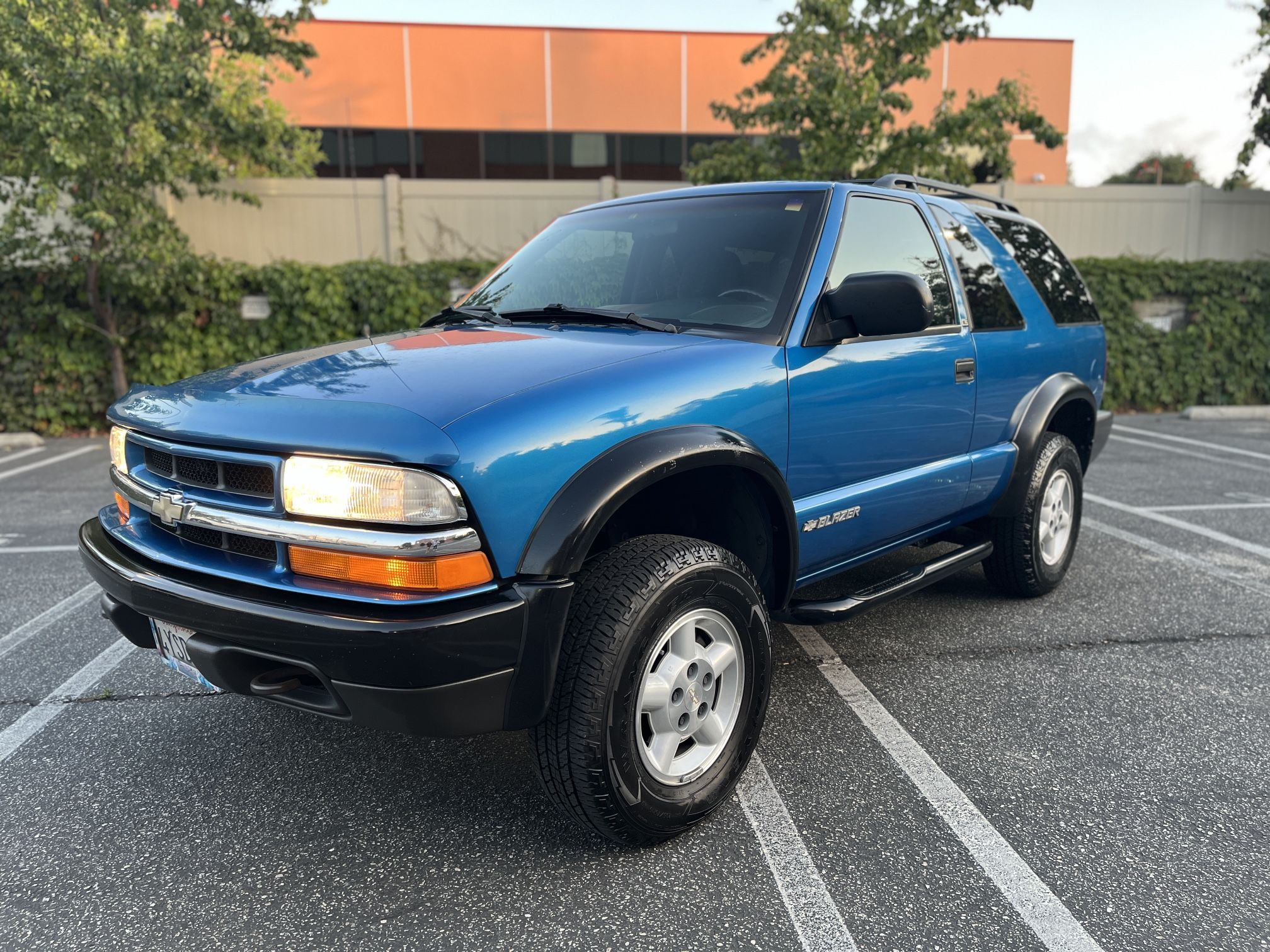
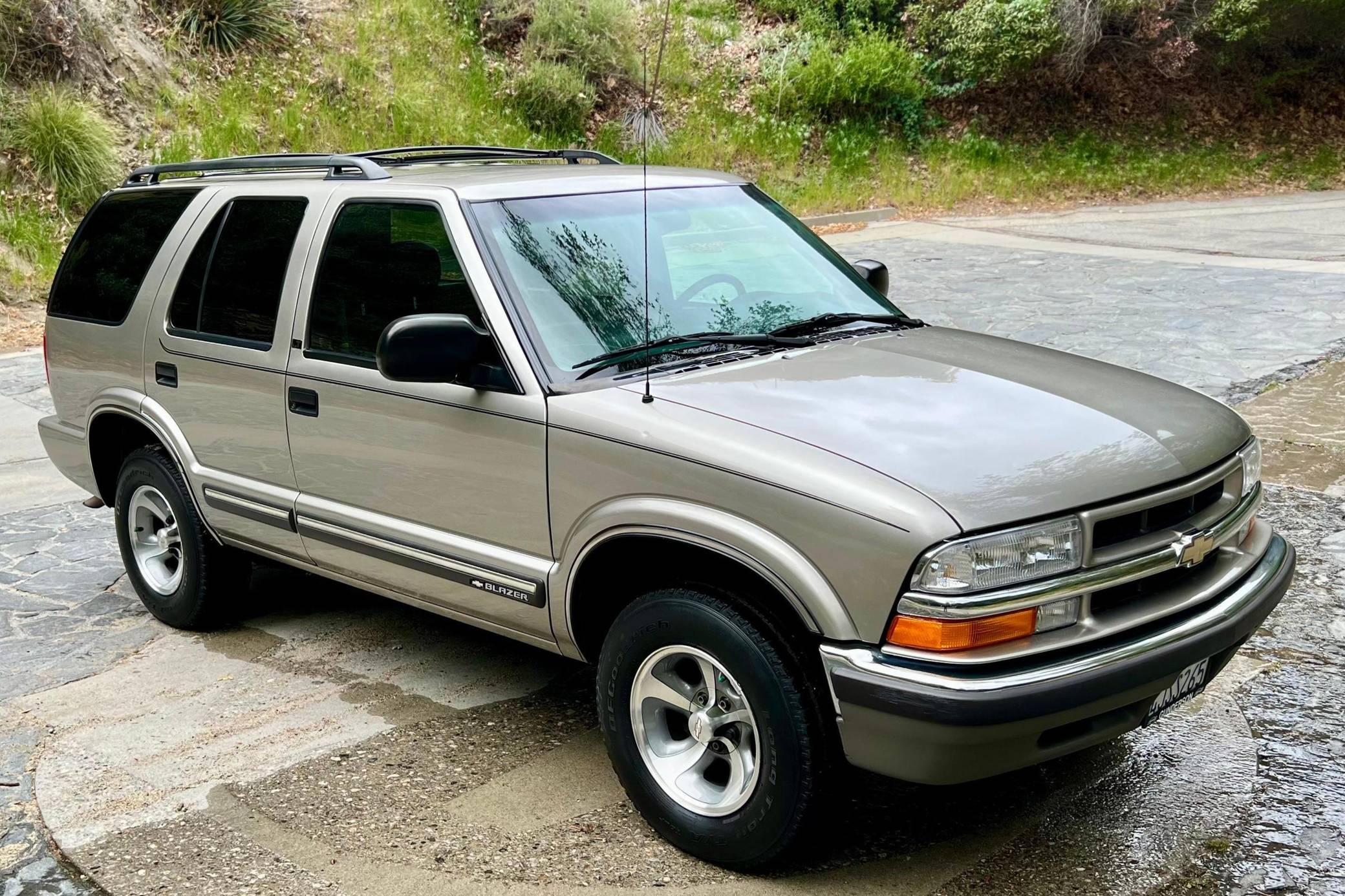
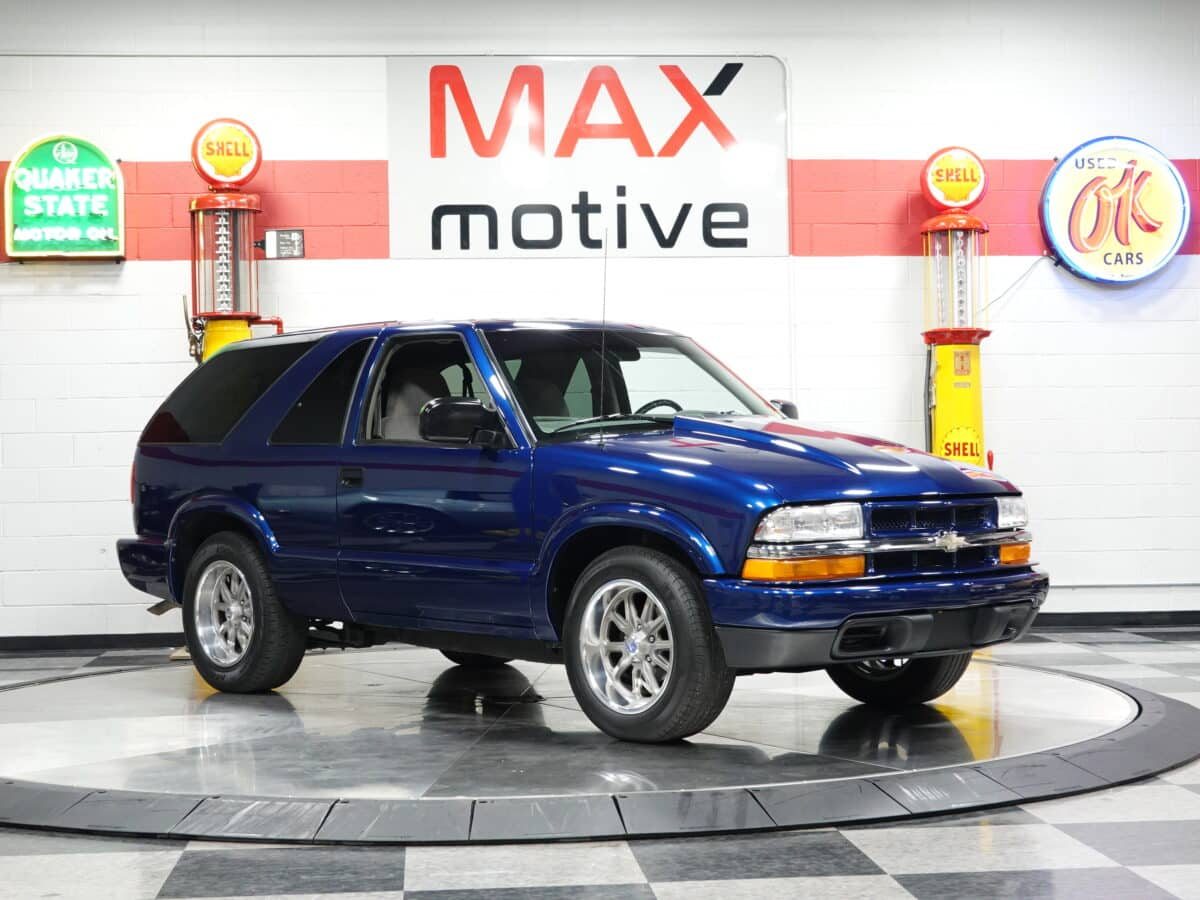
The 2000 Chevrolet Blazer typically achieves an average of 14 to 16 MPG in the city and 18 to 20 MPG on the highway, depending on whether the vehicle is equipped with two-wheel drive (2WD) or four-wheel drive (4WD). Most drivers find that the combined fuel economy settles around 15 to 17 MPG under normal operating conditions.
As we look at the 2000 Chevrolet Blazer in 2026, it remains a popular choice for enthusiasts of classic "S-10" era SUVs. However, its fuel consumption is a significant consideration for modern owners. This vehicle was designed in an era when fuel economy was secondary to utility and torque. Understanding the specific factors that influence the 2000 Chevrolet Blazer mpg is essential for both potential buyers and current owners looking to maximize their range.
Official EPA Ratings for the 2000 Chevrolet Blazer
To understand the baseline for this vehicle, we must look at the official ratings provided by the Environmental Protection Agency (EPA). It is important to note that the EPA revised its testing methods in 2008 to better reflect real-world driving. When looking at 2000-era stickers, the numbers often seem higher than what modern testing would suggest.
2WD vs. 4WD Configurations
The 2000 Blazer was primarily offered with the 4.3L Vortec V6 engine. The drivetrain configuration plays the largest role in determining its efficiency.
- 2WD Models: These are the most "efficient" versions of the 2000 Blazer. Without the added weight and mechanical drag of a transfer case and front differential, these models typically see a 1-2 mpg advantage over their 4WD counterparts.
- 4WD Models: The addition of the four-wheel-drive system increases the vehicle's curb weight and introduces more rotational mass. Even when not engaged, the components of the 4WD system create parasitic drag that lowers overall efficiency.
2-Door vs. 4-Door Variations
The 2000 Blazer came in both two-door and four-door body styles. While the engine remained the same, the two-door model featured a shorter wheelbase and slightly lower weight. However, the aerodynamic profile of both vehicles is quite similar—resembling a "brick" in the wind—which limits the impact of weight savings on highway fuel economy.
| Configuration | City MPG (Revised EPA) | Highway MPG (Revised EPA) | Combined MPG |
|---|---|---|---|
| 2WD 4-Door (4.3L V6) | 15 | 20 | 17 |
| 4WD 4-Door (4.3L V6) | 14 | 18 | 15 |
| 2WD 2-Door (4.3L V6) | 15 | 20 | 17 |
| 4WD 2-Door (4.3L V6) | 14 | 18 | 16 |
The 4.3L Vortec V6: Engineering and Efficiency
The heart of every 2000 Chevrolet Blazer is the 4.3L Vortec 4300 V6. This engine is legendary for its durability, but it was never designed as a fuel-sipper. To understand why the mpg is relatively low by 2026 standards, one must look at its heritage.
Small-Block Heritage
The 4.3L V6 is essentially a 5.7L (350 cubic inch) Chevrolet small-block V8 with two cylinders removed. It shares the same 4-inch bore and 3.48-inch stroke as its V8 sibling. This design results in a "torquey" engine that is excellent for towing and off-road use but lacks the sophisticated variable valve timing or high-compression ratios found in modern, fuel-efficient powerplants.
Fuel Injection Systems
By 2000, the Blazer utilized the Sequential Central Port Injection (SCPI) system. This was an evolution of the earlier TBI (Throttle Body Injection) systems. While SCPI was more precise, it still relied on a central "spider" assembly with poppet valves that could become clogged or leak over time. When these injectors fail or become inefficient, the air-fuel ratio is compromised, leading to a drastic drop in mpg and increased emissions.
Transmission and Gearing
The standard automatic transmission for the 2000 Blazer was the 4L60-E, a four-speed unit with an overdrive gear. The overdrive is crucial for maintaining highway fuel economy, as it allows the engine to cruise at lower RPMs. However, the final drive gear ratio also affects fuel economy. Blazers equipped with the 3.73 rear axle ratio offer better acceleration and towing capacity but suffer higher fuel consumption on the highway compared to those with the 3.42 or 3.08 ratios.
Mechanical Factors That Degrade MPG
As a vehicle that is now over 25 years old, a 2000 Chevrolet Blazer is likely to suffer from several mechanical issues that can negatively impact its fuel economy. For owners in 2026, addressing these "efficiency killers" is the most effective way to restore the vehicle's original mpg ratings.
Fuel Pressure Regulator and "Spider" Injectors
One of the most common failures on the 4.3L Vortec is the internal fuel pressure regulator. If this regulator leaks, it dumps raw fuel into the intake manifold. This creates a "rich" condition where the engine is burning more fuel than necessary. Similarly, the original poppet-style injectors are prone to sticking. Upgrading to the newer MFI (Multiport Fuel Injection) style spider assembly is a common modification that can improve both reliability and fuel efficiency.
Vacuum Leaks and 4WD Engagement
The 2000 Blazer uses a complex vacuum system to operate various components, including the HVAC vents and the 4WD front differential engagement. Over time, rubber vacuum lines become brittle and crack. A vacuum leak causes the engine to run lean, prompting the computer to compensate by adding more fuel, which lowers mpg. Furthermore, a leak in the 4WD actuator can cause the front hubs to remain partially engaged, creating significant mechanical drag.
Oxygen Sensors and Catalytic Converters
The O2 sensors are responsible for monitoring the exhaust gases and telling the engine computer (PCM) how to adjust the fuel trim. These sensors have a limited lifespan and often become "lazy" after 100,000 miles. A faulty O2 sensor can cause the vehicle to run in "open loop" mode, which ignores real-time data and defaults to a rich, fuel-heavy map. Additionally, a partially clogged catalytic converter increases backpressure, forcing the engine to work harder and consume more gas to maintain speed.
The Impact of Modern Fuels on Older Engines
In 2026, the composition of gasoline at the pump has evolved since the Blazer was manufactured in 2000. Most fuel today contains at least 10% ethanol (E10), and some regions have shifted toward E15.
Ethanol Content
Ethanol has a lower energy density than pure gasoline. When using E10, most vehicles see a 3-4% reduction in fuel economy. For an older engine like the 4.3L Vortec, which was optimized for pure gasoline or early E10 blends, the impact can be noticeable. Owners should be cautious with E15 (15% ethanol), as the fuel systems in 2000-year models were not specifically designed for higher concentrations of alcohol, which can lead to accelerated wear on rubber seals and fuel lines.
Fuel System Cleaners
Because the SCPI injectors in the 2000 Blazer are sensitive to deposits, using a high-quality fuel system cleaner containing PEA (Polyetheramine) can help maintain the spray pattern and improve efficiency. This is particularly important for vehicles that sit for long periods or are used only for short trips where the engine does not reach full operating temperature.
Real-World Driving and Aerodynamics
The 2000 Blazer is a body-on-frame SUV with a high center of gravity and a blunt front end. This design makes it highly sensitive to speed.
The "Speed Wall"
For most 2000 Blazers, fuel economy remains relatively stable up to about 60-65 mph. Once the vehicle exceeds 70 mph, the aerodynamic drag increases exponentially. Driving at 75 or 80 mph on a modern highway can drop the highway mpg from 19 down to 14 or 15. The 4.3L engine has to work significantly harder to push the un-aerodynamic body through the air at high speeds.
Weight and Cargo
Many Blazer owners use these vehicles for camping or work. Adding a roof rack, oversized tires, or carrying heavy tools inside the cabin will further degrade fuel economy. A set of 31-inch all-terrain tires, while aesthetically pleasing and functional for off-roading, increases rolling resistance and rotational mass, often costing the driver 1-2 mpg compared to standard highway-terrain tires.
Comparison: 2000 Blazer vs. Competitors
When it was released, the 2000 Blazer competed directly with the Ford Explorer, the Jeep Cherokee (XJ), and the Toyota 4Runner. None of these vehicles were known for being "green" by today's standards, but there were subtle differences in their efficiency.
| Vehicle (2000 Models) | Engine | 4WD Combined MPG |
|---|---|---|
| Chevrolet Blazer | 4.3L V6 | 15-16 |
| Ford Explorer | 4.0L V6 | 15-17 |
| Jeep Cherokee (XJ) | 4.0L I6 | 16-17 |
| Toyota 4Runner | 3.4L V6 | 17-18 |
The Blazer's fuel economy was generally on par with the Ford Explorer but slightly behind the Jeep Cherokee and Toyota 4Runner. The Jeep benefit from a lighter unibody construction, while the Toyota's smaller V6 was slightly more efficient at the cost of peak torque compared to the Chevy's 4.3L.
Expert Tips for Improving 2000 Blazer MPG
If you are operating a 2000 Chevrolet Blazer in 2026, there are several steps you can take to ensure you are getting the best possible gas mileage.
- Check Tire Pressure Regularly: Because the Blazer is heavy, under-inflated tires significantly increase rolling resistance. Maintain the pressure at the manufacturer's recommended PSI (usually 32-35 PSI), or slightly higher if carrying loads.
- Clean the Mass Air Flow (MAF) Sensor: The MAF sensor tells the computer how much air is entering the engine. If it is dirty, the readings will be inaccurate, leading to poor fuel management. Using a specialized MAF cleaner can often restore lost MPG.
- Inspect the Thermostat: The 4.3L engine is designed to run at about 195°F. If the thermostat is stuck open, the engine will stay in "warm-up" mode, which uses more fuel. If your temperature gauge never reaches the midpoint, your thermostat likely needs replacement.
- Use Cruise Control: The 4L60-E transmission's torque converter lockup is essential for fuel economy. Using cruise control on flat highways helps keep the torque converter locked and prevents unnecessary downshifting.
- Ignition Tune-up: The 2000 Blazer uses a traditional distributor, rotor, and spark plug wires. These components degrade with heat and age. Ensuring you have a strong spark prevents unburnt fuel from exiting the exhaust, maximizing the energy extracted from every drop of gasoline.
Frequently Asked Questions
Does the 2-door 2000 Blazer get better gas mileage than the 4-door?
The difference is negligible. While the 2-door model is slightly lighter (by about 200-300 pounds), its aerodynamic profile and drivetrain are identical to the 4-door. In real-world driving, both versions usually return nearly identical mpg figures. The driver's behavior and the vehicle's maintenance state are much larger factors than the door count.
Can I use E85 fuel in my 2000 Chevrolet Blazer?
No. The 2000 Chevrolet Blazer was not a "Flex-Fuel" vehicle. Using E85 (85% ethanol) will cause the engine to run lean, likely trigger a Check Engine Light (CEL), and can cause long-term damage to the fuel pump and injectors. It will also result in a massive drop in fuel economy (30% or more) because E85 contains significantly less energy per gallon than standard gasoline.
Why is my Blazer's gas mileage worse in the winter?
Winter fuel blends have lower energy content, and cold air is denser, increasing aerodynamic drag. Furthermore, the 4.3L engine takes longer to reach its efficient operating temperature in cold weather. If you have a 4WD model, the lubricants in the differential and transfer case are thicker when cold, creating more mechanical resistance until they warm up.
Does removing the roof rack help with MPG?
Yes. At highway speeds, the factory roof rack crossbars create "dirty" air and wind resistance. While the gain might be small—perhaps 0.2 to 0.5 mpg—it is a free way to improve efficiency if you do not regularly carry cargo on the roof.
What is the fuel tank capacity of a 2000 Blazer?
The 4-door models typically have an 18 to 19-gallon fuel tank. The 2-door models often have a 19-gallon tank as well. With a combined average of 16 mpg, the theoretical range is approximately 280 to 300 miles, though most drivers find the "Low Fuel" light comes on after about 240 to 250 miles.
Final Recommendation for Owners
To maintain or improve the mpg of a 2000 Chevrolet Blazer, the most important action is to address the Check Engine Light (CEL) immediately. Because the Blazer's computer system (OBD-II) is sensitive to air-fuel mixtures, any code related to O2 sensors, EVAP systems, or engine misfires is a direct indicator that you are wasting fuel. By keeping the ignition system fresh and ensuring the fuel injection "spider" is leak-free, you can keep this classic SUV running as efficiently as the day it left the factory.