A standard 12-ounce cup of coffee—commonly referred to as a "small" at many commercial coffeehouses or a typical mug at home—contains approximately 120 to 160 milligrams of caffeine and requires roughly 21 grams of medium-grind coffee beans to achieve an optimal extraction balance using a standard 1:16 brewing ratio.
The 12-ounce cup of coffee occupies a unique space in modern coffee culture. It sits precisely between the tiny 6-to-8-ounce historical standard and the massive 16-to-24-ounce commercial portions found in everyday retail environments. Understanding the mechanics of a 12-ounce serving requires looking closely at water-to-coffee ratios, extraction science, caffeine delivery, and how different brewing methods alter the final liquid in your mug. Whether you are brewing at home with a pour-over cone, a standard drip machine, or a French press, scaling your recipe correctly ensures that a 12-ounce serving tastes balanced, sweet, and clean rather than watery or overly bitter.
Defining the 12-Ounce Standard in Coffee Culture
To understand a 12-ounce cup of coffee, one must first separate liquid volume from container capacity. In culinary and specialty coffee measurements, 12 fluid ounces equates to approximately 355 milliliters. This measurement represents the volume of brewed coffee inside the vessel, not the total rim-to-rim capacity of the ceramic mug.
Historically, standard institutional coffee cups held between 5 and 6 ounces, a size designed to encourage sipping while hot without cooling down too rapidly. Over the late 20th century, commercial chains popularized larger formats, shifting the baseline perception of a standard cup upward. Today, the 12-ounce size serves as the baseline "tall" or "small" size in major coffeehouse chains and represents the standard fill line for most residential automatic drip coffee maker baskets.
Recognizing this volume matters because brewing equipment, scale measurements, and flavor profiles rely on exact liquid weight and volume. When recipes call for a specific extraction yield, hitting that 12-ounce target ensures that the solubles extracted from the coffee grounds dissolve into the correct amount of water, preventing over-extraction (sourness) or under-extraction (bitterness).
The Mathematics of Brewing: Ratios and Measurements
Achieving a stellar 12-ounce cup of coffee requires precise math. In specialty coffee, weight is always preferred over volume because coffee beans vary in density depending on roast level, bean variety, and processing method.
The Golden Ratio (1:15 to 1:18)
The Specialty Coffee Association (SCA) advocates for a brewing ratio that generally falls between 1:15 and 1:18—meaning one part coffee to 15 to 18 parts water by weight. For a 12-ounce (355 ml/g) finished beverage, a 1:16 ratio provides a reliable middle ground for balanced sweetness, body, and acidity.
- Water Weight: 355 grams (fluid ounces of water weigh very close to grams at standard temperatures).
- Coffee Weight: 355 / 16 = ~22 grams of whole bean coffee.
| Brewing Ratio | Coffee Weight (grams) | Water Weight (grams / ml) | Flavor Profile Impact |
|---|---|---|---|
| 1:14 (Strong) | 25.3g | 355g | Heavy body, intense flavor, higher extraction concentration, potential bitterness. |
| 1:16 (Balanced) | 22.2g | 355g | Optimal balance of sweetness, acidity, clarity, and mouthfeel. |
| 1:18 (Light) | 19.7g | 355g | Cleaner cup, lighter body, highlights delicate floral or fruit notes, potential under-extraction if ground is too coarse. |
Accounting for Water Absorption
When brewing coffee, the dry grounds absorb roughly twice their weight in water during the extraction process. To end up with a full 12 ounces (355 grams) of liquid in your cup, you must account for this absorption loss. If you put exactly 355 grams of water into a drip basket or pour-over cone containing 22 grams of coffee, the resulting brew in your caraffe will only be about 310 grams. To yield a true 12-ounce cup, practitioners often calculate for a slightly higher initial water weight—around 380 to 390 grams of poured water—or accept a slightly smaller cup if strict output ratios are maintained.
Caffeine Content and Physiological Impact
Caffeine content in a 12-ounce cup of coffee varies based on bean species (Coffea arabica vs. Coffea canephora / robusta), roast profile, and brewing time, but standard parameters give a clear picture.
Typical Caffeine Ranges
- Light to Medium Roast Arabica: 120 to 140 milligrams. Lighter roasts often possess marginally higher density and slight variations in soluble extraction that can yield slightly more caffeine per gram, though differences are frequently minimal.
- Dark Roast Arabica: 110 to 130 milligrams. The extended heat of the roasting process breaks down caffeine molecules slightly, though the primary change is a loss of water weight in the bean rather than massive caffeine degradation.
- Blends Containing Robusta: 180 to 220+ milligrams. Robusta beans naturally contain roughly twice the caffeine concentration of arabica beans and are frequently utilized in commercial espresso blends and instant coffees.
Dietary Guidelines and Safe Consumption
According to health authorities such as the U.S. Food and Drug Administration (FDA), a healthy adult can typically consume up to 400 milligrams of caffeine per day without adverse health effects. This translates to roughly two and a half to three 12-ounce cups of standard brewed coffee. Individuals metabolize caffeine at different rates depending on genetics, liver enzymes, medication usage, and lifestyle habits. Excessive intake can lead to jitteriness, increased heart rate, elevated blood pressure, and disrupted sleep architecture.
Method-Specific Guide to Brewing 12 Ounces
Different brewing devices manipulate extraction time and turbulence in distinct ways. Adjusting your grind size and technique ensures that a 12-ounce batch succeeds regardless of your equipment.
Automatic Drip Machine
Automatic drip makers are the most common household appliance for producing a 12-ounce cup of coffee.
- Grind Size: Medium, resembling coarse sand.
- Execution: Place a paper or permanent filter into the basket. Add 22 grams of ground coffee. Fill the machine's reservoir with 390 milliliters of filtered water to account for absorption and steam loss. Turn on the machine and allow the cycle to finish completely.
- Pro Tip: Ensure your machine's heating element reaches the optimal extraction temperature range of 195°F to 205°F (90°C to 96°C). Lower temperatures result in flat, sour extractions.
Pour-Over (V60 or Kalita Wave)
Pour-over brewing provides manual control over water dispersion and flow rate, highlighting delicate regional bean characteristics.
- Grind Size: Medium-fine, similar to table salt.
- Execution: Wet your paper filter with hot water to remove papery tastes and preheat the vessel; discard this rinse water. Add 22 grams of medium-fine coffee. Pour 50 grams of water at 200°F over the grounds for a 30-second bloom phase, allowing trapped carbon dioxide to escape.
- Pouring Technique: Slowly pour the remaining water in concentric spirals until you hit a total water weight of 380 grams. The total drawdown time should take between 2 minutes and 30 seconds to 3 minutes.
French Press (Immersion Brewing)
Immersion brewing extracts flavors through direct, prolonged contact between water and coffee grounds, resulting in a heavier body due to oils passing through the metal mesh filter.
- Grind Size: Coarse, resembling rough sea salt.
- Execution: Add 22 grams of coarse coffee to the empty carafe. Pour 355 to 370 grams of water just off the boil over the grounds, ensuring all grounds are fully saturated.
- Steeping: Place the plunger assembly loosely on top to retain heat and steep for 4 minutes. Break the crust of coffee floating on top with a spoon, gently scoop away any remaining foam, press the plunger down slowly, and pour immediately into your mug to halt extraction.
Common Mistakes When Brewing 12 Ounces
Even with exact measurements, several common pitfalls can compromise the quality of a 12-ounce cup of coffee.
- Using Unfiltered Tap Water: Coffee is over 98% water. Water with high mineral hardness, chlorine, or sulfur odors masks delicate flavor compounds. Always use filtered or bottled water with moderate mineral content for clean extraction.
- Incorrect Grind Size: Using a blade grinder produces an uneven mix of boulders and dust. Boulders under-extract (sour), while dust over-extracts (bitter). Invest in a burr grinder to maintain consistent particle size.
- Stale Coffee Beans: Ground coffee loses aromatic compounds within minutes of grinding, and whole beans lose peak flavor within weeks of roasting. Buy whole bean coffee from roasters with visible roast dates and grind immediately before brewing.
- Ignoring Water Temperature: Boiling water straight off the burner (212°F / 100°C) scorches the coffee grounds, creating harsh bitterness. Let water rest for 30 to 60 seconds after boiling to settle into the ideal 195°F–205°F window.
Frequently Asked Questions
How many scoops of coffee do I need for a 12-ounce cup?
Using a standard tablespoon coffee scoop (which holds roughly 5 grams of ground coffee), you will need approximately 4 to 4.5 level scoops of coffee for a 12-ounce cup. However, weighing beans on a digital kitchen scale provides significantly higher consistency than volumetric scoops, as roast levels alter bean density.
Is a 12-ounce cup considered a small or medium in coffee shops?
In most modern commercial coffee chains, a 12-ounce cup is designated as a "small" or a "tall." Specialty independent third-wave cafes often treat 10 to 12 ounces as their standard single-size hot mug offering, prioritizing balance and temperature stability over large volumes.
How much does a 12-ounce cup of coffee cost to make at home?
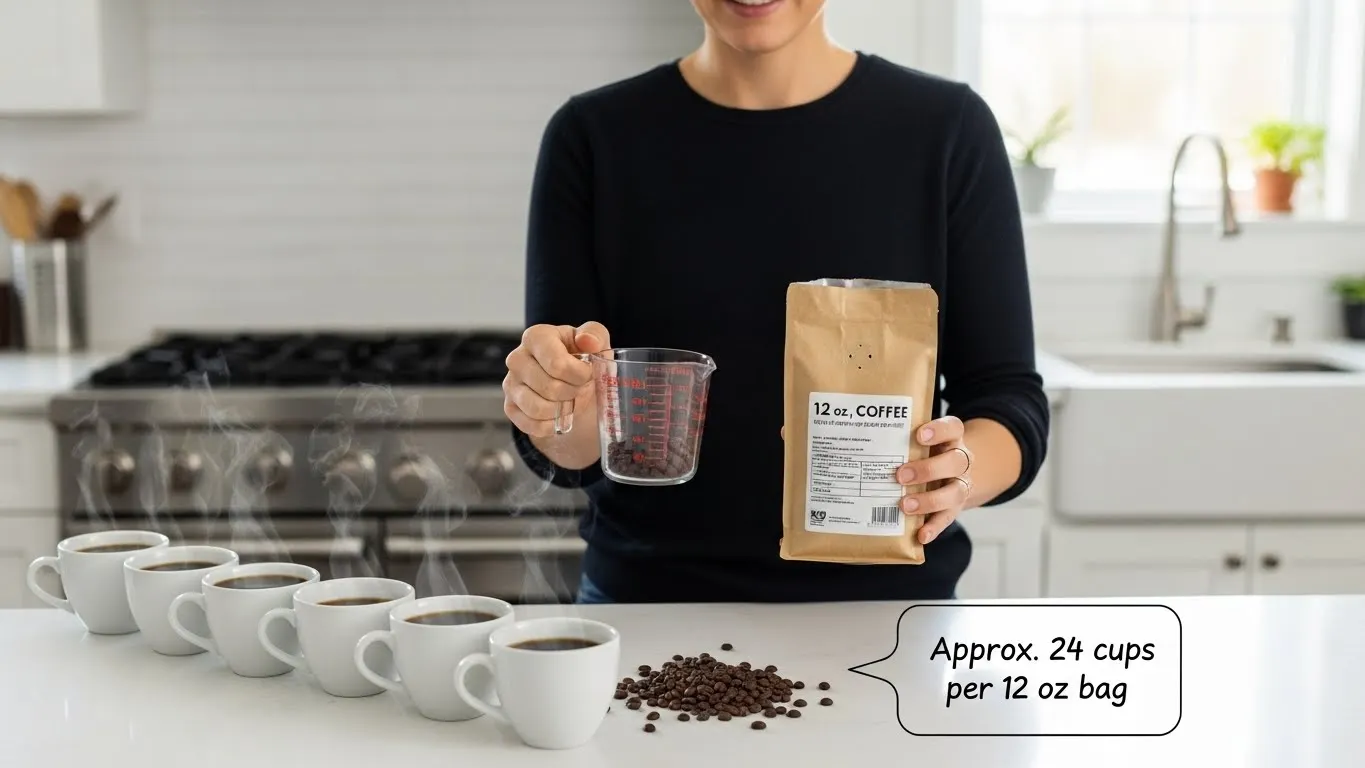
Brewing a 12-ounce cup of coffee at home using quality specialty beans costs approximately $0.50 to $1.25 per cup, calculated by dividing the cost of a 12-ounce (340g) bag of whole beans ($15–$25) by the 22-gram dose required per brew. This is significantly cheaper than commercial coffeehouse pricing, which typically ranges from $2.50 to $4.50 for drip coffee.
Does adding milk and sugar change the caffeine content?
Adding dairy, plant-based milks, or sweeteners does not alter the absolute milligrams of caffeine present in the liquid, but it does dilute the caffeine concentration per fluid ounce and buffers the absorption rate of acids and stimulants in the digestive tract.
Can I reuse coffee grounds for a second 12-ounce brew?
Reusing coffee grounds is not recommended. The vast majority of soluble flavor compounds, aromatic oils, and caffeine are extracted during the initial brewing cycle. A second brew using the same grounds will extract harsh, bitter, and astringent compounds, resulting in an unpalatable cup.
Practical Next Actions
To improve your daily coffee routine starting today, evaluate your current equipment and habits. First, purchase an affordable digital kitchen scale to measure your coffee beans and water by weight rather than scoops. Second, transition from tap water to a basic carbon-filtered pitcher or bottled spring water. Finally, buy a burr grinder to ensure uniform particle size. Implementing these three adjustments will immediately elevate the clarity, sweetness, and consistency of your 12-ounce cup of coffee.