The 100-meter butterfly world record stands as one of swimming’s ultimate benchmarks of power, technique, and physiological conditioning. Tracing its evolution reveals decades of tactical shifts, physiological breakthroughs, and intense technological and regulatory debates that continue to shape the sport.
The Evolution of Butterfly Swimming and the 100m Event
The butterfly stroke emerged as a distinct competitive discipline in the mid-20th century. Initially swum as a variation of the breaststroke, it gained official international recognition from FINA (now World Aquatics) in 1952. Coaches and swimmers quickly realized that separating the arm recovery above the water from the breaststroke kick drastically increased velocity, paving the way for dedicated sprint and middle-distance events.
When the 100-meter butterfly was officially introduced into the international competition landscape—ultimately joining the Olympic program for men and women at the 1956 Melbourne Games—it immediately captured the imagination of swimming purists and tacticians alike. Unlike freestyle, which rewards a streamlined, continuous catch and steady cadence, the butterfly demands explosive, synchronized power generation from both upper and lower extremities simultaneously.
Early world records in the event were volatile, falling frequently as athletes experimented with stroke rates, breathing patterns, and core stabilization. Pioneers in the water discovered that maintaining a high elbow recovery while minimizing lateral body roll was essential for shaving tenths of a second off their times. As national training programs in the United States, East Germany, Australia, and later nations across Asia and Europe industrialized elite sports science, the progression of the 100m fly world record transitioned from raw athletic talent to a meticulously calculated science of biomechanics and hydrodynamics.
Technological Shifts and Swimwear Controversies
Few factors have impacted the trajectory of swimming world records as profoundly as technological innovations in swimwear. The most disruptive era in the history of the 100m butterfly arrived in the mid-2000s with the introduction of full-body polyurethane and non-porous textile suits.
These high-tech garments fundamentally altered the hydrodynamics of competitive swimming. By trapping microscopic layers of air, enhancing buoyancy, and compressing muscle groups to reduce micro-vibrations and form drag, suits like the Speedo LZR Racer and various polyurethane models by Arena, Jaked, and TYR rendered previous records obsolete almost overnight. During the 2008 Beijing Olympic Games and the subsequent 2009 World Aquatics Championships in Rome, world records tumbled at an unprecedented rate, including fiercely contested marks in the men’s and women’s 100m butterfly.
| Era / Year Range | Dominant Technologies | Impact on 100m Fly Records |
|---|---|---|
| Pre-2008 | Traditional textile suits (nylon/spandex) | Gradual, incremental progress based on training science. |
| 2008-2009 | Polyurethane & high-tech compressed body suits | Massive, sudden drops in times; historic marks set in Rome 2009. |
| Post-2010 | Textile-only suits (F1 & textile regulations) | Return to human-driven baselines; gradual, hard-fought recovery. |
The proliferation of these technological aids sparked an intense ethical debate within the global swimming community. Critics argued that the suits effectively amounted to "technological doping," allowing athletes to float higher in the water and maintain unnatural body positions without expending additional physiological effort. The integrity of historical milestones was called into question, as comparisons between generations of swimmers became mathematically and physically distorted.
In response to the mounting controversy, FINA enacted sweeping reforms that took effect on January 1, 2010. The new regulations banned polyurethane suits, mandated that men’s suits cover only from the waist to the knee, and restricted women’s suits from extending past the shoulders or below the knee. Furthermore, suits had to be made from approved textile materials with strict limits on thickness and buoyancy.
Despite the return to textile-only competition, the debate over technological influence never truly vanished. Modern discussions frequently center on pool design, starting block ergonomics, underwater torque analysis, and physiological recovery tools, ensuring that the interplay between human performance and external innovation remains a permanent fixture of the sport.
Landmark Performances in the Men’s 100m Butterfly
The men’s 100m butterfly has a rich history characterized by dominant eras led by generational talents who redefined what was physically possible in the pool. From Mark Spitz in the 1970s to Michael Phelps and Caeleb Dressel in the 21st century, the record book reflects a continuous push against physiological boundaries.
The Spitz and Biondi Eras
In the early decades of organized record-keeping, legendary figures established foundational benchmarks. Mark Spitz dominated the Munich Olympics in 1972, showcasing a devastating combination of high stroke frequency and relentless pace. Following Spitz, sprinters like Matt Biondi pushed the boundaries further in the 1980s, leveraging superior height and leverage to dominate the butterfly sprint events.
The Phelps-Milak Rivalry
Entering the 2000s, Michael Phelps captured the global spotlight by lowering the world record multiple times, cementing his legacy as the most decorated Olympian in history. Phelps mastered the art of the underwater dolphin kick off the walls, maximizing the distance he could travel underwater within the strict 15-meter regulatory limit.
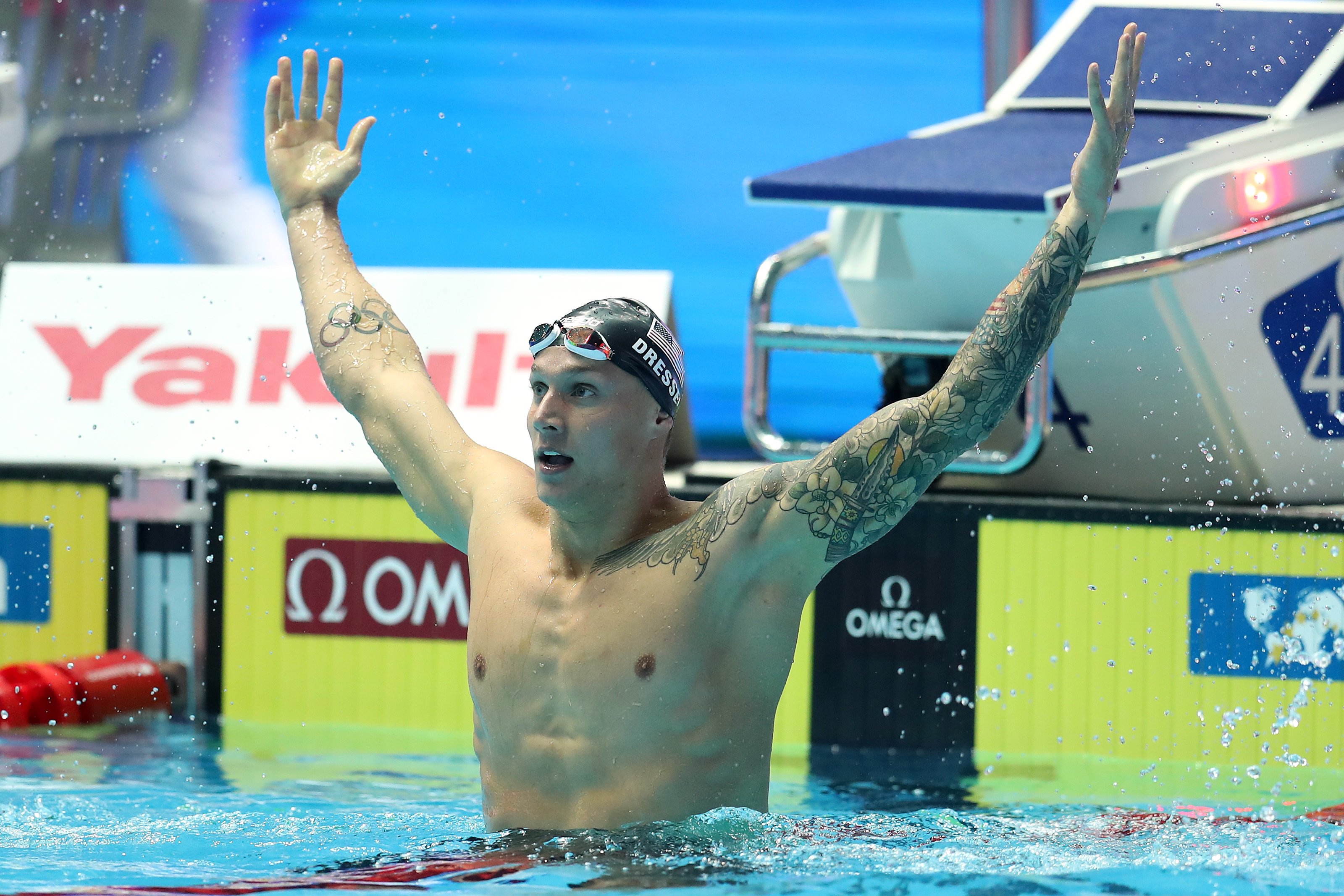
For years, Phelps's peak standard stood as a seemingly untouchable monument. However, the modern era introduced Hungarian standout Kristóf Milák. Known for his astonishing raw power and extraordinary second-50 split management, Milák shattered the long-standing record at the 2019 World Championships in Gwangju, lowering the mark to a blistering 50.75 seconds. Milák’s performance proved that the limits of human speed in the 100m butterfly were far from reached, relying on an aggressive pacing strategy that attacks the first lap while maintaining phenomenal efficiency on the return.
Landmark Performances in the Women’s 100m Butterfly
The women’s 100m butterfly has similarly witnessed fierce competition, tactical evolution, and generational shifts. The event demands an extraordinary balance of aerobic capacity and explosive fast-twitch muscle recruitment.
Pioneers of Speed
In the decades following the inclusion of the event in international competition, swimmers from various nations established baseline records that climbed downward through disciplined interval training and improved stroke mechanics. The introduction of flip turns and enhanced wall transitions in the latter half of the 20th century transformed the event from a purely linear race into a dynamic contest of turns and breakouts.
The Era of Sarah Sjöström and Modern Titans
Swedish sprint superstar Sarah Sjöström redefined the women’s 100m butterfly landscape over the course of her storied career. Sjöström combined a remarkably high and efficient stroke rate with exceptional physical strength. Her crowning achievement came at the 2016 Rio Olympic Games, where she scorched the water to set a world record of 55.48 seconds, capturing gold and leaving a lasting imprint on the event's history.
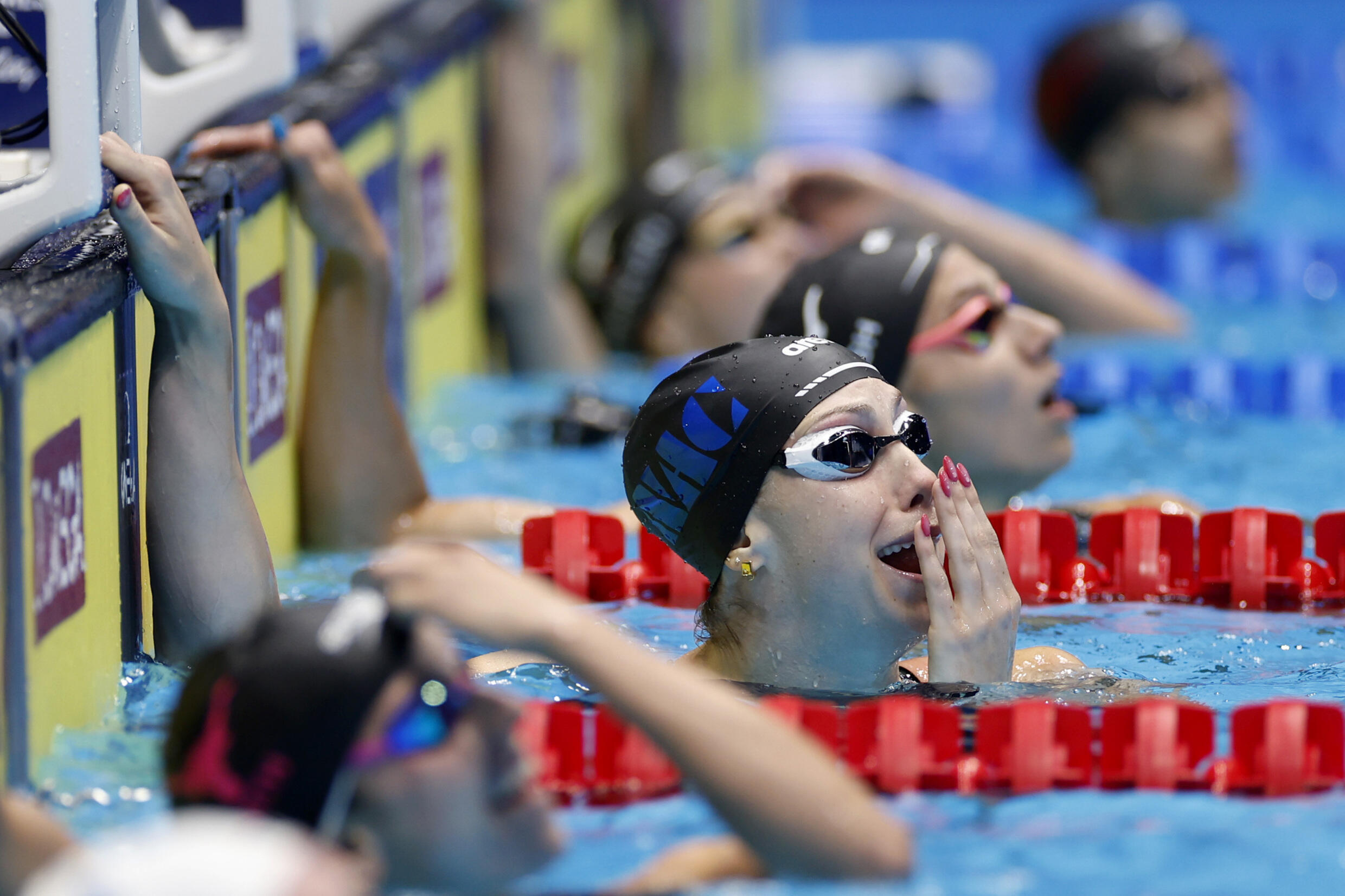
The depth of the women’s field has intensified significantly in recent years. Competitors from Australia, the United States, China, and Canada regularly challenge elite barriers, pushing the standard closer to the mid-54-second range. The ongoing battles at World Aquatics Championships and Olympic Games highlight how technical precision—particularly in the transition from the final turn into the finishing touch—separates gold medalists from the rest of the world-class field.
Physiological and Biomechanical Demands of the Event
Analyzing the 100m butterfly requires a deep dive into bioenergetics and fluid mechanics. The event occupies a unique physiological space, demanding an intense combination of the ATP-PC (phosphagen) energy system, anaerobic glycolysis, and aerobic endurance.
| Race Segment | Primary Energy System | Biomechanical Focus |
|---|---|---|
| Start & First 15m | ATP-PC (Phosphagen) | Maximum explosive power, tight underwater dolphin kicking. |
| Mid-Pool (15m-75m) | Glycolytic / Aerobic Mix | High stroke efficiency, minimal vertical oscillation, high elbows. |
| Final 25m | Severe Lactate Accumulation | Fighting form breakdown, aggressive driving finish to the wall. |
Energy Systems and Lactate Tolerance
During the first 50 meters, swimmers rely heavily on stored cellular energy to generate maximal velocity off the blocks and through the opening strokes. As the race progresses into the second 50 meters, blood lactate concentrations skyrocket, and hydrogen ions accumulate within the muscle tissue, causing severe muscular fatigue and a burning sensation.
Elite butterflyers separate themselves through superior lactate tolerance and pacing discipline. A common strategic debate among coaches centers on pacing splits: whether to attack the first lap aggressively and hang on through physiological decay, or to swim a more controlled opening 50 meters and finish with a stronger closing speed.
Biomechanical Efficiency and Hydrodynamics
Because the butterfly stroke involves simultaneous arm recovery over the water, it inherently creates fluctuations in forward velocity. Every time the arms exit the water, the body's center of mass experiences a deceleration force.
To combat this, elite athletes focus on:
- Minimizing vertical oscillation: Keeping the hips high and driving energy forward rather than up and down.
- Maximizing the catch: Establishing an early vertical forearm position underwater to generate maximum lift and propulsion.
- Optimizing breathing timing: Intaking air quickly without dropping the chin or altering spinal alignment, which causes the hips to sink and increases form drag.
Ongoing Debates: Rules, Equipment, and the 15-Meter Rule
The governance of competitive swimming is an arena of constant scrutiny, with sports scientists, coaches, and regulatory bodies continually evaluating the rules that govern the 100m butterfly.
The 15-Meter Underwater Limit
One of the most consequential regulations in modern swimming is the 15-meter rule, which dictates that swimmers must surface their heads at or before the 15-meter mark following the start and each turn. This rule was implemented in the late 1980s and early 1990s to prevent athletes from utilizing excessive underwater dolphin kicking—which can be faster than surface swimming—to bypass traditional stroke mechanics.
The debate around this rule remains active. Proponents argue that the 15-meter limit preserves the traditional integrity of swimming as a surface-based stroke event. Critics and sports biomechanists, however, contend that underwater kicking is a legitimate athletic skill that requires extraordinary core strength and breath control, suggesting that policing the limit introduces subjective officiating challenges and stifles athletic progression.
Equipment Standardization and Fairness
Beyond the high-tech suit bans of 2010, ongoing debates touch on everything from goggle design and cap materials to nutritional supplements and altitude training protocols. Ensuring a level playing field across nations with vastly different economic resources remains a core challenge for World Aquatics. While technological advancements in training analysis software and motion-capture technology are widely accessible to major federations, smaller nations often face barriers, keeping the conversation about equitable access to sports science at the forefront of administrative meetings.
Frequently Asked Questions
How fast do elite swimmers complete the 100m butterfly?
Elite male swimmers compete close to or below the 50.75-second threshold, while elite female swimmers approach the mid-54-second range. These times reflect a combination of explosive power generation, flawless turns, and exceptional pacing endurance under extreme metabolic stress.
Why is the butterfly stroke considered the most difficult swimming discipline?
The butterfly requires simultaneous, symmetrical movements of both arms and legs, demanding immense upper-body strength, core stabilization, and precise timing. Unlike freestyle or backstroke, which feature continuous propulsion, the butterfly's recovery phase creates natural stops and starts in velocity, requiring greater energy expenditure.
What is the 15-meter rule in butterfly races?
The 15-meter rule mandates that a swimmer's head must break the surface of the water on the start and after every turn by the time they reach the 15-meter mark. This rule prevents athletes from gaining an unfair speed advantage by remaining submerged for the entirety of the pool length via underwater dolphin kicking.
How did the 2008-2009 polyurethane suits affect world records?
Full-body polyurethane suits significantly increased buoyancy and reduced form drag, enabling athletes to shatter historical world records across almost every swimming event. The controversy led World Aquatics to ban these suits in 2010, returning the sport to textile-only materials to restore human athletic performance as the primary variable.
What are the key biomechanical differences between the first and second 50 meters?
The first 50 meters rely heavily on explosive fast-twitch power, fresh energy systems, and high stroke velocity off the walls. The second 50 meters require managing severe lactate accumulation, maintaining core tension despite muscle fatigue, and executing a powerful, uncompromised finish to the touchpad.
Practical Next Steps and Observation for Fans and Coaches
For coaches, biomechanists, and swimming enthusiasts seeking to deepen their understanding of the 100m butterfly, analyzing race footage through split-time breakdowns offers invaluable insights. Observing how elite athletes manage their stroke rates between the 25-meter and 75-meter marks reveals the delicate balance between power application and energy conservation.
When evaluating modern swims against historical milestones, always account for regulatory changes, pool depth, starting block technology, and timing precision. By examining both the physiological grit of the athletes and the evolving regulatory framework, observers gain a comprehensive appreciation of why the 100m butterfly remains one of the most compelling events in global aquatics.