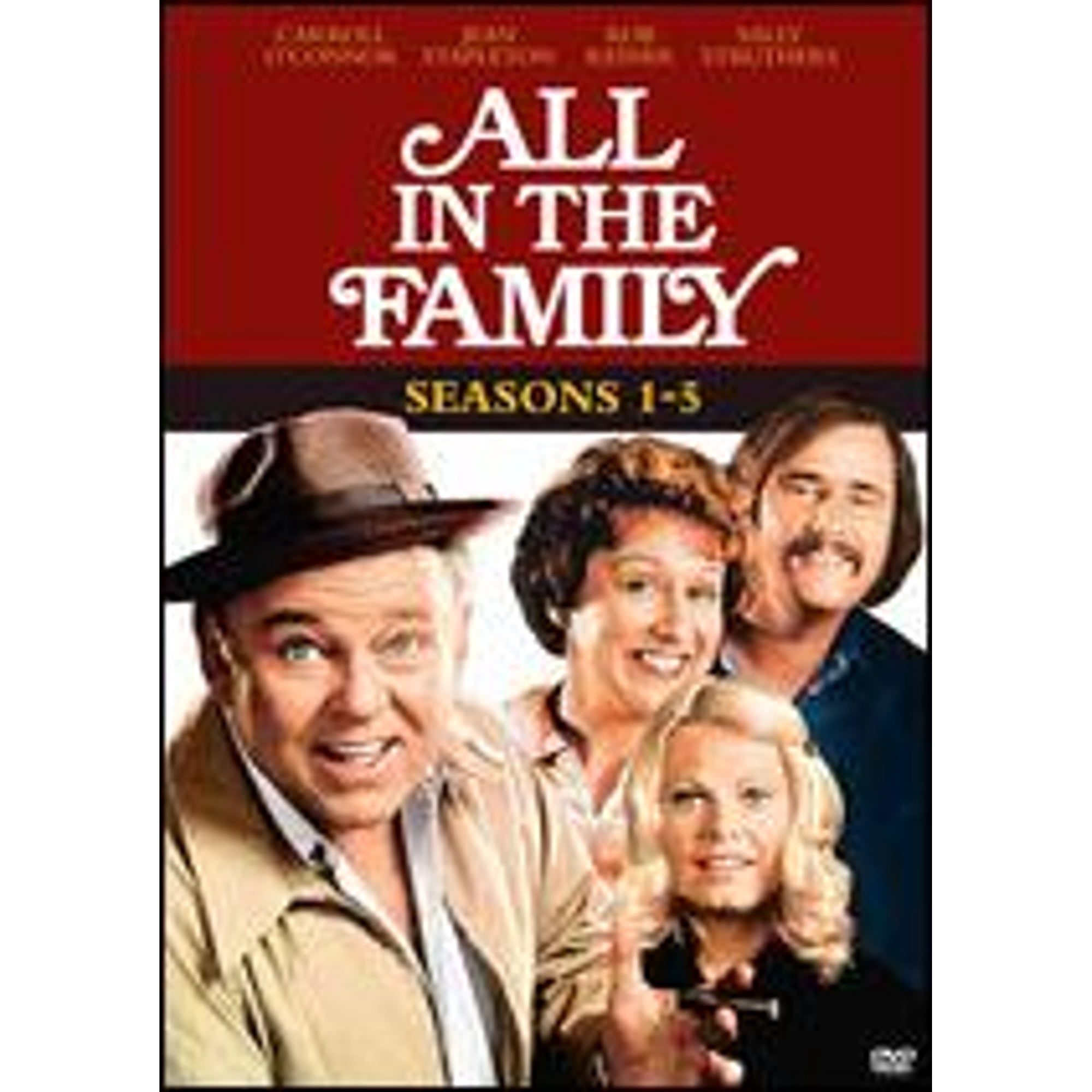
All in the Family ran for 10 seasons, airing 208 episodes on CBS from January 12, 1971, to April 8, 1979. Created by Norman Lear and based on the British sitcom Till Death Us Do Part, the series revolutionized American television by injecting contemporary social, political, and cultural realities into a medium that had long relied on sanitized, escapist domestic comedies.
To understand All in the Family across its 10 seasons requires examining how a single television address in Queens, New York, mirrored a rapidly changing American society during the 1970s. The show tackled racism, antisemitism, the Vietnam War, women's liberation, homosexuality, rape, and inflation—topics previously considered taboo for prime-time network broadcasts. Led by a powerhouse ensemble cast featuring Carroll O'Connor, Jean Stapleton, Rob Reiner, and Sally Struthers, the production evolved from a controversial, high-risk broadcast experiment into a cultural institution and a blueprint for modern television satire.
The Genesis and Premise: Setting the Stage for 1971
Before the 10-season run began, American television was dominated by idyllic, rural-themed comedies and predictable workplace sitcoms. Norman Lear recognized a significant disconnect between what television portrayed and what people were actually experiencing in their living rooms. Civil rights movements, anti-war protests, and shifting generational norms were polarizing the United States. Lear sought to capture this friction within the confines of a working-class household.
The narrative centered on Archie Bunker, played by Carroll O'Connor, a World War II veteran, loading-dock worker, and staunch traditionalist whose prejudices and outdated worldview were constantly challenged by the modern world. Opposite him was his wife, Edith, played by Jean Stapleton, whose seemingly meek exterior masked a profound moral clarity and emotional resilience. Sharing their modest row house in Astoria, Queens, were their daughter, Gloria, and her husband, Michael Stivic—played by Sally Struthers and Rob Reiner. Michael, a liberal graduate student whom Archie derisively nicknamed "Meathead," served as the primary ideological foil to Archie's conservative dogmatism.
| Character | Primary Actor | Ideological Position / Archetype |
|---|---|---|
| Archie Bunker | Carroll O'Connor | Working-class conservative, bigoted, nostalgic |
| Edith Bunker | Jean Stapleton | Pious homemaker, empathetic, secretly progressive |
| Gloria Stivic | Sally Struthers | Dutiful daughter, evolving feminist, peacemaker |
| Michael Stivic | Rob Reiner | Radical college student, liberal, contrarian |
Seasons 1 to 3: Establishing the Format and Breaking Taboos
The first three seasons of All in the Family established the volatile comedic chemistry that would define the show. Premiering as a mid-season replacement in January 1971, the series initially faced network anxiety and viewer backlash. CBS famously aired disclaimers before early episodes, warning audiences about the show's controversial language and attitudes.
Navigating Controversy and Real-World Issues
Early storylines directly addressed racial integration, women's rights, and anti-war sentiment. In the landmark episode "Meet the Bunkers" and subsequent scripts like "Lionel Moves Into the Neighborhood," the show utilized comedy to expose the absurdity of bigotry. Archie's intolerance was never glorified; rather, the scripts engineered situations where his prejudices exposed his own ignorance, leaving him isolated or emotionally vulnerable.
By Season 2, the series had ascended to the top of the Nielsen ratings, a position it would hold for five consecutive years—a feat matched by only a few shows in television history, such as Cheers and The Cosby Show. The production moved from a taped-before-a-live-studio-audience format toward sharper multi-camera setups that preserved theatrical timing while capturing the intimate tension of cramped living room arguments.
Seasons 4 to 6: Peak Cultural Impact and Narrative Maturity
Entering its middle years, All in the Family deepened its character arcs, transitioning from purely issue-driven comedic sketches to serialized character studies. While individual episodes still tackled contemporary social flashpoints, the writers began exploring long-term personal consequences for the Bunkers and Stivics.
Expanding the Ensemble and Tackling Darker Themes
The introduction of recurring neighbors, such as the Jeffersons (George and Louise) and later Archie's bar patrons, expanded the social canvas of the series. The success of The Jeffersons spin-off in 1975 demonstrated the expansive storytelling universe Norman Lear was building under the Tandem Productions banner.
During these middle seasons, the show demonstrated a willingness to disrupt its own comedic rhythm to address devastating realities. Episodes such as "Edith's Problem," which dealt with menopause, and "Cousin Liz," which addressed closeted lesbianism and grief, proved that a situation comedy could handle profound emotional weight without abandoning its humor. The writing staff relied on precise pacing, ensuring that moments of genuine pathos earned their place alongside the rapid-fire ideological barbs traded across the Bunker dining room table.
Seasons 7 to 10: Evolution, Departures, and the Transition to Archie Bunker's Place
As the 1970s drew to a close, the foundational cast dynamic of All in the Family began to shift. The final four seasons reflect a maturing television landscape where the original premise required structural reinvention to survive.
The Stivics' Departure and the Shift to Serialized Drama
In Season 8, Rob Reiner and Sally Struthers chose to leave the series, leading to an emotional two-part farewell episode where Mike and Gloria moved to California. This departure removed the primary generational sparring partners from the Bunker household, forcing the writers to adapt.
Seasons 9 and 10 introduced new dynamics, including the addition of Stephanie Mills (played by Danielle Brisebois), a young runaway left in the care of Archie and Edith. This storyline allowed the aging couple to explore surrogate parenthood, softening Archie's rough edges while maintaining his characteristic grumble.
Recognizing that the show had reached its natural storytelling limits within the original format, the network prepared for the final transition. Jean Stapleton reduced her presence in the tenth season (appearing in only a handful of episodes), leading to storylines where Archie and Edith navigated separation and aging. In 1979, the original series concluded, immediately spawning the sequel series Archie Bunker's Place, which ran for another four seasons and further tracked Archie's life into the early 1980s.
Comparative Overview of the Series Phases
To trace the evolution of the 10 seasons, television historians often divide the run into distinct developmental eras:
| Era | Seasons | Primary Cast Dynamics | Core Thematic Focus |
|---|---|---|---|
| Formative Era | Seasons 1–3 | Archie, Edith, Gloria, Mike | Breaking taboos, racial prejudice, anti-war sentiment, establishing ratings dominance. |
| Peak Era | Seasons 4–6 | Core four + expanded neighbors (Jeffersons, Lorenzos) | Deepening character psychology, systemic social issues, peak cultural relevance. |
| Transition Era | Seasons 7–8 | Core four with gradual decoupling of Stivics | Generational shifts, career changes, preparation for cast departures. |
| Concluding Era | Seasons 9–10 | Archie, Edith, Stephanie Mills | Surrogate parenting, aging, emotional resolution, transition to sequel format. |
Frequently Asked Questions About the 10 Seasons
Why did Rob Reiner and Sally Struthers leave the show?
Rob Reiner and Sally Struthers chose to leave All in the Family at the end of Season 8 to pursue other opportunities in writing, directing, and acting. After playing Michael and Gloria Stivic for nearly eight years, both actors felt their characters had reached a natural conclusion and wanted to explore new creative avenues in film and television production.
How many total episodes aired across the 10 seasons?
Across its 10-season run on CBS from 1971 to 1979, All in the Family produced and broadcast 208 episodes. This count excludes the original unaired pilot films produced for ABC before CBS picked up the series.
Did All in the Family win major television awards?
Yes, the series achieved widespread critical acclaim, winning 22 Primetime Emmy Awards out of numerous nominations. It remains one of the few sitcoms where every principal cast member (Carroll O'Connor, Jean Stapleton, Rob Reiner, and Sally Struthers) won at least one competitive Emmy Award for their performances.
How did the show handle the absence of Jean Stapleton in Season 10?
In Season 10, Jean Stapleton wanted to scale back her commitment to the series. To accommodate her availability, the writers crafted storylines where Edith Bunker was frequently away visiting relatives or managing community obligations, allowing the narrative to focus more heavily on Archie and the newly introduced character Stephanie Mills.
Where can viewers watch the 10 seasons of All in the Family today?
Streaming availability for classic television series frequently changes due to licensing agreements and platform updates. As of 2026, home media releases on DVD and digital purchase options through major video-on-demand marketplaces provide the most reliable access to the complete unedited 208 episodes.
Conclusion and Recommended Next Actions
Reviewing the 10 seasons of All in the Family reveals a masterclass in television writing, ensemble acting, and cultural risk-taking. For researchers, media students, and classic television enthusiasts, exploring the series requires looking beyond the dated slang and examining the structural mechanics of how a single room could hold America's most difficult cultural debates.
To fully appreciate the scope of the production, start by examining the pilot episodes of Season 1 to understand the initial network hesitations, then compare them with the emotional depth of the transitional episodes in Seasons 8 and 9. By analyzing how the writers used humor as a vehicle for social commentary rather than mere distraction, modern creators can better understand the enduring power of character-driven television satire.