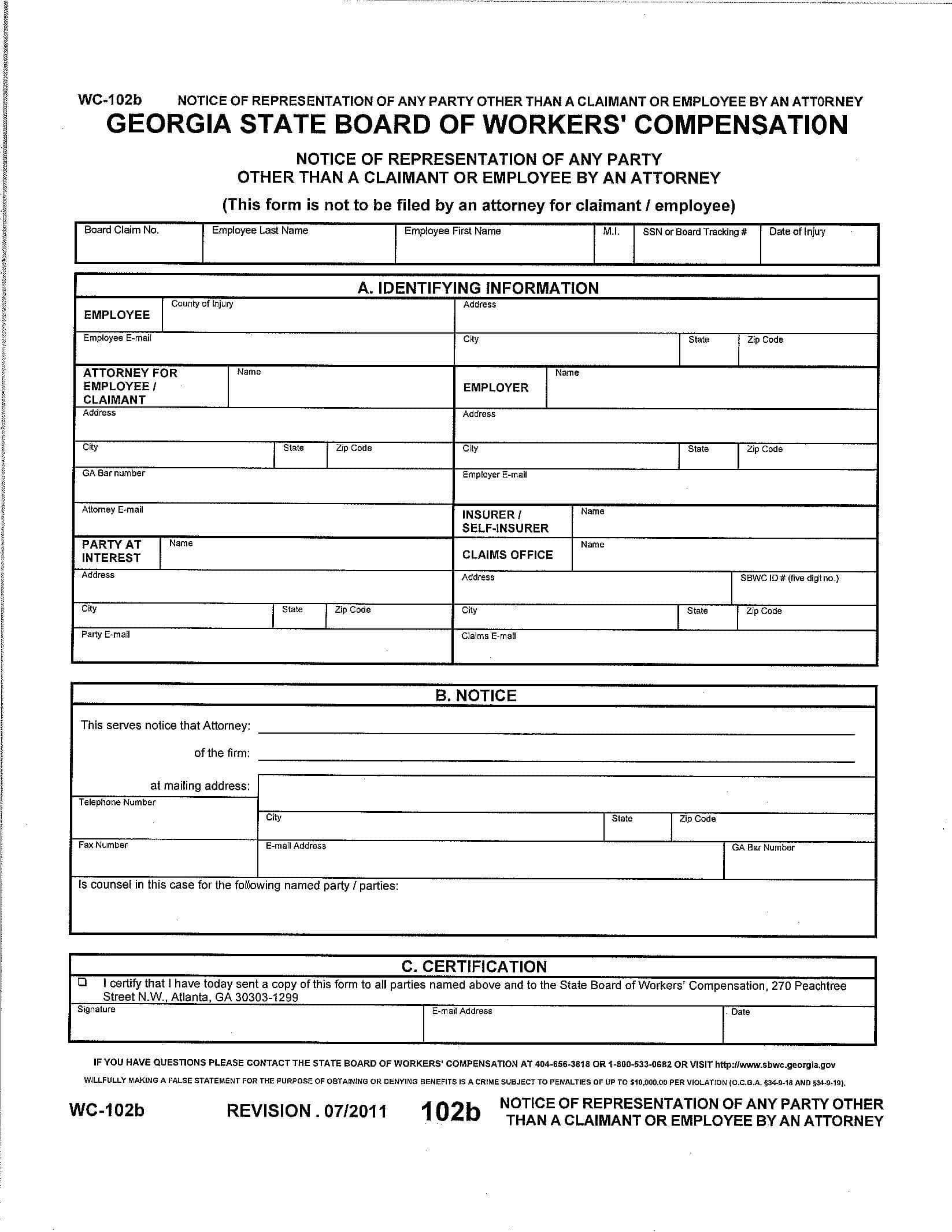
In Georgia, you are required to have workers' compensation insurance if your business regularly employs three or more people, including part-time workers and corporate officers. This legal mandate, overseen by the Georgia State Board of Workers’ Compensation (SBWC), ensures that employees receive medical and income benefits for work-related injuries regardless of who is at fault.
As we move through 2026, the landscape of labor in Georgia continues to evolve with more remote work and diverse employment structures. However, the foundational "Rule of Three" remains the primary benchmark for determining whether a business owner must secure a workers' compensation policy. Navigating these requirements is essential not only for legal compliance but also for protecting the financial stability of your enterprise.
The Rule of Three: Determining Your Legal Obligation
The most critical factor in Georgia workers' compensation law is the number of employees. According to the Official Code of Georgia Annotated (O.C.G.A.) § 34-9-2, any employer who has three or more employees regularly in service in the same business within the state must provide workers' compensation coverage.
Who Counts as an Employee?
It is a common misconception that "employee" only refers to full-time, salaried staff. In Georgia, the definition is much broader. To determine if you meet the threshold of three, you must count:
- Full-time employees: Standard 40-hour-per-week staff.
- Part-time employees: Even those working only a few hours a week.
- Seasonal or temporary workers: If they are "regularly in service" during their period of employment.
- Corporate officers: By default, officers of a corporation are counted as employees, even if they are the owners.
- LLC Members: Generally treated similarly to corporate officers unless specific exemptions are filed.
"Regularly in Service"
The term "regularly in service" does not mean the employees must be present every single day. It means that the employment is part of the regular conduct of the business. If your business model fluctuates—for instance, a landscaping company that has two employees in winter but jumps to five in the spring—you are required to have insurance as soon as that third person is hired, and you should maintain it to avoid lapses in coverage.
Statutory Exemptions and Special Cases
While the three-employee rule is the standard, Georgia law provides specific exemptions and nuances for certain types of workers and business structures.
Corporate Officers and LLC Members
Under Georgia law, corporate officers are technically employees. However, a corporation may elect to exempt up to five corporate officers from coverage. Even if these officers are exempt from receiving benefits, they still count toward the three-employee threshold that triggers the requirement for the business to carry insurance for its other staff. For example, if a corporation has two officers and one regular employee, the business has "three employees" and must carry a policy, even if the two officers waive their own personal coverage.
Sole Proprietors and Partners
Sole proprietors and partners in a partnership are not automatically counted as employees. They are the owners of the business. They have the option to include themselves in their workers' compensation coverage if they choose, but they are not required to do so by law. If a sole proprietor has two employees, the total count is two, meaning insurance is not legally mandated (though it may still be a wise investment).
Domestic Servants and Farm Laborers
Georgia law specifically excludes domestic servants (such as housekeepers or nannies working in private homes) and farm laborers from mandatory coverage. However, agricultural employers can voluntarily choose to provide workers' compensation for their workers.
Independent Contractors
This is one of the most litigated areas of workers' compensation. Simply labeling someone an "independent contractor" or providing them with a 1099 form does not mean they aren't an employee in the eyes of the Georgia SBWC. The state uses a "control test" to determine the relationship. If you control the time, manner, and method of their work, they may be legally classified as an employee, potentially pushing your headcount over the threshold of three and triggering insurance requirements.
Benefits Provided by Georgia Workers' Compensation
If you are required to have insurance, the policy you purchase must provide specific benefits mandated by the state. These benefits are designed to be a "no-fault" system, meaning the employee does not have to prove the employer did something wrong to receive help.
| Benefit Type | Description | Coverage Details (as of 2026) |
|---|---|---|
| Medical Expenses | Covers all "authorized" medical treatment related to the injury. | Includes doctor visits, hospital stays, physical therapy, and prescriptions. |
| Income Benefits (TTD) | Temporary Total Disability paid if the worker cannot work for more than 7 days. | Two-thirds of average weekly wage, subject to state maximum caps. |
| Permanent Disability | Paid if the injury results in a permanent physical impairment. | Calculated based on a schedule of injuries (e.g., loss of a limb or vision). |
| Death Benefits | Paid to dependents if a work-related injury results in death. | Includes burial expenses (up to $7,500) and lost income for the family. |
| Rehabilitation | Vocational assistance for catastrophic injuries. | Helps the worker train for a new role if they cannot return to their old job. |
Methods of Securing Coverage in Georgia
Once you determine that you are required to have insurance, you have three primary avenues to obtain it in Georgia.
1. Commercial Insurance Carriers
Most Georgia businesses purchase a policy through a private insurance company authorized by the Georgia Department of Insurance. There are hundreds of carriers in the state. Rates are determined by your industry classification (NCCI codes), your total payroll, and your "Experience Modifier" (a score based on your history of claims).
2. Self-Insurance
Large, financially stable companies may apply to the SBWC to become self-insured. This allows the company to pay claims out of its own funds rather than paying premiums to an insurance company. To qualify, a business must typically demonstrate significant net worth, post a surety bond, and have a robust internal claims management system.
3. The Assigned Risk Pool
If a business is in a high-risk industry (like roofing or long-haul trucking) and cannot find a private carrier willing to write a policy, they can apply for coverage through the Georgia Workers’ Compensation Assigned Risk Pool. This ensures that every business can fulfill its legal obligation, though premiums in the pool are often higher than in the voluntary market.
Penalties for Non-Compliance
Operating without workers' compensation insurance when you are legally required to have it is a serious offense in Georgia. The State Board of Workers' Compensation maintains an Enforcement and Investigations Division specifically to identify uninsured employers.
Civil Penalties
The SBWC can impose civil penalties ranging from $500 to $5,000 per violation. A violation can occur for every day the business remains uninsured. Furthermore, if an injury occurs while you are uninsured, the Board can order you to pay a 10% increase in the compensation due to the employee, plus the employee's attorney fees.
Criminal Penalties
Under O.C.G.A. § 34-9-126, the failure to provide workers' compensation insurance is a misdemeanor. In severe cases, particularly those involving a refusal to comply after being notified, business owners can face jail time and significant criminal fines.
Civil Liability and Lawsuits
The primary benefit of workers' compensation for an employer is "exclusive remedy." This means that because you provide insurance, the employee generally cannot sue you in civil court for their injury. If you fail to carry insurance, you lose this protection. An injured worker can sue you for unlimited damages, including pain and suffering, which are not covered under standard workers' compensation.
Cost-Control Strategies for Georgia Employers
While insurance is a required expense for most, there are ways to manage and reduce the cost of premiums.
- Drug-Free Workplace Program: Georgia offers a 7.5% premium discount to employers who certify a drug-free workplace through the SBWC. This requires a formal policy, drug testing, and employee education.
- Safety Committees: Implementing a formal safety program can reduce accidents, leading to a lower Experience Modifier (E-Mod) and lower future premiums.
- Class Code Accuracy: Ensure your employees are classified correctly. A clerical worker has a much lower premium rate than a construction laborer. Misclassification is a common cause of overpaying.
- Managed Care Organizations (WC/MCO): Some insurers offer discounts for using an approved managed care organization to coordinate medical treatment for injured workers.
Frequently Asked Questions
What happens if I have only two employees?
If you have only two employees (including yourself if you are a corporate officer), you are not legally required to carry workers' compensation in Georgia. However, you can still be held liable for workplace injuries under general negligence laws. Many small business owners choose to buy a policy voluntarily to gain the "exclusive remedy" protection and ensure their employees are cared for.
Do out-of-state contractors working in Georgia need insurance?
Yes. If an out-of-state business brings three or more employees into Georgia to perform work, they must comply with Georgia's workers' compensation laws. The Georgia SBWC generally requires that the insurance policy explicitly lists Georgia in "Section 3A" of the policy information page to be valid for work performed within the state.
Can I require my employees to pay for their own insurance?
No. Georgia law strictly prohibits employers from deducting workers' compensation premium costs from an employee's wages. The cost of the insurance is solely the responsibility of the employer.
How do I check if a sub-contractor has insurance?
You should always request a Certificate of Insurance (COI) directly from the sub-contractor’s insurance agent. If you hire a sub-contractor who does not have insurance and they have an injured worker, you (as the "statutory employer") could be held liable for that worker's benefits. Furthermore, your own insurance carrier will likely charge you an additional premium for the sub-contractor's payroll during your annual audit.
Are family members exempt from the count?
In Georgia, family members who work for the business are generally counted as employees. There is no automatic "family exemption" for the three-employee rule. If you run a family restaurant with your spouse and child, and all three of you are "regularly in service," you likely meet the threshold for mandatory coverage.
Does workers' compensation cover COVID-19 or other illnesses?
Under Georgia law, occupational diseases are covered if they arise out of and in the course of employment. However, the burden of proof is high for "ordinary diseases of life" (like the flu or common colds). The claimant must prove that the workplace presented a significantly higher risk of contracting the illness than the general public faces.
Recommendation and Next Actions
If you are starting a business in Georgia or your headcount is approaching the three-employee mark, your first action should be to consult with a licensed insurance agent specializing in commercial lines. They can help you determine your NCCI classifications and obtain quotes from multiple carriers.
Simultaneously, you should review the Georgia State Board of Workers’ Compensation website for the most current forms and posters. Georgia law requires all covered employers to post the "WC-P1" (Bill of Rights) and the "WC-P3" (Panel of Physicians) in a prominent location where employees can see them. Failure to post these can result in penalties and may prevent you from controlling the medical treatment of an injured worker.
Lastly, if you currently have exactly three employees and one departs, do not immediately cancel your policy. If you intend to hire a replacement, maintaining continuous coverage is far more cost-effective than a lapse, which can trigger audits and much higher "re-entry" rates in the insurance market.