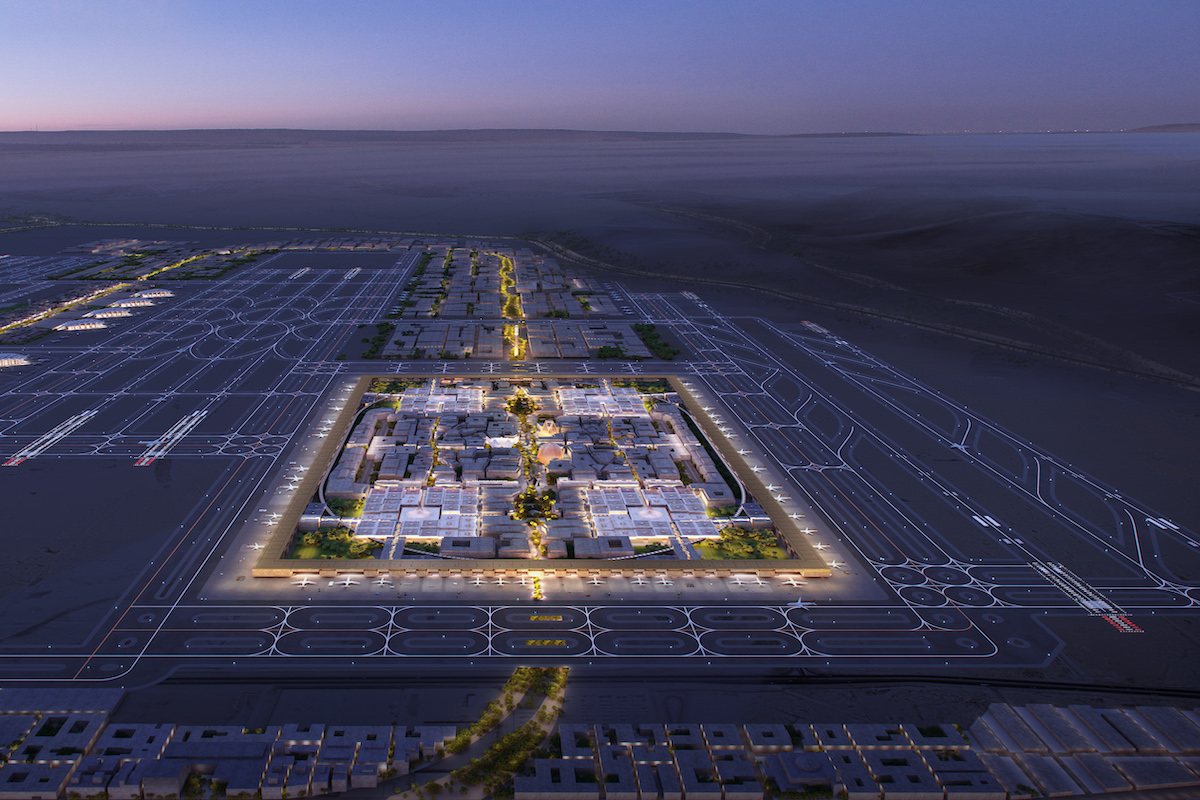
As of 2026, the primary new airport development in Saudi Arabia is the King Salman International Airport (KSIA) in Riyadh. This massive infrastructure project is designed to become one of the world’s largest aviation hubs, featuring six parallel runways and a capacity to handle up to 120 million passengers by 2030. It serves as the home base for Riyadh Air and is the centerpiece of the Kingdom’s strategy to transform into a global logistics and tourism crossroads.
The evolution of Saudi Arabia’s aviation sector is not merely about building larger terminals; it is a fundamental shift in how the Middle East facilitates global trade and travel. Under the framework of Vision 2030, the Kingdom has moved aggressively to diversify its economy away from oil, identifying the aviation and logistics sectors as critical pillars. While King Salman International Airport is the most prominent project, it is part of a broader network of "new" developments, including the specialized Red Sea International Airport and significant upgrades to existing gateways in Jeddah and Dammam.
The Strategic Vision: Why Saudi Arabia is Building a Mega-Hub
To understand the scale of King Salman International Airport, one must first understand the Saudi National Aviation Strategy. The goal is to triple annual passenger traffic to 330 million by 2030 and increase air cargo capacity to 4.5 million tons. This ambition requires more than just capacity; it requires a reimagining of the passenger experience and logistical efficiency.
Connectivity Between Three Continents
Saudi Arabia’s geographical location is its greatest asset. Situated at the intersection of Asia, Africa, and Europe, the Kingdom is within an eight-hour flight of 80% of the world's population. Historically, this transit traffic was largely captured by hubs in Dubai, Doha, and Istanbul. By 2026, the development of KSIA has positioned Riyadh as a direct competitor in this "super-connector" model.
Integration with Riyadh Air
A new airport needs a flagship carrier to drive volume. Riyadh Air, which officially commenced operations in 2025, is inextricably linked to the success of the new airport. Unlike the existing flag carrier, Saudia (which is increasingly focusing on Jeddah and religious tourism), Riyadh Air is designed to cater to the global business traveler and the "luxury leisure" segment, utilizing KSIA as its primary operational engine.
King Salman International Airport (KSIA): Technical Specifications
The master plan for King Salman International Airport, designed by the world-renowned architectural firm Foster + Partners, covers approximately 57 square kilometers. This footprint encompasses the existing King Khalid International Airport (KKIA) but expands it into a cohesive "aerotropolis."
Runway Configuration and Efficiency
One of the most striking features of KSIA is the plan for six parallel runways. In the world of aviation, the number of parallel runways is a direct indicator of a hub's ability to minimize delays.
- Simultaneous Operations: Parallel runways allow for simultaneous take-offs and landings without the air traffic interference seen in intersecting runway configurations.
- Reduced Taxi Times: The layout is designed to minimize the distance between the terminal gates and the runway thresholds, which significantly reduces fuel consumption and turnaround times for airlines.
Passenger Capacity Projections
The growth trajectory for KSIA is staged to match the Kingdom’s increasing international profile:
- 2030 Target: 120 million passengers annually.
- 2050 Target: 185 million passengers annually.
- Cargo: A dedicated processing zone aimed at handling 3.5 million tons of cargo by 2050, supporting the Kingdom's goal to become a top 10 global logistics hub.
The "Aerotropolis" Concept: More Than Just a Terminal
By 2026, the concept of the "Aerotropolis"—a city built around an airport—has become the standard for Saudi infrastructure. KSIA is not just a place where planes land; it is a destination in itself.
Residential and Recreational Integration
The master plan includes 12 square kilometers of airport support facilities, residential areas, recreational outlets, and retail spaces. This approach ensures that the airport contributes to the local Riyadh economy even when people aren't flying. It creates a seamless transition for business travelers who can attend meetings, stay in high-end hotels, and access luxury retail without ever leaving the airport precinct.
Sustainability and LEED Certification
In alignment with the Saudi Green Initiative, KSIA is being built with a heavy emphasis on sustainability. The project aims to achieve LEED Platinum certification by incorporating:
- Renewable Energy: Massive solar arrays designed to power a significant portion of the terminal operations.
- Water Conservation: Advanced recycling systems for greywater and sustainable landscaping that utilizes indigenous, drought-resistant flora.
- Smart Building Tech: AI-driven climate control and lighting systems that adjust based on passenger density and time of day to minimize energy waste.
Comparison of Major Saudi Airport Projects
While Riyadh's new hub takes the spotlight, other "new" airports and major expansions are defining the Kingdom's landscape in 2026.
| Feature | King Salman International (Riyadh) | Red Sea International (RSI) | King Abdulaziz Intl (Jeddah) |
|---|---|---|---|
| Primary Focus | Global Hub / Business / Logistics | Luxury Tourism / Eco-Travel | Hajj & Umrah / Tourism Hub |
| Projected Capacity (2030) | 120 Million Passengers | 1 Million Passengers | 80-100 Million Passengers |
| Key Architect | Foster + Partners | Foster + Partners | Various (Expansion Phase) |
| Sustainability Goal | LEED Platinum | 100% Renewable Energy | Enhanced Efficiency Upgrades |
| Current Status (2026) | Major Phase Construction | Fully Operational | Ongoing Terminal Expansion |
Red Sea International Airport: The Boutique Alternative
If King Salman International is the "giant" of Saudi aviation, Red Sea International Airport (RSI) is its sophisticated, boutique sibling. Opened to support the Red Sea Global giga-project, this airport represents a different philosophy.
Specialized Design for the Luxury Traveler
RSI is designed to handle only one million passengers per year. The focus here is on the "seamless" arrival. There is no traditional baggage reclaim area in the sense most travelers know it; instead, luggage is tracked and delivered directly to the guest’s resort. The terminal itself is divided into five "mini-terminals" that can be operated independently to save energy during off-peak hours.
Environmental Stewardship
RSI claims to be the first airport in the Middle East to be powered 100% by renewable energy. This is achieved through a combination of solar farms and one of the world’s largest battery storage systems. For travelers in 2026, RSI serves as the primary gateway to the Amaala and Red Sea resorts, proving that "new" airports can be environmentally responsible without sacrificing luxury.
Operational Requirements for Travelers in 2026
Navigating the new airport infrastructure in Saudi Arabia requires an understanding of the current digital and legal landscape.
Visa and Entry Requirements
The Saudi eVisa system remains the primary gateway for international tourists. As of 2026, the "Stopover Visa" has become incredibly popular for passengers transiting through King Salman International.
- Duration: Up to 96 hours.
- Cost: Usually included or offered at a nominal fee when booking with Riyadh Air or Saudia.
- Requirement: Must have a confirmed onward ticket and, in some cases, a hotel booking through the airline’s partner portal.
Digital Integration: The "Seamless Journey"
Both KSIA and RSI utilize advanced biometrics. Travelers are encouraged to register their biometric data (facial recognition) via the Nusuk or Tawakkalna apps before arrival. This allows for "curb-to-gate" transit without the need for physical passports or boarding passes at multiple checkpoints, significantly reducing the time spent in the terminal.
Challenges and Considerations for the Aviation Sector
Despite the rapid progress seen by 2026, the development of these mega-airports is not without challenges.
- Airspace Management: With the massive increase in flight volumes between Riyadh, Jeddah, and the new NEOM airports, Saudi Arabia has had to completely overhaul its air traffic control (ATC) systems. Integrating military and civilian airspace remains a complex logistical task.
- Competition: Neighboring hubs like Dubai (DWC) and Doha (DOH) are also expanding. Saudi Arabia’s success depends on its ability to offer competitive transit times and superior ground services.
- Human Capital: Running one of the world's largest airports requires thousands of skilled professionals. The "Saudi Nationalization" (Nitaqat) program is heavily focused on training local talent to manage these high-tech facilities, moving away from a historical reliance on expatriate labor for specialized aviation roles.
Future Outlook: Beyond 2026
The trajectory for Saudi Arabia’s new airports extends far beyond the current year. By 2030, the integration of high-speed rail (like the Haramain and the proposed Landbridge project) will connect these airports to major cities, creating a multi-modal transport network.
King Salman International Airport is expected to become the logistical "heart" of the Middle East. For businesses, the specialized cargo zones and proximity to the King Abdullah Financial District (KAFD) make it an ideal base for regional headquarters. For tourists, the airport is no longer a hurdle to overcome but the beginning of an experience that reflects the Kingdom's modernized identity.
Frequently Asked Questions
Is King Salman International Airport replacing King Khalid International Airport?
King Salman International Airport (KSIA) effectively incorporates the existing King Khalid International Airport (KKIA) site. While some of the older terminals (Terminals 1-5) continue to be utilized or repurposed, the broader master plan expands the site significantly to include new mega-terminals and four additional runways, creating a unified, much larger facility.
Which airline uses the new Saudi airport as its hub?
Riyadh Air is the primary carrier based at King Salman International Airport. However, as the Kingdom's main gateway, the airport also hosts Saudia and dozens of international carriers. Riyadh Air specifically was designed to utilize the new infrastructure to facilitate global long-haul connections.
Can I transit through the new Riyadh airport without a visa?
Passengers transiting for less than 12 hours generally do not require a visa, provided they stay within the international transit area. However, for those wanting to explore Riyadh, the 96-hour Stopover Visa is the recommended option, often available for free or a low cost when flying with Saudi-based airlines.
How far is the new airport from downtown Riyadh?
King Salman International Airport is located approximately 35 kilometers (about 22 miles) north of Riyadh’s city center. By 2026, access is facilitated by the Riyadh Metro (Yellow Line) and an expanded network of high-capacity highways, making the commute roughly 30 to 45 minutes depending on the mode of transport.
What makes the Red Sea International Airport different from other airports?
Red Sea International is a specialized "luxury" airport. Its primary differences include its 100% renewable energy power source, its boutique size (handling only 1 million passengers), and its "luggage-free" guest experience, where bags are sent directly from the plane to the traveler’s resort.
Practical Recommendation for Travelers
If you are planning to visit or transit through Saudi Arabia in 2026, download the Riyadh Air app and the Nusuk app at least two weeks before your journey. Use these platforms to upload your biometric data and verify your visa status. For the best experience at King Salman International, look for "Biometric Path" signage upon arrival to bypass traditional immigration queues. If your schedule allows, a 24-hour stopover in Riyadh is highly recommended to experience the "Aerotropolis" retail and dining facilities, which are among the most advanced in the world.