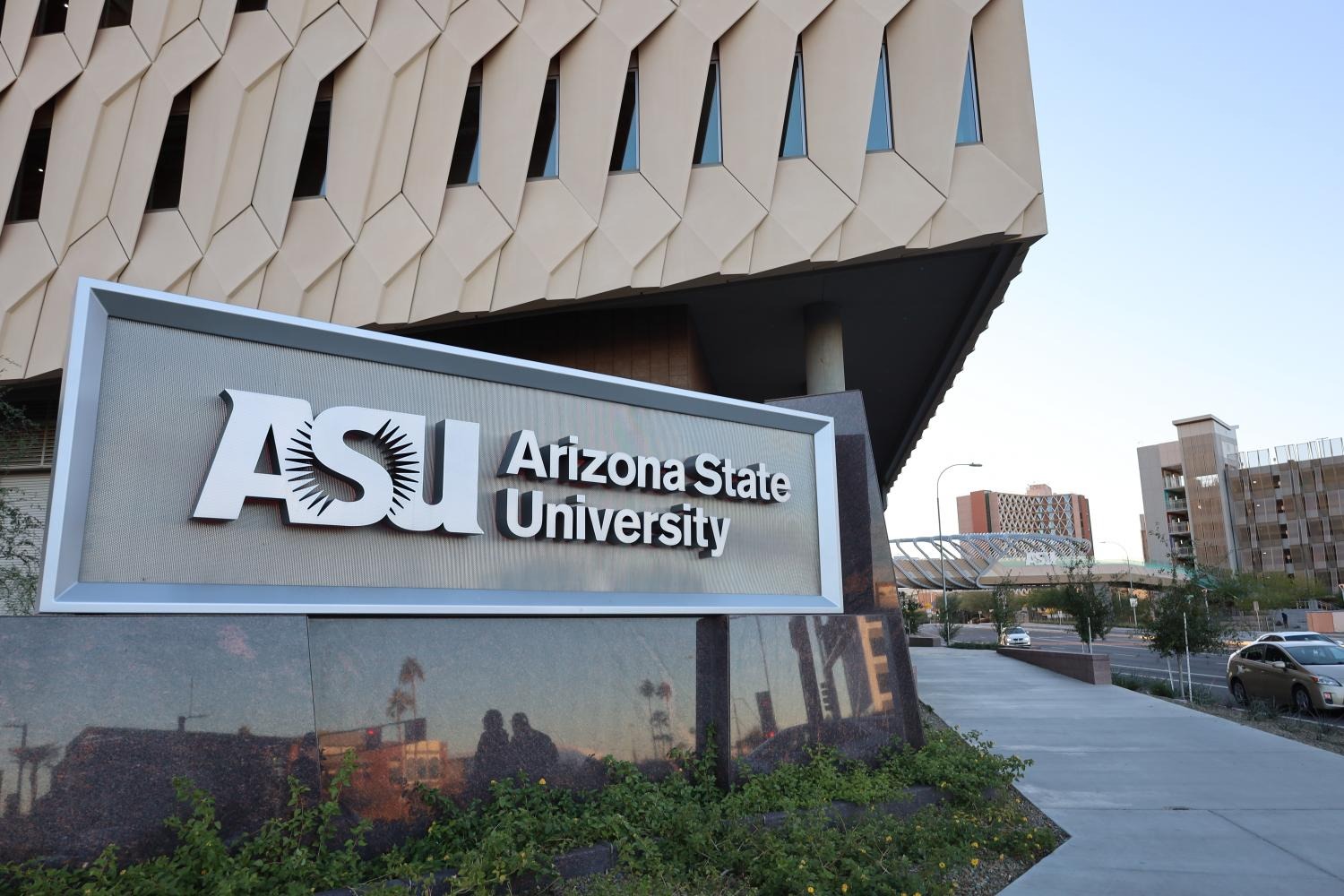
Arizona State University (ASU) is primarily known for its consistent ranking as the most innovative university in the United States, a title it has held for over a decade. It is celebrated for its "New American University" model, which prioritizes broad accessibility and inclusion over traditional Ivy League-style exclusivity. ASU is also a global leader in sustainability, space exploration, and high-ranking professional programs in business, law, and engineering.
The Identity of Innovation: Why ASU Leads the Pack
When people ask what Arizona State University is known for, the word "innovation" is almost always the first response. Since 2016, U.S. News & World Report has ranked ASU as the #1 most innovative school in the country, often placing it ahead of institutions like Stanford and MIT. This ranking is not merely a marketing slogan; it reflects a fundamental shift in how the university operates.
Under the leadership of President Michael Crow, who assumed the role in 2002, ASU pioneered the "New American University" model. This philosophy suggests that a public research university should be measured not by whom it excludes, but by whom it includes and how they succeed. This has led to massive investments in technology-enhanced learning, interdisciplinary research centers, and unconventional partnerships with private industry.
Innovation at ASU manifests in several practical ways:
- Adaptive Learning Technology: ASU uses sophisticated data analytics and AI-driven platforms to personalize education, helping students master difficult subjects like college algebra at their own pace.
- Interdisciplinary Schools: Unlike traditional universities that silo departments, ASU has reorganized many of its programs into interdisciplinary schools, such as the School of Earth and Space Exploration, which blends geology, astrophysics, and engineering.
- Speed of Implementation: The university is known for its ability to launch new degree programs and research initiatives in response to global trends much faster than the typical bureaucratic academic institution.
Academic Excellence and Prestigious Colleges
While its scale is massive, ASU is home to several highly specialized colleges that rank among the best in the world. These "colleges within the university" allow students to benefit from the resources of a major research institution while receiving the focused attention of a top-tier professional school.
W. P. Carey School of Business
The W. P. Carey School of Business is one of the largest and highest-ranked business schools in the United States. It is particularly renowned for its Supply Chain Management program, which consistently ranks in the top five nationally. The school is also a leader in business analytics, accounting, and executive MBA programs. Its reputation is bolstered by a massive alumni network and strong ties to the "Silicon Desert"—the growing tech hub in the Phoenix metropolitan area.
Barrett, The Honors College
Often referred to as the "gold standard" of honors colleges, Barrett provides a small-college feel within the larger university ecosystem. It is known for its rigorous academic requirements, including a mandatory senior thesis, and its dedicated facilities on all four major campuses. Barrett students often compete for and win prestigious international scholarships, such as Rhodes, Marshall, and Fulbright awards, at rates comparable to elite private universities.
Sandra Day O’Connor College of Law
Located in the heart of downtown Phoenix, the Sandra Day O’Connor College of Law is a top-30 law school known for its innovation in legal education. It was one of the first schools to offer a Master of Legal Studies (MLS) for non-lawyers and is highly regarded for its programs in health law, legal writing, and dispute resolution. Its proximity to the Arizona Supreme Court and major law firms provides students with unparalleled clinical and externship opportunities.
Thunderbird School of Global Management
Originally an independent institution, Thunderbird is now a unit of ASU and remains the world's premier school for global leadership and international business. Known for its "Global Mindset" curriculum, it prepares students to lead in cross-cultural environments. Its brand-new, high-tech headquarters in downtown Phoenix serves as a hub for international trade and policy education.
Pioneering Sustainability and Earth Sciences
ASU has positioned itself as a global epicenter for the study of the environment and the future of the planet. In 2006, it established the first School of Sustainability in the United States, treating sustainability not just as an elective, but as a formal academic discipline.
The university’s commitment to the environment is visible in its operations and research:
- Julie Ann Wrigley Global Futures Laboratory: This initiative functions as a "medical school for the planet," bringing together scientists, policymakers, and engineers to solve existential threats like water scarcity and climate change.
- Solar Energy Leadership: ASU has one of the largest solar footprints of any university in the world, utilizing the intense Arizona sun to power a significant portion of its campus operations.
- Water Management: Given its location in the Sonoran Desert, ASU is a primary researcher in arid-land water management, a field that has become increasingly critical as the American West faces ongoing drought conditions.
ASU’s Role in Space Exploration and Technology
Another pillar of ASU’s reputation is its deep involvement in space exploration. It is one of the few universities in the world with the capability to design, build, and lead NASA-scale missions.
The School of Earth and Space Exploration (SESE) is known for its hands-on approach. ASU faculty and students have been involved in every NASA Mars rover mission. Most notably, ASU led the Psyche mission, a journey to a unique metal-rich asteroid orbiting the sun between Mars and Jupiter. The university also operates the Lunar Reconnaissance Orbiter Camera (LROC) and has significant involvement in the James Webb Space Telescope's ongoing discoveries.
This technical prowess extends to engineering. The Ira A. Fulton Schools of Engineering is the largest engineering school in the country, known for its research in semiconductors—a vital industry in Arizona, which is home to major Intel and TSMC facilities.
Campus Life and the "Sun Devil" Spirit
ASU is a multi-campus institution, and each location has a distinct personality and reputation. Unlike universities with one central campus and smaller satellite locations, ASU operates on a "One University in Many Places" model.
| Campus | Location | Known For |
|---|---|---|
| Tempe Campus | Tempe, AZ | The historic heart of ASU; home to Sun Devil Athletics, Barrett Honors College, and the main research labs. |
| Downtown Phoenix | Phoenix, AZ | Professional hub; home to Law, Journalism (Cronkite), Nursing, and the Thunderbird School. |
| West Valley Campus | Glendale, AZ | A liberal arts focus with a small-campus feel; known for forensics, business, and teacher education. |
| Polytechnic Campus | Mesa, AZ | Hands-on, project-based learning; home to aviation, robotics, and professional flight programs. |
| ASU Online | Global | A world leader in digital education; identical degrees to campus-based programs with 300+ options. |
Athletics and the Big 12
Athletically, ASU is known as the home of the Sun Devils. As of 2026, the university is fully integrated into the Big 12 Conference, a move that shifted its athletic focus toward traditional powerhouses in the Midwest and South. While the school has a storied history in baseball (producing legends like Barry Bonds and Reggie Jackson) and golf (Phil Mickelson), the "Inferno" student section at football games remains a central part of the campus culture.
Online Education and Global Accessibility
One cannot discuss ASU's reputation without mentioning ASU Online. While many universities treated online learning as a secondary "extension" program, ASU integrated it into the core of the university.
ASU is known for its high-profile corporate partnerships, most notably the Starbucks College Achievement Plan. Through this program, eligible Starbucks employees can earn a bachelor’s degree with full tuition coverage. Similar partnerships exist with Uber and the U.S. military. These initiatives have helped ASU grow its total student population to over 145,000 students (including online and immersion), making it one of the largest public universities in the United States.
Addressing the "Party School" Reputation
Historically, ASU struggled with a reputation as a "party school," a label popularized by various magazines in the 1980s and 90s. However, in 2026, that reputation has largely been eclipsed by its academic and innovative achievements.
While ASU still has a vibrant social scene—as any university with 50,000+ undergraduate students on its main campus would—the university has significantly tightened its behavioral standards. The academic rigor has increased, and the average GPA of incoming freshmen has risen steadily for two decades. Today, ASU is more likely to be recognized for its research expenditures (exceeding $800 million annually) than for its social life.
Research Impact and Economic Contribution
ASU is a Tier 1 (R1) Research University, a designation reserved for institutions with the highest level of research activity. This status means that the university is a major engine for economic development.
The university is known for its Biodesign Institute, which focuses on nature-inspired solutions to health and environmental challenges. During the COVID-19 pandemic, the institute gained national acclaim for developing the first saliva-based PCR test in the Southwest. In 2026, its research focuses on early cancer detection, neurodegenerative diseases, and sustainable materials.
Frequently Asked Questions
Is Arizona State University an Ivy League school?
No, ASU is a public research university. However, its honors college, Barrett, is often compared to Ivy League institutions in terms of academic rigor and student outcomes. ASU prioritizes "broad excellence" and accessibility over the exclusive admission models of the Ivy League.
What are the most popular majors at ASU?
The most popular majors at ASU include Business (Management, Marketing, Supply Chain), Engineering, Biological Sciences, Psychology, and Visual/Performing Arts. Its journalism program, the Walter Cronkite School of Journalism and Mass Communication, is also widely considered one of the top three in the country.
Is an ASU Online degree the same as an on-campus degree?
Yes. ASU does not distinguish between online and in-person degrees on diplomas or transcripts. The curriculum is developed and taught by the same faculty who teach on the physical campuses, and online students must meet the same rigorous academic standards to graduate.
How hard is it to get into ASU?
ASU has a relatively high acceptance rate compared to other top-tier research universities, which aligns with its mission of accessibility. However, specific programs—such as the W. P. Carey School of Business, the Ira A. Fulton Schools of Engineering, and Barrett, The Honors College—have much higher admission standards and lower acceptance rates than the university at large.
Where is ASU located?
ASU is headquartered in Tempe, Arizona, but it has four major campuses in the Phoenix metropolitan area (Tempe, Downtown Phoenix, West Valley, and Polytechnic). It also has a location in Lake Havasu City, Arizona, and international centers in Washington D.C., Los Angeles, and various global "hubs" through its partnership with the Cintana Alliance.
Final Recommendation for 2026 Applicants
If you are looking for a university that offers a traditional campus experience combined with cutting-edge technology and a "future-forward" mindset, Arizona State University is a top contender. It is best suited for students who are self-starters and thrive in large, diverse environments where resources are plentiful but require initiative to access.
For those interested in high-demand fields like Supply Chain Management, Sustainability, or Aerospace Engineering, ASU offers specialized resources and industry connections that are difficult to match elsewhere. When applying, consider which of the four Phoenix-area campuses aligns best with your professional goals, as the "known for" factor of ASU varies significantly depending on whether you are based in the high-tech Polytechnic campus or the professionally focused Downtown Phoenix hub.