The sudden closure of Argosy University in March 2019 disrupted the education of thousands of students nationwide, leaving them stranded with unfulfilled degrees, withheld financial aid stipends, and complex credit transfer challenges. This comprehensive overview examines the systemic institutional failures, federal and state regulatory responses, and the pathways available to affected learners seeking loan discharges or academic completion.
The Collapse of Argosy University: An Overview of the 2019 Crisis
The collapse of Argosy University in the spring of 2019 stands as one of the most disruptive events in the modern history of for-profit higher education in the United States. Operated by the Dream Center Education Holding (DCEH), a secular non-profit foundation that had acquired Argosy alongside other institutions from Education Management Corporation (EMC) in 2017, the university system buckled under severe financial distress. By early 2019, students across multiple campuses and online programs faced abrupt campus closures, evicted facilities due to unpaid rent, and a catastrophic breakdown in administrative operations.
The root of the 2019 crisis lay in chronic mismanagement and a severe liquidity shortage within DCEH. Despite assurances to the U.S. Department of Education that the transition from a for-profit to a non-profit model was financially sound, Dream Center grossly underestimated the operating costs and liabilities of the institutions it acquired. By late 2018 and early 2019, Argosy was struggling to meet payroll, maintain facility leases, and—most critically—distribute Title IV federal financial aid stipends to students who relied on those funds for living expenses.
The crisis escalated dramatically when the U.S. Department of Education placed Argosy under Heightened Cash Monitoring 2 (HCM2) due to severe financial and administrative oversight failures. This restriction delayed federal funding disbursements, pushing the institution past the brink of insolvency. In February 2019, a federal court appointed a receiver, Kelly Kramer, to manage the crumbling assets of Dream Center Education Holdings. However, the receiver's efforts could not salvage the university. On March 8, 2019, Argosy University officially closed its doors across all remaining physical locations and online portals, abruptly terminating academic operations for nearly 20,000 enrolled students.
Immediate Impacts on Students and Financial Aid Embezzlement
When Argosy University closed in 2019, the immediate fallout for students extended far beyond the sudden loss of classroom instruction. The most acute crisis involved the mishandling of federal financial aid credit balances. Under Title IV regulations, universities are required to disburse excess federal student loan and grant funds—intended for living expenses such as rent, food, and childcare—directly to students. Investigations by the U.S. Department of Education and the court-appointed receiver revealed that Dream Center executives and Argosy administration had diverted millions of dollars in student financial aid stipends to cover operational payroll and vendor debts.
This diversion of funds left thousands of students facing severe financial precarity. Many students discovered that thousands of dollars in living-expense stipends had vanished from their accounts without warning, triggering housing evictions, utility shut-offs, and deep financial distress.
Academic disruption compounded these financial hardships. Students found themselves in various stages of their educational programs, ranging from first-year undergraduates to doctoral candidates completing their dissertations or clinical internships. The sudden cessation of classes meant that institutional transcripts were frequently delayed, withholding critical proof of credit completion. Furthermore, because Argosy’s regional accreditation (under the Woosncis Association of Schools and Colleges Senior College and University Commission - WSCUC) was suspended and subsequently revoked following the closure, students faced massive hurdles in convincing other institutions to accept their academic credits. Clinical psychology and counseling students, in particular, faced professional licensing crises, as their specialized coursework and supervised practicum hours hung in administrative limbo.
Regulatory and Legal Responses to the Closure
The systemic failure of Argosy University triggered intense scrutiny and intervention from federal regulators, state attorneys general, and the federal court system. The U.S. Department of Education played a central role in managing the aftermath, working alongside the court-appointed receiver to secure student records and establish baseline remediation protocols.
Under federal regulations governing school closures, students enrolled at the time of closure—or those who withdrew within 120 days before the closure date—were granted specific federal protections. The Department of Education established dedicated transition teams to assist students with understanding their options, which primarily included seeking a Closed School Loan Discharge or transferring credits to a teach-out institution. State attorneys general also stepped in, launching investigations into deceptive marketing practices, predatory enrollment tactics, and the unlawful withholding of financial aid funds by DCEH management. These legal actions aimed to hold former executives accountable and secure debt relief or restitution for affected consumers.
However, the legal landscape was complicated by the bankruptcy proceedings of Dream Center Education Holdings. The receivership and subsequent bankruptcy filings meant that institutional assets were pooled to satisfy secured creditors, leaving student claimants at the back of a long queue for financial restitution. Consequently, federal loan discharge programs administered through the Department of Education became the primary legal and financial safety net for Argosy borrowers seeking relief from their student loan debt burdens.
Pathways for Affected Students: Closed School Loan Discharges vs. Credit Transfers
Students affected by the 2019 closure were forced to choose between two fundamentally divergent paths: pursuing a federal student loan discharge or attempting to salvage their academic progress via credit transfers or teach-out agreements. Each path carried distinct legal, financial, and academic implications.
| Pathway Type | Primary Benefit | Key Requirements & Limitations | Long-Term Implication |
|---|---|---|---|
| Closed School Loan Discharge | Complete cancellation of federal student loans; refund of past payments made on those loans. | Must not have completed the program; must not have transferred credits to a new school; requires formal application to loan servicer. | Erases federal debt associated with Argosy, but earned credits are generally forfeited. |
| Credit Transfer / Teach-Out | Preservation of academic progress; potential faster path to degree completion. | Subject to receiving institution's evaluation; many credits may be rejected due to accreditation differences. | Retains credits, but student remains responsible for repaying all federal and private student loans incurred at Argosy. |
Closed School Loan Discharge Eligibility
For many students, the Closed School Loan Discharge administered by the U.S. Department of Education offered the cleanest financial exit from the Argosy disaster. To qualify for a 100% discharge of federal Direct Loans, Federal Family Education Loan (FFEL) Program loans, or Perkins Loans, a student had to meet specific criteria:
- The student was enrolled at Argosy University when it closed on March 8, 2019, or withdrew within 120 days of the closure date (though the Department of Education later extended eligibility windows for certain impacted cohorts).
- The student did not complete their program of study.
- The student did not accept a formal transfer of their Argosy credits to another institution. Accepting a credit transfer generally disqualifies a borrower from receiving a closed school discharge, making this a pivotal fork in the road for affected learners.
The Challenges of Credit Transfers and Teach-Outs
For students who were close to graduation, accepting a closed school discharge meant walking away from years of hard work. Several institutions attempted to establish "teach-out" agreements—formal arrangements where another accredited university agreed to accept Argosy students and honor their earned credits. However, because Argosy’s regional accreditation status was severely compromised prior to and during the closure, many external universities proved hesitant to accept transfer credits without rigorous transcript reviews. Students frequently discovered that receiving institutions would only accept general education credits, forcing them to retake major-specific courses and prolonging their time to degree completion.
Accessing Academic Records and Transcripts Post-Closure
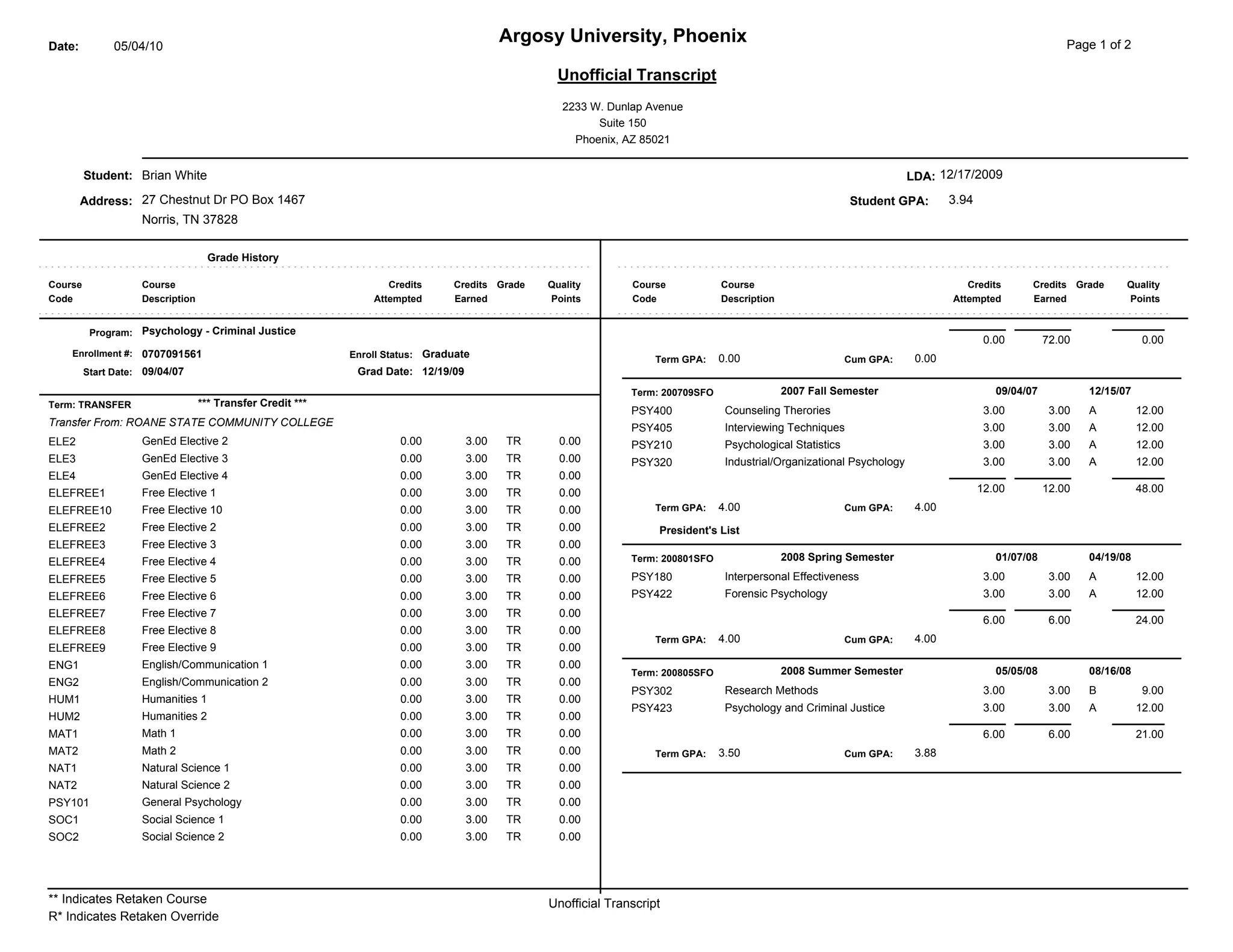
A critical hurdle for former Argosy University students has been securing official academic transcripts. Transcripts are mandatory for verifying degree completion, applying for professional licensure, or transferring credits to a new university. Following the 2019 bankruptcy and receivership, the physical and digital records of Argosy students were transferred to state-appointed custodians and designated record management repositories.
Because Argosy operated across multiple states, transcript custody was decentralized. Depending on the specific campus location, student records were assigned to state higher education executive boards, designated third-party archivists, or state departments of education. For example, students from California campuses must navigate transcript requests through specific state archival pathways overseen by the California Bureau for Private Postsecondary Education (BPPE) or designated record custodians.
To obtain official transcripts, former students should take the following verified steps:
- Identify the state regulatory body or record custodian responsible for the specific Argosy campus location attended.
- Visit the official website of the state’s higher education agency or the Department of Education's designated Argosy resource page to locate current archival contact details.
- Submit a formal transcript request form, paying any authorized archival processing fees.
- Verify whether the issuing entity provides electronic delivery or secure physical mail services, ensuring that transcripts are sent directly to receiving academic institutions or licensing boards without intermediary handling.
Frequently Asked Questions
Can I still apply for a closed school loan discharge for Argosy University?
Yes, eligible borrowers who did not complete their program and did not transfer their credits can still apply for a Closed School Loan Discharge. While there is no strict federal statute of limitations for filing a closed school discharge, acting promptly is strongly recommended to ensure efficient processing by loan servicers and the U.S. Department of Education.
What happens if I transferred my Argosy credits to another school?
If you formally transferred your Argosy credits to a new institution and continued your education in the same or a similar program, you generally forfeit your eligibility for a Closed School Loan Discharge. The Department of Education considers the successful transfer and use of credits as an indication that the prior education retained its value.
How do I find my Argosy University transcript if the campus is permanently closed?
Transcript custody depends on the state where your specific Argosy campus was located. You should consult the state higher education regulatory agency or the U.S. Department of Education’s official school closure page to find the current designated records custodian authorized to issue certified copies of your academic history.
Are private student loans eligible for discharge under the 2019 Argosy closure?
No. Federal closed school discharge programs apply exclusively to federal student loans (such as Direct Loans, FFEL loans, and Perkins loans). Private student loans issued by banks or private lenders are not automatically cancelled upon a school closure. Borrowers with private loans must contact their private lenders directly or consult consumer protection attorneys regarding potential defense-to-repayment or school-misconduct claims.
Will an Argosy University withdrawal or discharge affect my credit score?
A approved Closed School Loan Discharge removes the associated federal loans from your active repayment burden and corrects negative reporting related to those specific discharged loans. However, borrowers should monitor their credit reports closely during the discharge application processing period to ensure loan servicers correctly update statuses from delinquent to discharged.
Conclusion and Next Actions
The 2019 closure of Argosy University remains a cautionary milestone in higher education administration, underscoring the vital importance of institutional financial stability and consumer protection. For former students still navigating the lingering aftermath, determining the appropriate next action requires a clear assessment of academic goals versus financial liabilities. If you abandoned your program and hold federal loans, verify your eligibility for a Closed School Loan Discharge through your federal loan servicer or the official StudentAid.gov portal. If you successfully transitioned to a new institution, focus on securing official transcripts through designated state archives to safeguard your professional credentials and academic record.