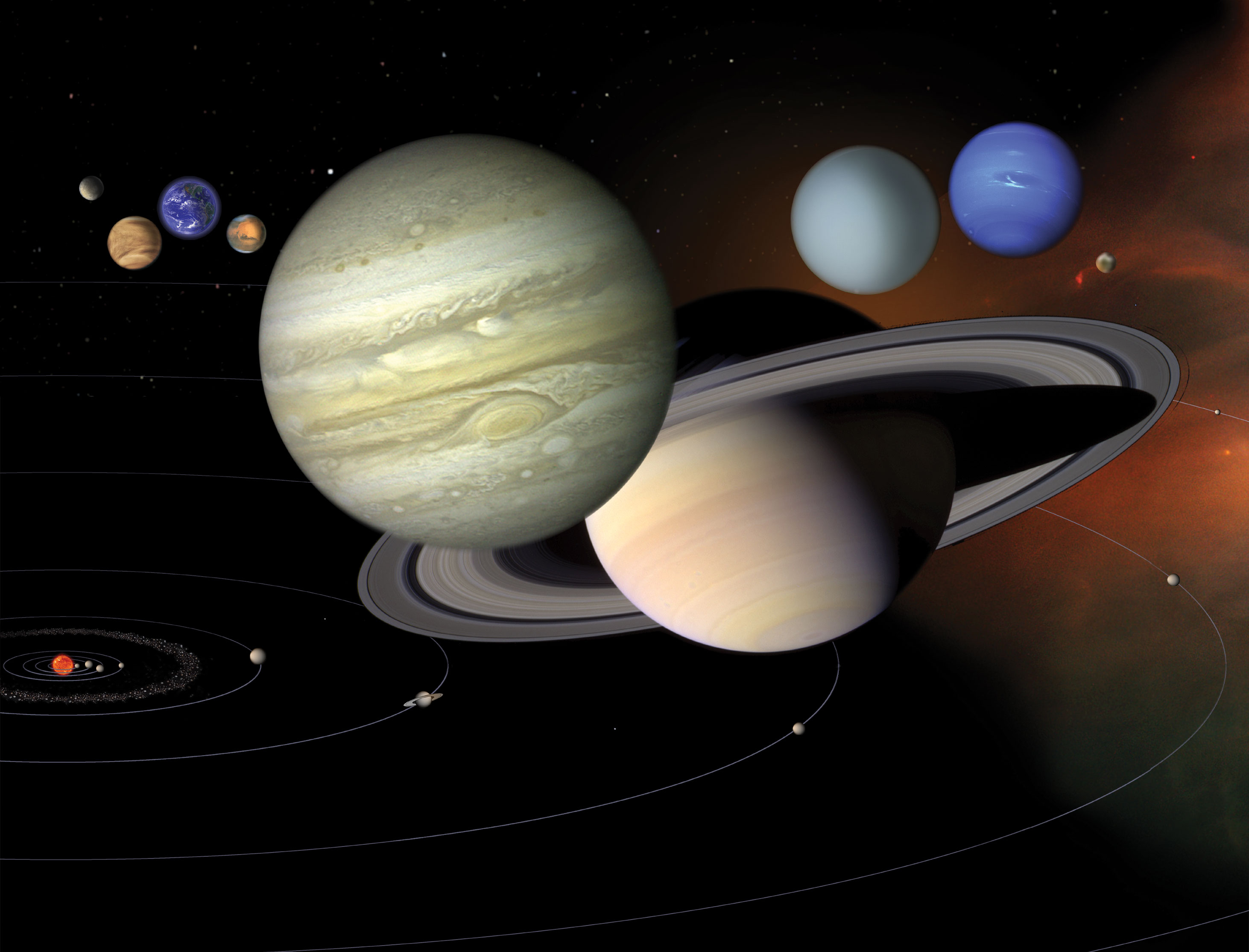
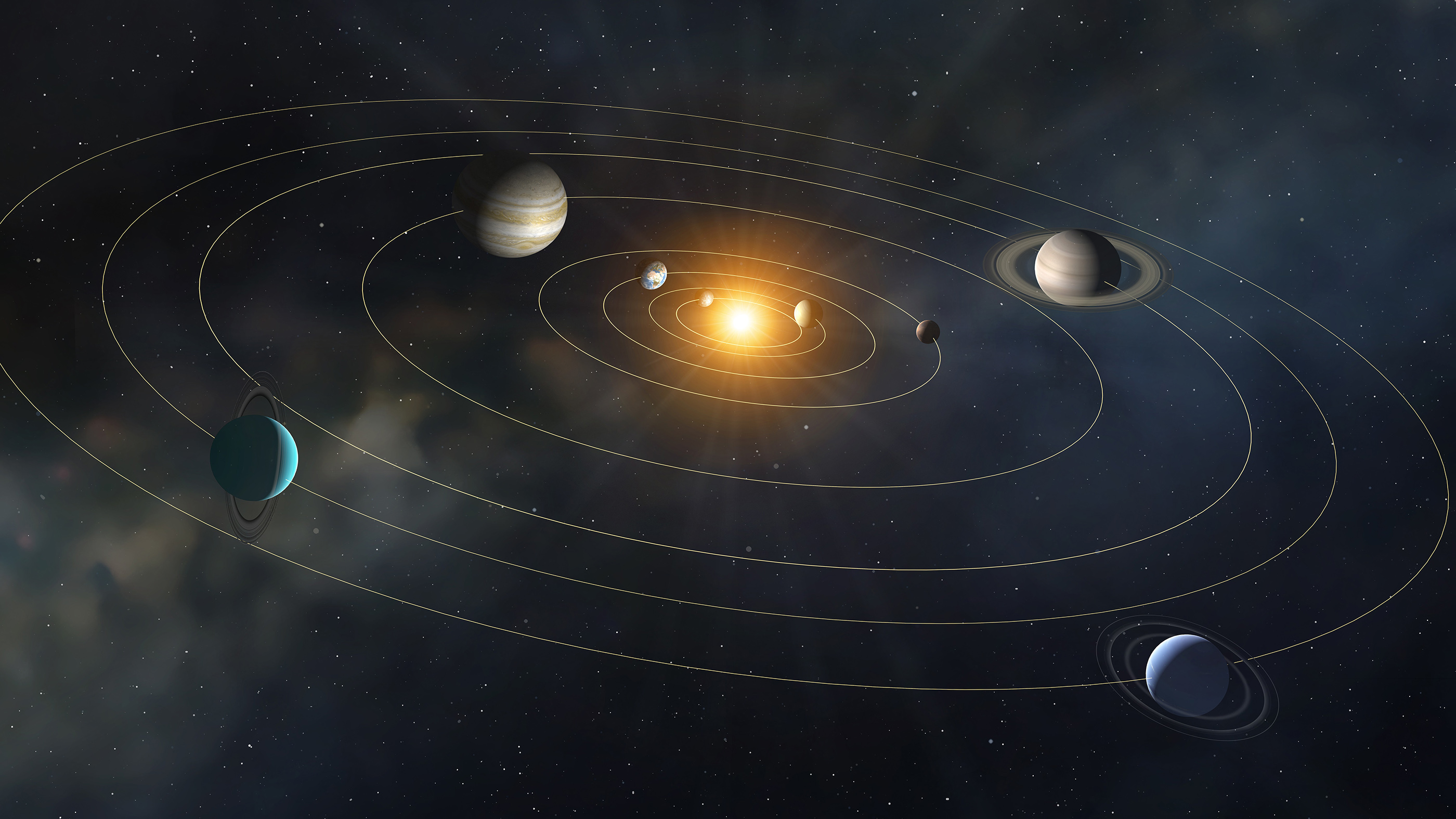
As of 2026, the scientific community recognizes eight major planets, but compelling gravitational evidence suggests a massive, unseen ninth planet—often called Planet Nine—exists in the far reaches of the Kuiper Belt. Researchers utilize advanced wide-field surveys to pinpoint this elusive world, which likely orbits hundreds of times further from the Sun than Earth.
The quest to find another planet in our solar system has evolved from a matter of visual observation to a complex exercise in mathematical modeling and deep-space surveying. While the solar system’s map seemed settled after the reclassification of Pluto in 2006, the behavior of distant icy bodies suggests our neighborhood is larger and more populated than previously confirmed. The current focus of planetary science is not merely cataloging smaller debris, but identifying a significant gravitational influencer that could reshape our understanding of solar system formation.
The Gravitational Footprint: Why Scientists Believe in Planet Nine
The primary reason researchers are searching for another planet in our solar system is not because they have seen it, but because they have seen its "ghost." In the vast region beyond Neptune, known as the Kuiper Belt, there are objects called extreme Trans-Neptunian Objects (eTNOs). In 2014 and 2016, researchers at the California Institute of Technology (Caltech), most notably Konstantin Batygin and Michael Brown, noticed a startling mathematical anomaly: the orbits of these distant objects are not randomly distributed.
Instead, these eTNOs exhibit "orbital clustering." They all swing out into space in the same direction and are tilted at roughly the same angle relative to the plane of the solar system. The probability of this happening by chance is estimated to be less than 0.001%. This suggests that a massive object—a true ninth planet—is acting as a gravitational shepherd, herding these smaller bodies into their specific elliptical paths. To exert such influence, this hypothetical planet would need to be roughly five to ten times the mass of Earth, placing it in the category of a "Super-Earth" or "Mini-Neptune."
The Dynamics of Orbital Clustering
To understand how another planet in our solar system remains hidden, one must look at the sheer scale of the outer reaches. The clustering observed in objects like Sedna and 2012 VP113 occurs at distances where the Sun is little more than a bright star. The gravitational reach of a massive ninth planet would explain several solar system mysteries:
- The tilt of the Sun’s spin axis: The Sun’s equator is tilted about six degrees relative to the orbital plane of the major planets. A distant, massive planet could provide the necessary torque over billions of years to cause this misalignment.
- The existence of "Detached" Objects: Some objects in the Kuiper Belt have orbits that never come close to Neptune. Without a ninth planet, it is difficult to explain how these objects were pulled into their current high-perihelion orbits.
- High-inclination TNOs: There is a population of objects that orbit almost perpendicularly to the rest of the planets. Simulations show that Planet Nine naturally produces these "vertical" orbits.
Physical Characteristics: Estimating the Properties of a New World
While we have not yet captured a direct image of another planet in our solar system, astrophysical models provide a detailed "wanted poster" for what it should look like. If it exists as predicted, Planet Nine is likely a cold, gas-rich or ice-rich world.
Predicted Mass and Volume
Current simulations suggest a mass of approximately six times that of Earth and a radius two to four times larger than Earth’s. This would make it smaller than Neptune but significantly larger than our terrestrial planets. In the context of the broader galaxy, this is a very common type of planet. Observations from missions like Kepler and TESS have shown that "Super-Earths" are the most common planets in the Milky Way, making it somewhat ironic that our own solar system appears to lack one—unless Planet Nine is that missing piece.
Atmospheric Composition and Temperature
Given its extreme distance from the Sun—estimated to be between 400 and 800 astronomical units (AU)—the surface temperature would be incredibly low, likely around 40 Kelvin (-387°F). At these temperatures, many gases would freeze. However, internal heat from its formation might support a thick atmosphere of hydrogen and helium, potentially layered with clouds of methane ice, similar to the composition of Neptune.
Orbital Period and Path
A year on this potential ninth planet would be immense. Scientists estimate its orbital period to be between 10,000 and 20,000 Earth years. Its orbit is also thought to be highly elliptical and significantly inclined relative to the ecliptic (the path the other planets follow). This high inclination is one of the reasons it has been so difficult to find; most planetary surveys focus on the ecliptic, whereas Planet Nine could be lurking in the "northern" or "southern" sky, far from the traditional search zones.
The Search Methods of 2026: Technology and Observatories
As of 2026, the search for another planet in our solar system has entered its most technologically advanced phase. The primary hurdle is that the planet is likely extremely dim. At its predicted distance, it would be roughly 600,000 times fainter than Neptune.
The Vera C. Rubin Observatory
The most significant development in this search is the full operational status of the Vera C. Rubin Observatory in Chile. Its Legacy Survey of Space and Time (LSST) is a ten-year project to map the entire visible sky every few nights. The observatory uses a 3.2-gigapixel camera—the largest digital camera ever built—to capture faint movements in the deep sky.
- Wide-Field Survey: Unlike narrow-view telescopes like Hubble or James Webb, the Rubin Observatory scans vast areas of the sky.
- Time-Domain Astronomy: By comparing images taken days or weeks apart, software can identify objects that have moved slightly against the backdrop of stationary stars. If Planet Nine is within the observatory's field of view, its motion should be detectable within the first few years of the survey's full operation.
Infrared Detection and the James Webb Space Telescope (JWST)
While the JWST is not a survey telescope, it can be used for targeted follow-up. If a candidate object is identified by the Rubin Observatory, JWST’s Near-Infrared Camera (NIRCam) and Mid-Infrared Instrument (MIRI) could be used to confirm its planetary nature by detecting its thermal signature. Even a cold planet emits a tiny amount of internal heat in the infrared spectrum, which JWST is uniquely equipped to see.
Comparison of Known Planets and Theoretical Planet Nine
The following table compares the physical and orbital characteristics of Earth and Neptune with the current mathematical predictions for the theoretical ninth planet.
| Characteristic | Earth | Neptune | Theoretical Planet Nine |
|---|---|---|---|
| Mass (Earth Masses) | 1.0 | 17.1 | ~5 to 10 |
| Average Distance from Sun | 1 AU | 30.1 AU | 400 – 800 AU |
| Orbital Period | 1 Year | 164.8 Years | 10,000 – 20,000 Years |
| Radius (Earth Radii) | 1.0 | 3.88 | 2.0 – 4.0 |
| Estimated Temperature | 288 K (15°C) | 72 K (-201°C) | ~40 K (-233°C) |
| Orbital Eccentricity | 0.017 (Near Circular) | 0.009 (Near Circular) | 0.2 – 0.5 (Highly Elliptical) |
| Confirmed Status | Confirmed (Ancient) | Confirmed (1846) | Hypothetical (Active Search) |
The Classification Debate: What Makes a Planet?
The search for another planet in our solar system often brings up the question of why Pluto is no longer considered the ninth planet. The International Astronomical Union (IAU) established three criteria for a celestial body to be classified as a planet:
- It must orbit the Sun.
- It must have sufficient mass to assume a nearly round shape (hydrostatic equilibrium).
- It must have "cleared the neighborhood" around its orbit.
Pluto fails the third criterion because it shares its orbital zone with many other objects in the Kuiper Belt. If Planet Nine is discovered, however, it is expected to easily satisfy this requirement. Given its predicted mass, it would be the dominant gravitational force in its region, millions of times more massive than any other object in its vicinity.
Is "Planet Ten" Also Possible?
In addition to Planet Nine, some astronomers hypothesize the existence of a "Planet Ten," a Mars-sized object much closer than Planet Nine (around 60-100 AU) that might explain the "warping" of the Kuiper Belt’s orbital plane. While the evidence for Planet Ten is currently less robust than the evidence for Planet Nine, the possibility underscores how much of our solar system remains unmapped.
Common Obstacles in Deep-Space Detection
Finding a new planet at the edge of the solar system is a monumental task. Several factors complicate the detection process:
- The Galactic Plane: If the planet is currently positioned in front of the Milky Way’s dense star fields, it becomes nearly impossible to distinguish it from the billions of distant stars.
- Albedo Uncertainty: We do not know how reflective the planet’s surface or atmosphere is. If it has a low albedo (reflects little light), it could be much darker than current models predict.
- The Distance-Square Law: Sunlight follows the inverse-square law. By the time light travels to Planet Nine and reflects back to Earth, it has lost a tremendous amount of energy. The brightness of an object decreases by the fourth power of its distance from the Sun.
Frequently Asked Questions
Has another planet in our solar system been officially discovered recently?
As of 2026, no new major planet has been officially confirmed. While several dwarf planets (like Eris, Haumea, and Makemake) have been discovered in the 21st century, the massive "Planet Nine" remains a theoretical necessity supported by gravitational data but lacking a direct visual "discovery image."
Why can't we just use the Hubble or James Webb telescope to find it?
The Hubble and James Webb telescopes have very narrow fields of view. Using them to find Planet Nine is like trying to find a specific grain of sand on a beach through a drinking straw. We first need a wide-field survey (like the one performed by the Rubin Observatory) to tell us exactly where to point those powerful telescopes.
Is Planet Nine the same as "Nibiru"?
No. Planet Nine is a legitimate scientific hypothesis based on observed gravitational anomalies and peer-reviewed mathematical models. Nibiru is a debunked pseudoscientific conspiracy theory involving a mythical planet on a collision course with Earth. There is no scientific evidence for Nibiru, whereas there is significant indirect evidence for Planet Nine.
If Planet Nine exists, could it be a small black hole?
Some researchers have proposed that the gravitational anomalies could be caused by a "primordial black hole" the size of a grapefruit but with the mass of five Earths. While mathematically possible, most astronomers believe the object is more likely to be a standard planet formed during the early stages of the solar system.
How long would it take a spacecraft to reach a new ninth planet?
Using current propulsion technology, a mission to Planet Nine would take several decades. For context, New Horizons took nine years to reach Pluto (30-50 AU). To reach an object at 500 AU, a spacecraft would need revolutionary propulsion, such as solar sails or nuclear-thermal engines, or would require a journey of 50 to 75 years.
Future Steps in Planetary Verification
The path to confirming another planet in our solar system requires a transition from mathematical inference to visual evidence. The next few years are critical. Astronomers are currently refining their "search strips"—specific regions of the sky where the planet is most likely to be located based on its predicted orbit.
The primary next action for the scientific community is the continued analysis of the LSST data stream from the Vera C. Rubin Observatory. Amateur astronomers also play a role through "citizen science" projects like "Backyard Worlds: Planet 9," where volunteers look through infrared images from the WISE (Wide-field Infrared Survey Explorer) mission for moving objects.
If a candidate is found, the discovery would prompt an immediate international effort to characterize the world. We would seek to determine its mass, its atmospheric composition, and whether it possesses its own system of moons. Such a discovery would not only complete the modern map of our solar system but also provide a "missing link" for understanding how our planetary system compares to those found around other stars.