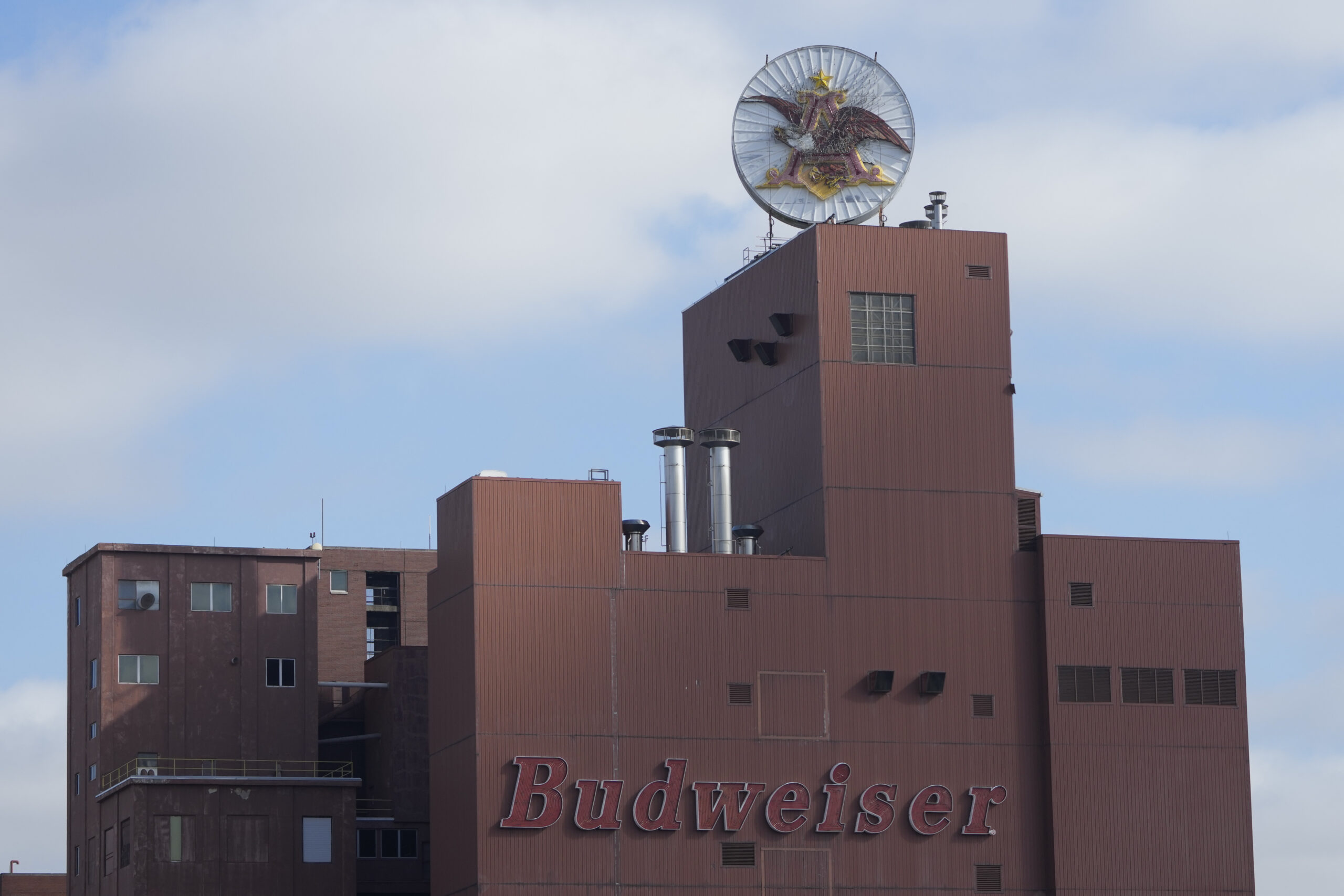
Anheuser-Busch is the largest brewing company in the United States, operating as the American subsidiary of global brewing conglomerate Anheuser-Busch InBev (AB InBev). Headquartered in St. Louis, Missouri, the company produces iconic beverage brands like Budweiser, Bud Light, and Michelob Ultra while managing an extensive national network of breweries, agricultural facilities, and wholesale distribution assets.
Defining Anheuser-Busch: Corporate Disambiguation
To understand Anheuser-Busch today, one must separate the historical American enterprise from its modern global parent entity. Searches for "Anheuser-Busch" frequently blur the lines between two distinct corporate structures:
- Anheuser-Busch Companies, LLC: The U.S.-based operating subsidiary based in St. Louis, Missouri. It oversees U.S. brewing operations, domestic brand management, regional farm operations, and North American distribution logistics.
- Anheuser-Busch InBev SA/NV (AB InBev): The global parent company headquartered in Leuven, Belgium. Publicly traded on the Euronext, NYSE, and other international exchanges, AB InBev was formed through a sequence of multinational mega-mergers combining American, Brazilian, Belgian, and British brewing giants.
While the American subsidiary maintains deep roots in U.S. brewing history, its strategic direction, capital allocation, and executive reporting directly feed into AB InBev’s global corporate matrix.
- AB InBev SA/NV (Global Parent - Leuven, Belgium)
- Anheuser-Busch Companies, LLC (US Division - St. Louis, MO)
- 12 Major US Flagship Breweries
- Craft & Beyond Beer Portfolio
- Wholly-Owned Distributors (WODs)
- Global Operating Zones (Middle Americas, South America, Europe, Asia Pacific)
- Anheuser-Busch Companies, LLC (US Division - St. Louis, MO)
The Historical Evolution of Anheuser-Busch
From St. Louis Brewery to National Leader (1852–1933)
The enterprise originated in 1852 when German immigrant George Schneider opened the Bavarian Brewery in St. Louis. After experiencing financial difficulties, the brewery was purchased in 1860 by Eberhard Anheuser, a prosperous soap manufacturer. Anheuser’s son-in-law, Adolphus Busch, joined the business in 1865 and bought out a partner's stake in 1869. The company officially adopted the name Anheuser-Busch Brewing Association in 1879.
Adolphus Busch modernized the American beer industry through structural and technological innovations:
- Pasteurization: Busch was among the first commercial U.S. brewers to apply Louis Pasteur’s heat-sterilization process to beer, extending product shelf life and allowing long-distance shipment.
- Refrigerated Rail Cars: Busch developed and deployed a fleet of double-walled, ice-refrigerated rail cars to transport beer across the United States without spoiling.
- National Distribution Networks: By establishing localized icehouses along railway lines, Anheuser-Busch built the first nationwide beer distribution network.
- Budweiser: Introduced in 1876 as a bohemian-style lager, Budweiser grew into the company's centerpiece flagship product.
During Prohibition (1920–1933), under the leadership of August A. Busch Sr., the company survived by diversifying into non-alcoholic cereal beverages (such as Bevo), baker's yeast, ice cream, refrigeration equipment, and automobile body manufacturing. When the 21st Amendment repealed Prohibition in 1933, Anheuser-Busch immediately resumed brewing operations and rapidly regained its market dominance.
Post-War Expansion and Industrial Scale (1934–2007)
Through the mid-to-late 20th century, led by August "Gussie" Busch Jr. and August Busch III, the company built massive automated breweries across the United States. Key milestones during this period included:
- 1957: Anheuser-Busch became the largest brewery by volume in the United States.
- 1982: The launch of Bud Light, which eventually surpassed original Budweiser to become the top-selling beer brand in North America.
- Vertical Integration: The creation of Metal Container Corporation (canning operations), Busch Agricultural Resources (barley and hop supply chains), and Busch Entertainment Corporation (theme parks like Busch Gardens and SeaWorld, later divested).
Global Consolidation: The Formation of AB InBev
The modern architecture of Anheuser-Busch was reshaped by three major international corporate transactions occurring between 2004 and 2016.
- Interbrew (Belgium) + AmBev (Brazil)
- InBev (2004)
- InBev + Anheuser-Busch (USA) ($52B Acquisition, 2008)
- AB InBev (2008-2016)
- AB InBev + SABMiller (UK/South Africa) ($100B+ Acquisition, 2016)
- AB InBev Global Enterprise Today
1. The 2004 InBev Merger
Belgian brewing group Interbrew merged with Brazilian beverage company AmBev to form InBev. This transaction combined European heritage brands (such as Stella Artois and Beck's) with Latin America’s largest brewing engine, backed by the private equity practices of Brazilian firm 3G Capital (led by Jorge Paulo Lemann, Carlos Alberto Sicupira, and Marcel Telles).
2. The 2008 Acquisition of Anheuser-Busch
In July 2008, InBev launched an unsolicited $52 billion cash offer ($70 per share) to buy Anheuser-Busch. Despite pushback from board members, local politicians, and traditionalists in St. Louis, the board ultimately accepted the offer. The deal closed in November 2008, creating Anheuser-Busch InBev (AB InBev).
Following the acquisition, management introduced stringent cost-control models, specifically Zero-Based Budgeting (ZBB). Under ZBB, every department must justify all annual expenses from scratch rather than carrying forward historical baseline budgets. The company also divested non-core assets, including theme parks and packaging units, to reduce acquisition debt.
3. The 2016 SABMiller Megamerger
In October 2016, AB InBev acquired its main global competitor, SABMiller, for over $100 billion. To meet global antitrust regulatory requirements in the United States, China, and Europe, AB InBev was required to execute significant divestitures:
- Sold SABMiller's 58% stake in MillerCoors to Molson Coors for $12 billion (giving Molson Coors full ownership of the Miller brand portfolio in the U.S.).
- Divested European brands (including Peroni, Grolsch, and Pilsner Urquell) to Asahi Group Holdings.
- Sold SABMiller’s stake in China’s top-selling beer brand, Snow, to China Resources Beer.
Despite these forced divestitures, the combined entity secured dominant market shares across South America, Africa, Central America, and North America, handling approximately 25–30% of global beer volume.
Business Model & Supply Chain Architecture
Anheuser-Busch operates an integrated supply chain that spans agriculture, manufacturing, distribution, and retail execution.
1. The U.S. Three-Tier System
Following the repeal of Prohibition, federal and state laws mandated a strict Three-Tier System to prevent producer monopolies and tied-house retail formats:
- Tier 1: Producers / Importers (e.g., Anheuser-Busch brewing plants)
- Tier 2: Wholesale Distributors (Middlemen responsible for logistics, warehousing, and delivery)
- Tier 3: Retailers (Bars, restaurants, grocery stores, convenience stores)
Under this legal framework, Anheuser-Busch cannot sell beer directly to retail stores or consumers in most jurisdictions. Instead, it sells inventory to independent wholesale distributors or its own legal network of Wholly-Owned Distributors (WODs) where state laws permit.
Anheuser-Busch’s core competitive advantage stems from its extensive independent wholesaler network (often called "Red Network" distributors). These distributors prioritize Anheuser-Busch products, granting the company superior shelf placement, tap handle representation, and retail execution compared to smaller craft rivals.
- Tier 1: Anheuser-Busch Breweries
- Sells beer under regulated pricing
- Tier 2: Wholesalers / Distributors
- Independent AB Wholesalers
- Wholly-Owned Distributors (WODs)
- Delivers inventory & handles merchandising
- Tier 3: Licensed Retail Outlets
- On-Premise (Bars, Restaurants, Stadiums)
- Off-Premise (Grocery Stores, Liquors Stores)
2. Vertical Integration & Logistics
To shield itself from raw material price volatility, Anheuser-Busch manages key upstream supply assets:
- Agribusiness: Operates specialized barley research centers, elevator facilities, and seed programs across Idaho, Montana, and North Dakota.
- Packaging: Operates glass plants, can manufacturing facilities (Metal Container Corporation), and bottle-cap manufacturing units.
- Transportation: Coordinates dedicated logistics fleets to move finished product from its 12 primary domestic macro-breweries to regional distribution hubs.
Brand Portfolio Structure
Anheuser-Busch categorizes its extensive product line into distinct market segments designed to cover varying price points and consumer demographics.
- Anheuser-Busch Brand Portfolio
- Core & Mainstream
- Budweiser
- Busch / Busch Light
- Natural Light
- Premium Light
- Michelob Ultra
- Michelob Ultra Pure Gold
- Beyond Beer / Spirits
- Cutwater Spirits
- NÜTRL Hard Seltzer
- Hoop Tea
- Budweiser Zero
- Core & Mainstream
Core Mainstream & Value Segment
- Budweiser: The classic American lager, brewed using a blend of two-row barley, un-malted rice, and beechwood chips during aging.
- Busch & Busch Light: Key value-segment offerings that target budget-conscious demographics.
- Natural Light & Natural Ice: High-volume entry-level value brands popular among college demographics and value shoppers.
Premium & Super-Premium Segment
- Bud Light: Historically the highest-volume light lager in North America, positioned around sports marketing and casual consumption.
- Michelob Ultra: Introduced in 2002, this low-carbohydrate (2.6g per 12 oz), low-calorie lager has experienced multi-year volume growth by aligning itself with health, fitness, and active lifestyle marketing.
- Stella Artois: A Belgian import lager positioned in the super-premium trade class for upscale on-premise venues.
The High End & Craft Beer Division
To offset plateauing legacy lager sales, Anheuser-Busch acquired notable craft breweries starting in 2011. Managed under "The High End" business unit, these brands were integrated into its national distribution system:
- Goose Island Beer Co. (Acquired 2011)
- Blue Point Brewing Company (Acquired 2014)
- 10 Barrel Brewing (Acquired 2014; later divested to Tilray Brands)
- Elysian Brewing (Acquired 2015)
- Golden Road Brewing (Acquired 2015)
- Wicked Weed Brewing (Acquired 2017)
Strategic Note: In late 2023, AB InBev shifted its craft portfolio strategy by selling eight of its regional craft brands (including Shock Top, Breckenridge Brewery, Blue Point, 10 Barrel, and Redhook) to cannabis and beverage company Tilray Brands, refocusing internal investments back toward core megabrands and ready-to-drink (RTD) spirit products.
Beyond Beer Segment
Recognizing changing consumer preferences toward low-sugar and non-beer alternatives, Anheuser-Busch expanded heavily into alternative alcohol formats:
- Cutwater Spirits: A spirits brand producing canned cocktails (margaritas, rum & colas, vodka sodas).
- NÜTRL: A vodka-based canned seltzer designed to compete directly against White Claw and Truly.
- Non-Alcoholic Offerings: Offerings such as Budweiser Zero target zero-proof lifestyle trends.
Comparative Matrix: Major AB InBev Operating Segments & Subsidiaries
| Segment / Subsidiary | Primary Geographic Focus | Primary Brands Handled | Role in Business Model |
|---|---|---|---|
| Anheuser-Busch Companies, LLC | United States | Budweiser, Bud Light, Michelob Ultra, Busch, Cutwater | Domestic production, U.S. three-tier wholesale distribution, domestic brand marketing. |
| AmBev S.A. | South America & Canada | Skol, Brahma, Antarctica, Labatt, Quilmes | Handles Latin American and Canadian production, bottling, and regional distribution networks. |
| AB InBev Europe / Middle Americas | Europe, Mexico, Central America | Corona (Global ex-US), Stella Artois, Beck's, Model (Global ex-US) | Manages European operations and global rights for Mexican heritage brands outside the U.S. |
| Budweiser APAC | Asia-Pacific (China, South Korea, India) | Budweiser, Harbin, Cass, Hoegaarden | Publicly listed subsidiary in Hong Kong targeting premium beverage growth across Asian markets. |
Strategic Challenges and Market Dynamics
Anheuser-Busch faces several evolving commercial challenges, regulatory constraints, and shifts in consumer behavior.
- Industry Pressure Points
- Changing Consumer Tastes
- Growth of RTDs & Spirits
- Zero-sugar / Non-alc
- Distribution Restrictions
- Three-tier legal limits
- Independent wholesaler bias
- Category Competition
- High-end imports (e.g., Modelo)
- Independent craft options
- Changing Consumer Tastes
1. Evolving Consumer Demographics and Tastes
Domestic consumption of traditional American macro-lagers has seen long-term structural decline over the past two decades. Younger consumers increasingly choose alternative categories:
- Spirits & Ready-To-Drink (RTD) Cocktails: Pre-mixed vodka, tequila, and gin cocktails have captured market share from traditional malt beverages.
- Mexican Premium Imports: Brands like Modelo Especial (distributed in the U.S. by Constellation Brands due to antitrust settlement rulings) have grown rapidly, becoming top-selling retail beers in the U.S.
- Health and Wellness Alignment: Demand for low-carbohydrate, zero-sugar, and non-alcoholic alternatives has forced traditional brewers to adjust product development priorities.
2. Marketing and Brand Volatility
In early 2023, Bud Light experienced a notable consumer reaction following a social media promotion with influencer Dylan Mulvaney. The pushback led to a sustained double-digit drop in Bud Light's domestic sales volume over subsequent quarters.
The drop allowed Modelo Especial to pass Bud Light as the top-selling beer brand in U.S. retail dollars in 2023. In response, Anheuser-Busch reallocated marketing investments back toward broad-audience sports partnerships (including major NFL, UFC, and Olympic sponsorships) and streamlined its brand messaging.
3. Financial Debt Management
Following its massive debt-financed acquisitions of Anheuser-Busch ($52B) and SABMiller ($100B+), AB InBev held substantial net debt balance sheets. Corporate strategy focuses heavily on deleveraging—using operational cash flow to pay down bond debt, lower interest expense exposures, and maintain investment-grade credit ratings.
Operational Footprint & Environmental Initiatives
Anheuser-Busch operates twelve major flagship breweries within the United States alongside dozens of craft breweries, agricultural facilities, and packaging sites.
Major U.S. Flagship Breweries
- St. Louis, Missouri (Historical headquarters & original plant)
- Jacksonville, Florida
- Newark, New Jersey
- Fort Collins, Colorado
- Baldwinsville, New York
- Houston, Texas
- Fairfield, California
- Cartersville, Georgia
- Los Angeles, California
- Columbus, Ohio
- Williamsburg, Virginia
- Merrimack, New Hampshire
Sustainability & Resource Management
Brewing is a resource-intensive process requiring large volumes of water, natural gas, electric power, and agricultural crops. Anheuser-Busch has established baseline targets around sustainability performance:
- Water Stewardship: Reductions in water-to-beer operational ratios (aiming for less than 2.5 to 3.0 liters of water used per liter of beer produced).
- Renewable Energy: Investing in off-site solar and wind power purchase agreements (PPAs) to supply electric power to major U.S. manufacturing operations.
- Sustainable Packaging: Transitioning packaging fleets toward higher percentages of recycled aluminum cans and lightweighting glass bottles to reduce shipping freight carbon footprints.
Frequently Asked Questions
Is Anheuser-Busch an American or a foreign-owned company?
Anheuser-Busch Companies, LLC is based in St. Louis, Missouri, but operates as a subsidiary of AB InBev, a multinational corporation headquartered in Leuven, Belgium. While operations, brewing plants, and domestic employees reside in the U.S., ultimate corporate ownership and global financial reporting sit with the parent entity in Belgium.
Who owns the rights to Corona and Modelo in the United States?
In the United States, Constellation Brands owns the exclusive commercial rights to market and distribute Corona and Modelo. When AB InBev acquired SABMiller and restructured its Mexican holdings in 2013, federal antitrust regulators required AB InBev to sell the U.S. rights for Grupo Modelo brands to Constellation to prevent an illegal monopoly in the domestic beer market. Outside the U.S., AB InBev still owns and distributes Corona.
How does the Three-Tier System affect how Anheuser-Busch sells beer?
Under U.S. legal regulations post-Prohibition, brewing companies (Tier 1) cannot sell products directly to grocery stores, bars, or consumers. Anheuser-Busch must sell its product inventory to independent or corporate-owned licensed wholesale distributors (Tier 2). Distributors then sell and deliver those products to licensed retailers (Tier 3), who complete the sale to end consumers.
What is the difference between Budweiser and Bud Light?
Budweiser is an American-style lager brewed with two-row barley, rice, and hops, containing 5.0% alcohol by volume (ABV) and approximately 145 calories per 12 oz serving. Bud Light is a light lager formulated with a lower starting gravity, containing 4.2% ABV and approximately 110 calories per 12 oz serving, resulting in a lighter flavor profile and body.
Why did AB InBev sell off many of its craft beer brands in 2023?
In late 2023, AB InBev sold eight of its craft regional breweries (including Shock Top, Blue Point, and 10 Barrel) to Tilray Brands. The company initiated this sale to optimize its portfolio, shift focus away from lower-margin regional craft brands, and redirect capital toward high-growth mega-brands (such as Michelob Ultra) and expanding spirit categories like Cutwater.
Summary and Next Steps
Anheuser-Busch remains a key force in the global beverage industry. Understanding its structure requires viewing it through two distinct lenses: its legacy as an American industrial brewing pioneer and its current role as the North American operational engine of AB InBev. Driven by strict cost controls, broad wholesale distribution infrastructure, and portfolio diversification into non-beer categories, the company continues to navigate changing consumer preferences, regulatory frameworks, and market headwinds.
For investors, industry analysts, or business professionals seeking to evaluate Anheuser-Busch's market performance:
- Review AB InBev's annual SEC filings (Form 20-F) for detailed segment revenues, volume shifts, and financial metrics across North America.
- Track quarterly alcohol volume data published by the TTB (Alcohol and Tobacco Tax and Trade Bureau) to analyze broader U.S. beer category movements versus spirits and wine.
- Monitor distributor inventory reports and regional shelf-space assignments to gauge seasonal retail performance across the company's core flagship and Beyond Beer portfolios.
EDITORIAL CATEGORY METADATA: