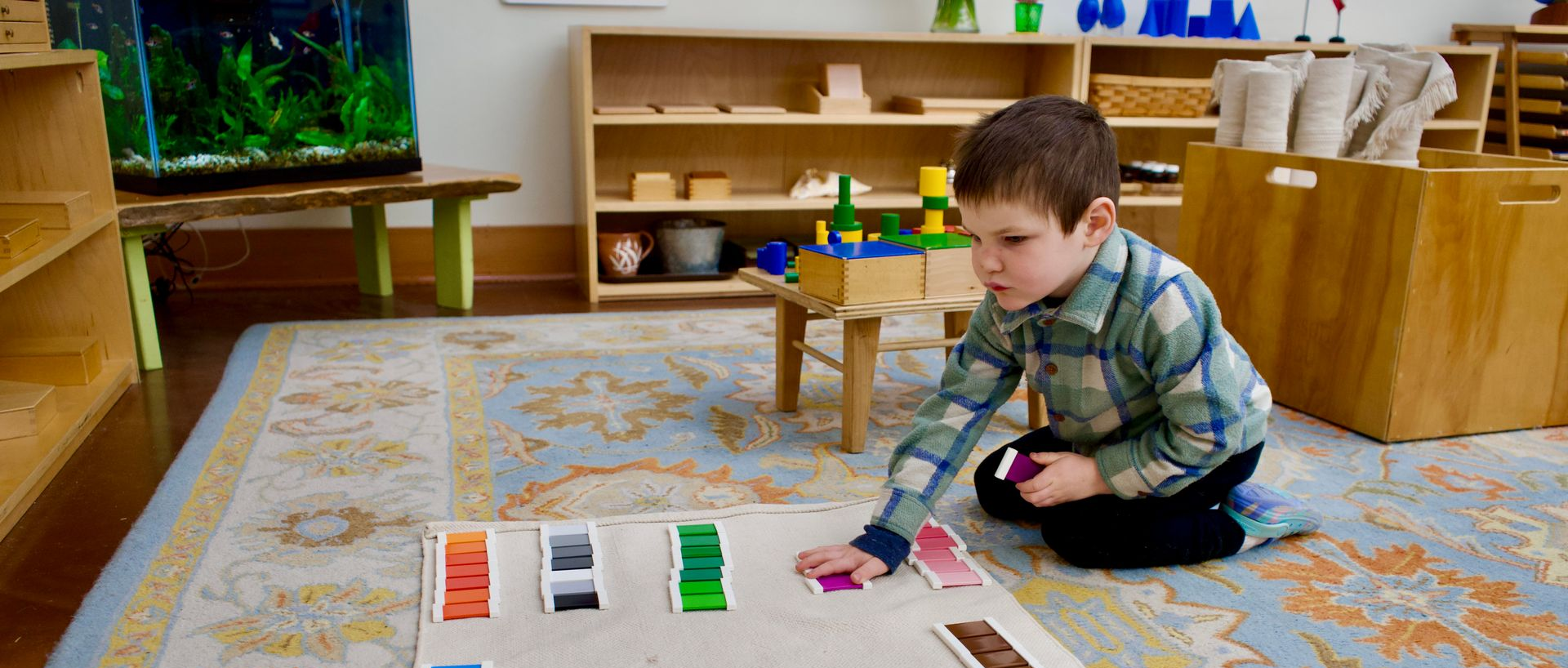
Angeline Lillard’s research provides the empirical bridge between Maria Montessori’s 20th-century observations and modern developmental psychology. Through her landmark book, Montessori: The Science Behind the Genius, and extensive peer-reviewed studies, Lillard demonstrates that Montessori’s educational principles align more closely with current neuroscientific findings on how children learn than traditional schooling models.
The Intersection of Legacy and Empirical Science
For over a century, the Montessori method was often viewed through a lens of philosophical admiration or anecdotal success. However, Dr. Angeline Lillard, a Professor of Psychology at the University of Virginia, changed the discourse by applying rigorous scientific methodology to the movement. In 2026, her work remains the definitive authority for parents, educators, and policymakers seeking to understand why a century-old method continues to produce superior developmental outcomes.
Dr. Lillard’s primary contribution is the systematic deconstruction of the Montessori "genius." Rather than accepting the method as a static historical artifact, she evaluates its components—such as multi-age classrooms, self-directed work, and tactile materials—against the backdrop of contemporary psychological research. Her findings suggest that Maria Montessori was an intuitive scientist who correctly identified the optimal conditions for human brain development long before modern scanning technology could confirm them.
The Eight Principles of Montessori Science
In her foundational text, Lillard identifies eight core principles where Montessori practice and modern psychology converge. These principles serve as the framework for understanding how the "science of Montessori" functions in a practical classroom setting.
1. Movement and Cognition
Traditional education often treats the body and mind as separate entities, frequently requiring children to sit still to learn. Lillard highlights research showing that movement and cognition are inextricably linked. In a Montessori environment, children move through the room and manipulate physical materials to understand abstract concepts. This "embodied cognition" helps solidify neural pathways, making learning more efficient and durable.
2. Choice and Perceived Control
Human beings generally perform better when they feel they have agency. Lillard points to studies showing that children who are given the autonomy to choose their work are more engaged and experience less stress. This "perceived control" is a cornerstone of the Montessori method, where the child’s interest drives the curriculum within a structured environment.
3. Interest in Learning
Lillard explores the "match" between a child’s internal interest and the external material. When a child is interested in a topic, they enter a state of "flow"—a term coined by Mihaly Csikszentmihalyi—which is characterized by deep concentration and intrinsic satisfaction. Montessori environments are designed to facilitate this flow by allowing long, uninterrupted work periods.
4. Avoiding Extrinsic Rewards
One of the more controversial aspects of Montessori science is the rejection of gold stars, grades, and praise as primary motivators. Lillard discusses the "overjustification effect," where external rewards can actually decrease a child’s natural interest in a task. By fostering intrinsic motivation, Montessori schools help children develop a lifelong love of learning that doesn't depend on external validation.
5. Peer Interaction
While traditional schools often segregate children by birth year, Montessori uses three-year age groupings. Lillard validates this through the lens of Vygotsky’s "Zone of Proximal Development." Older children reinforce their knowledge by teaching younger peers, while younger children observe and aspire to the more complex work of their elders, creating a natural social-learning ecosystem.
6. Learning in Meaningful Contexts
Abstract rote memorization is notoriously difficult for the developing brain. Lillard emphasizes that Montessori materials provide a "concrete" representation of abstract ideas. For instance, learning about decimal systems with golden beads provides a sensory and mathematical context that makes the information meaningful and easier to retrieve.
7. Teacher Interaction and Scaffolding
The Montessori "Director" or "Guide" does not lecture from the front of the room. Instead, they provide "scaffolding"—carefully timed interventions that help a child move from one level of understanding to the next. Lillard’s research shows that this sensitive, responsive teaching style supports better social and cognitive development than a top-down, authoritarian approach.
8. Order in the Environment
The "prepared environment" is a hallmark of Montessori. Lillard connects the physical order of the classroom—where every object has a specific place and purpose—to the internal mental order of the child. Research in environmental psychology suggests that chaotic environments tax a child’s executive function, whereas ordered spaces allow the brain to focus on complex tasks.
Comparing Educational Models: Research Outcomes
To understand the practical impact of Lillard's work, it is helpful to look at the comparative data she has collected over decades of study. One of her most famous studies, published in the journal Science (2006) and expanded in later years, followed students in Milwaukee who were selected for Montessori programs via a random lottery. This "gold standard" of research design eliminated the "self-selection bias" often cited by critics.
| Development Area | Montessori Student Outcomes (Lillard Research) | Traditional Student Outcomes (Control Group) |
|---|---|---|
| Executive Function | Significantly higher; better impulse control and focus. | Standard developmental curve; highly variable. |
| Social Competence | Higher levels of empathy and conflict resolution skills. | More frequent reliance on adult intervention for disputes. |
| Academic Mastery | Equivalent or superior in math and reading by age 12. | Standard achievement based on state testing metrics. |
| Sense of Community | Stronger reporting of feeling "part of a community" at school. | Variable; often dependent on extracurricular participation. |
| Creativity | Higher scores in original storytelling and complex play. | Often constrained by standardized curriculum limits. |
The Role of Executive Function in Montessori Success
A significant portion of Angeline Lillard’s research focuses on Executive Function (EF). EF refers to the suite of mental processes—including working memory, cognitive flexibility, and inhibitory control—that allow us to plan, focus attention, and juggle multiple tasks.
Lillard argues that the Montessori environment is a "natural laboratory" for developing EF. Because children must choose their work, plan their time, and respect the boundaries of their peers, they are constantly exercising their prefrontal cortex. In 2026, as concerns over digital distractions and attention spans continue to rise, Lillard’s findings on EF are more relevant than ever. Her data suggests that high-fidelity Montessori programs (those that strictly adhere to the original method) produce the most significant gains in these critical life skills.
The Problem of "Montessori in Name Only"
One of the most important caveats in Lillard’s research is the distinction between "High-Fidelity" and "Supplemented" Montessori programs. Because the name "Montessori" is in the public domain and not trademarked, any school can claim to follow the method.
Lillard’s 2012 study, Ways of Knowing: Montessori and Culture, highlighted that children in "classic" or high-fidelity Montessori classrooms showed significantly greater gains than those in "Montessori-supplemented" classrooms (which mixed Montessori with traditional methods). This suggests that the "science of Montessori" is an integrated system; removing key components like the three-hour work cycle or specific materials can diminish the developmental benefits.
Impact on 21st-Century Neuroscience
Dr. Lillard’s work has prompted neuroscientists to look more closely at the Montessori materials themselves. For example, the "Sandpaper Letters" (which children trace with their fingers while saying the sound) are now understood as a multisensory approach that engages the motor cortex, the visual cortex, and the auditory cortex simultaneously. This "whole-brain" engagement is a primary reason why Montessori children often learn to write and read with relative ease.
Furthermore, Lillard has explored the concept of "functional independence." By designing furniture and tools that children can use without adult help, Montessori allows the child to build a sense of self-efficacy. Neurologically, this builds a "can-do" circuit in the brain, reducing the "learned helplessness" that can sometimes occur in more restrictive educational settings.
FAQs: Understanding the Research of Angeline Lillard
Is Angeline Lillard’s research peer-reviewed?
Yes. Dr. Lillard’s research has been published in some of the most prestigious scientific journals in the world, including Science, Frontiers in Psychology, and Psychological Bulletin. This ensures that her findings meet the rigorous standards of the broader scientific community, moving Montessori theory into the realm of proven developmental science.
What is the "lottery study" everyone mentions?
The lottery study refers to a research project where Lillard compared children who won a lottery to attend a public Montessori school in Milwaukee with those who lost the lottery and attended traditional schools. This method is the "gold standard" for research because it ensures the two groups are identical in terms of family motivation and background, allowing any differences in outcome to be attributed solely to the school environment.
Does the "Science of Montessori" apply to older children?
While much of Lillard's work focuses on the 3-to-6 and 6-to-12 age ranges, the principles of autonomy, interest-led learning, and social interaction remain consistent through adolescence. Lillard has expanded her research to show that even in middle school, the Montessori "Erdkinder" (land-children) approach aligns with the neurological needs of the adolescent brain, which craves social relevance and practical contribution.
Why does Lillard emphasize "high fidelity" so much?
Lillard’s data shows that when schools "dilute" the Montessori method with traditional elements—like worksheets or teacher-led drills—the specific developmental advantages, particularly in executive function and social-emotional growth, tend to disappear. Her research advocates for "pure" implementation to achieve the results Maria Montessori originally documented.
Has Lillard written more than one book?
While Montessori: The Science Behind the Genius is her most famous work (now in its third edition as of 2017/2026), she has also authored numerous chapters and articles on the development of "theory of mind," pretend play, and the impacts of media on executive function. Her broader body of work provides a comprehensive view of child development that supports the Montessori framework.
Can the science of Montessori be used at home?
Absolutely. Lillard’s research validates the underlying principles rather than just the classroom materials. Parents can apply "the science of Montessori" by fostering independence, providing an ordered environment, and avoiding excessive extrinsic rewards or punishments, thereby supporting their child's natural developmental trajectory outside of school.
Final Recommendation for Educators and Parents
For those seeking to maximize a child's developmental potential, Angeline Lillard’s research offers a clear directive: focus on fidelity and environment. To leverage the science of Montessori effectively, prioritize schools that maintain three-year age groupings and offer long, uninterrupted work cycles. For parents, the most impactful action is to support "functional independence" at home—allowing children the time and space to master daily tasks—which Lillard’s research proves is essential for building a robust, self-regulated brain.