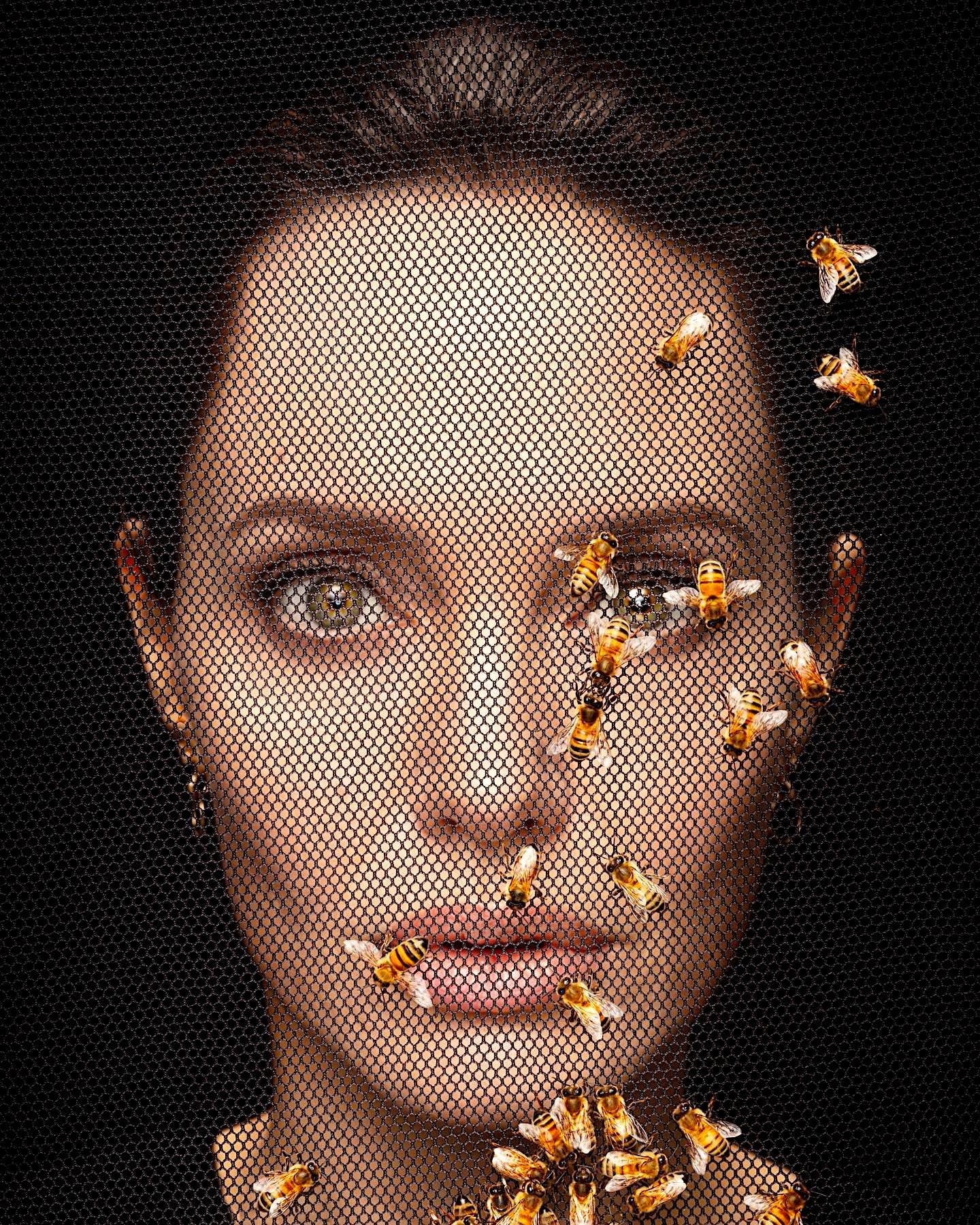
The famous Angelina Jolie bee photoshoot, captured by master photographer Dan Winters for National Geographic in May 2021, involved the actor covered in live bees to raise awareness for World Bee Day and a Women for Bees entrepreneurship program.
Introduction to the Historic Collaboration
In May 2021, images and video footage of actor, filmmaker, and humanitarian Angelina Jolie covered in living bees swept across global media outlets. The striking visual immediately commanded public attention, sparking curiosity, admiration, and widespread discussion. However, the conceptual portrait session was far from a mere exercise in avant-garde celebrity photography. It served as a meticulously planned, highly symbolic advocacy campaign orchestrated to draw international focus toward a rapidly accelerating ecological crisis: the alarming decline of global pollinator populations.
Published in National Geographic to coincide with World Bee Day on May 20, 2021, the photoshoot brought together Jolie’s platform as a Special Envoy for the United Nations High Commissioner for Refugees (UNHCR), the technical expertise of master portrait photographer Dan Winters, and the conservation mission of UNESCO and Guerlain’s Women for Bees program. Understanding the impact of this project requires examining the environmental motivations that drove it, the intense logistical and safety protocols required to execute it, and the long-term conservation legacy it continues to support.
Contextualizing the Global Pollinator Crisis
Bees, butterflies, and other pollinators play an indispensable role in maintaining the health of global ecosystems and human food security. Approximately one-third of global human food production relies directly or indirectly on pollination by insects and other animals. Beyond commercial agriculture, wild pollinators sustain the flowering plants that form the foundation of terrestrial food webs, supporting countless other species.
Despite their ecological and economic importance, pollinator populations face unprecedented threats from multiple fronts:
- Habitat loss driven by urbanization, deforestation, and industrial agriculture.
- The widespread use of systemic pesticides, particularly neonicotinoids, which impair the neurological and navigational functions of bees.
- Climate change, which disrupts the delicate synchronization between the emergence of pollinators and the blooming periods of target flora.
- Parasites and pathogens, such as the Varroa destructor mite, which devastate managed honeybee colonies worldwide.
By partnering with scientific institutions and conservation bodies, high-profile figures can amplify scientific warnings that might otherwise remain confined to academic journals. The Jolie photoshoot leveraged the universal language of portraiture to translate abstract ecological data into a visceral, compelling narrative about the fragility of the natural world.
The Artistic Vision of Dan Winters
Executing a portrait of a human subject completely covered in bees requires an extraordinary synthesis of artistic vision, scientific understanding of insect behavior, and rigorous safety management. Famed portrait and documentary photographer Dan Winters was selected to helm the project. Winters is widely recognized for his meticulous lighting, technical precision, and historical references in portraiture—most notably drawing inspiration from the iconic 1981 Richard Avedon portrait The Beekeeper, featuring a beekeeper covered in bees named Ronald Fischer.
Winters approached the session with an acute awareness of both the artistic heritage of insect portraiture and the biological realities of working with living stinging insects. Rather than relying on digital manipulation or composite photography, the team chose to use actual live bees to achieve authentic textural and emotional resonance. The resulting photographs utilize dramatic chiaroscuro lighting, highlighting the contrast between Jolie’s calm, statuesque composure and the chaotic, organic swarm of thousands of insects moving across her skin and shoulders.
Preparation and Safety Protocols: How the Photoshoot Was Executed
The logistics behind the Angelina Jolie bee photoshoot were complex, requiring days of preparation, specialized environmental controls, and the expertise of professional entomologists and beekeepers. Safety was paramount, both for Jolie and for the bees, which are delicate creatures easily stressed by sudden movements, strong odors, and environmental shifts.
Environmental and Biological Preparations
To ensure the bees remained calm throughout the multi-hour session, the production team adhered to strict environmental protocols:
- Pheromone Management: The bees used were European honeybees (Apis mellifera). The production team utilized specific pheromones, specifically queen mandibular pheromone (QMP), to encourage the bees to cluster peacefully on Jolie’s body.
- Sensory Isolation: Jolie was required to refrain from showering for three days prior to the shoot. Soaps, shampoos, deodorants, perfumes, and hair products can introduce foreign chemical scents that provoke aggressive defensive behaviors in bees.
- Quiet Environment: Absolute silence and stillness were maintained on set. Sudden sounds or vibrations can disrupt the hive mind and trigger stinging responses.
- Protective Interventions: While Jolie sat completely still for nearly 18 minutes while covered in the insects, expert beekeepers stood just out of frame, continuously monitoring the swarm's collective demeanor.
| Parameter | Operational Requirement | Rationale |
|---|---|---|
| Duration of Exposure | Approx. 18 minutes per session | Minimizes stress on the insect colony and prevents fatigue for the subject. |
| Scent Profile | Zero synthetic fragrances, unwashed hair/skin | Prevents chemical irritation and aggressive defensive responses from bees. |
| Lighting Setup | Low-heat, diffused studio lighting | Avoids overheating the insects and prevents sudden behavioral shifts. |
| Insect Management | Use of calm colonies and queen pheromones | Encourages natural clustering without inducing panic or aggression. |
The Core Partnership: Women for Bees
The primary objective behind the artistic endeavor was to spotlight the launch of Women for Bees, a pioneering entrepreneurship and female-empowerment beekeeping program developed jointly by UNESCO and the French luxury cosmetics house Guerlain, in partnership with the observation and research organization CETA Forêt Noire.
Jolie, who was named the godmother of the initiative, recognized the program’s dual focus on biodiversity restoration and gender equity in rural economies. The initiative aims to build a global network of female beekeepers-entrepreneurs by training participants, supplying them with modern beehives, and establishing professional apiaries around the world.
Key Objectives of the Women for Bees Program
- Training and Education: Providing comprehensive theoretical and practical instruction in beekeeping, hive management, honey harvesting, and apiary maintenance.
- Economic Independence: Equipping women from UNESCO Biosphere Reserves with the business skills necessary to market honey and hive products, thereby generating sustainable local income.
- Ecosystem Restoration: Populating designated biosphere reserves with millions of new bees to bolster declining local pollinator populations and improve agricultural yields.
- Scientific Research: Collaborating with academic institutions to study bee health, disease resistance, and the impacts of environmental stressors on local ecosystems.
Public Reception and Cultural Impact
Upon its release in May 2021, the photoshoot generated an immediate media sensation. Digital publications, morning talk shows, and scientific journals alike analyzed the technical feat of the portrait session alongside its conservation message.
While celebrity stunts often face criticism for prioritizing vanity over substance, media analysts and environmental advocates largely praised the collaboration for its transparency, genuine scientific backing, and direct tie-in to a concrete philanthropic initiative. By placing herself in a position of vulnerability—surrounded by thousands of stinging insects without protective gear—Jolie visually underscored the theme of human interdependence with the natural world. If the bees perish, human agricultural systems and ecosystems face catastrophic collapse.
Common Misconceptions About the Shoot
As with many viral celebrity moments, several misconceptions circulated online regarding how the photographs were created:
- Digital Effects: Many viewers initially assumed the bees were digitally added via CGI or compositing. Both Winters and Jolie confirmed in interviews that every bee in the primary portraits was entirely real and physically present on Jolie's body.
- Dangerous Stings: While a small number of stings are occupational hazards in beekeeping, Jolie was stung only once during the entire multi-day preparation and shooting process, which occurred when a bee accidentally became trapped in her clothing.
- Harm to Insects: The bees used in the production were managed according to strict ethical and ecological guidelines, ensuring that no colonies were harmed, poisoned, or permanently displaced during the creation of the art.
Frequently Asked Questions
Why did Angelina Jolie do the bee photoshoot?
Angelina Jolie participated in the photoshoot to raise global awareness for World Bee Day and to launch the Women for Bees entrepreneurship program, a joint initiative by UNESCO and Guerlain focused on biodiversity conservation and female empowerment.
Were the bees in the photos real?
Yes. Photographer Dan Winters utilized thousands of live European honeybees (Apis mellifera) rather than digital effects or composite editing to achieve an authentic and striking portrait.
Was Angelina Jolie stung during the shoot?
She was stung only once during the entire process, when a bee accidentally became trapped in her garments. She remained remarkably still for approximately 18 minutes while the swarm covered her upper body.
How did they keep the bees calm?
The production team used queen mandibular pheromones to encourage the bees to cluster peacefully. Additionally, Jolie avoided using scented soaps, shampoos, or perfumes for three days prior to the shoot, and absolute silence was maintained on set.
What is the Women for Bees program?
Women for Bees is a multi-year entrepreneurship initiative designed by UNESCO and Guerlain that trains women to become professional beekeepers, establishes new apiaries within UNESCO Biosphere Reserves, and supports rural economic independence while restoring local pollinator populations.
Conclusion and Next Actions
The Angelina Jolie bee photoshoot stands as a powerful intersection between fine art, celebrity advocacy, and rigorous scientific conservation. By enduring the physical challenge of being covered in live bees, Jolie and photographer Dan Winters successfully directed global attention toward the fragile state of our pollinators and the vital need for habitat protection. For individuals inspired by the campaign, meaningful action can be taken locally by planting pollinator-friendly flora containing native wildflowers, avoiding the use of systemic neonicotinoid pesticides in home gardens, supporting local beekeepers, and contributing to global biodiversity initiatives.