Angelina Jolie’s involvement in Afghanistan represents a sustained commitment to humanitarian advocacy, focusing primarily on the rights of refugees, the education of women and girls, and the socio-political stability of the region. Her engagement spans over two decades, characterized by field visits, high-level diplomatic outreach, and persistent media advocacy to maintain global awareness of the country's humanitarian crises.
The Foundation of Engagement: UNHCR and Advocacy
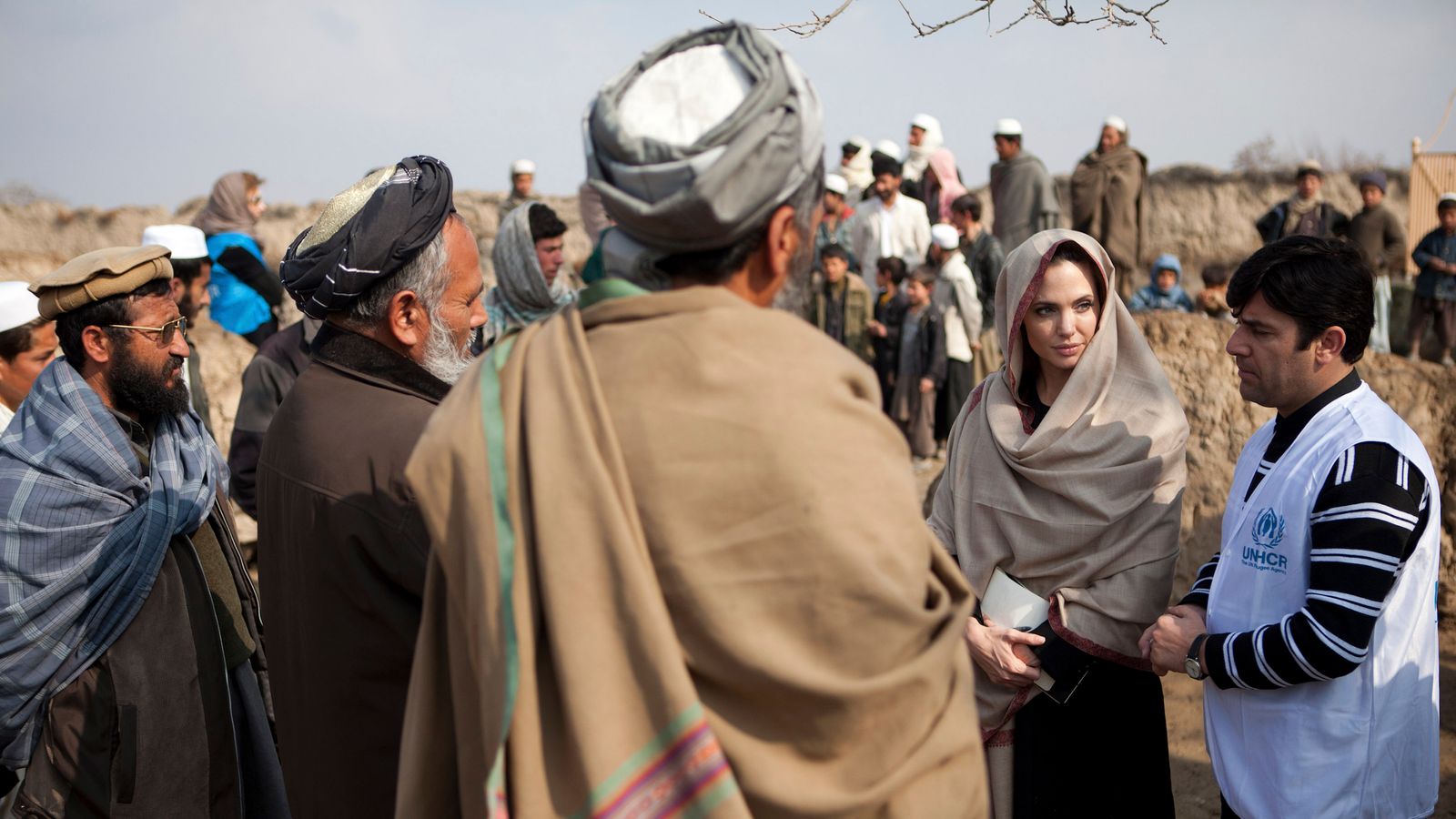
Angelina Jolie’s connection to the Afghan humanitarian cause began through her role as a Goodwill Ambassador for the United Nations High Commissioner for Refugees (UNHCR), a position she accepted in 2001. During the early 2000s, as the geopolitical landscape of Central Asia shifted, Jolie prioritized Afghanistan due to the massive displacement of civilians fleeing conflict and the systemic collapse of public services.
Her advocacy is distinct from purely diplomatic efforts; it focuses on the lived experience of displaced populations. By visiting refugee camps in bordering nations—such as Pakistan and Iran—during the early 2000s, Jolie sought to humanize the statistical reality of millions of Afghans living in exile. These visits were intended to compel donor nations to maintain funding for the UNHCR’s operations, which were frequently under-resourced during the post-2001 reconstruction era.
Chronology of Field Visits and Diplomatic Efforts
While security constraints and the evolving political landscape have limited travel in recent years, Jolie’s earlier physical presence in the region provided a blueprint for her advocacy.
- 2001–2005 (The Initial Outreach): Jolie’s early work focused on the repatriation process. Following the fall of the Taliban in late 2001, millions of refugees returned to Afghanistan. Her visits during this window were focused on the viability of return, emphasizing the need for infrastructure, education, and healthcare as the foundations of a sustainable peace.
- 2008–2012 (Education Focus): As a special envoy, her focus shifted toward long-term sustainability. During this period, she advocated for the expansion of education access, specifically for young women who had been excluded from formal schooling under previous regimes. She famously funded and established schools in Afghanistan, focusing on female enrollment, and utilized international forums to discuss the barriers to education.
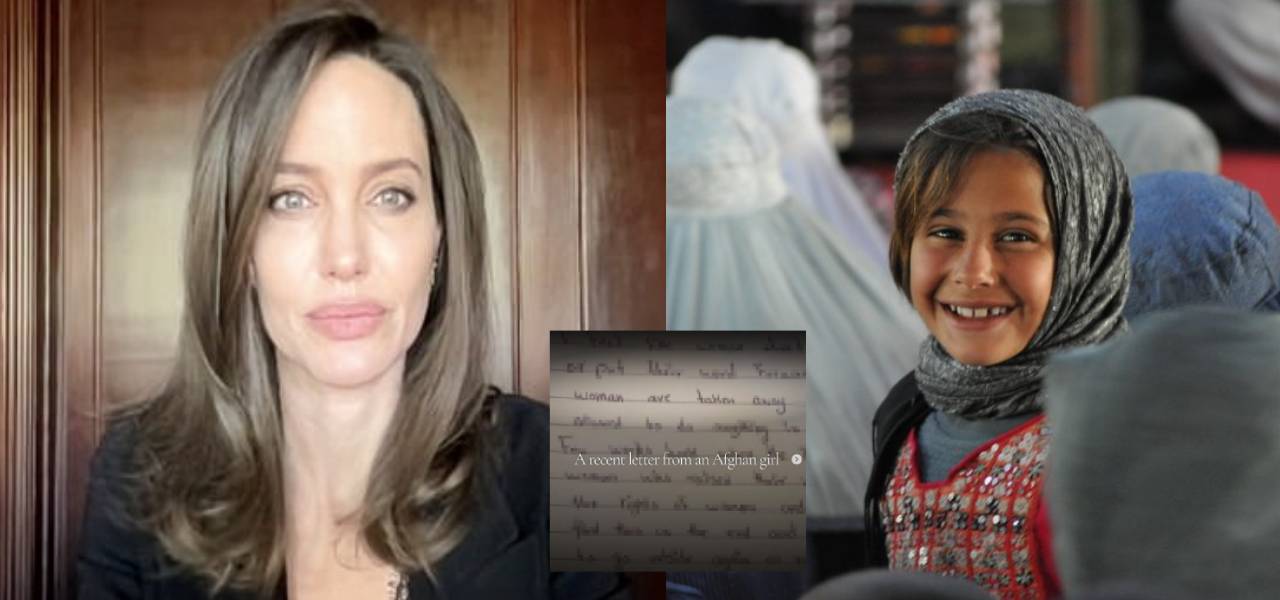
- 2021–2026 (Strategic Advocacy): Following the withdrawal of international forces and the subsequent shift in government, Jolie’s role evolved toward vocal critique and international mobilization. She has utilized public platforms—including her personal social media presence and contributions to international policy journals—to highlight the restriction of rights for Afghan women and the humanitarian impact of economic sanctions on the broader population.
Thematic Focus: Women’s Rights and Education
The central pillar of Jolie's advocacy regarding Afghanistan is the protection of women's and girls' rights. She has consistently argued that the stability and economic future of Afghanistan are inextricably linked to the inclusion of women in all levels of society.
Her efforts have included:
- Capacity Building: Supporting local grassroots organizations that provided vocational training for women.
- Documentation: Through her collaboration with organizations like the Women for Afghan Women (WAW), she helped document the struggles faced by local activists.
- Global Policy Influencing: Leveraging her public stature to meet with international ministers and UN representatives, she has pushed for women’s rights to be a "red line" in any international negotiations regarding the country’s status.
Humanitarian Challenges and Operational Limitations
Engaging in humanitarian work in Afghanistan presents profound logistical and security challenges. Throughout her tenure, Jolie has navigated a landscape where the safety of both humanitarian workers and local beneficiaries is constantly at risk.
For international aid efforts, the primary challenges have remained consistent:
- Security for Aid Workers: High levels of localized conflict and the presence of insurgent groups have frequently forced NGOs to pause operations, limiting the delivery of essential supplies.
- Sanction Regimes: Since 2021, the international financial response to the political transition has included severe banking and economic sanctions. These sanctions, while intended to target specific entities, often result in "de-risking," where banks refuse to process transactions for aid agencies, thereby paralyzing the distribution of food and medical aid.
- Access to Information: The shifting legal framework within Afghanistan has created "gray zones" regarding what international support is permissible, making it difficult for agencies to maintain consistency in their programming.
Comparative Perspective: International Aid Models
The following table outlines the different tiers of humanitarian engagement Jolie has supported throughout her involvement in the region.
| Engagement Level | Primary Objective | Methodology | Scope of Impact |
|---|---|---|---|
| Field Advocacy | Visibility and awareness | Site visits, media interviews | International public opinion |
| Institutional Support | Funding for UNHCR | UN-level diplomacy | Refugee repatriation programs |
| Educational Funding | Gender equality | Direct financing of schools | Localized academic access |
| Rights Reporting | Policy accountability | Public op-eds and briefings | International government policy |
The Evolution of the "Special Envoy" Role
In 2012, Jolie was promoted from Goodwill Ambassador to Special Envoy for the UNHCR. This change in title reflected a shift toward high-level diplomatic negotiation. In this capacity, her work regarding Afghanistan became less about "on-the-ground" presence and more about influencing the Security Council and donor governments.
Her reports and public speeches often focused on the prevention of future crises. She emphasized that international neglect of the Afghan humanitarian situation inevitably leads to long-term regional instability and increased global displacement, which ultimately impacts the security of the international community.
Navigating the Current Landscape (2026)
As of 2026, the humanitarian landscape in Afghanistan remains precarious. The focus of advocates like Jolie has pivoted toward "survival-focused" humanitarianism—ensuring the population has access to food, water, and medical care—while maintaining pressure on global leaders not to ignore the systematic exclusion of women from public life.
The approach today is less about large-scale infrastructure projects, which are difficult to sustain under the current administration, and more about supporting underground or community-based initiatives. This shift highlights a departure from the "reconstruction" era of the mid-2000s toward an era of crisis mitigation.
Frequently Asked Questions
1. How has Angelina Jolie’s role regarding Afghanistan changed since 2001? Jolie’s role began as a field-based representative focusing on refugee return and basic needs. It evolved into a high-level diplomatic role as a Special Envoy, focusing on structural reform, and currently exists as a vocal advocate for human rights in the face of restricted international engagement.
2. Did Angelina Jolie personally fund schools in Afghanistan? Yes, during the early 2000s, Jolie utilized private funds to support the construction and maintenance of schools in Afghanistan, with a specific focus on programs designed to increase the participation of young girls in the education system.
3. What is the current status of international aid to Afghanistan? As of 2026, international aid is heavily constrained by banking sanctions and political disagreements. Most humanitarian organizations operate under strict vetting protocols to ensure that aid does not interact with sanctioned entities, which complicates the distribution of resources.
4. Why is education for women a priority in her advocacy? Jolie, along with many international human rights organizations, views the exclusion of women from education as the primary obstacle to Afghanistan’s long-term economic independence and social development. Without education, women are effectively barred from professional roles in medicine, law, and government.
5. Can humanitarian aid effectively reach the population today? It is extremely difficult. While aid reaches many areas, it is hampered by the logistical, financial, and security restrictions mentioned earlier. Most aid is channeled through UN-approved NGOs that have been granted specific exemptions to operate within the country.
Recommendations for Further Engagement
For individuals or organizations looking to understand or support the humanitarian situation in Afghanistan, the most effective path remains the support of reputable international NGOs currently operating within the country. It is essential to research the specific operational mandates of these organizations to ensure they are compliant with international sanctions and are focused on neutral, life-saving service delivery.
Prioritize tracking updates from the UNHCR and the UN Office for the Coordination of Humanitarian Affairs (OCHA), as these entities provide the most accurate, ground-level data on the needs and logistical realities of the Afghan population as of 2026.