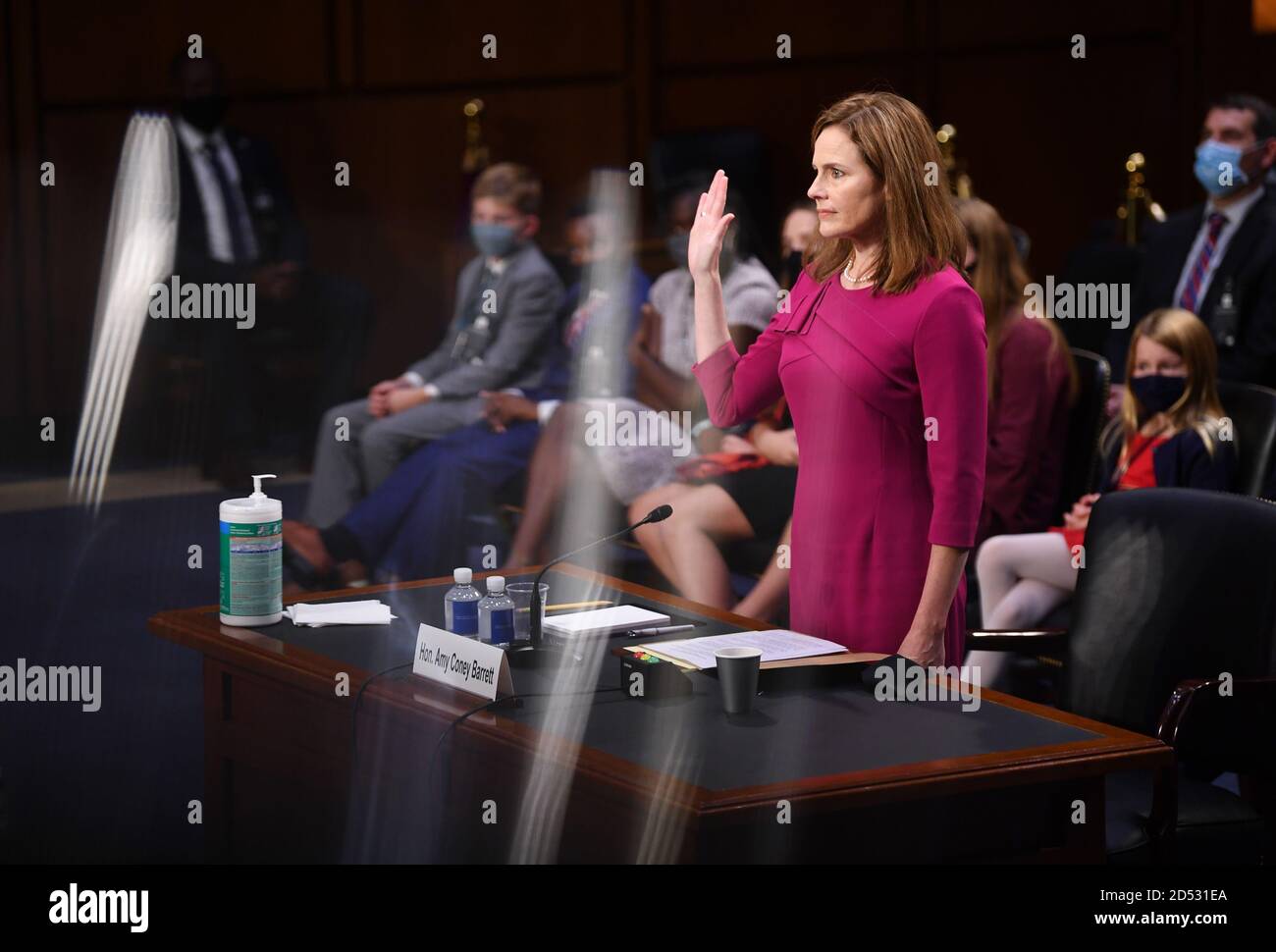
Amy Coney Barrett officially succeeded Justice Ruth Bader Ginsburg on the U.S. Supreme Court on October 27, 2020. Following Ginsburg’s death in September 2020, Barrett’s rapid confirmation shifted the Court’s ideological balance to a 6-3 conservative supermajority, fundamentally altering American jurisprudence on issues ranging from reproductive rights to administrative power.
The Passing of Ruth Bader Ginsburg and the 2020 Vacancy
The vacancy that led to Amy Coney Barrett’s appointment was created by the death of Justice Ruth Bader Ginsburg on September 18, 2020. Ginsburg, a pioneering advocate for gender equality and the leader of the Court’s liberal wing, died at age 87 due to complications from metastatic pancreatic cancer. Her passing occurred just 46 days before the 2020 presidential election, igniting an immediate and intense political battle over the timing of her replacement.
Justice Ginsburg’s tenure lasted 27 years, during which she became a cultural icon known as "The Notorious R.B.G." Her judicial philosophy was rooted in the concept of a "Living Constitution," which posits that legal interpretations should evolve alongside societal changes. This perspective stood in stark contrast to the philosophy of the person who would eventually take her seat.
The vacancy was historically significant not only because of Ginsburg’s stature but also because of the precedent established in 2016. At that time, Senate Republicans, led by Majority Leader Mitch McConnell, blocked President Barack Obama’s nominee, Merrick Garland, arguing that a vacancy should not be filled during an election year. However, in 2020, Republican leadership argued that because the same party controlled both the White House and the Senate, the confirmation should proceed despite the proximity to the election.
The Nomination of Amy Coney Barrett
On September 26, 2020, President Donald Trump nominated Amy Coney Barrett to the Supreme Court. At the time of her nomination, Barrett was a judge on the U.S. Court of Appeals for the Seventh Circuit, a position she had held since 2017. Before her judicial appointment, she was a longtime professor of law at the University of Notre Dame.
Barrett was widely regarded as a protégé of Justice Antonin Scalia, for whom she had clerked. Her legal background was firmly rooted in originalism and textualism. Originalism is the theory that the Constitution should be interpreted based on the original public meaning of the text at the time it was written. Textualism focuses on the plain meaning of legal statutes rather than the intent of the legislators who wrote them.
The selection of Barrett was a strategic move to solidify a conservative majority that would last for decades. At 48 years old, she was the youngest nominee since Clarence Thomas in 1991, ensuring her influence on American law would likely extend into the mid-21st century.
The Confirmation Process and Senate Battle
The confirmation process for Amy Coney Barrett was one of the fastest in modern U.S. history, taking only 30 days from nomination to final confirmation. This speed was a point of significant contention in the Senate, where Democrats argued that the process was being "rammed through" to influence the outcome of the 2020 election and potential legal challenges to the Affordable Care Act (ACA).
The Senate Judiciary Committee hearings began on October 12, 2020. During the hearings, Barrett maintained a disciplined approach, often refusing to comment on how she might rule on specific issues like abortion or the ACA, citing the "Ginsburg Rule"—a precedent set by Ginsburg herself during her own confirmation, where a nominee declines to offer "hints, forecasts, or previews" of their future rulings.
On October 26, 2020, the Senate confirmed Barrett by a vote of 52–48. The vote was almost entirely along party lines, with Senator Susan Collins being the only Republican to vote against the confirmation, citing her objection to the timing so close to an election. No Democrats voted in favor of Barrett’s appointment. Justice Barrett was sworn in by Justice Clarence Thomas in a ceremony at the White House later that night.
Comparing the Jurisprudence of Ginsburg and Barrett
The transition from Ginsburg to Barrett represented the most significant ideological shift in a single Supreme Court seat since Clarence Thomas replaced Thurgood Marshall in 1991. The following table highlights the fundamental differences between the two justices across various dimensions of legal thought and career milestones.
| Feature | Justice Ruth Bader Ginsburg | Justice Amy Coney Barrett |
|---|---|---|
| Appointed By | Bill Clinton (1993) | Donald Trump (2020) |
| Judicial Philosophy | Living Constitution / Purposivism | Originalism / Textualism |
| Primary Focus | Gender Equality, Civil Rights | Statutory Interpretation, Federalism |
| Pre-SCOTUS Role | D.C. Circuit Judge / ACLU Attorney | 7th Circuit Judge / Law Professor |
| Education | Harvard / Columbia Law School | Notre Dame Law School |
| Confirmation Vote | 96–3 | 52–48 |
| Tenure Start Age | 60 | 48 |
The Emergence of the 6-3 Conservative Supermajority
The arrival of Justice Barrett fundamentally changed the math of the Supreme Court. Prior to her appointment, the Court had a 5-4 conservative majority, but Chief Justice John Roberts often acted as a "swing vote," occasionally joining the liberal wing to maintain institutional stability or incrementalism. With Barrett, the conservative wing expanded to six justices, meaning that even if the Chief Justice joined the liberals, the conservative majority would still prevail 5-4.
This shift created what legal scholars call a "supermajority." It allowed the Court’s more conservative members—Justices Thomas, Alito, Gorsuch, Kavanaugh, and Barrett—to pursue a more aggressive agenda in revisiting long-standing precedents without needing to compromise with the Chief Justice’s more cautious approach.
As we look back from 2026, the impact of this supermajority is evident in the systematic re-evaluation of decades of American law. The Court shifted from a reactive body to a more proactive one, willing to take on controversial cases and issue broad rulings that have reshaped the landscape of federal power and individual rights.
Key Rulings and the Impact of the Succession
Since Amy Coney Barrett succeeded Justice Ginsburg, the Supreme Court has issued several landmark decisions that reflect the new ideological reality. These cases illustrate the profound shift in the Court’s direction and the practical consequences of Barrett’s appointment.
The Overturning of Roe v. Wade
Perhaps the most significant impact was the 2022 decision in Dobbs v. Jackson Women’s Health Organization. In this ruling, the Court overturned the nearly 50-year-old precedent of Roe v. Wade, declaring that the Constitution does not confer a right to abortion. Justice Barrett joined the majority, a move that would have been impossible had Justice Ginsburg still occupied the seat. This decision returned the authority to regulate or prohibit abortion to individual states, leading to a patchwork of reproductive laws across the country.
Expansion of Second Amendment Rights
In New York State Rifle & Pistol Association, Inc. v. Bruen (2022), Barrett joined the majority in striking down a New York law that required individuals to show "proper cause" to carry a concealed firearm. The ruling established a new standard for evaluating gun laws, requiring them to be consistent with the nation’s "historical tradition of firearm regulation." This has led to the invalidation of various state-level gun control measures in the years following the decision.
The End of Chevron Deference
In 2024, the Court issued a major blow to the "administrative state" in Loper Bright Enterprises v. Raimondo. This decision overruled the 1984 Chevron doctrine, which had required courts to defer to federal agencies' reasonable interpretations of ambiguous statutes. By ending Chevron deference, the Court—with Barrett in the majority—transferred significant power from executive branch agencies to the federal judiciary. As of 2026, this has fundamentally changed how environmental, labor, and healthcare regulations are enforced.
Religious Freedom and Public Funding
The Barrett-era Court has also been markedly more receptive to claims of religious liberty. In cases such as Carson v. Makin (2022) and Kennedy v. Bremerton School District (2022), the Court expanded the protections for religious expression and limited the scope of the Establishment Clause, allowing for more public funding of religious schools and greater freedom for religious activity in public settings.
The Evolution of the "Shadow Docket"
Under the 6-3 majority, the use of the "shadow docket"—the Court’s emergency orders and summary decisions—has become a focal point of legal scrutiny. Justice Barrett has occasionally signaled a desire for more transparency in this area. In her concurring opinions, she has sometimes cautioned against using emergency motions to decide the merits of cases prematurely, showing a slight divergence from the more aggressive stances of some of her conservative colleagues.
However, the shadow docket remains a primary tool for the Court to stay lower court rulings on high-profile issues like immigration, environmental regulations, and election laws. The efficiency with which the conservative majority has used this mechanism has led to significant policy shifts even before a full oral argument has taken place.
Public Perception and Institutional Legitimacy
The transition from Ginsburg to Barrett and the subsequent rulings have had a measurable effect on public perception of the Supreme Court. Public approval ratings for the Court reached historic lows in the years following the Dobbs decision. Critics argue that the rapid confirmation of Barrett and the subsequent overturning of long-standing precedents have made the Court appear more like a partisan political body than a neutral arbiter of the law.
Conversely, supporters of the current Court argue that the 6-3 majority is simply returning the judiciary to its proper role by adhering strictly to the text of the Constitution and the laws passed by Congress. They view the Barrett appointment as a necessary correction to decades of "judicial activism" that they believe characterized the Court during the 20th century.
As of 2026, the debate over Supreme Court reform—including proposals for term limits or "court-packing"—remains a significant part of the national political dialogue, largely fueled by the consequences of the 2020 succession.
FAQs: Understanding the Ginsburg-Barrett Transition
How long was the seat vacant after Justice Ginsburg died?
The seat was vacant for exactly 39 days. Justice Ginsburg passed away on September 18, 2020, and Justice Barrett was sworn in on October 27, 2020. This was significantly faster than the average Supreme Court confirmation process, which typically takes between 70 and 90 days.
Did Justice Barrett have to be confirmed before the 2020 election?
While there was no legal requirement for her to be confirmed before the election, Republican leadership in the Senate made it a political priority. They argued that a full nine-member court was necessary to resolve any potential legal disputes arising from the 2020 presidential election.
What was Justice Ginsburg's "final wish"?
Days before her death, Justice Ginsburg dictated a statement to her granddaughter, Clara Spera: "My most fervent wish is that I will not be replaced until a new president is installed." This statement became a rallying cry for Democrats during the confirmation process, though it had no legal bearing on the President’s power to nominate or the Senate’s power to confirm a successor.
Has Justice Barrett ever voted against the other conservative justices?
Yes. Since joining the Court, Justice Barrett has occasionally split from the more conservative wing, particularly in cases involving the "shadow docket" or specific procedural questions. She has shown a tendency toward a more meticulous, academic approach to textualism that sometimes results in narrower rulings than those desired by Justices Thomas or Alito.
How does Justice Barrett's age impact the Court's future?
Because Supreme Court justices have lifetime appointments, Barrett’s age is a major factor in her long-term influence. Born in 1972, she was only 48 at the time of her appointment. If she serves until the age of 80, she will remain on the bench until the year 2052, potentially influencing American law for over three decades.
Next Steps for Legal Scholars and Citizens
Understanding the succession of Amy Coney Barrett is essential for navigating the current legal landscape of the United States. For those looking to dive deeper into the implications of this transition, the following actions are recommended:
- Review Official Opinions: Visit the Supreme Court of the United States website to read Justice Barrett’s written opinions directly. This provides the best insight into her judicial reasoning and how it differs from her predecessor’s.
- Track Pending Cases: Use resources like Oyez or SCOTUSblog to monitor how the 6-3 majority is handling current constitutional challenges in 2026.
- Study Administrative Law Changes: With the end of Chevron deference, it is crucial for professionals in regulated industries to consult with legal counsel to understand how new judicial standards affect compliance and federal oversight.
The transition from Justice Ginsburg to Justice Barrett remains one of the most consequential events in modern American political history. Its effects continue to ripple through the legal system, shaping the rights and responsibilities of every citizen as the Court continues its originalist trajectory in 2026 and beyond.