Advanced Micro Devices (AMD) is a global semiconductor company headquartered in the United States, yet its products are the result of a highly complex, multinational manufacturing ecosystem. When users inquire about AMD’s country of origin, they are often seeking to understand where their processors, graphics cards, and specialized chips are physically fabricated, assembled, and tested. Because AMD operates under a "fabless" business model, the answer involves a distributed network of international partners rather than a single manufacturing facility.
The Fabless Business Model and Global Manufacturing
To understand the origin of an AMD product, one must first recognize the fundamental difference between chip design and chip manufacturing. AMD is a "fabless" semiconductor company, meaning it focuses on the design, development, and marketing of its high-performance CPUs (Central Processing Units) and GPUs (Graphics Processing Units). Unlike integrated device manufacturers that own their own foundries, AMD outsources the physical fabrication of its silicon wafers to specialized third-party foundries.
The primary partner for AMD’s most advanced silicon is the Taiwan Semiconductor Manufacturing Company (TSMC), headquartered in Hsinchu, Taiwan. For many years, TSMC has been the exclusive manufacturer of AMD’s cutting-edge process nodes, such as the Zen-based Ryzen and EPYC architectures. Consequently, the silicon die at the heart of an AMD processor is almost exclusively produced in Taiwan. This global dispersion of labor—design in the United States and fabrication in Taiwan—is the standard operational framework for the majority of the modern semiconductor industry.
The Multi-Stage Lifecycle of an AMD Processor
The journey of an AMD chip from concept to your desktop is a geographically diverse process. Understanding the origin requires breaking down the lifecycle into distinct phases:
- Architecture and Design (United States): The research, development, and engineering work for AMD chips primarily takes place in the United States, with major hubs in Santa Clara, California; Austin, Texas; and other engineering centers. This is where the intellectual property, logic design, and circuit layout are finalized.
- Wafer Fabrication (Taiwan): Once the design is completed, the "masks" are sent to fabrication plants, or "fabs." The vast majority of AMD’s advanced high-performance logic chips are manufactured at TSMC facilities in Taiwan. These facilities use complex photolithography machines to etch billions of transistors onto silicon wafers.
- Packaging, Assembly, and Test (Various Locations): After the wafers are completed, they are shipped to assembly and test facilities. This stage involves dicing the wafer into individual chips, attaching them to a substrate, and sealing them in a protective housing. These operations are typically located in regions with specialized infrastructure for electronics assembly, such as Malaysia, China, Vietnam, or Taiwan.
- Logistics and Distribution (Global): Finished products are then boxed and distributed to regional warehouses, system integrators, and retailers worldwide, including the United States, Europe, and Asia.
Distinguishing Between "Made In" and "Designed In"
Consumers often confuse the country where a product is "made" with the country of origin regarding corporate identity. According to trade regulations and standard consumer electronics labeling, a product’s country of origin refers to the location where the final substantial transformation occurred.
For an AMD processor, the "Made in" label found on the packaging often reflects the final assembly and test location, rather than the location of the chip's design or the location of the silicon fabrication. For example, a processor might be designed in the U.S., fabricated in Taiwan, and assembled in Malaysia. In this case, the packaging may indicate "Assembled in Malaysia" or "Product of Malaysia" for trade purposes, despite the core engineering and silicon fabrication occurring elsewhere.
Comparison of Semiconductor Manufacturing Roles
To clarify how these roles differ, the following table summarizes the typical involvement of various regions in the production of high-performance microchips.
| Stage | Primary Responsibility | Common Regions |
|---|---|---|
| IP & Logic Design | Architectural research and circuit layout | United States, Canada, India |
| Wafer Fabrication | Transistor creation via photolithography | Taiwan, South Korea, United States |
| Assembly & Testing | Dicing, packaging, and functional verification | Malaysia, China, Vietnam, Taiwan |
| Distribution | Logistics and regional retail fulfillment | Global (Centralized by market demand) |
Why Geographic Diversification Matters
AMD’s reliance on a global supply chain is not accidental; it is a necessity driven by the extreme technical requirements of semiconductor manufacturing. Building a state-of-the-art semiconductor fab, such as those operated by TSMC, costs tens of billions of dollars and requires a specialized workforce that has been cultivated over decades.
By utilizing a fabless model, AMD can focus its capital on research and development rather than the immense ongoing costs of maintaining and upgrading physical foundries. Furthermore, this approach allows AMD to leverage the most advanced manufacturing processes available globally. If AMD owned its own fabs, it would be limited to the technological capabilities of those specific facilities. By using external foundries, they can pivot to whichever company offers the most efficient, power-dense process node at any given time.
Assessing Product Origin for Compliance and Taxes
For business and enterprise customers, understanding the origin of components is often tied to trade compliance and tax obligations. Under U.S. law, companies must provide clear markings regarding the country of origin for imported goods. When AMD chips are imported into the United States or other markets, they must adhere to the labeling requirements of the destination country.
If you are an enterprise customer checking the "Country of Origin" (COO) for government or corporate procurement documentation, you should always consult the specific documentation provided by the vendor or the system integrator. Because of the multi-stage manufacturing process, an AMD processor sold in a finished laptop may carry a different country-of-origin certificate than a boxed retail CPU. The system integrator (the company that built the computer) is responsible for determining the COO of the final, finished good based on where the "substantial transformation" occurred.
Frequently Asked Questions
Does AMD own any fabrication plants? No, AMD is a fabless semiconductor company. They divested their manufacturing operations in 2009, forming a separate company now known as GlobalFoundries. While AMD still maintained some ties to GlobalFoundries for legacy or specialized manufacturing tasks in the past, their cutting-edge high-performance chips are primarily manufactured by third-party foundries, most notably TSMC.
If my processor says "Made in Malaysia," is it fake? No. It is standard for major semiconductor companies to use assembly and test facilities in countries like Malaysia, Vietnam, and China. The "Made in" label on a box typically refers to the location of the final packaging and testing process, not the location where the silicon die was fabricated or the chip was designed.
Where are AMD CPUs designed? The core research, development, and architectural design for AMD products take place in the United States, particularly at their corporate headquarters and major engineering centers. While AMD has global R&D teams, the intellectual property and primary engineering leadership remain under U.S. jurisdiction.
Why are almost all modern chips made in Taiwan? Taiwan has developed a unique ecosystem of infrastructure, raw material suppliers, and specialized engineering talent centered around semiconductor manufacturing. TSMC, based in Taiwan, has led the industry in providing the most advanced nanometer-scale manufacturing processes, making them the preferred partner for AMD and many other major technology firms.
How can I verify the origin of my specific AMD processor? For specific regulatory or compliance purposes, you should check the label on the physical processor heat spreader or the official packaging box. Additionally, major retailers and system integrators provide a "Country of Origin" line item in their detailed product specifications. If you require formal certification for a business contract, contact the specific distributor from whom the hardware was purchased.
Practical Steps for Procurement and Compliance
If your task is to verify the country of origin for corporate reporting, import documentation, or tax compliance, do not rely on generalized information found on the internet. Follow these concrete steps:
- Check the Product Labeling: Always start with the physical markings on the hardware or the manufacturer’s original packaging. Regulations require this information to be clearly displayed.
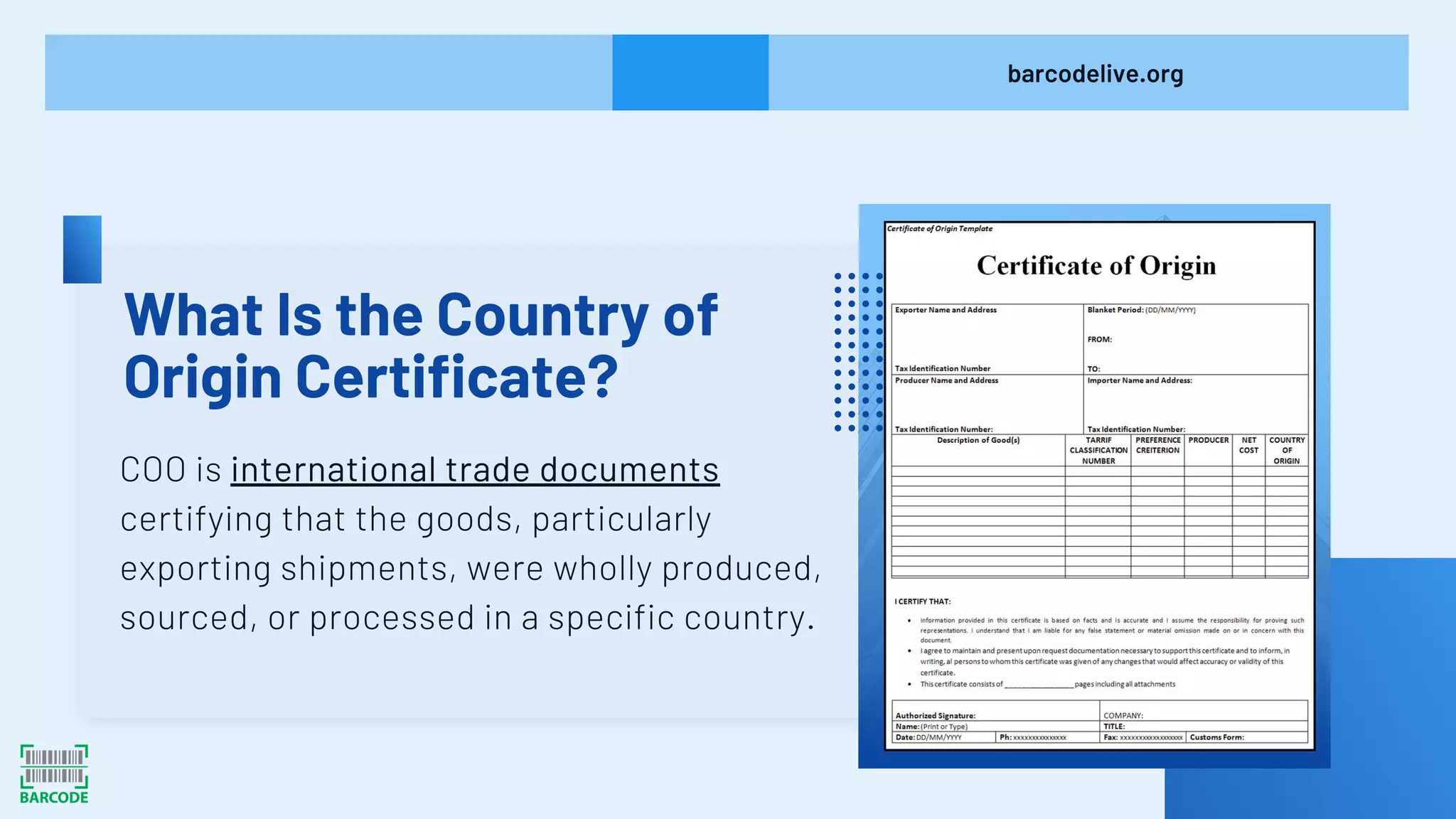
- Request a Certificate of Origin (COO): If you are purchasing in bulk, your supplier or the authorized distributor is legally obligated to provide a Certificate of Origin. This document is the only source of truth for customs and legal purposes.
- Consult Procurement Documentation: For AMD-based servers or workstations, the system integrator provides a bill of materials that specifies the origin of key components. This is the most reliable way to track parts that have undergone multiple stages of assembly across different countries.
- Reference Official Regulatory Guidance: If you are dealing with government contracts, refer to the Federal Acquisition Regulation (FAR) or equivalent local trade laws regarding the "substantial transformation" test to understand how the country of origin is determined for finished electronic goods.
By recognizing that AMD chips are the result of global cooperation, you can better navigate trade documentation and understand the supply chain complexities that allow high-performance computing to exist in 2026.