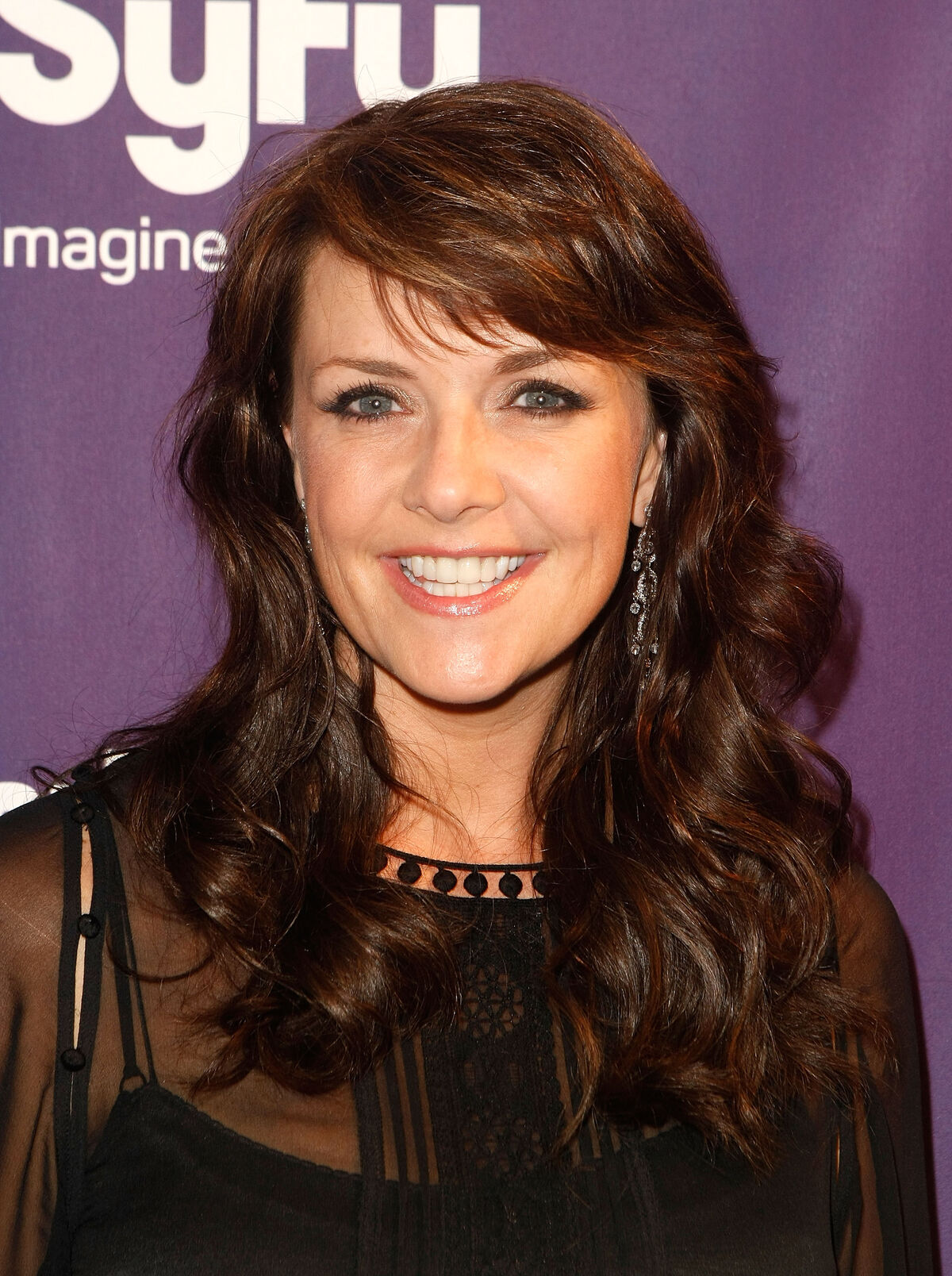
As of 2026, Amanda Tapping is 60 years old. Born on August 28, 1965, in Rochford, Essex, England, Tapping has maintained a prolific and influential career in the entertainment industry for over three decades, transitioning seamlessly from iconic roles in science fiction television to becoming a highly sought-after director and producer.
Early Life and The Foundations of a Career
Amanda Tapping’s journey into the arts began long before her international breakthrough in the late 1990s. Moving to Canada as a child, she was raised in Ontario and eventually studied drama at the University of Windsor’s School of Dramatic Art. Her early years were defined by a rigorous focus on theater, which provided the technical foundation for her later work in television and film.
Unlike many actors who transition purely into screen work, Tapping’s background in stage performance allowed her to develop a distinct range. During the late 1980s and early 1990s, she appeared in numerous commercials and guest spots on Canadian television, refining her craft. These formative years were critical in preparing her for the high-pressure environment of long-running episodic television, where endurance and versatility are as important as artistic talent.
The Stargate Era and Genre Impact
While Tapping has an extensive filmography, her age is frequently referenced in the context of her most famous role: Captain, and later Colonel, Samantha Carter in the Stargate franchise. Joining Stargate SG-1 in 1997 at the age of 31, she brought a grounded, intellectual realism to the character of an astrophysicist and military officer.
This role was pivotal not just for her career, but for the representation of women in STEM-focused science fiction. Throughout the ten seasons of Stargate SG-1, Tapping’s portrayal of Carter set a standard for technical dialogue delivery and action-oriented performance. Her involvement continued through the franchise’s subsequent iterations, including Stargate Atlantis and Stargate Universe. By the time the franchise reached its peak, Tapping had moved into a dual role as both an actor and a creative force behind the camera.
Transition to Directing and Producing
A significant portion of Amanda Tapping's professional evolution has involved her shift toward directing. In the mid-2000s, Tapping began directing episodes for the shows in which she starred, a move that signaled a shift in her career trajectory. By the time she reached her 40s and 50s, she had established herself as a powerhouse director, working on some of the most high-profile shows in the industry.
Her directing credits as of 2026 span a wide array of genres, including fantasy, horror, and high-budget drama. She has become known for her ability to handle complex visual effects sequences while maintaining character-driven narratives. This transition is not uncommon for actors of her generation who seek greater control over the visual storytelling process, but Tapping’s success is notable for the sheer volume and critical reception of her work behind the lens.
Career Milestones by Decade
To understand the arc of her career, it is useful to view her achievements through the lens of her professional milestones rather than just chronological age.
| Decade of Life | Primary Focus | Notable Contributions |
|---|---|---|
| 20s (1985–1995) | Education & Theater | Formal training, Canadian stage work, early TV guest spots. |
| 30s (1995–2005) | Stargate Breakthrough | Stargate SG-1 (Samantha Carter), initial directing steps. |
| 40s (2005–2015) | Expansion & Producing | Sanctuary (Star/EP), directorial work for major series. |
| 50s (2015–2025) | Directorial Dominance | Directing for The Flash, Supernatural, The Handmaid's Tale. |
| 60s (2025–Present) | Mentorship & Leadership | Continued directing, creative production, and industry advocacy. |
The Value of Experience in Television Production
In the modern television landscape of 2026, the industry places a high value on directors who possess "on-set literacy"—the ability to communicate effectively with actors, crew, and studio executives simultaneously. Amanda Tapping’s career demonstrates how an actor’s depth of experience serves as an asset when managing a set. Having spent decades in front of the camera, she approaches directorial challenges with a unique understanding of the actor's process, which has made her a favorite among performers and producers alike.
This expertise is particularly relevant in the era of high-concept, VFX-heavy shows. Directing science fiction and fantasy requires a precise understanding of timing and staging. Tapping’s ability to bridge the gap between technical requirements and emotional narrative arcs has allowed her to sustain a career that has evolved alongside the medium itself.
Frequently Asked Questions
How old is Amanda Tapping in 2026? Amanda Tapping is 60 years old in 2026. She was born on August 28, 1965.
Did Amanda Tapping direct episodes of the shows she starred in? Yes, Tapping frequently directed episodes of Stargate SG-1 and her later series, Sanctuary. This marked the beginning of her transition into a full-time career as a director and executive producer.
Is Amanda Tapping still active in the film industry as of 2026? Yes, she remains highly active as a director. She continues to work on significant series across multiple streaming and broadcast platforms, maintaining a reputation for technical proficiency and creative leadership.
What was her most significant role before directing? Her most significant role remains Samantha Carter in the Stargate franchise. The character is widely cited in pop culture as a trailblazing representation of a female scientist and military officer.
Has she won awards for her work? Yes, throughout her career, Tapping has received numerous accolades, including multiple Leo Awards and nominations for her acting and directing, reflecting her standing within the Canadian and international television industry.
Looking Toward the Future
As Amanda Tapping enters her 60s, her role in the industry continues to shift from a focus on individual performance to a broader commitment to narrative direction and professional mentorship. Her career provides a template for longevity in a fast-paced environment, proving that the ability to adapt—from theater student to sci-fi icon, and eventually to a sought-after director—is the most reliable metric of success in the entertainment business. For those following her work or looking to enter the production side of the industry, Tapping’s trajectory serves as a reminder that understanding the entire production ecosystem is the key to sustained relevance.