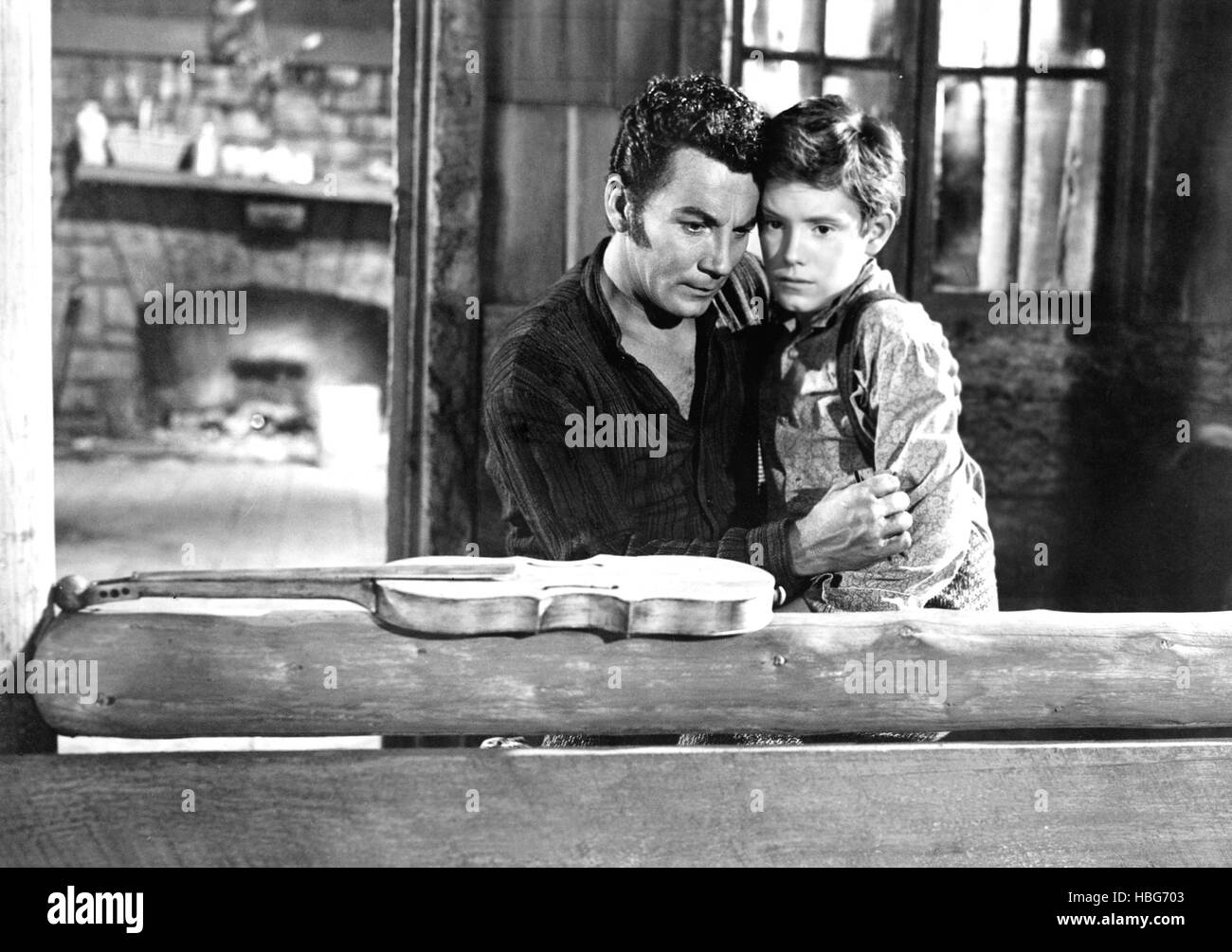
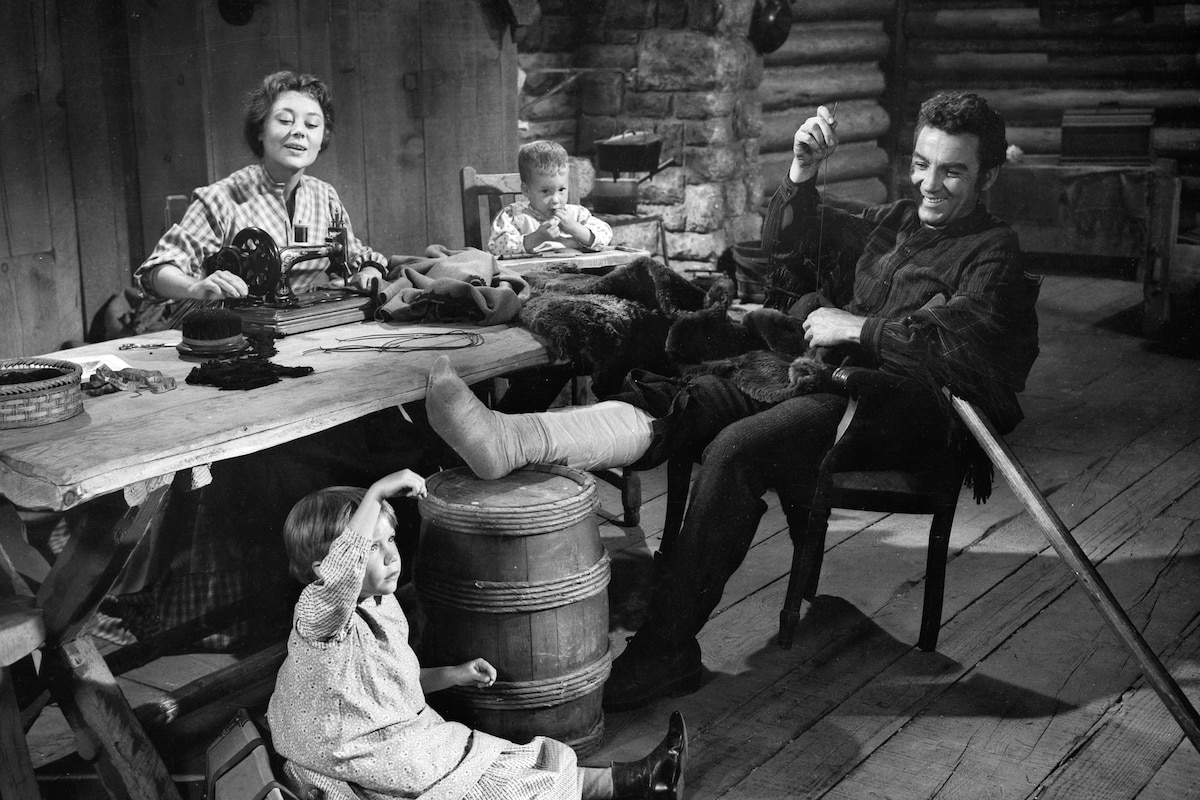
The trailer for the 1957 film All Mine to Give introduces audiences to the poignant, true-life story of the Eunson family, Scottish immigrants who settled in 19th-century Wisconsin. It previews the narrative of a family’s growth and the subsequent tragedy that leaves six children orphaned, focusing on the eldest son's mission to find them new homes on Christmas Day.
In the landscape of mid-century cinema, few trailers manage to capture the transition from pioneer optimism to devastating melodrama as effectively as the one for All Mine to Give (originally titled The Day They Gave Babies Away in the United Kingdom). Produced by RKO Radio Pictures and released at a time when Technicolor was used to amplify both the beauty of nature and the starkness of human suffering, this trailer serves as a roadmap for one of the most enduring "tear-jerkers" in Hollywood history.
As we examine this trailer from the perspective of 2026, we look back at how marketing in the 1950s sought to prepare audiences for a story of resilience, communal duty, and the preservation of family dignity under impossible circumstances.
The Narrative Arc of the Trailer
The trailer for All Mine to Give is structured as a three-act miniature of the film itself. It begins with the hope of the American Dream, shifts into the darkness of personal loss, and concludes with a plea for emotional endurance.
The Arrival and Prosperity
The opening shots of the trailer introduce Robert and Mamie Eunson, played by Cameron Mitchell and Glynis Johns. We see them arriving in Eureka, Wisconsin, in the mid-1800s. The trailer emphasizes their Scottish roots—not just through dialogue, but through the visual cues of their attire and the ruggedness of their initial living conditions. The "explanation" offered by these early scenes is one of foundational strength. The trailer shows the building of their home and the birth of their children, establishing a sense of warmth and accomplishment that makes the coming tragedy feel more earned.
The Turning Point
The trailer takes a sharp tonal shift when it introduces the concept of mortality. In a series of quick-cut scenes, it hints at the arrival of illness—specifically diphtheria and typhoid—which historically ravaged pioneer communities. The voiceover in the 1950s trailer style uses heightened language to describe the "unthinkable task" that falls upon the shoulders of the eldest son, Robbie. By showing Mamie’s decline and Robert’s death, the trailer explains the stakes: this is not just a story about death, but about the responsibility of the living.
The Christmas Resolution
The most famous sequences teased in the trailer involve the Christmas Day "giveaway." The trailer explains the central premise without spoiling the specific fates of every child. It shows 12-year-old Robbie (played by Rex Thompson) leading his younger siblings through the snow. This imagery is designed to evoke a mixture of pity and admiration. The trailer frames the act of giving the children away not as an abandonment, but as the ultimate act of parental love carried out by a child.
Understanding the True Story Behind the Trailer
To fully explain the All Mine to Give trailer, one must understand that it is marketing a true story. The film is based on an article written by Dale Eunson for Cosmopolitan magazine in 1946, which he later expanded into a book. Dale Eunson was the son of Robbie Eunson, the boy depicted in the film.
The Real-Life Robbie Eunson
The trailer positions Robbie as a miniature adult. In reality, Robert "Robbie" Eunson was a real person who faced the daunting task of honoring his mother’s dying wish. After his father died of typhoid and his mother succumbed to diphtheria shortly after, Robbie was left in charge of his five younger siblings. The trailer highlights the specific instruction Mamie gave: to find "good homes" where the children would be loved and raised with the same values the Eunsons held.
The Setting: Eureka, Wisconsin
While the trailer was filmed in high-gloss Technicolor (often utilizing California locations to stand in for the Midwest), it represents the very real settlement of Eureka, Wisconsin. The trailer uses the harshness of the winter landscape as a character in itself. The snow-covered woods are not just a backdrop; they represent the isolation and the physical barriers Robbie had to overcome to reach the neighbors who would eventually take in his siblings.
Character Dynamics and Casting in the Trailer
The trailer focuses heavily on the chemistry between Cameron Mitchell and Glynis Johns to build the "ideal" family unit, making their eventual absence felt more keenly by the viewer.
| Character | Actor | Role and Significance in the Trailer |
|---|---|---|
| Mamie Eunson | Glynis Johns | The emotional core; the trailer highlights her transition from a vibrant bride to a dying mother. |
| Robert Eunson | Cameron Mitchell | The provider; his scenes emphasize the physical labor of building a life in the wilderness. |
| Robbie Eunson | Rex Thompson | The protagonist; the trailer focuses on his maturation and the weight of his final promise. |
| Delbert Eunson | Patty McCormack | One of the younger children; used in the trailer to show the innocence at stake. |
| The Townspeople | Various | Represent the "village" that must step up to support the orphans. |
Technical and Artistic Direction Explained
When viewing the trailer today, the technical choices of director Allen Reisner and cinematographer Robert Burks (known for his work with Alfred Hitchcock) stand out. The trailer utilizes "saturated" colors, which was a hallmark of 1850s-period pieces filmed in the 1950s.
The Use of Music
The trailer’s score is typical of the era’s melodramas—swelling strings and choral arrangements that signal to the audience exactly when to feel inspired and when to feel sorrow. The music "explains" the film's intent as a hagiography of the American pioneer spirit. It transforms a potentially grim story of child displacement into a soaring epic of character and faith.
The "Sobs and Smiles" Marketing Strategy
In 1957, RKO marketed the film as a "four-handkerchief" movie. The trailer reflects this by balancing scenes of domestic bliss (singing, dancing, and holiday preparations) with the stark, tear-filled faces of children being separated. This "explained" to the 1950s audience that the film was a safe space for cathartic crying—a popular genre during the post-war era when family stability was a central cultural theme.
Cultural Context: Why the Trailer Resonated in 1957
The trailer for All Mine to Give appeared at a time when the American family was being idealized. However, the story it tells is one of family fragmentation.
- Immigrant Identity: The trailer leans into the Scottish heritage of the characters. By doing so, it explains the "rugged individualism" and deep religious faith that were expected to carry the characters through their trials.
- The Role of the Community: Unlike modern "gritty" dramas, the trailer portrays the neighbors not as predators or indifferent strangers, but as a supportive network. The explanation offered is that in the mid-19th century, the community was the safety net.
- Childhood Autonomy: In 2026, the idea of a 12-year-old deciding the legal fate of five children seems impossible. The trailer, however, frames Robbie's agency as a noble necessity. It explains a world where children had to grow up instantly in the face of frontier mortality.
Key Scenes Broken Down
The Mother’s Deathbed Scene
One of the most intense moments in the trailer is the close-up of Glynis Johns as she speaks to Robbie. This scene explains the "contract" of the movie: the mother delegates her authority to her son. The lighting is softer here, focusing on the eyes to create an intimate connection with the audience.
The Sled Journey
The visual of the children on a sled in the snow is the film's most iconic image. The trailer uses this to establish the "Christmas" theme. It juxtaposes the joy usually associated with Christmas (the sled, the snow) with the somber reality of what is actually happening (the distribution of the children). This irony is the hook that made the film a holiday staple for decades.
Comparison with the Source Material
The trailer simplifies the timeline of the real-life events. In the actual story of the Eunson family, the deaths did not happen in such quick succession as the trailer suggests. However, for the sake of a 2-minute promotional clip, the timeline is compressed to heighten the drama. The trailer explains the "spirit" of the Eunson story rather than providing a minute-by-minute historical documentary.
Frequently Asked Questions
Is All Mine to Give a true story?
Yes, the film and its trailer are based on the real-life Eunson family who moved from Scotland to Eureka, Wisconsin. The events were chronicled by Dale Eunson, the son of the eldest boy, Robert. While some dramatic licenses were taken for the Hollywood production, the core event—a 12-year-old boy placing his siblings in new homes after their parents died—is historically accurate.
Why was the movie also called The Day They Gave Babies Away?
This was the title of the original magazine article and the book by Dale Eunson. When the film was released in certain international markets, including the UK, the original title was used because it was more descriptive of the plot. The title All Mine to Give was chosen for the US market to emphasize the personal sacrifice and the "gift" Robbie was giving to his siblings.
What happened to the real Eunson children?
Historically, all six children were placed in homes in and around the Eureka and Omro areas of Wisconsin. Robert Eunson (Robbie) eventually moved to Chicago and then Kansas, where he became a successful businessman. The children grew up apart but remained aware of their heritage, and the story was eventually immortalized by Robert's son, Dale.
Who directed the film featured in the trailer?
The film was directed by Allen Reisner. While Reisner worked extensively in television, All Mine to Give remains his most famous cinematic contribution, largely due to the emotional performances he elicited from the child actors, which are a focal point of the trailer.
Where was the movie filmed?
Although the trailer depicts Wisconsin, much of the filming took place at the RKO Forty Acres backlot in Culver City, California, and on location in the San Bernardino National Forest to simulate the snowy Wisconsin terrain.
Summary of the Film's Legacy
The trailer for All Mine to Give remains a textbook example of how to market a "weepie." It doesn't rely on explosions or high-concept gimmicks; instead, it relies on the universal fear of losing one's parents and the universal hope of finding a place to belong. As we view it in 2026, it serves as a bridge to a different era of filmmaking—one where the stakes were purely emotional and the hero was a young boy with a sled and a promise.
If you are looking to watch the film after seeing the trailer, it is often broadcast during the holiday season due to its climactic Christmas scenes. It remains a testament to the endurance of the human spirit and the complexities of the early American immigrant experience.