To legally drive in North Carolina in 2026, you must carry a minimum liability insurance policy of 30/60/25: $30,000 for bodily injury per person, $60,000 for total bodily injury per accident, and $25,000 for property damage. Additionally, North Carolina requires Uninsured Motorist coverage. The state follows a "contributory negligence" legal standard, making comprehensive and collision coverage particularly vital for protecting your own assets.
Understanding the North Carolina Auto Insurance Landscape
North Carolina operates under a unique regulatory framework compared to most other U.S. states. The primary governing body is the North Carolina Department of Insurance (NCDI), but the engine behind the pricing is the North Carolina Rate Bureau (NCRB). Unlike in many states where insurance companies file their own independent rates based solely on their internal data, the NCRB represents all insurance companies in the state and submits recommended base rates for all personal lines of insurance to the Commissioner of Insurance.
In 2026, this system continues to provide a level of price stability, but it also creates specific nuances for consumers, such as the "Consent to Rate" process. If an insurance company believes the Bureau-set rate is too low for the risk a specific driver presents, they can ask the driver to sign a form agreeing to a higher rate. This is common for drivers with recent accidents or moving violations.
The Role of the North Carolina Rate Bureau
The NCRB was created by the General Assembly in 1977. Its goal is to prevent "predatory" pricing and ensure that insurance remains available to all residents. In 2026, the NCRB still acts as a central repository for data, ensuring that base premiums for liability, medical payments, and physical damage coverages are standardized across the industry. While companies can "deviate" (offer lower rates) from these base rates to stay competitive, they cannot exceed them without the aforementioned consent of the policyholder.
Minimum Liability Requirements in North Carolina
North Carolina law is very specific about the minimum amount of insurance you must carry to maintain a valid vehicle registration. As of 2026, the requirements are:
- Bodily Injury Liability: $30,000 per person and $60,000 per accident. This covers medical expenses, lost wages, and pain and suffering for others if you are at fault in an accident.
- Property Damage Liability: $25,000 per accident. This pays for damage you cause to another person’s vehicle or property (like a fence or building).
- Uninsured Motorist (UM) Coverage: This is mandatory and must equal the minimum liability limits ($30/60/25). It protects you if you are hit by a driver who has no insurance or if you are the victim of a hit-and-run.
Is the Minimum Enough?
While the 30/60/25 limits satisfy the legal requirements, they are often insufficient in 2026. Given the rising costs of medical care and the average price of a new vehicle exceeding $45,000, a $25,000 property damage limit could leave you personally liable for thousands of dollars if you total a modern SUV or electric vehicle. Most insurance professionals in NC recommend a minimum of 100/300/100 to protect personal assets and savings from lawsuits.
The Safe Driver Incentive Plan (SDIP)
One of the most critical aspects of auto insurance in North Carolina is the Safe Driver Incentive Plan (SDIP). This is a statewide system that rewards safe drivers with lower premiums and penalizes high-risk drivers with significant surcharges based on "points."
It is important to distinguish Insurance Points from DMV License Points. While DMV points can lead to a license suspension, Insurance Points (SDIP points) directly determine your premium increase.
How SDIP Points Affect Your Premium
Under the SDIP, points are assigned for moving violations and at-fault accidents that occur during the "experience period" (usually the three years preceding the application or renewal).
- 1 Point: Can lead to a 30% increase in premium.
- 2 Points: Can lead to a 45% increase.
- 4 Points: Can lead to a 80% increase (common for reckless driving).
- 10 Points: Can lead to a 260% increase (common for racing).
- 12 Points: Can lead to a 340% increase (usually for a DUI/DWI).
A significant rule in NC is that an "at-fault" accident usually only results in SDIP points if the property damage exceeds a certain threshold (historically around $2,300, though this is adjusted periodically) or if it results in bodily injury. Minor "fender benders" below the threshold might not trigger a rate hike, provided there are no other convictions on the record.
Contributory Negligence: A Unique NC Legal Hurdle
North Carolina is one of the few remaining states that still uses the Pure Contributory Negligence rule. This legal doctrine is a major reason why carrying "first-party" coverages like Collision and Medical Payments (MedPay) is so important in the state.
Under contributory negligence, if you are found to be even 1% at fault for an accident, you are legally barred from recovering any damages from the other party. In most other states (which use "comparative negligence"), you could still recover 99% of your damages if you were 1% at fault. In North Carolina, if the other driver’s insurance company can prove you contributed to the accident in any small way (e.g., you were driving 3 mph over the limit or failed to use a turn signal), they can deny your liability claim entirely.
Because of this harsh rule, many North Carolinians rely on their own Collision Coverage to fix their car and MedPay to cover their medical bills, regardless of who caused the accident.
Required and Optional Coverages in NC
| Coverage Type | Status in NC | What it Covers |
|---|---|---|
| Bodily Injury Liability | Mandatory | Medical bills/legal fees for others when you are at fault. |
| Property Damage Liability | Mandatory | Damage to other vehicles/property when you are at fault. |
| Uninsured Motorist (UM) | Mandatory | Your injuries/damage if hit by an uninsured or hit-and-run driver. |
| Underinsured Motorist (UIM) | Optional* | Your injuries if the at-fault driver's limits are too low. |
| Collision | Optional | Damage to your car from a crash, regardless of fault. |
| Comprehensive | Optional | Damage to your car from theft, fire, animals, or weather. |
| Medical Payments (MedPay) | Optional | Medical/funeral expenses for you and your passengers. |
| Gap Insurance | Optional | The "gap" between your car's value and your loan balance. |
*Note: UIM is often required if you choose higher-than-minimum liability limits.
The North Carolina Reinsurance Facility
If you have a poor driving record, you might find that private insurance companies are unwilling to "voluntarily" insure you. However, North Carolina law requires that coverage be available to all eligible drivers. This is handled through the North Carolina Reinsurance Facility (NCRF).
The NCRF is not an insurance company itself. Instead, it is a mechanism where a private company (like State Farm or Geico) issues you a policy but then "cedes" the risk to the Facility. The Facility pools the premiums and pays the losses. From the consumer's perspective, the policy looks and acts like a normal policy, but the rates are typically much higher and are strictly set by the NCRF rather than the company's internal competitive rates.
Consequences of a Coverage Lapse in North Carolina
The North Carolina Department of Transportation (NCDOT) and the DMV are extremely strict regarding continuous insurance coverage. In 2026, the digital monitoring system is nearly instantaneous. When an insurance company cancels a policy, they are required by law to notify the DMV electronically via form FS-1.
If you have a lapse in coverage:
- Notification: The DMV will send you a notice (Form FS-5-7).
- Verification: You have 10 days to respond with proof of new insurance.
- Penalties: If you cannot prove continuous coverage, you must pay a civil penalty. These penalties start at $50 for the first lapse, $100 for the second, and $150 for subsequent lapses.
- Plate Seizure: Failure to pay the fine or provide proof of insurance will result in the suspension of your vehicle's license plate. You may be required to surrender the plate to law enforcement or a DMV official.
It is a common mistake to cancel insurance before turning in a license plate when selling a car. Always surrender the plate to the DMV first, then cancel the insurance policy to avoid fines.
Factors Influencing Auto Insurance Rates in NC
Beyond the SDIP points, insurance companies in 2026 use several factors to determine your final premium (within the bounds of NCRB rules):
- Location: Rates in urban areas like Charlotte or Raleigh are generally higher than in rural mountain or coastal counties due to traffic density and higher theft rates.
- Vehicle Type: Safety features, repair costs, and the likelihood of theft affect the "symbol" assigned to your vehicle by the ISO (Insurance Services Office).
- Credit History: In North Carolina, insurers are allowed to use insurance-based credit scores to help determine risk, although they cannot use it as the sole basis for denying coverage.
- Usage: How many miles you drive annually and whether the vehicle is used for commuting or business (like ridesharing) impacts the premium.
How to Save on NC Auto Insurance
Despite the regulated nature of the market, there are several ways to lower your costs in 2026:
- Comparison Shopping: While base rates are set by the Bureau, different companies offer different "deviations" (discounts) below that base rate.
- Bundling: Combining your auto insurance with homeowners or renters insurance remains the most effective way to secure a significant discount.
- Deductibles: Raising your deductible on Collision and Comprehensive coverage from $250 to $500 or $1,000 can reduce the physical damage portion of your premium by 15-30%.
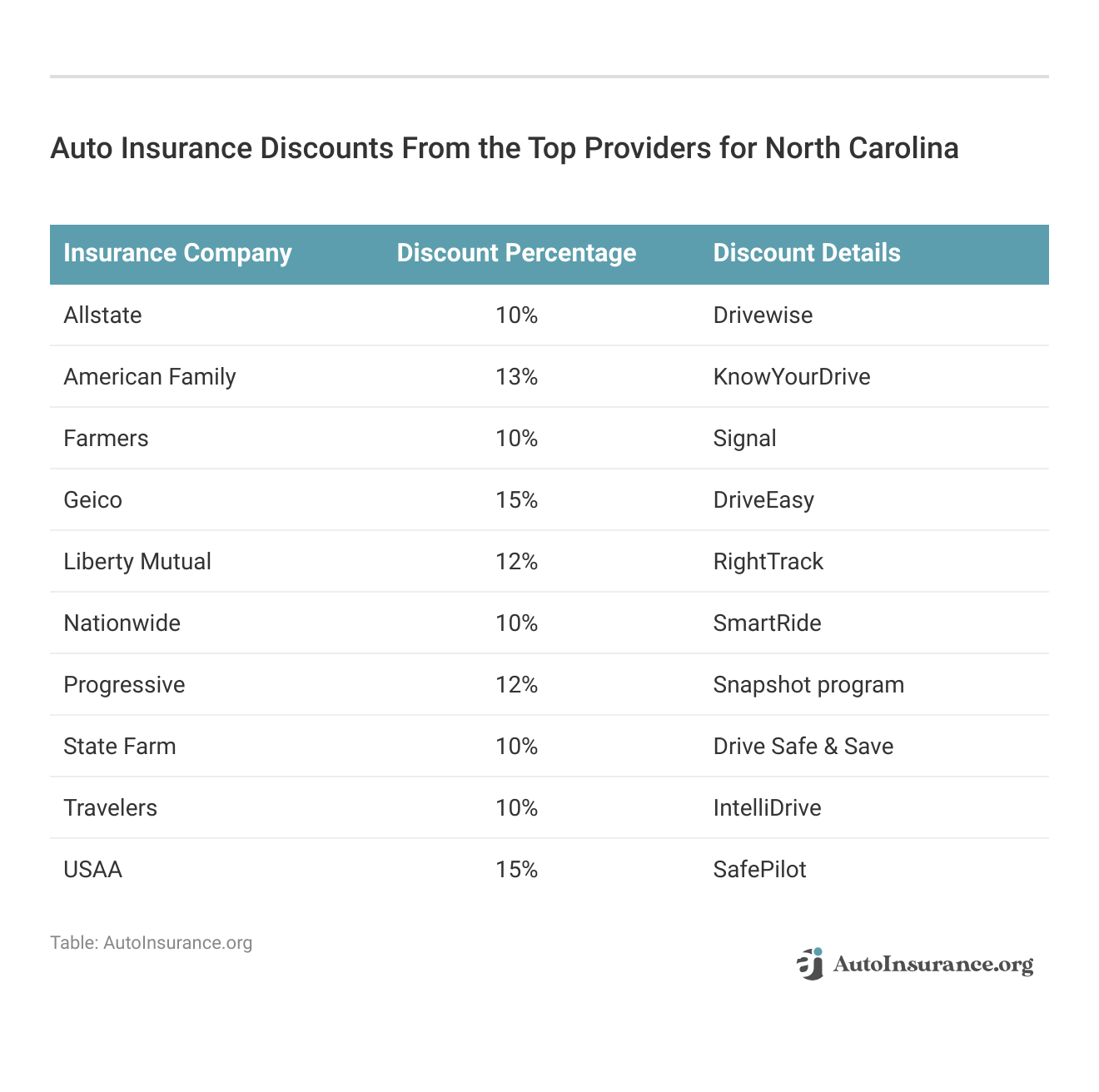
- Telematics Programs: Many insurers in NC now offer "Pay-How-You-Drive" programs using smartphone apps to monitor braking, speed, and phone usage. Safe drivers can often earn discounts of up to 40%.
- Professional/Alumni Discounts: Many companies offer small discounts for members of certain professional organizations or graduates of North Carolina universities (UNC, NC State, Duke, etc.).
Frequently Asked Questions
Does auto insurance follow the car or the driver in North Carolina?
In North Carolina, the insurance generally follows the vehicle. If you lend your car to a friend and they get into an accident, your insurance is the primary coverage. However, the driver's own insurance may act as secondary coverage if your limits are exceeded.
How long do SDIP points stay on my record?
SDIP points for insurance purposes stay on your record for three years. This is usually measured from the date of the conviction or the date of the at-fault accident. It is different from DMV points, which can stay on your license for longer depending on the violation.
What is "Consent to Rate" and should I sign it?
"Consent to Rate" is a form where you agree to pay a premium higher than the state-mandated Bureau rate. If you have a high-risk profile, an insurer may refuse to cover you unless you sign this form. If you refuse, you may have to seek coverage through the North Carolina Reinsurance Facility, which might be even more expensive.
Is Gap Insurance required in North Carolina?
No, North Carolina law does not require Gap Insurance. However, if you are financing or leasing a new vehicle in 2026, many lenders will require it. It is highly recommended if you put down a small down payment, as it covers the difference between the car's depreciated value and your loan balance if the car is totaled.
Can I drive in NC with out-of-state insurance?
If you are a visitor or a student, you can generally drive with your out-of-state policy. However, if you move to North Carolina and establish residency (by getting a job, registering to vote, or staying for more than 6 months), you must register your vehicle in NC and obtain a North Carolina auto insurance policy within 30 days.
Next Steps for North Carolina Drivers
To ensure you are properly protected and compliant with North Carolina law in 2026, your first step should be to review your current Declarations Page. Check if your liability limits are still at the 30/60/25 minimums; if they are, contact your agent to request a quote for higher limits, such as 100/300/100. Given the state's "contributory negligence" rule, you should also verify that you have Collision and Medical Payments coverage to protect yourself in the event of a disputed-fault accident. Finally, always ensure there is no gap between the cancellation of an old policy and the start of a new one to avoid DMV penalties.