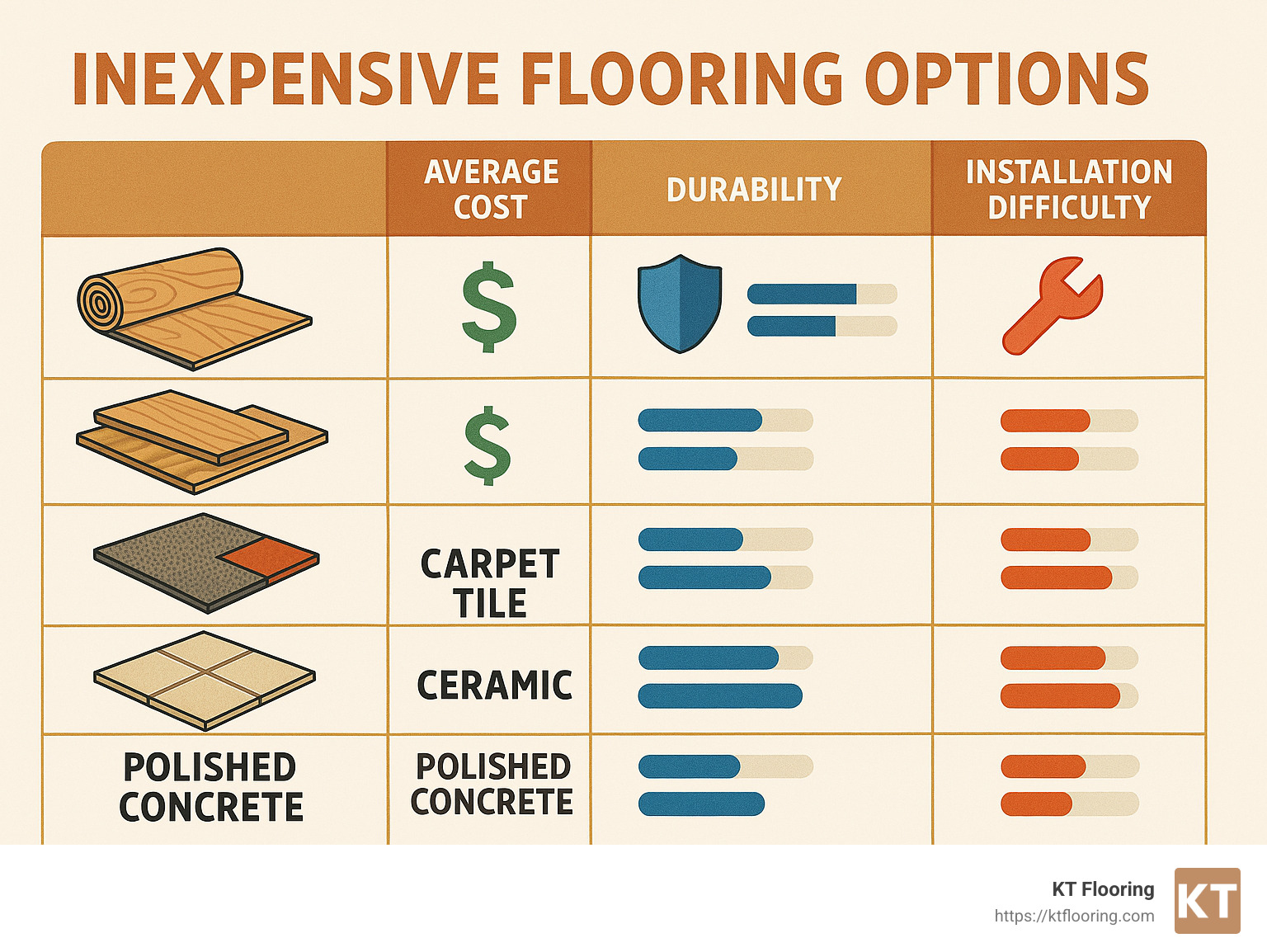
Choosing affordable flooring options requires balancing upfront material and installation costs with long-term durability, maintenance requirements, and aesthetic goals. Whether you are renovating a rental property, updating a high-traffic family room, or preparing a home for the market, budget-friendly materials like luxury vinyl plank, laminate, sheet vinyl, peel-and-stick tile, and low-cost carpeting can deliver an attractive finish without straining your finances.
Understanding the True Cost of Budget Flooring
When evaluating budget flooring options, looking beyond the initial price per square foot is essential. A truly economical flooring choice accounts for installation labor, subfloor preparation, underlayment materials, and waste margins. Homeowners frequently make the mistake of purchasing the least expensive material available, only to encounter unexpected expenses during installation or premature wear that requires early replacement.
Material costs represent only one component of a budget renovation. Professional installation can easily double the total project cost if complex subfloor repairs or specialized tools are required. Conversely, many affordable flooring types—particularly click-lock laminate and luxury vinyl—are engineered for the DIY enthusiast, eliminating labor costs entirely for those with basic woodworking skills and patience.
Furthermore, lifecycle costs play a critical role in affordability. A bargain carpet that needs replacement every three years is ultimately more expensive than a mid-range luxury vinyl plank floor that lasts for decades. Assessing room functionality, moisture levels, and foot traffic patterns before selecting a material ensures that your budget-friendly choice remains economical over its entire lifespan.
Top Affordable Flooring Materials Compared
To select the right product for your space, comparing the primary attributes of standard budget materials helps clarify which option aligns with your practical needs and financial constraints.
| Flooring Type | Average Cost per Sq. Ft. (Materials) | Water Resistance | DIY Friendliness | Typical Lifespan | Best Suited For |
|---|---|---|---|---|---|
| Sheet Vinyl | $0.50 – $2.00 | High | Moderate | 10–20 years | Bathrooms, laundries, kitchens |
| Peel-and-Stick Tile | $0.50 – $3.00 | Moderate to High | High | 5–10 years | Small bathrooms, entryways, pantries |
| Carpet (Standard) | $2.00 – $4.00 | Low | Low to Moderate | 5–15 years | Bedrooms, living rooms, low-moisture areas |
| Laminate Flooring | $1.00 – $3.00 | Low to Moderate | High | 15–25 years | Living rooms, bedrooms, hallways |
| Luxury Vinyl Plank (LVP) | $2.00 – $5.00 | High | High | 20–30+ years | Entire homes, kitchens, basements |
Luxury Vinyl Plank (LVP): The Modern Budget Standard
Luxury Vinyl Plank has transformed the budget flooring market by offering the realistic appearance of hardwood or stone at a fraction of the cost. Constructed in multiple layers—including a stabilizing backing, a design film, a durable wear layer, and a clear protective topcoat—LVP is engineered to withstand heavy use while remaining visually appealing.
One of the primary advantages of LVP is its complete moisture resistance. Unlike traditional hardwood, which warps and buckles when exposed to standing water, vinyl plank flooring is impervious to moisture, making it an exceptional choice for kitchens, bathrooms, finished basements, and mudrooms. High-quality wear layers (measured in mils, typically ranging from 6 to 20 mils for residential use) protect against scratches from pets, high heels, and moving furniture.
Most modern LVP products feature a click-lock or tongue-and-groove installation system. Planks float above the subfloor without requiring nails or permanent glue, allowing for straightforward floating floor installation. While LVP can be more expensive upfront than sheet vinyl or standard carpet, its longevity and low maintenance requirements make it one of the most cost-effective long-term investments in residential renovation.
Laminate Flooring: Affordable Wood Aesthetics
Laminate flooring remains a staple for budget-conscious renovators seeking the look of hardwood without the high price tag. Composed of a high-density fiberboard (HDF) core topped with a photographic applique layer and a tough melamine wear layer, laminate provides a rigid, highly scratch-resistant surface.
Advances in manufacturing technology have significantly improved the texture and realism of laminate flooring. Embossed-in-register techniques align the surface texture with the visual wood grain, creating a tactile experience very similar to genuine timber. Additionally, many contemporary laminate products incorporate water-resistant technologies and tight locking mechanisms that prevent liquid from seeping into the core joints, addressing historical concerns regarding moisture vulnerability.
Despite these improvements, traditional laminate remains susceptible to water damage if standing liquid is left unattended. Therefore, it is best deployed in dry living areas, dining rooms, and bedrooms rather than full bathrooms or damp cellars. Proper underlayment is also mandatory during installation to reduce hollow sounds when walking and to provide a moisture barrier against subfloor dampness.
Sheet Vinyl and Peel-and-Stick Tiles: Maximum Savings
For projects operating under strict financial limits, sheet vinyl and peel-and-stick vinyl tiles represent the lowest barrier to entry in terms of material costs.
Sheet vinyl is manufactured in wide rolls—typically 12 feet wide—allowing many residential rooms to be covered with minimal seams. Modern sheet vinyl features cushioned backing options that provide underfoot comfort and warmth, along with sophisticated printing techniques that mimic ceramic tile, slate, or hardwood planks. Its seamless nature in smaller rooms provides excellent water protection, making it a traditional favorite for budget kitchen and bathroom updates.
Peel-and-stick vinyl tiles offer an even more accessible DIY format. Backed with a factory-applied adhesive protected by a release paper, these tiles require only a utility knife and a clean, primed subfloor for installation. While peel-and-stick tiles are prone to edge lifting if the subfloor is dusty or uneven, they serve as an effective, highly economical solution for low-traffic spaces, rental touch-ups, or temporary aesthetic improvements.
Budget Carpeting Options
Carpet remains a popular choice for bedrooms and living spaces due to its warmth, sound-dampening qualities, and soft underfoot feel. When shopping for budget-friendly carpet, fiber type dictates both the price point and overall performance.
Olefin (polypropylene) and polyester are the most economical carpet fibers available. Olefin is naturally moisture- and stain-resistant, making it ideal for basements, though it tends to crush under heavy foot traffic. Polyester offers brilliant color clarity and a soft texture at a low price, and modern manufacturing has dramatically improved its stain resistance and resilience. Nylon remains the most durable synthetic fiber but typically sits at a higher price point, though budget blends are frequently available.
To maximize the value of a budget carpet installation, investing in a quality carpet cushion (padding) is just as important as selecting the carpet itself. Adequate padding extends the lifespan of low-cost fibers, prevents premature matting, and enhances thermal insulation.
Subfloor Preparation and Hidden Costs
Ignoring subfloor preparation is the most common cause of premature flooring failure and unexpected budget overruns. Whether installing LVP, laminate, or vinyl tile, the subfloor must be clean, structurally sound, and completely level.
- Inspection and Cleaning: Remove existing flooring down to the subfloor. Sweep away debris, nails, staples, and dust. Check for soft spots in plywood or moisture damage in concrete slabs.
- Leveling: Low spots cause click-lock joints to separate under weight, while high spots create bounce and excessive wear. Apply self-leveling compound on concrete or patch plywood subfloors with appropriate underlayment patches.
- Moisture Testing: Conduct moisture tests on concrete subfloors. Excessive vapor emission rates will ruin laminate cores and adhesive bonds, requiring a dedicated vapor barrier membrane.
- Underlayment Selection: Install the manufacturer-recommended underlayment to provide sound reduction, thermal insulation, and minor surface smoothing.
Frequently Asked Questions About Affordable Flooring
What is the cheapest flooring option overall?
Sheet vinyl and peel-and-stick vinyl tiles are generally the least expensive flooring options, with material costs often starting under $1 per square foot. For those who can handle installation themselves, click-lock laminate also provides exceptional economy when considering long-term durability.
Can I install budget flooring over existing flooring?
In many cases, yes. Luxury vinyl plank, laminate, and sheet vinyl can often be installed directly over clean, flat, existing hard surface flooring like vinyl or tile, provided there is only one existing layer and it is securely bonded. However, installing over old carpet or uneven surfaces is never recommended.
Which budget flooring is best for pets and kids?
Luxury Vinyl Plank (LVP) is widely considered the best budget option for households with pets and children. Its thick wear layer resists scratches from claws, and its waterproof construction easily handles spills, muddy paws, and frequent cleaning.
Is DIY installation truly cost-effective?
Yes, for click-lock laminate, LVP, and peel-and-stick products, DIY installation saves hundreds or thousands of dollars in labor costs. However, intricate cuts around door jambs, stairs, and precise subfloor preparation require patience and basic tools. Mistakes during DIY installation can void manufacturer warranties.
How can I make cheap flooring look high-end?
Achieving an upscale look with budget flooring relies on meticulous installation and design cohesion. Ensure transitions between rooms are flush and professional, use matching baseboards and quarter-round molding to hide expansion gaps, and choose matte or low-gloss finishes that mimic natural wood or stone rather than overly shiny synthetic surfaces.
Conclusion and Next Action
Selecting the ideal affordable flooring option depends on carefully assessing your room's moisture levels, foot traffic, and installation capabilities. Begin your project by measuring the exact square footage of your space, adding a 10% waste margin for cuts and fitting errors. Visit local suppliers or home improvement centers to examine physical material samples in your home's lighting before making a final purchasing decision.