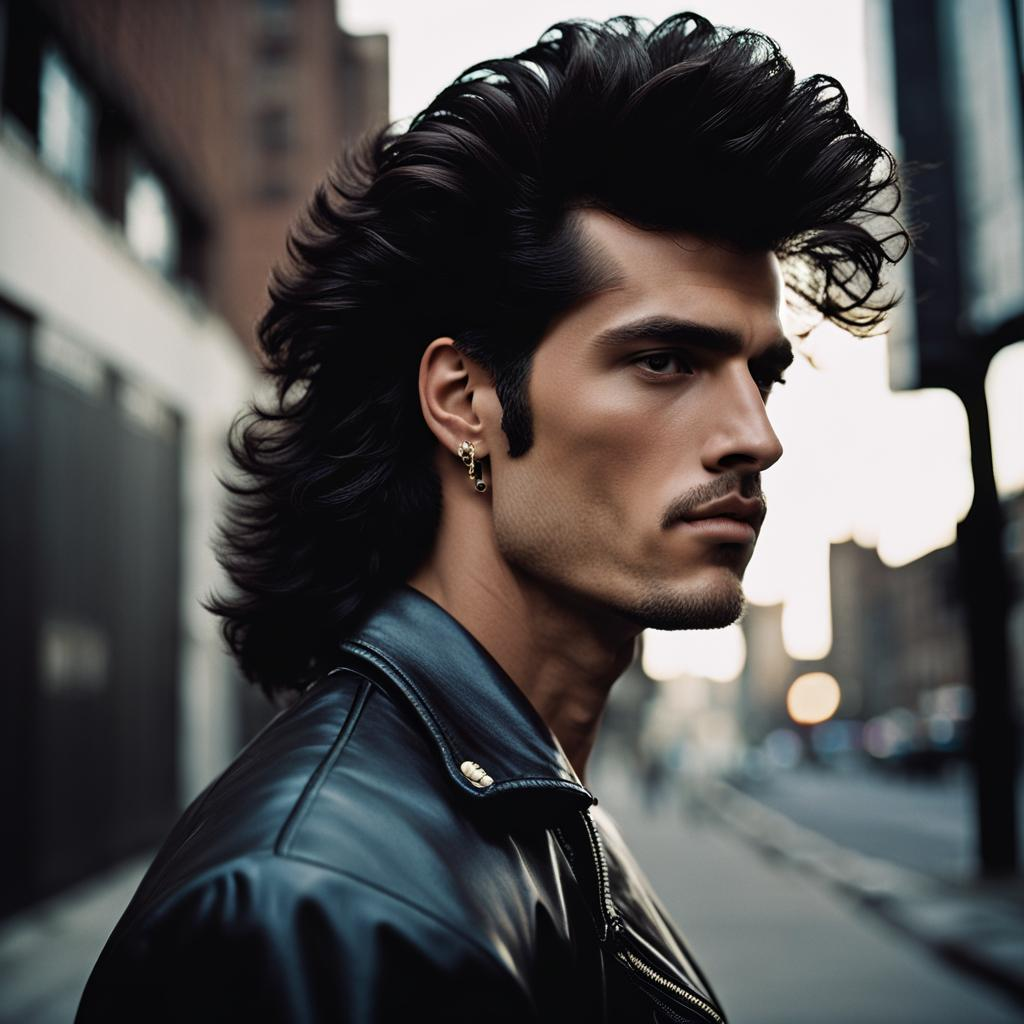
80s rocker hair, synonymous with the "Hair Metal" movement, is defined by extreme volume, architectural height, and heavy reliance on chemical perms and high-hold aerosols. These styles—ranging from teased-out manes to shaggy mullets—served as visual symbols of rebellion, excess, and gender-bending theatricality within the hard rock and heavy metal subcultures of the decade.
The 1980s represented a pinnacle of grooming excess, where the "bigger is better" philosophy moved from the runway to the rock stage. While often dismissed as mere vanity, the construction of these styles required significant technical skill, specific chemical processes, and a commitment to daily maintenance that rivaled traditional salon artistry. To understand 80s rocker hair is to understand the intersection of 20th-century cosmetic chemistry, the rise of MTV, and the subversion of traditional masculine aesthetics.
The Cultural Origins of the "Big Hair" Aesthetic
The transition from the naturalistic, often greasy aesthetic of 1970s hard rock to the polished, gravity-defying styles of the 1980s was driven by the visual demands of television. With the launch of MTV in 1981, rock bands were no longer just heard; they were seen in high rotation. Image became as critical as the guitar riff.
The aesthetic was heavily influenced by the 1970s Glam Rock movement (David Bowie, T. Rex, and the New York Dolls), which introduced the idea of androgeny and theatricality. However, 80s rockers took these foundations and amplified them using modern styling products. Bands like Mötley Crüe, Poison, and Ratt pushed the boundaries of volume, using hair as a form of "peacocking" to stand out in a saturated market. By the mid-80s, the style had moved from the Sunset Strip in Los Angeles into the global mainstream, influencing not just musicians but fans across all demographics.
The Technical Anatomy of 80s Rocker Hair
Achieving the iconic rocker look was not a matter of genetics; it was a matter of structural engineering. There are four primary pillars that supported these styles: height, texture, density, and hold.
1. Structural Height and "The Tease"
The most recognizable feature of 80s hair is its verticality. This was achieved through a technique known as backcombing or "teasing." By using a fine-toothed comb or a specialized teasing brush, a stylist (or the musician themselves) would brush the hair toward the scalp rather than away from it. This process creates a "nest" of tangled hair at the base of the shaft, which acts as a structural foundation to support the weight of the hair above it.
On a microscopic level, teasing involves lifting the hair cuticles so they interlock with one another. While effective for volume, this process is mechanically damaging to the hair fiber, leading to the "fried" texture common in the era.
2. Texture through Chemical Perming
For many men in the 80s rock scene, natural hair lacked the necessary grit and curl to maintain high-volume shapes. The solution was the permanent wave, or "perm." This chemical process uses reducing agents (typically ammonium thioglycolate) to break the disulfide bonds in the hair’s keratin structure. Once the bonds are broken, the hair is molded around a rod and then "neutralized" with an oxidizing agent to reform the bonds in a new, curly shape.
Perms provided the "frizz" and "body" required to make hair appear twice as thick as it actually was. In the 2026 landscape, we often see a more refined version of this known as "digital perming," but the 80s version was intentionally aggressive to ensure maximum lift.
3. Crimp and Wave
In addition to perms, mechanical tools like crimping irons were used to create a zig-zag texture. This added visual complexity and further increased the surface area of the hair, making it appear more voluminous. Crimping was often used on specific sections—such as the "fringe" or the crown—to create contrast with longer, straighter sections.
4. The Chemistry of Hold: Aerosols and Resins
No 80s style could survive a stage performance without heavy-duty fixatives. The era was dominated by high-alcohol-content hairsprays like Aqua Net. These products functioned by coating the hair in a layer of plastic-like resins (such as polyvinylpyrrolidone or PVP). When the alcohol evaporated, the resin hardened, essentially "gluing" the teased structure into place. This created the "helmet" effect, where the hair remained stationary even during aggressive headbanging.
Categorizing 80s Rocker Styles
Not all 80s hair was created equal. Depending on the musical subgenre, the hair served different purposes and followed different "rules."
| Style Name | Primary Characteristics | Iconic Examples | Typical Maintenance |
|---|---|---|---|
| The Glam Mane | Extreme volume, bleached highlights, full perimeter teasing. | Brett Michaels (Poison), Nikki Sixx (Mötley Crüe) | Daily teasing, frequent bleaching, high-hold spray. |
| The Rocker Mullet | "Business in the front, party in the back"; short crown, long nape. | Joe Elliott (Def Leppard), Billy Ray Cyrus | Regular trimming of the top and sides; perming the back. |
| The Thrash Shag | Longer, more natural, less "styled" but still voluminous; often unwashed. | James Hetfield (Metallica), Dave Mustaine (Megadeth) | Minimal product; air-drying; focusing on length and density. |
| The Goth/Post-Punk Spike | Vertical orientation, often jet black, extreme structural rigidity. | Robert Smith (The Cure), Siouxsie Sioux | Heavy use of styling gel and "egg white" or glue-based hacks. |
The "How-To": Recreating the Look in 2026
If you are looking to recreate 80s rocker hair today—whether for a production, a themed event, or as part of the current "retro-synth" fashion trend—the techniques have evolved to be less damaging, though the principles remain the same.
Step 1: Preparation and Prep-Products
Starting with clean hair is actually a disadvantage. "Slippery" hair will not hold a tease. In 2026, we use dry shampoo or texturizing powder (silica silylate) to add "grip" to the hair fibers. Apply these to the roots to create a matte, high-friction base.
Step 2: The Sectioned Tease
Divide the hair into one-inch horizontal sections starting at the crown. Hold the section vertically and, using a rat-tail comb, perform three firm strokes downward toward the scalp. Do not "saw" back and forth; use clean, deliberate strokes. Once a section is teased, give it a quick "blast" of high-hold spray at the base before moving to the next.
Step 3: Shaping the "Cloud"
Once the entire head is teased, you will likely look like a "fright wig." Use a soft-bristle brush to gently smooth over the topmost layer of hair. This hides the messy, tangled "nest" underneath while maintaining the volume. This is known as "smoothing over the structural base."
Step 4: Finishing Touches
In the 80s, you would use a blow-dryer on a hot setting to "set" the hairspray. Today, we recommend a "cool shot" setting to harden the polymers without further heat-damaging the cuticle. For the authentic 80s "wet look" fringe, use a high-shine pomade on just the tips of the bangs.
Tools of the Trade: Then vs. Now
The technology used to achieve these looks has shifted significantly over the decades. While the goals remain the same, the health of the hair is prioritized much more in the current era.
- 1980s Tools: Metal-toothed combs (highly abrasive), CFC-heavy aerosols (environmentally damaging), and high-pH home perms (often led to "chemical haircuts" or breakage).
- 2026 Tools: Ceramic ionic blow-dryers that reduce frizz, carbon-fiber teasing combs that minimize static, and "working sprays" that allow for flexibility before they set. Modern bonding agents like Olaplex or K18 are now used during the perming process to keep the hair's internal structure intact, a luxury 80s rockers did not have.
The Decline and Modern Legacy
The dominance of 80s rocker hair came to an abrupt end in the early 1990s. The arrival of Grunge—led by bands like Nirvana and Soundgarden—brought an aesthetic of "anti-fashion." High-maintenance, sprayed hair was replaced by unwashed, natural, and flat styles. By 1992, "big hair" was considered a relic of an era of perceived superficiality and corporate excess.
However, the style never truly died. In 2026, we see the DNA of 80s rocker hair in the "Wolf Cut" and the "Modern Shag." These contemporary styles use the same layering and crown-volume principles of the 80s but skip the aggressive chemicals and rigid hairsprays in favor of natural movement and "lived-in" textures. The 80s taught the world that hair could be an architectural statement, a lesson that continues to influence high-fashion editorial styling today.
Troubleshooting Common Issues
When attempting 80s styles, beginners often face three main hurdles:
- Style Collapse: Usually caused by humidity or using too much product too close to the scalp, which weighs the hair down. The fix is to use "dry" aerosols and ensure the teasing is tight enough at the base to support the weight.
- The "Matte" Problem: Over-teasing can make hair look dull and dead. Use a glossing spray or a light silicone-based serum only on the outermost surface to restore a healthy-looking sheen.
- Removal Pain: Trying to brush out an 80s tease can cause massive breakage. To remove the style safely, do not brush it dry. Instead, soak the hair in a heavy conditioner or a detangling oil for 20 minutes to dissolve the hairspray resins, then gently work through the tangles with a wide-tooth comb while the hair is saturated.
Frequently Asked Questions
Did 80s rockers actually use Aqua Net?
Yes, Aqua Net was the industry standard for both professional stylists and amateur musicians. It was prized for its high concentration of polymers and its very low price point. In the 80s, it was not uncommon for a single band to go through a dozen cans of "Extra Super Hold" per week while on tour.
How did they keep their hair healthy with all those chemicals?
The reality is that many did not. If you look closely at high-definition footage from the era, many musicians had significant "chemical breakage" and split ends. Those who maintained healthy hair often had access to high-end salon treatments or, in many cases, wore high-quality wigs or hairpieces to supplement their natural hair for music videos and photo shoots.
Is it possible to get 80s volume without a perm?
Yes, but it is temporary. You can achieve similar volume using a combination of volumizing mousse applied to wet hair, followed by a "rough dry" with a blow-dryer while hanging your head upside down. Once dry, use a small-barrel curling iron to create tight curls, then tease those curls out. This provides the "frizz-volume" of a perm without the permanent chemical change.
What is the difference between a mullet and a shag?
While both involve layers, a mullet has a distinct "disconnection" where the sides and top are significantly shorter than the back. A shag is more "blended," with layers of varying lengths throughout the entire head. Most 80s rockers actually wore a hybrid of the two—a "shaggy mullet"—which maximized volume at the crown while maintaining length at the shoulders.
Can I achieve this look with short hair?
The classic "Big Hair" look requires at least 4-6 inches of length on the top and sides to create enough surface area for teasing. If your hair is shorter, you are limited to "spiking" or "mohawk" variations, which rely more on gel and gravity-defying verticality than the "cloud" volume characteristic of 80s glam.
Professional Recommendation for 2026
If you are looking to embrace the 80s rocker aesthetic in 2026, the key is texture over stiffness. Instead of reaching for the cheapest aerosol you can find, invest in a high-quality dry texture spray and a volumizing powder. These modern products allow you to achieve the "big" look without the "crunchy" feel of the 1980s. For those with straight hair, consider a "partial perm" (only at the roots) to provide lift without the full-head frizz, allowing for a more versatile daily look that can be styled into a rocker mane when desired.