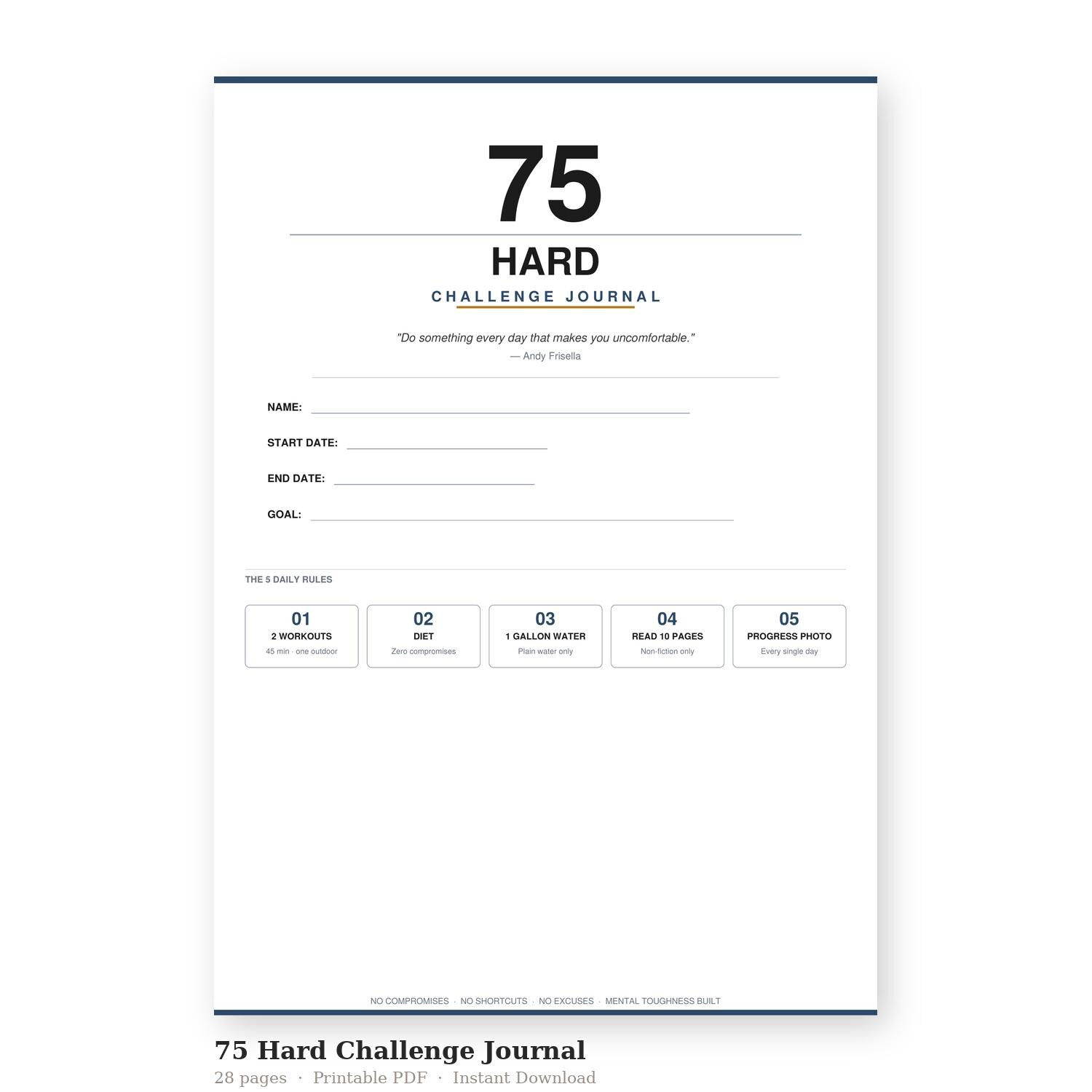
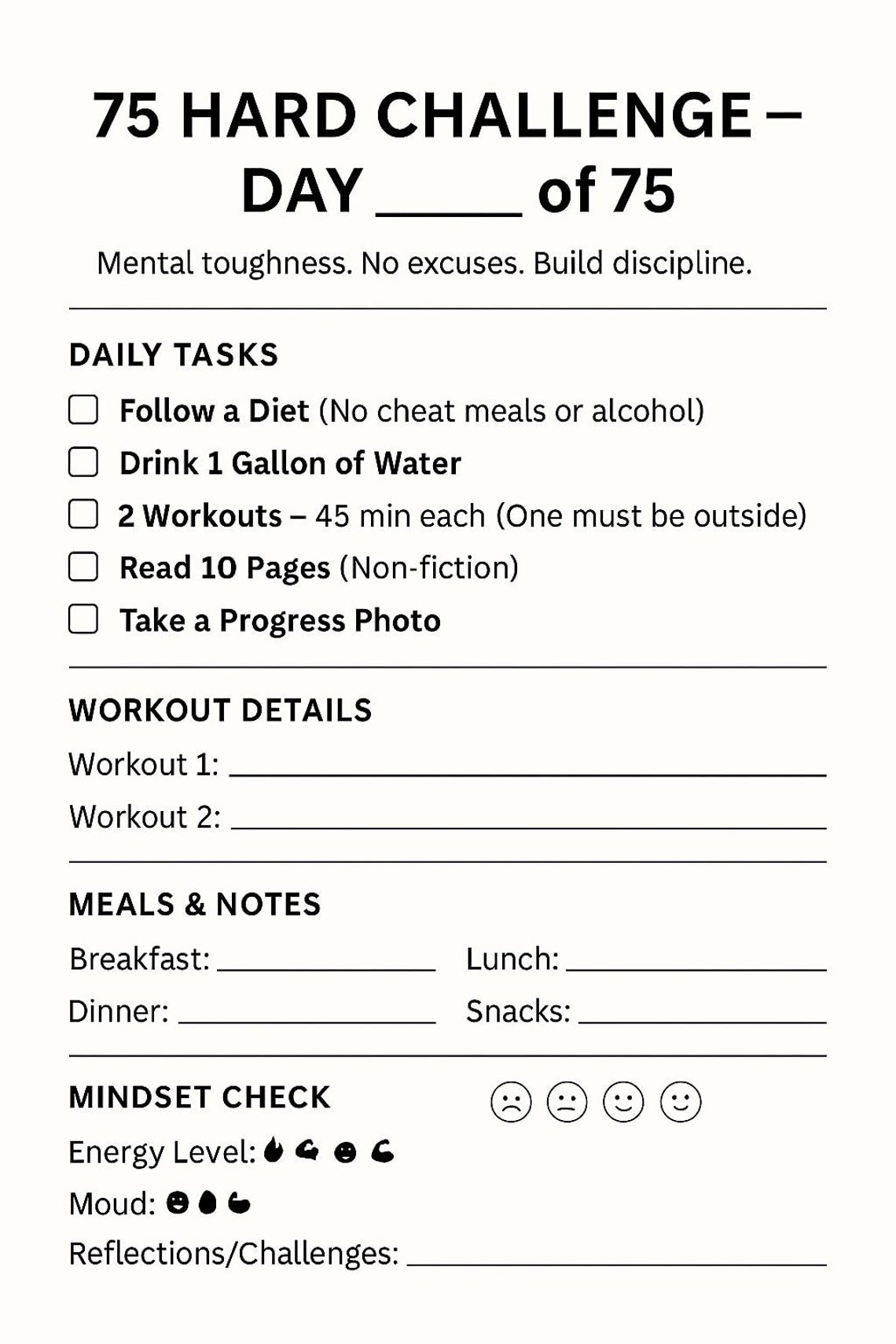
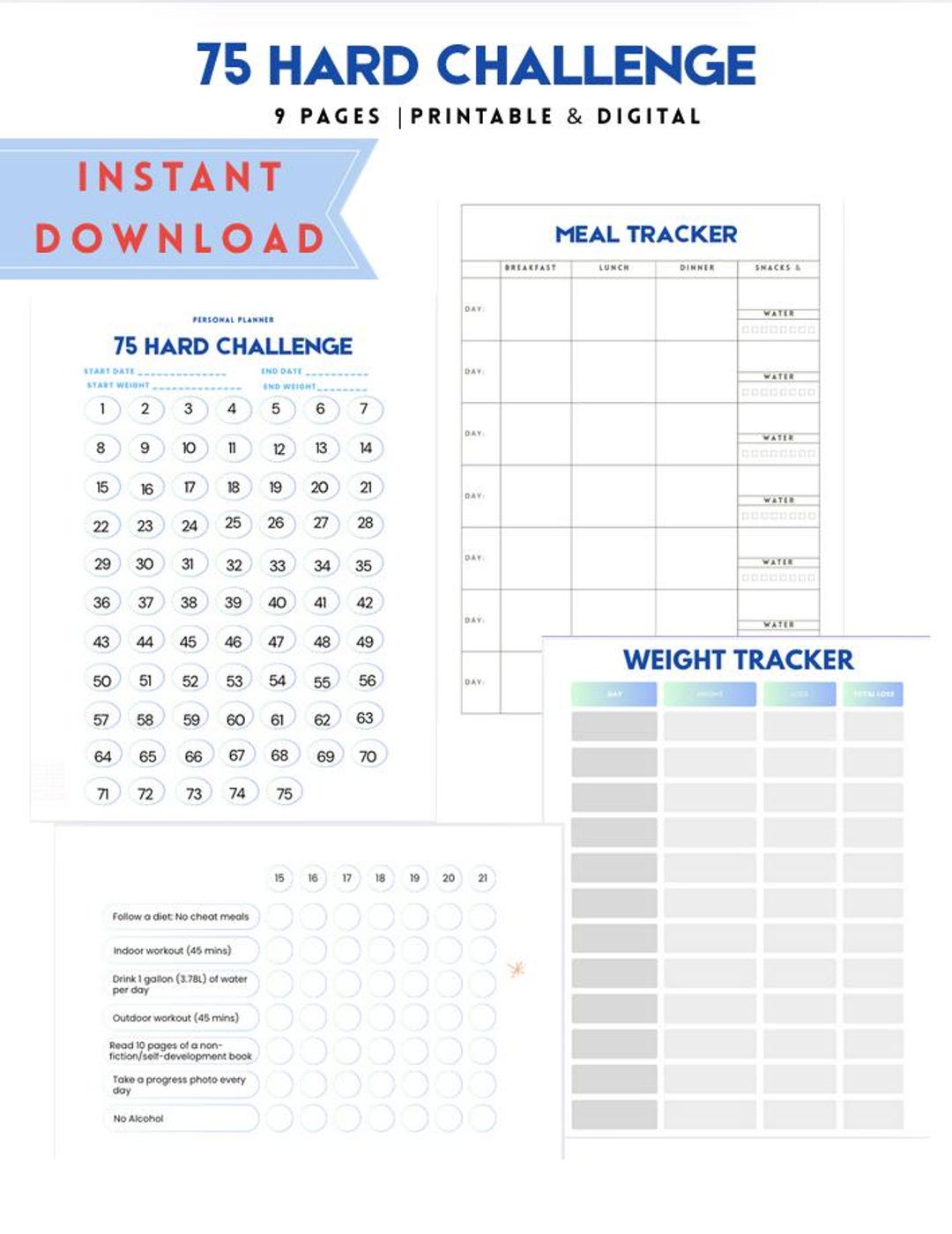
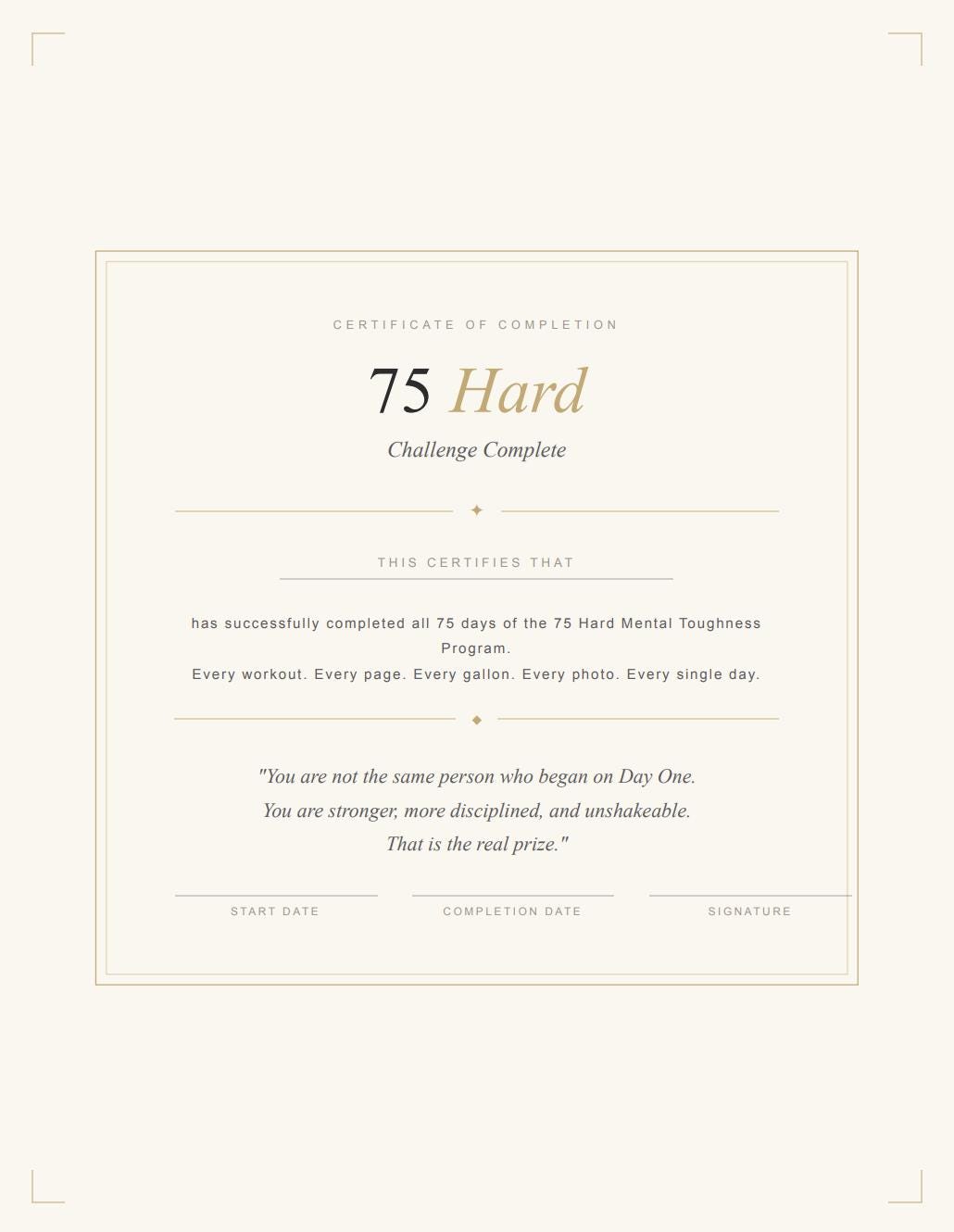
The 75 Hard program is a rigorous 75-day mental toughness challenge created by entrepreneur and podcaster Andy Frisella. It requires strict adherence to five daily tasks: following a structured diet with no alcohol or cheat meals, completing two 45-minute workouts (one must be outdoors), drinking one gallon of water, reading ten pages of non-fiction, and taking a daily progress photo. Failing any task necessitates a complete restart from Day 1.
The 75 Hard challenge is frequently mistaken for a traditional fitness or weight-loss plan. However, its creator, Andy Frisella, explicitly defines it as a "Transformational Mental Toughness Program." While significant physical changes are common outcomes, the primary objective is to cultivate traits such as discipline, grit, fortitude, and self-belief. By 2026, the program has maintained its status as a cornerstone of the "self-optimization" movement, surviving various fitness trends due to its uncompromising nature and the psychological shifts it demands from participants.
The Philosophy and Origins of 75 Hard
Andy Frisella developed 75 Hard in 2019 after interviewing individuals who had achieved elite levels of success. He noticed a common thread: these individuals possessed a level of mental toughness that allowed them to execute tasks regardless of their emotional state or external circumstances. Frisella designed the challenge to be a "manual" for developing that specific mindset.
The program is built on the premise that most people lack the "tactical" discipline required to reach their full potential. In an era dominated by convenience and "hacks," 75 Hard stands as a counter-culture movement. It rejects the idea of shortcuts. The core philosophy suggests that by forcing the brain to complete difficult tasks during inclement weather, social pressure, and physical fatigue, the individual rewires their internal dialogue from "I can't" to "I will."
The Five Critical Rules of 75 Hard
To successfully complete the 75 Hard challenge, a participant must complete every one of the following five tasks every single day for 75 consecutive days. There are no "off days," no substitutions, and no modifications allowed.
1. Follow a Structured Diet
The program does not mandate a specific dietary path (such as Keto, Paleo, or Vegan), but it requires the participant to choose a structured plan intended for physical improvement and stick to it without deviation.
- No Cheat Meals: Any consumption of food outside the chosen plan, even a single bite of unauthorized food, results in an immediate restart.
- No Alcohol: This is a non-negotiable rule. Alcohol is viewed as a "crutch" and a toxin that impairs judgment and discipline.
2. Two 45-Minute Workouts
Participants must complete two separate workouts each day, each lasting at least 45 minutes.
- The Outdoor Requirement: One of these workouts must take place outdoors, regardless of the weather conditions. This is designed to build mental resilience by removing the excuse of "bad weather."
- Separation: The workouts cannot be back-to-back. There must be a significant gap between them to ensure the participant has to manage their time and energy throughout the entire day.
3. Drink One Gallon of Water
Hydration is a cornerstone of physical health, but in 75 Hard, the gallon-of-water rule is as much about discipline as it is about biology. Carrying a jug and ensuring consistent intake throughout the day requires constant awareness.
- Plain Water Only: Supplements, powders, or flavorings do not count toward the gallon requirement.
4. Read 10 Pages of Non-Fiction
Participants must read at least ten pages of a book that contributes to their personal or professional development.
- Physical or E-books Only: Audiobooks do not count. The requirement focuses on the act of sitting down and concentrating on physical text, which develops focus and information retention.
- Subject Matter: The book must be non-fiction, typically in the realms of business, psychology, philosophy, or biography.
5. Take a Daily Progress Photo
While this seems simple, it is often the rule that causes the most restarts. The progress photo serves as a daily receipt of effort. It forces the participant to look at themselves and acknowledge their current state, fostering a sense of accountability.
The "Zero Compromise" Policy
The most daunting aspect of 75 Hard is the "Day 1" rule. If you forget to take your photo until after you’ve gone to bed, or if you accidentally eat a piece of bread that isn't on your diet, you do not simply "make it up" the next day. You must go back to Day 1.
This rule is designed to eliminate the habit of "negotiating with yourself." In everyday life, people often make small concessions—hitting the snooze button, skipping one set at the gym, or having "just one" drink. 75 Hard teaches that these small compromises eventually lead to large-scale failures. By 2026, psychologists studying high-performance habits have noted that this "all-or-nothing" approach can be a powerful tool for identity shifting, though it requires significant mental stability to manage the frustration of a restart.
Comparing 75 Hard to Alternative Programs
As the popularity of 75 Hard grew, various "lite" versions emerged for those who found the original program too restrictive or physically demanding. The most notable is "75 Soft."
| Feature | 75 Hard (Original) | 75 Soft (Variation) |
|---|---|---|
| Diet | Strict adherence; no cheat meals. | Eat well; only drink on social occasions. |
| Alcohol | Zero tolerance. | Only on social occasions. |
| Workouts | Two 45-min (one must be outdoors). | One 45-min workout per day. |
| Water | 1 Gallon (approx. 3.78 liters). | Drink 3 liters of water. |
| Reading | 10 pages of non-fiction (no audio). | 10 pages of any book. |
| Failure | Immediate restart to Day 1. | Keep going/no strict restart. |
| Primary Goal | Mental Toughness/Discipline. | General Fitness/Habit Building. |
The Role of the "Live Hard" Program
75 Hard is actually the "boot camp" phase of a larger year-long program called "Live Hard." For those who finish the initial 75 days, there are subsequent phases (Phase 1, Phase 2, and Phase 3) that add even more requirements, such as cold showers, "power list" tasks, and random acts of kindness. Completing the full "Live Hard" year is considered the pinnacle of the program's intended development.
Practical Preparation and Logistics
In 2026, with the abundance of meal-prep services and fitness tracking technology, executing the mechanics of 75 Hard is theoretically easier, yet the mental strain remains identical. Success requires meticulous planning.
- Schedule the Outdoor Workout First: Weather is unpredictable. Getting the outdoor workout done early in the day prevents it from becoming a midnight hurdle when energy is low.
- Meal Prep is Non-Negotiable: Without prepared meals, the likelihood of a "cheat" due to hunger or lack of options increases exponentially.
- The Water Jug: Most successful participants use a marked gallon jug to track progress throughout the day. Waiting until the evening to drink half a gallon is both uncomfortable and can lead to disrupted sleep.
- Reading Material: Have at least 3-4 books ready before starting. Running out of reading material on Day 40 can lead to an unnecessary lapse in the habit.
Health and Safety Considerations
While 75 Hard can lead to life-changing results, it is not without risks. Potential participants should consider the following before beginning:
- Overtraining: Two 45-minute workouts a day for 75 days is a high volume of physical activity. It is crucial to balance intensity. One workout could be high-intensity interval training (HIIT), while the other is a brisk walk or recovery yoga.
- Hyponatremia: Drinking a gallon of water is generally safe for most healthy adults, but it must be spread throughout the day. Consuming too much water in too short a timeframe can lead to water intoxication (hyponatremia), which is a serious medical condition.
- Nutritional Deficiencies: Since the program allows you to choose your diet, there is a risk of choosing a plan that is too restrictive for the increased activity level. Consulting a nutritionist is recommended.
- Medical Consultation: As with any intense physical regimen, consulting a physician before starting is essential, particularly for those with underlying health conditions. Information on safe exercise volumes can be found through resources like the American College of Sports Medicine.
The Psychological Impact: The "Power" of Completion
Completing 75 Hard often results in a phenomenon participants describe as "permanent confidence." This stems from the fact that the confidence is earned through observable, difficult actions rather than positive affirmations.
When you have stood in a downpour at 11:00 PM to finish a 45-minute walk because you refused to fail, your brain learns that your "feelings" are irrelevant to your "actions." This decoupling of emotion from execution is the essence of mental toughness. By 2026, many corporate leadership programs have adopted elements of this "execution-first" mindset to help executives manage high-stress environments.
Common Pitfalls and Why People Fail
The majority of 75 Hard participants do not finish on their first attempt. The failures are rarely due to the physical difficulty of the workouts; they are almost always due to "forgetfulness" or "lack of planning."
- The Photo: This is the #1 reason for restarts. It is such a small task that it is easily overlooked until the following morning.
- Social Pressure: Family gatherings, weddings, and holidays often involve food and alcohol. Navigating these events without "cheating" requires a high level of social courage and prior explanation to peers.
- The "I'll do it later" Mentality: Pushing the second workout or the water intake to the late evening creates a high-stress environment that often leads to failure when unexpected life events occur.
Frequently Asked Questions
Can I do 75 Hard if I have an injury?
Yes, but you must be strategic. The program requires two workouts, but it does not specify the intensity. If you are injured, "workouts" can consist of physical therapy exercises, stretching, or low-impact walking, provided your doctor clears the activity. The goal is the commitment to the time, not necessarily the caloric burn.
Does coffee or tea count toward the gallon of water?
No. According to the official rules set by Andy Frisella, only plain, unflavored water counts toward the one-gallon goal. While coffee and tea are not necessarily banned (unless your specific diet plan forbids them), they do not subtract from the gallon requirement.
What happens if I finish my reading but it was only 8 pages?
You must read at least 10 pages. If the chapter ends at page 8, you must start the next chapter to hit the 10-page minimum. Failing to reach the exact page count constitutes a failure of the day's tasks.
Can I use audiobooks for the reading requirement?
No. A key component of the challenge is the discipline of physical reading. Audiobooks are considered a "passive" form of consumption compared to the "active" focus required for reading physical or digital text.
Is there an official 75 Hard app?
Yes, there is an official 75 Hard app created by Andy Frisella’s team. It is designed to help participants track their daily tasks, set reminders for the progress photo, and keep a log of their 75-day journey. While not mandatory to complete the challenge, many find it helpful for accountability.
Final Recommendation
For those considering 75 Hard in 2026, the best approach is to start with a "zero-day" preparation. Before Day 1 begins, select your diet, purchase your gallon jug, clear your schedule for the first week, and choose your first two books. Treat the challenge not as a 75-day prison sentence, but as a 75-day training camp for the person you intend to become. The physical results will be a byproduct; the true prize is the knowledge that you can rely on yourself when things get difficult.