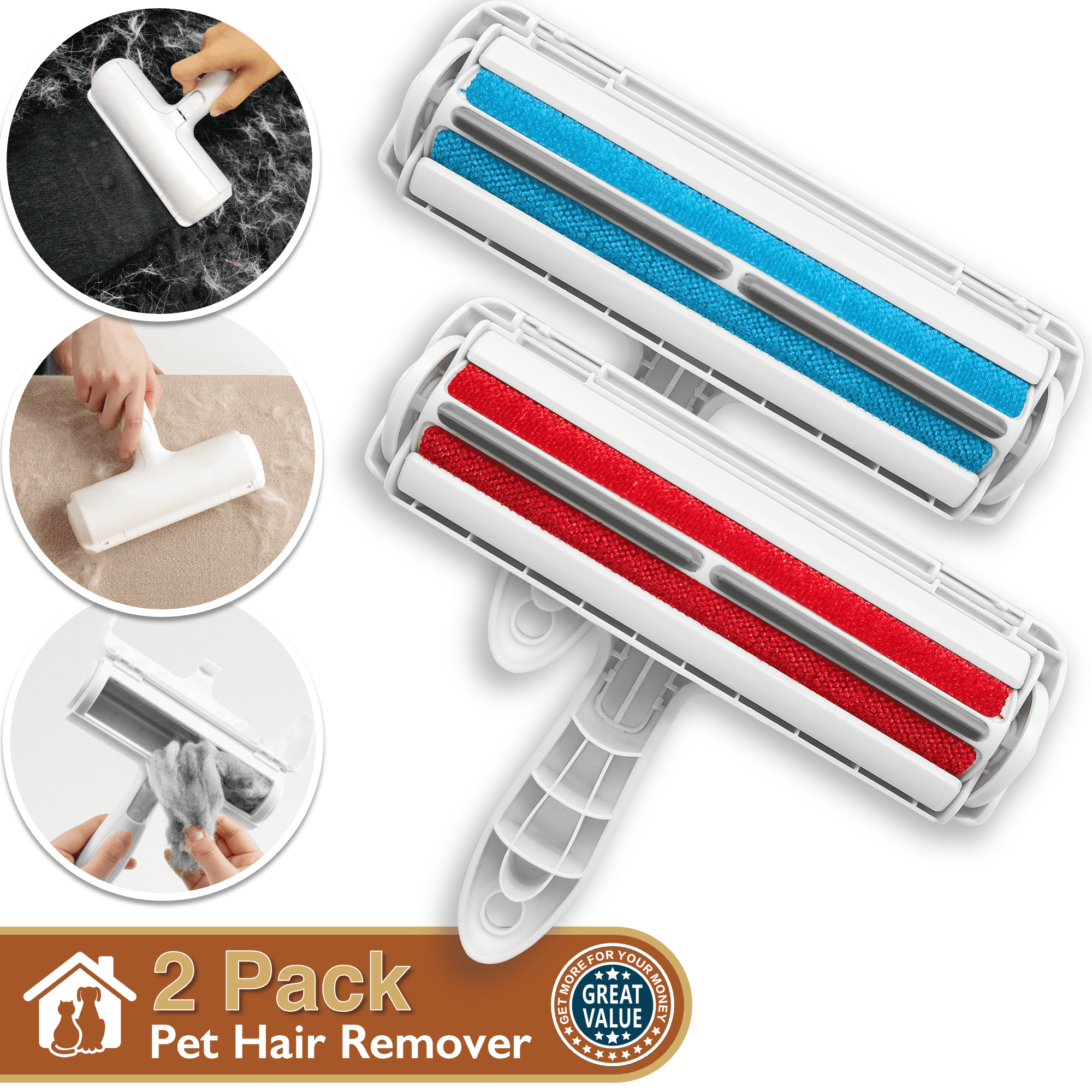
Choosing the best dog hair remover roller requires evaluating your specific upholstery fabrics, shedding volume, roller mechanism, maintenance requirements, and overall build durability. Finding the right tool ensures effortless fur eradication without damaging delicate textiles, wasting money on single-use sheets, or struggling with ineffective rubber bristles.
Pet ownership brings unmatched joy, but for millions of dog owners, coping with relentless shedding remains a daily battle. Canine hair clings stubbornly to woven sofas, wool rugs, velvet armchairs, vehicle upholstery, and winter coats. While traditional disposable lint rollers provide a quick fix for light touch-ups, they quickly become an expensive and environmentally taxing burden when dealing with heavy-shedding breeds like German Shepherds, Labradors, or Huskies.
Reusable pet hair remover rollers have transformed household maintenance, offering sustainable alternatives that lift embedded fur through mechanical friction, electrostatic charge, or specialized micro-bristle arrays. However, not all rollers function identically. Selecting the optimal model requires looking past flashy marketing to assess how different designs interact with various household fabrics and daily cleaning routines.
1. Analyze Your Dog's Coat Type and Shedding Volume
The first and most critical step in selecting a hair remover roller is matching the tool's surface mechanics to your dog's specific fur type. Canine hair varies dramatically across breeds, and a roller that excels at lifting fine, wispy undercoat hair may struggle entirely with coarse, wire-like guard hairs.
Fine and Double-Coated Breeds
Dogs with dense double coats—such as Golden Retrievers, Huskies, and Pomeranians—drop millions of fine, microscopic undercoat hairs that weave themselves deep into fabric loops. For these fabrics, look for rollers featuring bidirectional rubber blades or specialized micro-weave fabric pads. These materials create static friction that catches fine fibers, pulling them upward from the base of the textile rather than simply sliding over the top.
Short, Coarse, and Bristled Coats
Short-haired breeds like Boxers, Pugs, and French Bulldogs possess stiff, needle-like guard hairs. These hairs act like tiny splinters, piercing deep into woven upholstery and car seats. Rubberized nubs and flexible silicone scraper blades excel here. The rigid flexibility of rubber allows the tool to flex into the weave, hooking stiff hairs and rolling them into a cohesive mass that can be easily plucked away.
Long, Silky, and Human-Like Hair
Breeds with continuous-growth coats, such as Shih Tzus, Poodles, or Maltese, often shed hair that behaves more like human hair—longer strands that wrap around components. Traditional sticky rollers work reasonably well for these surface strands, but mechanical self-cleaning chamber rollers provide superior longevity by trapping long strands inside an internal compartment without clogging a delicate adhesive sheet.
2. Evaluate the Roller Mechanism: Sticky Sheets vs. Reusable Mechanical Systems
Dog hair removal tools generally fall into two distinct technological categories: adhesive-sheet rollers and mechanical reusable rollers. Understanding the operational differences, ongoing costs, and performance trade-offs of each system prevents buyer's remorse.
| Feature | Adhesive-Sheet Rollers | Mechanical Reusable Rollers |
|---|---|---|
| Primary Mechanism | Pressure-sensitive adhesive | Directional micro-bristle pads |
| Ongoing Costs | High (frequent refill purchases) | Zero (one-time purchase) |
| Environmental Impact | High (discarded paper sheets) | Low (infrequent waste disposal) |
| Best For | Quick touch-ups, ultra-fine dust | Deeply embedded fur, heavy use |
| Maintenance | Peeling and discarding sheets | Emptying built-in dust chamber |
Adhesive Rollers
Adhesive rollers use rolls of paper coated with high-tack glue. As you roll them across a surface, the glue grabs loose hairs, dust, and dander.
- Advantages: They require zero learning curve, leave surfaces completely polished, and pick up fine particulate dust alongside hair.
- Limitations: They generate continuous household waste. When dealing with heavy shedding, you may burn through an entire roll in a single cleaning session on a single sofa cushion, making them expensive over time.
Mechanical Reusable Rollers
Mechanical rollers typically feature directional fabric brushes (similar to corduroy or velvet facing opposite directions) or rubber ridges. When rolled back and forth, the friction traps hair and sweeps it into an internal storage compartment.
- Advantages: They offer infinite reusability without expensive refills. They excel at lifting massive quantities of fur quickly.
- Limitations: They rarely capture microscopic dust or fine dander as effectively as glue sheets, and mechanical hinges or trap doors can wear out over years of aggressive use.
3. Assess Surface Compatibility and Fabric Safety
Not every roller is safe for every fabric in your home. Using an overly aggressive scraping tool on delicate upholstery can cause pilling, snags, or tears, while a gentle tool will slide uselessly over heavy, textured carpets.
Delicate Upholstery and Apparel
Silk, satin, fine wool, knit sweaters, and delicate linen require gentle handling. For these items, low-tack adhesive sheets or soft velvet-brush rollers are ideal. Avoid rigid plastic scrapers or aggressive rubber teeth, which can catch loose threads and ruin woven textiles.
Heavy-Duty Furniture and Automotive Interiors
Sturdy synthetic couch fabrics, microfiber, tweed, and automotive carpet withstand robust mechanical intervention. For these resilient surfaces, firm rubber-blade rollers or multi-directional fabric sweepers deliver the deep-cleaning friction necessary to unseat packed-in fur without damaging the sturdy backing materials.
4. Consider Maintenance, Cleaning Ease, and Durability
A dog hair remover roller should simplify your life, not create an additional chore. Evaluate how easy it is to clean, empty, or restore the tool after a heavy cleaning session.
- For Sticky Rollers: Check whether the refill rolls feature diagonal cut lines. Straight-tear sheets often tear unevenly, forcing you to waste time picking at the edge to find the separation point.
- For Mechanical Rollers: Examine the trap door mechanism. Does it open easily with one hand? Is the internal rubber scraper durable, or will it warp over time? Some mechanical models require you to wipe the brush pads with a damp cloth periodically to remove accumulated skin oils and saliva residue that reduce friction.
- Build Quality: Avoid brittle plastics near high-stress joints like handles and rolling axles. Look for reinforced ABS plastic or ergonomic rubberized grips that prevent hand fatigue during extended couch-cleaning sessions.
5. Calculate Long-Term Value and Total Cost of Ownership
When budgeting for a dog hair remover roller, evaluate the total cost of ownership over a multi-year timeframe. While a cheap adhesive roller handle might cost only a few dollars upfront, the continuous purchase of proprietary refill packs adds up significantly.
- Upfront Costs: Reusable mechanical rollers carry a higher initial price tag—often ranging from $15 to $35—whereas adhesive rollers frequently sell for under $10 with one starter roll included.
- Consumable Expenses: Factor in how many dogs you own, their shedding intensity, and how often you clean. Households with multiple heavy-shedding dogs often save upwards of $50 to $100 annually by transitioning from disposable sticky sheets to a durable mechanical roller.
- Sustainability Factor: For eco-conscious pet owners, eliminating dozens of cardboard cores and sticky paper sheets per year represents a meaningful reduction in household waste.
Frequently Asked Questions
How do mechanical pet hair rollers actually work without glue?
Mechanical pet hair rollers use directional fabric pads or electrostatic rubber bristles. When you roll the tool back and forth against a fabric surface, the specialized fabric fibers create friction that catches and lifts hair, sweeping it backward into a built-in collection chamber.
Are reusable rollers safe to use directly on my dog's coat?
Most dog hair remover rollers are engineered exclusively for furniture, carpets, and clothing fabrics. Using hard plastic, abrasive rubber, or mechanical scrapers directly on sensitive dog skin can cause irritation or discomfort. Always use a dedicated pet grooming brush or deshedding tool for your dog's coat.
Can I use a sticky roller on delicate silk or wool garments?
Yes, but you should select a low-tack adhesive sheet specifically designed for delicate clothing. High-tack industrial lint rollers can pull delicate threads, distort knits, or leave adhesive residue behind on natural fibers.
How do I clean a mechanical pet hair roller that has lost its pickup power?
Over time, body oils, dust, and fabric softeners can coat the micro-bristle pads, reducing friction. Wipe the roller pads down with a slightly damp cloth soaked in a tiny drop of dish soap, let them dry completely, and the tool will regain its original gripping power.
Which roller type is best for removing dog hair from car seats?
Automotive upholstery is typically made of rugged, tightly woven synthetic fabric that traps stiff hairs deeply. A rubber-blade or multi-directional mechanical roller generally outperforms sticky sheets in vehicles because it digs deep into seat crevices and handles large volumes of fur rapidly.
Conclusion
Choosing the best dog hair remover roller comes down to balancing your dog's coat characteristics, the types of fabrics in your home, and your preference for reusable versus disposable technology. By assessing surface compatibility, mechanism durability, and long-term operating costs, you can invest in a tool that keeps your living spaces immaculate with minimal daily effort.