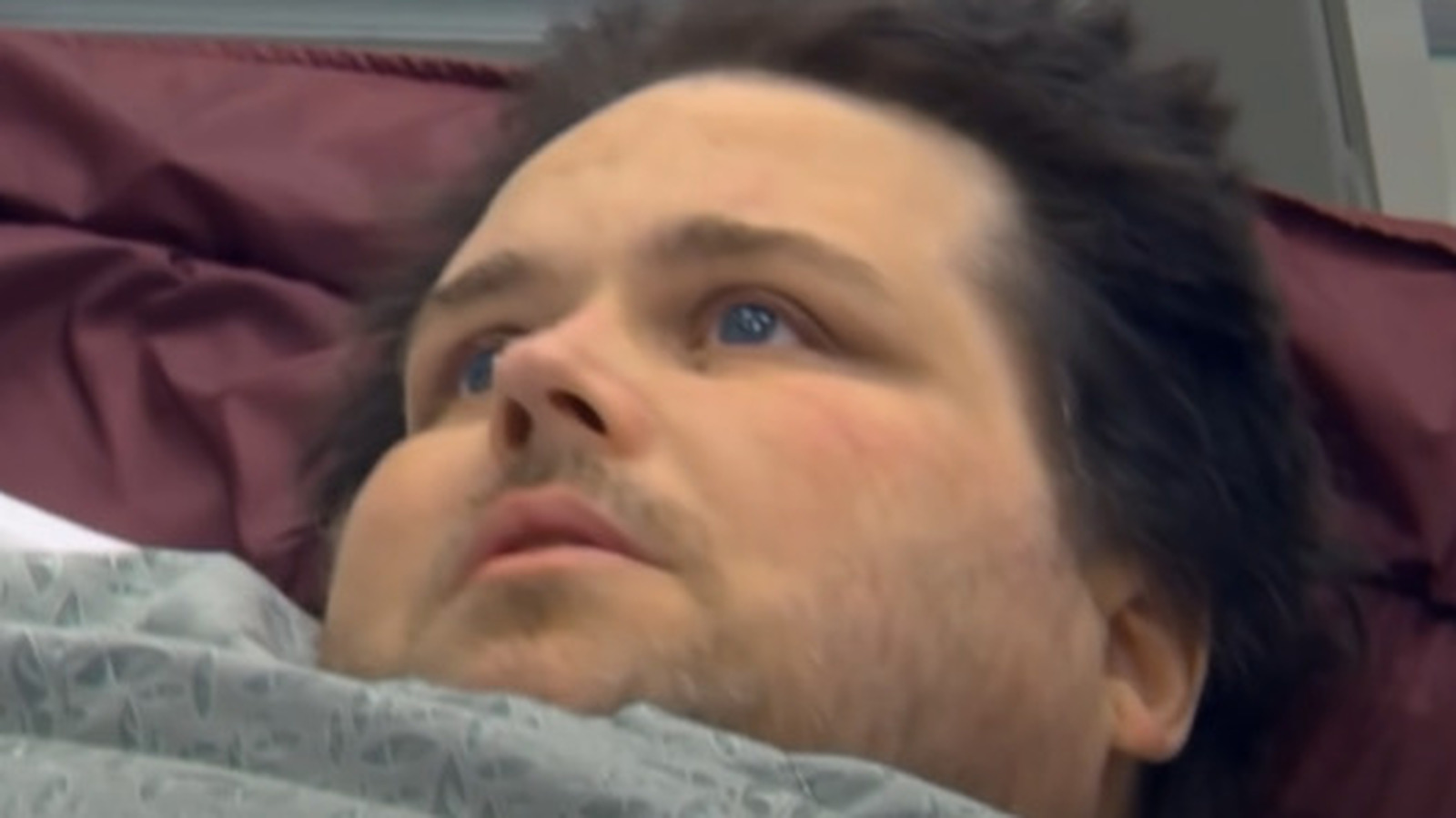
James King’s appearance on the TLC series "My 600-lb Life" remains one of the most discussed, controversial, and ultimately tragic stories in the show’s history. First introduced in Season 5, King’s journey was marked by extreme health complications, a contentious relationship with Dr. Younan Nowzaradan, and the complex dynamics of enabling within his family. Despite multiple interventions, King struggled to lose the weight required for gastric bypass surgery and passed away in April 2020.
1. James King’s Starting Weight and Physical Challenges
When viewers first met James King in Season 5, Episode 11 (which originally aired in 2017), he was in a state of extreme physical distress. At 46 years old, James weighed 791 pounds. His size had left him bedridden for several years, making him entirely dependent on his family for his basic needs.
The episode detailed the severe toll that morbid obesity takes on the human body beyond just mobility issues. James suffered from severe lymphedema and cellulitis, particularly in his legs. Cellulitis is a deep bacterial skin infection that causes redness, swelling, and pain; in James’s case, it had progressed to a point where his skin was weeping and severely scarred. These infections are common in patients with limited mobility because the skin folds can trap moisture and bacteria, and the compromised circulatory system cannot easily fight off the infection.
James’s journey to Houston to see Dr. Nowzaradan was one of the most harrowing transportation segments in the series. Because he could not sit in a standard vehicle or even a regular ambulance for long periods, he had to be transported via a specialized bariatric stretcher and a private transport service. The physical strain of the move nearly caused a medical crisis before he even reached the clinic, highlighting the "point of no return" many patients face when they delay medical intervention until they are completely immobile.
2. The Controversial Role of "Enabling" and Lisa Raisor
One of the most significant aspects of James King’s episode was the focus on his partner, Lisa Raisor. In the context of "My 600-lb Life," an "enabler" is a caregiver who provides the patient with the very food that is harming them, often out of a misguided sense of love, a desire to avoid conflict, or a psychological need to be needed.
Throughout the episode, Dr. Nowzaradan frequently confronted Lisa about the food she was bringing into the house and the hospital. In one of the most infamous scenes in the show’s history, James actually gained weight while under strict hospital supervision. Dr. Nowzaradan accused Lisa of "sneaking" food into the hospital room, a claim that sparked intense debate among viewers.
The psychological complexity of this dynamic is a primary reason why King’s story is studied by those interested in the behavioral health aspects of the show. Lisa’s actions were framed as a barrier to James’s survival, yet the episode also showed the immense pressure placed on caregivers who must manage the demands and emotional outbursts of a patient who is addicted to food. This tension reached a boiling point when Dr. Nowzaradan eventually called Adult Protective Services (APS) to intervene, a rare and extreme step even for this series.
3. The Refusal to Follow Dr. Nowzaradan’s Diet
James King’s story is often cited as a cautionary tale regarding the necessity of mental health intervention alongside physical weight loss. Despite being given a 1,200-calorie, high-protein, low-carb diet, James struggled significantly with compliance. While many participants in the program experience a "wake-up call" after their first meeting with Dr. Nowzaradan, James’s progress was non-linear and eventually regressive.
In his follow-up episode (featured in the "Where Are They Now?" spin-off), it was revealed that James’s weight had actually increased to 840 pounds. This made him one of the few patients in the history of the show to gain substantial weight after entering the program.
The medical implications of this weight gain were catastrophic. Dr. Nowzaradan explained that at his size, any additional weight put immense strain on his heart and kidneys. The episode highlighted the physiological phenomenon where the body’s organs begin to fail under the sheer mass of adipose tissue. For James, the inability to control his caloric intake while his body was in a state of chronic inflammation meant that the window for a safe surgical intervention was rapidly closing.
| Event Metric | Initial Episode (Season 5) | Follow-Up (WATN) |
|---|---|---|
| Starting Weight | 791 lbs | 840 lbs (Peak) |
| Primary Complication | Severe Cellulitis/Lymphedema | Sepsis and Kidney Failure |
| Dietary Compliance | Minimal / High Enabling | Non-compliant |
| Surgical Status | Denied (due to weight gain) | Denied (high risk of mortality) |
| Medical Intervention | Hospitalization for Diet | Intensive Care / Dialysis |
4. The "Death Pool" and Life-Threatening Medical Crises
The James King episode is also remembered for its depiction of multiple near-death experiences. During his time on the show and the subsequent follow-up filming, James faced several bouts of sepsis—a life-threatening reaction to an infection that can cause systemic organ failure.
His health crises became so frequent that his family was often told he might not survive the night. During one particular hospitalization, his kidneys began to fail, requiring him to be placed on dialysis. This was a turning point in the narrative, as it transitioned from a story about weight loss to a story about survival and end-of-life care.
The "James King episode" is technically a multi-part saga if you include the "Where Are They Now?" segments. These segments provided a raw look at the reality of end-stage morbid obesity. Unlike the "success stories" where patients regain their mobility and health, King’s episodes served as a somber documentation of the limits of modern medicine when a patient is unable to break the cycle of addiction and enabling.
5. James King’s Passing and Legacy in the Series
James King passed away on April 3, 2020, at the age of 49 at a hospital in Nashville, Tennessee. His cause of death was later linked to liver and kidney failure resulting from his long-term health struggles. His death was a significant moment for the "My 600-lb Life" community, as he had become one of the most recognizable figures from the middle seasons of the show.
His legacy is one of the most complicated in reality television history. On one hand, his episodes are often re-watched by fans who criticize his lack of effort and Lisa’s enabling. On the other hand, many viewers and medical professionals view his story with deep empathy, seeing it as a tragic example of how childhood trauma (which James discussed in his episode) and food addiction can become a terminal illness.
James’s story also sparked discussions regarding the ethics of the show itself. Some critics argued that filming a man in such a vulnerable and declining state was exploitative, while others argued that showing the "failure" cases is necessary to provide an honest look at the dangers of the obesity epidemic. As of 2026, his story remains a staple of the series' history, often used as a reference point for Dr. Nowzaradan when explaining the "all-or-nothing" stakes of the weight loss program to new patients.
Frequently Asked Questions
Did James King ever get the weight loss surgery?
No, James King never received gastric bypass or sleeve surgery. Dr. Nowzaradan’s protocol requires patients to lose a significant amount of weight on their own to prove they can adhere to a strict diet and to reduce the surgical risk. Because James continued to gain weight and suffered from multiple organ failures, he never became a candidate for the procedure.
What happened to Lisa Raisor after the episode?
Following James's death in 2020, Lisa Raisor remained largely out of the public eye. During the filming of the show, she was the subject of much criticism from the audience for her role in James’s diet. However, it was also revealed that she was under immense pressure and was dealing with her own health and family issues, including the death of her father during James's journey.
Why did Dr. Nowzaradan call Adult Protective Services?
Dr. Nowzaradan called APS because he believed James was being medically neglected and endangered by the food Lisa was providing. In cases of morbid obesity where a patient is bedridden, the caregiver has total control over the patient's nutrition. Dr. Now pointed out that James could not "buy" the food himself, meaning someone was actively contributing to his decline, which he viewed as a form of abuse or neglect.
How many "My 600-lb Life" episodes featured James King?
James King was the primary subject of Season 5, Episode 11. He also appeared in a notable follow-up episode of "My 600-lb Life: Where Are They Now?" in 2018. Brief updates and mentions of his progress (or lack thereof) appeared in various compilation and "extra" episodes throughout the later seasons.
What was James King's final weight?
While his peak weight recorded on the show was around 840 pounds, his weight at the time of his death in 2020 was not officially released to the public. However, reports from the time indicated he had continued to struggle with his weight and health until his final hospitalization.
Is James King's episode still available to watch?
Yes, James King’s episodes are available on various streaming platforms that host TLC content, including Max (formerly HBO Max) and Discovery+. It remains one of the most-watched episodes due to its intense emotional weight and the frequent confrontations between the family and Dr. Now.
Final Recommendation for Viewers
If you are planning to watch or re-watch the James King episode, it is important to approach it with an understanding of the psychological complexities of addiction. While it is easy to focus on the frustration of his non-compliance, his story serves as a critical look at the necessity of comprehensive care—incorporating mental health support, family counseling, and strict medical supervision. For those interested in the medical realities of bariatric care, James King’s journey provides an unfiltered view of the severe consequences of end-stage obesity and the difficult decisions doctors must make when a patient is unable to meet the requirements for life-saving surgery.