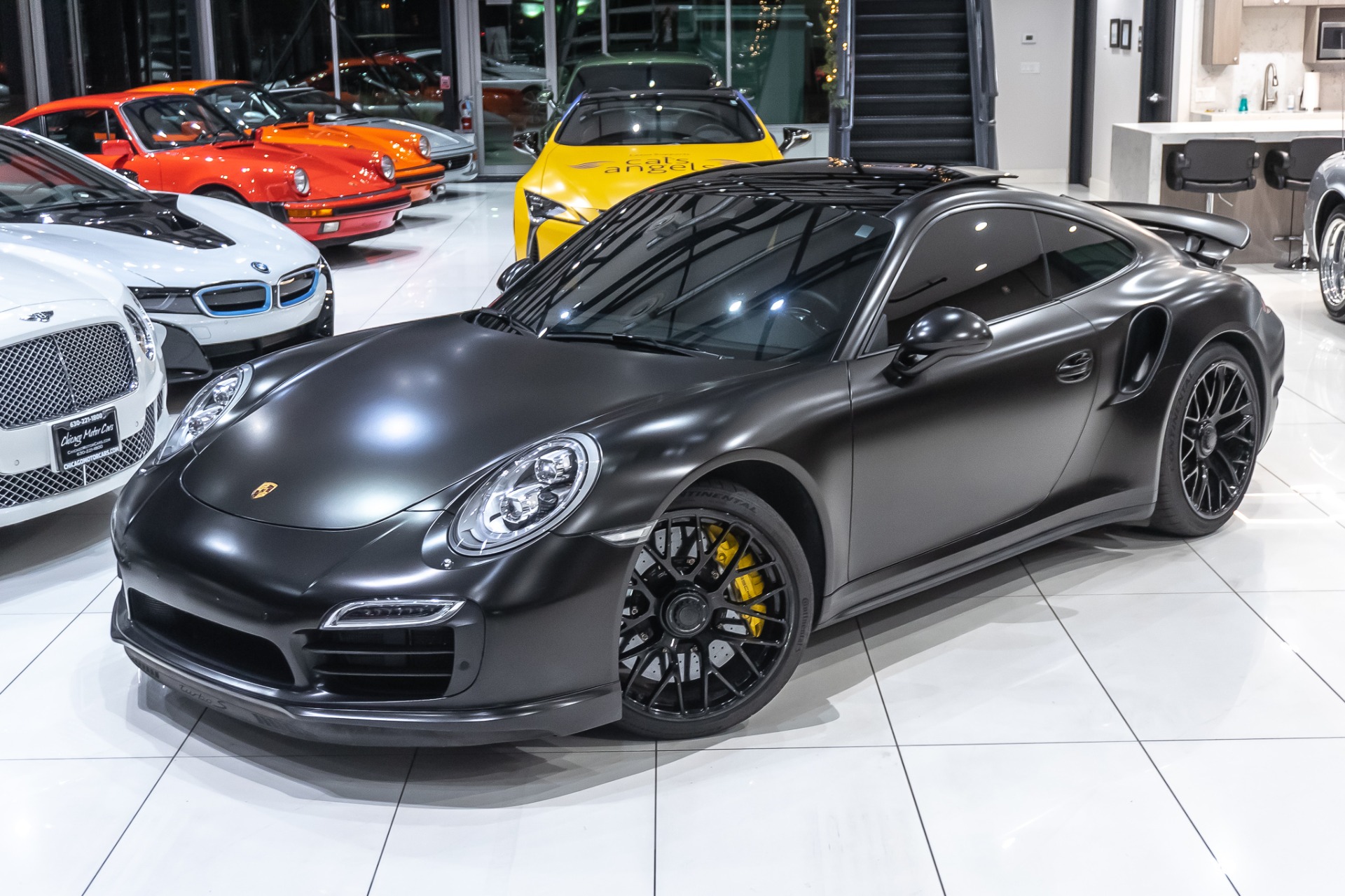
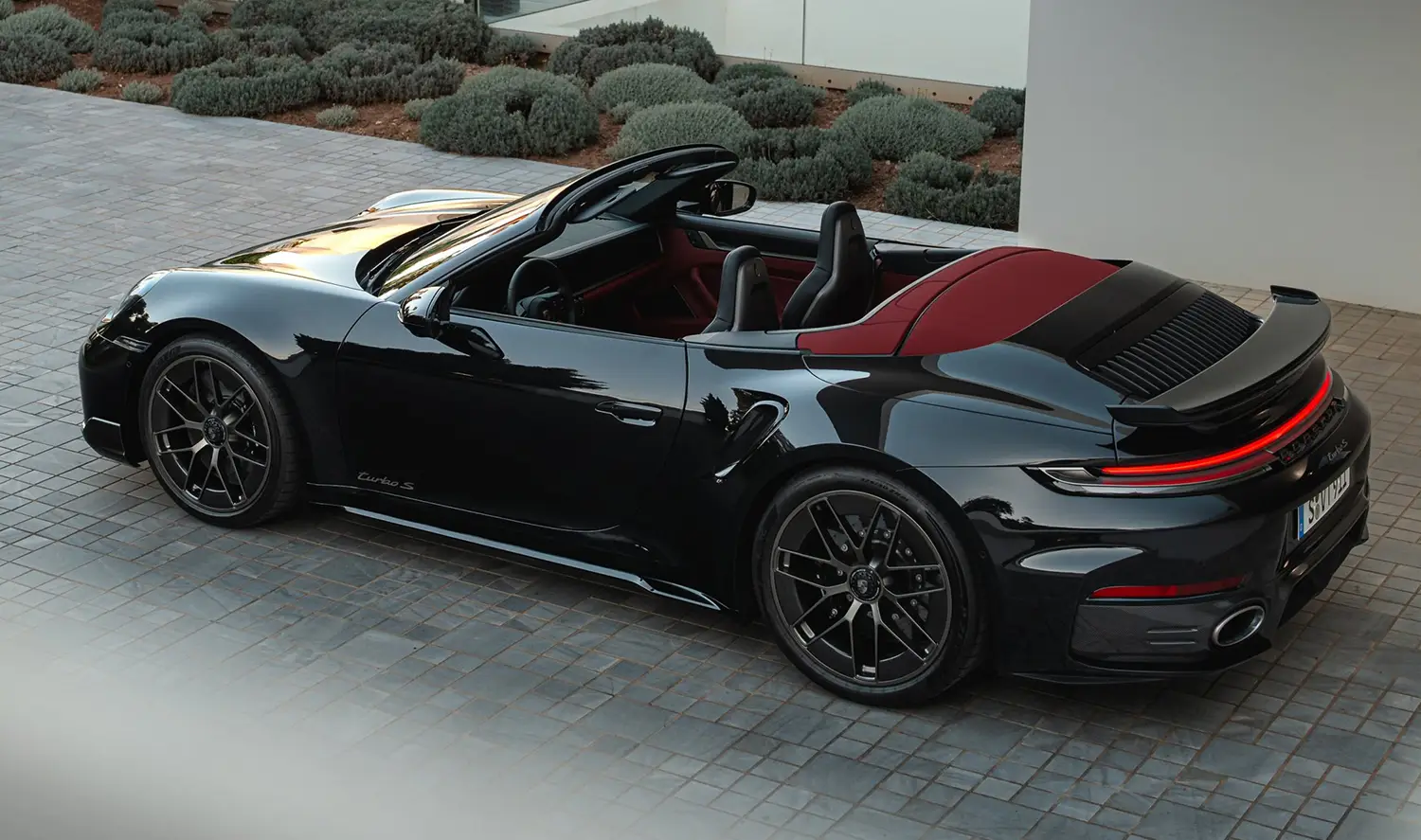
The matte black Porsche 911 Turbo S captivates enthusiasts by emphasizing the car's aggressive silhouette through light-absorbing textures, projecting an aura of "stealth wealth," and providing a high-contrast canvas for technical accents like ceramic brakes. This specific aesthetic transforms a precision-engineered machine into a timeless, understated sculpture of modern performance.
The Evolution of the 911 Turbo S Aesthetic in 2026
As we move through 2026, the Porsche 911 Turbo S continues to hold its position as the definitive "everyday supercar." While the 992 generation has seen various iterations, the core appeal remains its duality: the ability to dominate a racetrack while remaining subtle enough for a professional environment. However, when finished in matte black—whether through factory paint or advanced paint protection films—the car takes on a different persona entirely.
For decades, Porsche enthusiasts favored classic hues like Guards Red, GT Silver, or Racing Yellow. However, the shift toward matte and satin finishes represents a broader cultural movement in the automotive world. It is a move away from the high-gloss, reflective surfaces that have defined luxury for a century, opting instead for a finish that feels industrial, tactical, and profoundly modern. This transition is not merely a trend; it is a refinement of how we perceive speed and power.
1. Highlighting Architectural Form Through Light Absorption
The primary reason a matte black finish is so effective on the 911 Turbo S lies in the science of light. Glossy paint acts like a mirror, reflecting the sky, the road, and surrounding buildings. While this can look stunning, it often "breaks up" the visual lines of the car. The reflections introduce "visual noise" that can distract the eye from the actual shape of the metal.
In contrast, a matte black surface—technically a finish with a high level of microscopic surface roughness that scatters light—absorbs a significant portion of the visible spectrum. For the 911 Turbo S, this is transformative. The 992 generation features significantly wider rear fenders (the "hips") and a more muscular front track than its predecessors.
When light hits a matte black Turbo S, it creates soft, velvet-like gradients across the bodywork. The shadows become deeper, and the highlights are muted. This allows an enthusiast to appreciate the "architectural" quality of the car. You see the flared wheel arches, the active aerodynamics of the front spoiler, and the integrated rear wing as solid, physical volumes rather than a collection of reflections. It emphasizes the 911's iconic "teardrop" profile in its purest form.
2. The Psychology of "Stealth Wealth" and Tactical Elegance
In the luxury market of 2026, there is a growing segment of enthusiasts who prefer "stealth wealth" over "loud luxury." A Porsche 911 Turbo S is, by any standard, a loud car in terms of performance. It produces upwards of 640 horsepower and can reach 60 mph in under 2.5 seconds. However, a matte black finish allows all that capability to hide in plain sight.
Matte black is often associated with "tactical" equipment, aerospace technology (like the SR-71 Blackbird), and high-end industrial design. By applying this to a Porsche, the owner signals a preference for functionalism over flashiness. It creates a "menacing" presence that is nonetheless sophisticated.
Enthusiasts often describe the matte black Turbo S as looking "milled from a single block of basalt." This sense of solidity and purpose is particularly captivating because it aligns with Porsche’s own engineering philosophy: form follows function. There is no need for a bright color to attract attention when the car’s stance and mechanical pedigree speak for themselves.
3. High-Contrast Highlighting of Technical Components
One of the most visually striking aspects of a matte black Porsche is how it serves as a backdrop for the car’s technical highlights. The 911 Turbo S is a masterpiece of engineering, and many of its most expensive components are tucked away behind the wheels or integrated into the body.
When the body of the car is a non-reflective matte black, other materials and colors "pop" with incredible intensity.
- PCCB Calipers: The Porsche Ceramic Composite Brakes (PCCB) typically come with signature yellow calipers. Against a matte black body, these calipers become a focal point, signaling the car's immense stopping power.
- Carbon Fiber Weave: The Turbo S often features carbon fiber accents on the side mirrors, roof, and rear diffuser. The contrast between the matte paint and the intricate, gloss-coated weave of the carbon fiber creates a sophisticated interplay of textures.
- LED Matrix Lighting: In 2026, Porsche’s lighting technology is more advanced than ever. The four-point daytime running lights and the seamless rear light bar look like jewels set into a dark setting. The lack of body reflections makes the illumination appear sharper and more "digital."
4. The Durability and Materiality of Modern Matte Technology
Historically, matte paint was a nightmare to maintain. It couldn't be waxed, scratches couldn't be buffed out, and bird droppings could permanently etch the finish. However, as of 2026, the technology behind these finishes has matured significantly, which has contributed to their rise in popularity.
Many enthusiasts now opt for "Satin Paint Protection Film" (PPF) over a factory black car. This provides a twofold benefit: it achieves the desired matte/satin aesthetic while providing a "self-healing" barrier against rock chips and environmental damage. This practical side of the aesthetic appeals to the Porsche owner who actually intends to drive their car rather than keeping it in a climate-controlled garage.
Furthermore, factory matte finishes (often called "Satin" or "Magno" in the broader industry) now utilize advanced clear coats that are much more resilient than the flat paints of a decade ago. According to Porsche’s official paint technology documentation, these finishes are tested against extreme UV exposure and chemical contaminants to ensure they meet the brand’s longevity standards.
5. Cultural Connection to Tuning and Customization
The matte black aesthetic has deep roots in the world of high-end automotive tuning. Brands like TechArt and Brabus popularized the "murdered out" look—a style where the car is entirely blacked out, including the emblems, wheels, and trim.
For the 911 Turbo S enthusiast, a matte black finish connects the car to this world of bespoke customization. It makes the car feel less like a mass-produced product and more like a personalized "special project." This sense of exclusivity is a major driver for enthusiasts. Even though the Turbo S is a flagship model, seeing one in matte black feels like witnessing a rare variant or a limited-edition "Paint to Sample" (PTS) masterpiece.
Technical Specifications: 2026 Porsche 911 Turbo S (992 Gen)
To understand why this aesthetic is so prized, one must consider the hardware underneath. The matte black finish is the "skin" on what is arguably the most capable all-weather supercar in existence.
| Feature | Specification (2026 Base Model) |
|---|---|
| Engine | 3.7L Twin-Turbocharged Flat-6 |
| Horsepower | 640 hp (Standard) / up to 675 hp (with Performance Pack) |
| Torque | 590 lb-ft |
| 0-60 mph | 2.6 Seconds (Manufacturer Claim) |
| Top Speed | 205 mph |
| Drivetrain | All-Wheel Drive (AWD) with PTM |
| Transmission | 8-Speed Porsche Doppelkupplung (PDK) |
| Brakes | 10-piston front / 4-piston rear (Ceramic) |
The contrast between this raw, mechanical violence and the silent, dark matte exterior is what creates the "captivating" tension that enthusiasts love. It is the automotive equivalent of a heavyweight boxer in a perfectly tailored tuxedo.
Maintaining the Allure: Caring for a Matte Finish
Owning a matte black Porsche requires a specific regimen. Because you cannot use traditional waxes or polishes (which would add unwanted shine), owners must use specialized products.
- Matte-Specific Cleansers: Use pH-neutral soaps that do not contain gloss-enhancing oils or waxes.
- No Mechanical Polishing: Never use a high-speed buffer or orbital polisher on a matte surface. This would level the microscopic "peaks" of the paint, creating a shiny spot that cannot be reversed.
- Chemical Decontamination: Use iron removers and specialized clay bars designed for matte finishes to remove embedded road grime.
- Ceramic Coating: Applying a ceramic coating specifically formulated for matte paint can help repel water and dirt without changing the visual texture of the finish. This is highly recommended for 2026 models to preserve resale value.
The Resale Value Consideration
In the Porsche world, "Paint to Sample" and unique finishes often command a premium on the secondary market. While "flat black" was once a niche preference, the "Matte Black/Satin Black" look has become a staple for the 911 Turbo S.
According to market data from Bring a Trailer and other high-end auction houses, well-maintained matte finishes—especially those protected by PPF—tend to hold their value exceptionally well. They appeal to a younger demographic of collectors who value modern aesthetics over traditional 1970s and 80s heritage colors.
Frequently Asked Questions
Is matte black paint the same as a matte wrap?
No. A matte black paint job is a permanent finish applied at the factory or a professional body shop involving a matte-clear coat. A wrap is a vinyl film applied over the original paint. In 2026, most enthusiasts prefer "Satin PPF," which is a thick, protective film that turns the original gloss paint into a matte finish while protecting it from damage.
Can you wash a matte black Porsche in an automatic car wash?
It is strongly discouraged. Automatic car washes use brushes or curtains that can cause "burnishing" or fine scratches on the matte surface. Because these scratches cannot be polished out, the only way to fix them is to repaint the entire panel. Hand washing with the two-bucket method is the standard for matte vehicle care.
Does matte black make the car hotter in the summer?
While black surfaces do absorb more heat than lighter colors, the difference in cabin temperature for a modern Porsche is mitigated by advanced thermal-insulated glass and high-efficiency climate control systems. The matte texture itself does not significantly increase heat absorption compared to gloss black.
What is the cost difference between gloss and matte factory paint?
Porsche’s "Paint to Sample" or "Special Color" options, which include various matte and satin finishes, typically range from $3,000 to over $12,000 depending on the specific chemistry and application process. As of 2026, these options remain some of the most popular upgrades for the Turbo S.
Does a matte finish hide dirt better than gloss?
Actually, matte black tends to show dust and water spots more easily than lighter colors, but it is better at hiding "swirl marks" (the spider-web-like scratches often seen on gloss black cars in the sun). Because the surface doesn't reflect light directly, those fine scratches remain invisible to the naked eye.
Final Recommendation for Enthusiasts
For those considering a 2026 Porsche 911 Turbo S, the choice of a matte black finish should be seen as a commitment to a specific design philosophy. It is a choice for those who value the sculptural integrity of the 911's design and who want their vehicle to project a sense of quiet authority.
If you are a driver who enjoys the "ritual" of car care and wants a vehicle that stands out by being understated, the matte black Turbo S is an unparalleled choice. It captures the imagination because it refuses to shout, yet it is impossible to ignore. To ensure the best long-term experience, we recommend ordering the car in a standard black and immediately applying a high-quality Satin Paint Protection Film. This provides the captivating look enthusiasts crave with the durability required for a car designed to be driven.