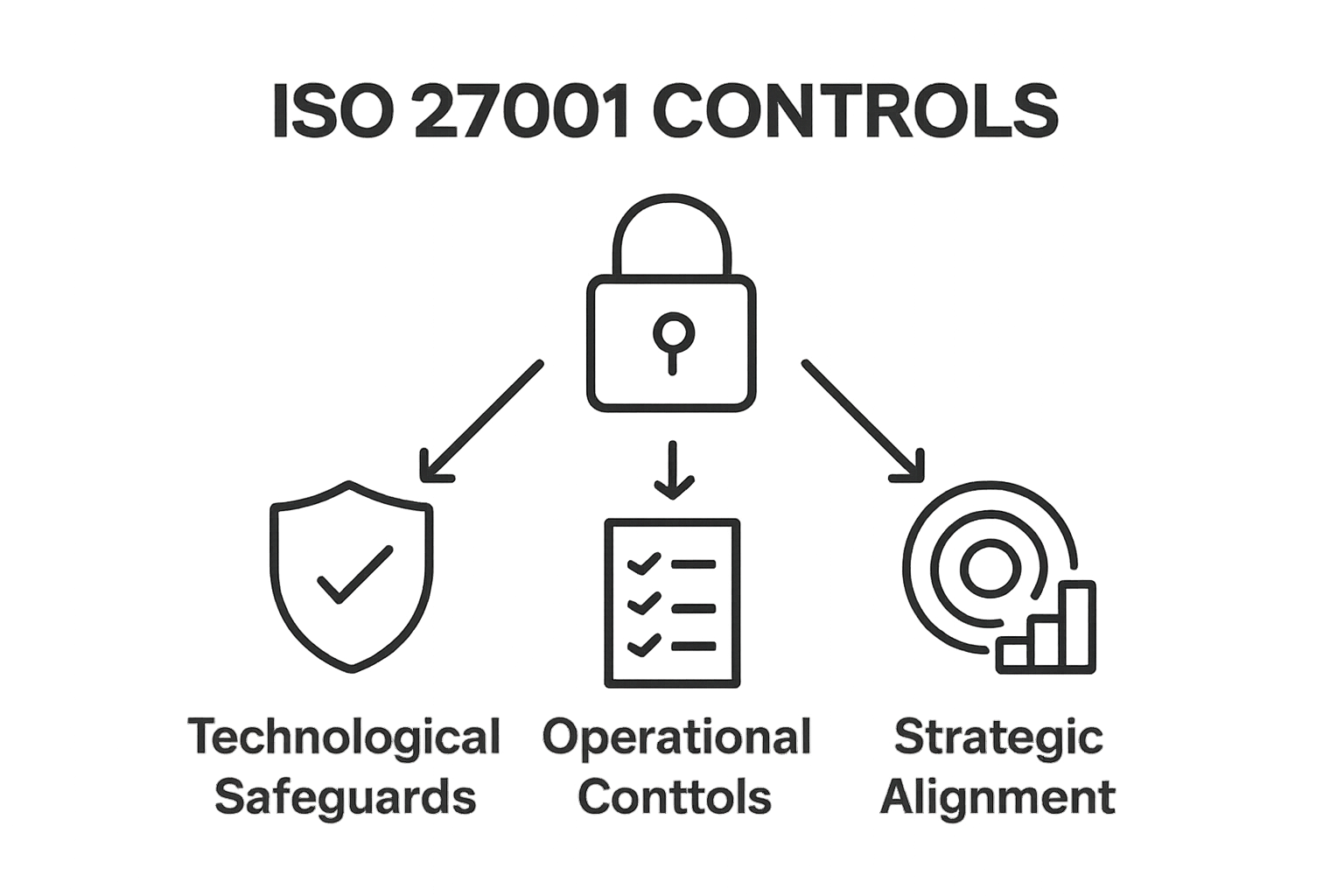
Implementing ISO/IEC 27001 security is a complex organizational undertaking that requires addressing leadership buy-in, resource constraints, cultural resistance, scoping complexities, and maintaining continuous operational compliance over time. Organizations often underestimate these hurdles during their initial preparation for information security management system (ISMS) certification.
ISO/IEC 27001 is the international standard for information security management systems (ISMS). Achieving and maintaining certification proves to stakeholders, customers, and regulatory bodies that an organization systematically manages information security risks. However, the path from initial gap analysis to a successful Stage 2 audit is fraught with administrative, technical, and cultural obstacles. Understanding these primary roadblocks allows project teams to allocate budgets accurately, set realistic timelines, and secure the necessary executive backing before formal implementation begins.
1. Securing Executive Buy-in and Budget Allocation
The most common point of failure in an ISO 27001 implementation occurs before technical controls are even discussed: the lack of sustained executive sponsorship. Information security is frequently viewed by C-suite executives and boards of directors as an expensive IT project rather than a fundamental business enabler. Without genuine executive backing, security teams struggle to secure adequate funding, cross-departmental cooperation, and the authority needed to enforce policy changes.
The Impact of Passive Support
Passive support—where leadership signs off on a budget once but refuses to champion the cultural shift—leads to stalled projects. ISO 27001 requires input and resource allocation from legal, human resources, facilities, and executive management. If the Chief Executive Officer (CEO) or Chief Information Security Officer (CISO) does not actively communicate that the ISMS is a top corporate priority, middle managers will deprioritize security tasks in favor of day-to-day operational deliverables.
Overcoming the Budget Hurdle
To secure and maintain executive buy-in, project leaders must translate compliance metrics into business risk language. Instead of focusing solely on technical controls, proposals should emphasize:
- Protection of intellectual property and client data assets.
- Reduction of potential legal and regulatory liabilities.
- Enabling market access to enterprise-level clients who mandate ISO 27001 certification as a prerequisite for doing business.
2. Defining and Scoping the ISMS Boundaries
Defining the precise scope of the Information Security Management System is one of the most technically challenging steps in the implementation lifecycle. Many organizations make the mistake of either trying to wrap the standard around their entire global enterprise all at once—which creates an administrative nightmare—or scoping the ISMS so narrowly that it fails to satisfy key customer requirements or auditor expectations.
Common Scoping Pitfalls
- Over-scoping: Including legacy systems, auxiliary business units, or physical locations that have little to do with core product delivery, unnecessarily multiplying the number of required risk assessments and control implementations.
- Under-scoping: Excluding critical supporting functions, such as third-party cloud hosting providers, outsourced human resources, or software development lifecycles, which immediately triggers non-conformities during external audits.
Best Practices for Effective Scoping
The scope must be documented in alignment with the organization’s context of the organization (Clause 4) and stakeholder requirements (Clause 4.2). It should reflect products, services, physical sites, and supporting information assets. Clear boundaries must be established so that internal teams and external auditors understand precisely what is—and what is not—covered by the certification certificate.
3. Cultural Resistance and Employee Adoption
ISO 27001 implementation fundamentally alters how employees handle data, access systems, and report incidents. Technical controls fail if the human element refuses to cooperate. Employees often view security policies as bureaucratic hurdles that slow down productivity, leading to workarounds such as shadow IT, unapproved file-sharing tools, or password reuse.
Shifting from Compliance to Security Culture
Overcoming resistance requires moving away from compliance-box-ticking toward a genuine culture of security awareness. This demands structured, role-based training programs rather than a single annual slide deck presentation.
- Initial Awareness Training
- Role-Specific Security Procedures
- Continuous Phishing & Incident Simulation
- Feedback Loop & Policy Refinement
Human Resources must be integrated into the ISMS project team to ensure that security responsibilities are embedded into job descriptions, onboarding workflows, and offboarding procedures. When employees understand why a control exists—such as why multi-factor authentication (MFA) is mandatory—adherence rates improve significantly.
4. Conducting Comprehensive Risk Assessments and Statement of Applicability (SoA)
Clause 6.1.2 of ISO 27001 mandates a formal risk assessment process. Organizations frequently struggle with establishing a repeatable, defensible methodology for identifying, analyzing, and evaluating information security risks. Furthermore, mapping those risks correctly to the security controls listed in Annex A often results in a flawed Statement of Applicability (SoA).
Flaws in Risk Methodology
- Subjectivity: Relying purely on gut feeling rather than defined impact and likelihood criteria.
- Asset Incompleteness: Failing to maintain an accurate, up-to-date asset inventory, making it impossible to evaluate risks associated with unmapped software, hardware, and data repositories.
- Disconnect from Annex A: Selecting controls arbitrarily without linking them back to specific risk treatment decisions (accept, mitigate, transfer, or avoid).
Mastering the Statement of Applicability
The SoA is a core audit artifact. It must list all Annex A controls, state whether each is applicable or not, and provide clear justification for exclusions. Auditors scrutinize the SoA intensely; an unjustified exclusion of a standard control will result in an immediate non-conformity.
5. Transitioning from Point-in-Time Setup to Continuous Compliance
Achieving certification (passing the Stage 2 audit) is not the finish line; it is the starting line. Many organizations treat ISO 27001 as an annual project where they scramble to gather evidence, update policies, and review logs only in the weeks leading up to the surveillance audit. This approach defeats the purpose of the standard and leads to severe operational fatigue.
The Maintenance Burden
Maintaining an ISMS requires continuous operational discipline, including:
- Conducting internal audits on a regular, scheduled basis (Clause 9.2).
- Performing management reviews to assess ISMS performance and resource adequacy (Clause 9.3).
- Managing corrective actions when control failures or security incidents occur (Clause 10).
- Reviewing risk assessments periodically to account for new vulnerabilities, business expansions, or infrastructure changes.
Comparison of Approach: Point-in-Time vs. Continuous Compliance
| Implementation Dimension | Point-in-Time Compliance (Ineffective) | Continuous Compliance (Effective) |
|---|---|---|
| Audit Preparation | Scramble mode weeks before the audit. | Ongoing, automated evidence collection. |
| Risk Management | Static spreadsheet updated annually. | Dynamic process tied to change management. |
| Policy Enforcement | Enforced only during audit cycles. | Embedded in daily operations and HR workflows. |
| Internal Audits | Rushed, checkbox exercise right before review. | Distributed schedule executed by trained internal auditors. |
Frequently Asked Questions
How long does it typically take to implement ISO 27001?
For most small to mid-sized organizations, a complete implementation takes between six to twelve months. The timeline depends heavily on organizational size, existing security maturity, the complexity of the defined scope, and the availability of dedicated personnel.
Can an organization implement ISO 27001 without external consultants?
Yes, organizations with robust internal compliance teams and deep information security expertise can implement the standard independently. However, external consultants or fractional CISOs are frequently hired to accelerate the process, provide objective gap analysis, and conduct pre-certification mock audits.
What is the difference between Stage 1 and Stage 2 audits?
The Stage 1 audit is a document review and readiness assessment where the auditor evaluates your ISMS design, policies, and scope definition. The Stage 2 audit is a detailed operational assessment where the auditor examines objective evidence to verify that your implemented controls operate effectively in practice.
How often are surveillance audits conducted after certification?
Once certification is granted, the issuing certification body conducts surveillance audits annually for two years. A recertification audit is then required in the third year to renew the three-year certificate cycle.
Are Annex A controls mandatory for every ISO 27001 implementation?
Every control in Annex A must be evaluated during the risk assessment process. However, specific controls can be excluded if valid justification is provided and documented within the Statement of Applicability—such as controls related to physical security if the organization is entirely remote.
Conclusion and Next Actions
Successfully navigating the implementation of ISO 27001 security requires treating the ISMS as an ongoing business management framework rather than a technical checklist. Begin by securing explicit executive sponsorship and establishing a realistic scope that aligns with strategic business goals. Next, build a defensible risk assessment methodology, invest in training to foster a security-conscious culture, and design your processes for continuous operational maintenance rather than frantic annual audit preparations. Engaging early with an accredited certification body for a gap analysis will provide a reliable baseline for your ongoing compliance journey.