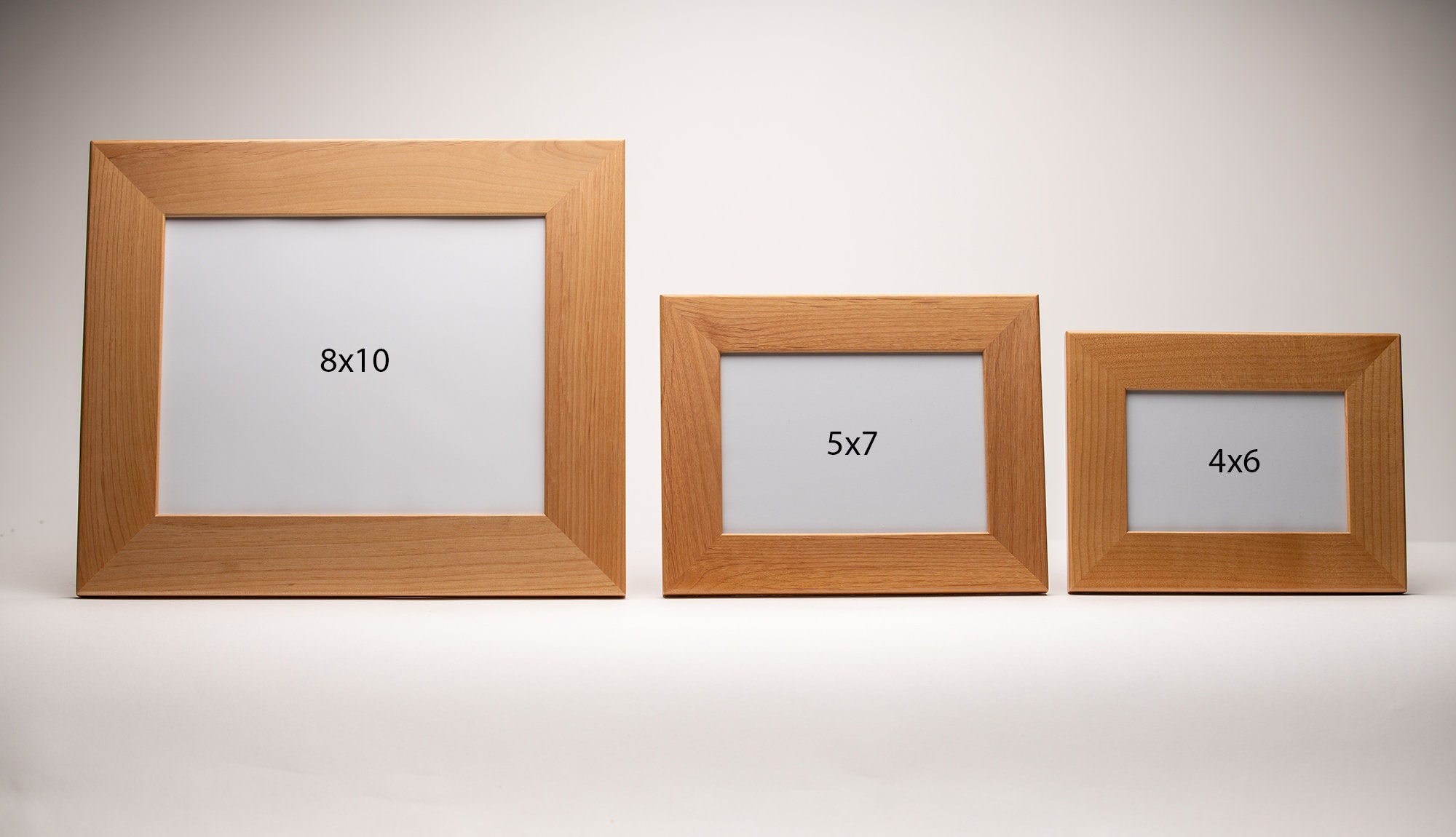
The 4x6 print is the "winner" for high-volume snapshots and standard photo albums because it matches the 2:3 aspect ratio of most digital cameras. However, the 5x7 is superior for greeting cards and desk portraits, while the 8x10 is the industry standard for professional wall displays and formal portraiture.
Choosing the right photo size is more than a matter of "bigger is better." It is a technical decision involving aspect ratios, resolution, and composition. When you select a print size that does not match your camera's sensor ratio, you risk losing parts of your image to cropping. Understanding the nuances of 4x6, 5x7, and 8x10 ensures that your memories are preserved exactly as you framed them through the viewfinder.
The Technical Foundation: Aspect Ratios Explained
Before comparing individual sizes, we must address the concept of the aspect ratio. This is the proportional relationship between the width and the height of an image. If the aspect ratio of your digital file does not match the aspect ratio of the paper you are printing on, the printing software will be forced to crop the edges or leave white borders (letterboxing).
Most modern DSLR and mirrorless cameras capture images in a 2:3 aspect ratio. This ratio is a legacy of 35mm film. Smartphones, conversely, often default to a 4:3 aspect ratio, which mimics older television screens and computer monitors.
When we look at our three contenders:
- 4x6 prints have a 2:3 aspect ratio.
- 5x7 prints have a 5:7 aspect ratio.
- 8x10 prints have a 4:5 aspect ratio.
Because these ratios differ, an image that looks perfect in a 4x6 format will require significant cropping to fit into an 8x10 frame. Specifically, you would lose two inches of image data along the longer side if you forced a 2:3 image into a 4:5 print. This technical reality is the primary driver behind which size "wins" for a specific photograph.
4x6: The Universal Standard for Snapshots
The 4x6 inch print is the most common photo size in the world. Its popularity is rooted in its perfect alignment with the 35mm film format and modern full-frame or APS-C digital sensors. If you are printing "vacation photos" or "everyday moments," the 4x6 is almost always the best choice.
Why 4x6 Wins for Volume
In 2026, the 4x6 remains the most cost-effective printing option. Whether using a high-end professional lab or a local kiosk, the price per print for a 4x6 is significantly lower than any other size. This makes it the only viable option for printing hundreds of photos for physical archives.
Furthermore, the physical dimensions of 4x6 (approximately 10x15 cm) have dictated the design of the photo industry for decades. Most standard photo albums are built specifically to house 4x6 prints. Using any other size for a traditional "flip-through" album usually requires custom mounting or adhesive pages, which are more labor-intensive.
Compositional Advantages
Because 4x6 matches the 2:3 sensor ratio, what you see in your camera's LCD is exactly what you get on the paper. There is no guesswork regarding whether someone’s head will be cut off or if a scenic horizon will be shortened. For photographers who compose their shots tightly—filling the frame with subjects—the 4x6 is the safest way to ensure the integrity of the original vision.
5x7: The Elegant Middle Ground
The 5x7 print occupies a unique space in the photography world. It is slightly larger and "sturdier" looking than a 4x6, making it a favorite for stationary and specialized displays.
Best Use Cases for 5x7
The 5x7 is the "goldilocks" size for many. It is large enough to be noticed on a mantelpiece or desk but small enough to not require dedicated wall space.
- Greeting Cards and Invitations: Most high-end wedding invitations and "Save the Date" cards are designed around the 5x7 format.
- School Portraits: Many "standard" school portrait packages center on the 5x7 as the primary gift size for grandparents.
- Desk Frames: A 4x6 often feels too small for a standalone frame on a large office desk, whereas a 5x7 provides enough presence to be a focal point.
The Cropping Challenge
The 5x7 ratio is neither 2:3 nor 4:3. It sits in its own category. This means that nearly every digital photo printed as a 5x7 will undergo some level of cropping. If you are printing a group photo where people are standing close to the edges of the frame, a 5x7 print might accidentally crop out the people on the ends. When choosing this size, always preview the crop in your printing software to ensure essential elements remain visible.
8x10: The Professional Choice for Wall Art
If 4x6 is for the album and 5x7 is for the desk, the 8x10 is for the wall. In the hierarchy of photo sizes, 8x10 is the first size that starts to feel like "art" rather than a "snapshot."
Impact and Detail
An 8x10 print offers nearly double the surface area of a 5x7 and more than triple the area of a 4x6. This increased real estate allows fine details to become visible. In a portrait, this means you can see the texture of clothing and the sparkle in the subject's eyes. In a landscape, it allows the viewer to distinguish individual leaves or distant landmarks that would be a blur on a 4x6.
The Standard for Framing
The 8x10 size is a retail powerhouse. If you walk into any home decor store, the 8x10 frame is the most widely available size. It is also the standard size for "matted" frames. A common professional display technique is to place an 8x10 print inside an 11x14 frame with a white mat. This creates a gallery-style look that is difficult to replicate with smaller sizes.
The "Heavy" Crop
The 8x10 uses a 4:5 aspect ratio. For a photographer shooting on a standard DSLR (2:3), this is the most aggressive crop among the standard sizes. You effectively lose 1/6th of your image's length. This is why professional portrait photographers often "shoot loose"—meaning they leave extra space around their subjects—knowing that the client will likely want an 8x10 print that will cut off the top and bottom (or sides) of the digital file.
Comparison Table: 4x6 vs. 5x7 vs. 8x10
| Feature | 4x6 Inch Print | 5x7 Inch Print | 8x10 Inch Print |
|---|---|---|---|
| Aspect Ratio | 2:3 | 5:7 | 4:5 |
| Best For | Bulk prints, albums, postcards | Greeting cards, desk portraits | Wall decor, formal portraits |
| Native Sensor Match | DSLR, Mirrorless, 35mm Film | None (Requires cropping) | Professional Medium Format |
| Common Cost (2026) | $0.15 - $0.35 | $0.90 - $2.50 | $3.50 - $9.00 |
| Framing Ease | High (mostly plastic/casual) | Moderate | Very High (Gallery standard) |
| Resolution Needed | 1200 x 1800 pixels | 1500 x 2100 pixels | 2400 x 3000 pixels |
Managing the "Crop Factor" in 2026
When deciding which size wins for your specific photo, you must evaluate the "breathing room" in your composition. With the high-resolution sensors available in 2026, pixel count is rarely the limiting factor for these small-to-medium sizes. Instead, the limiting factor is the compositional intent.
When 4x6 Wins on Composition
If your subject is centered and the background is essential to the story—such as a person standing in front of a wide mountain range—the 4x6 wins because it preserves that wide, cinematic 2:3 field of view.
When 8x10 Wins on Composition
If your subject is a vertical portrait of a single person, the 8x10 often wins because the 4:5 ratio is more "stout" and pleasing to the eye for human figures. It removes unnecessary dead space at the top or bottom of the frame that is often present in 2:3 vertical shots.
Resolution and Print Quality Requirements
To ensure a "winning" print, you must provide the lab with enough data. While digital interpolation has improved by 2026, the "300 DPI" (dots per inch) rule remains the gold standard for high-quality physical prints.
- For a 4x6: Your image should be at least 1.2 megapixels (1200 x 1800 pixels). Most modern phones exceed this by 10 or 20 times, so quality is rarely an issue.
- For a 5x7: You need at least 3.1 megapixels (1500 x 2100 pixels).
- For an 8x10: You need at least 7.2 megapixels (2400 x 3000 pixels).
If you attempt to print a low-resolution social media thumbnail as an 8x10, the result will be pixelated and soft. Always go back to the original source file (the one directly from the camera or cloud storage) before printing larger sizes.
Framing and Interior Design Considerations
The "winner" of the size debate is often decided by the wall or surface where the photo will live.
Creating a Gallery Wall
If you are designing a gallery wall, a mix of these sizes is usually the most aesthetically pleasing. A common mistake is to print everything in one size (like all 4x6s), which can look cluttered and "busy." Instead, use an 8x10 as an anchor piece and surround it with 5x7s and 4x6s to create a visual hierarchy.
The Role of Matting
Matting is the cardboard border that sits between the photo and the glass.
- A 4x6 with a mat usually goes into a 5x7 or 8x10 frame.
- A 5x7 with a mat usually goes into an 8x10 or 11x14 frame.
- An 8x10 with a mat almost always goes into an 11x14 frame.
Adding a mat makes any size look more expensive and professional. If you want a 5x7 to "win" against an 8x10 in terms of visual impact, place it in a large frame with a wide, 3-inch mat. This draws the eye inward and gives the small photo a sense of importance.
Common Mistakes When Choosing Sizes
1. Ignoring the "Bleed" and Frame Lip
Every frame has a "lip"—the small inner edge that holds the glass and the photo in place. This lip usually covers about 1/8th of an inch of your photo on all sides. If you have text or a person's chin right at the very edge of your 4x6 print, it may be hidden once the photo is framed. Always leave a tiny bit of margin.
2. Over-Cropping in Post-Processing
If you crop your photo heavily in an editing app before printing, you reduce the available pixels. If you then try to print that cropped image as an 8x10, you may see a significant drop in quality. Always crop with the final print size in mind.
3. Mixing Ratios in a Single Album
If you are buying a pocket-sleeve album, ensure all your prints are 4x6. While you can technically shove a 3.5x5 into a 4x6 sleeve, it will slide around and look unfinished. Consistency is key for physical archiving.
Frequently Asked Questions
Is 5x7 significantly bigger than 4x6?
Yes, a 5x7 print provides about 45% more surface area than a 4x6. While an extra inch in each direction sounds small, it significantly changes the visual weight of the photo, making the subjects appear much clearer and more prominent.
Why do 8x10 frames seem more common than 4x6 frames?
8x10 is considered a "standard portrait" size for wall hanging, whereas 4x6 is considered a "snapshot" size for albums. Retailers stock more 8x10 frames because they are the preferred size for displaying single, high-value images like wedding photos or family portraits.
Can I print a smartphone photo as an 8x10?
Yes, most smartphones from the last five years (up to 2026) capture images at 12 megapixels or higher. This is more than enough resolution for a crisp 8x10 print. However, because phone photos are usually a 4:3 ratio, you will still need to crop the image slightly to fit the 4:5 ratio of the 8x10.
Which size is better for black and white photos?
The 8x10 is often better for black and white photography. Monochrome images rely heavily on texture, contrast, and fine detail to create impact. The larger surface area of an 8x10 allows those tonal gradations to show more smoothly than a cramped 4x6.
Does 4x6 or 5x7 fit better in a mailer?
The 4x6 is the standard size for postcards and fits perfectly into a standard C6 envelope. The 5x7 requires an A7 envelope. If you are watching your postage costs or using standard greeting card sizes, the 5x7 is the professional choice, but 4x6 is more "standard" for casual mail.
Final Recommendation: How to Choose
To decide which photo size wins for your project, follow this simple workflow:
- Choose 4x6 if you are printing more than 20 photos, filling a traditional album, or if your photo composition is "tight" and cannot afford any cropping. It is the best choice for everyday memories and keeping costs low.
- Choose 5x7 if you are framing a photo for a desk, bookshelf, or small side table. It is also the ideal choice for "thank you" notes or invitations where you want the photo to feel substantial but not overwhelming.
- Choose 8x10 if the photo is a high-quality portrait or landscape that you intend to hang on a wall. It provides the most "professional" look, especially when paired with a mat and a larger frame.
For most people, the 4x6 remains the overall winner for versatility, but the 8x10 wins for emotional impact. Always check your crop preview before hitting "order" to ensure your favorite memories aren't cut off by the edges of the paper.