To successfully file for Chapter 7 bankruptcy in 2026, you must pass the Means Test to prove your income is below the state median, complete mandatory credit counseling from an approved agency, wait at least eight years since a prior Chapter 7 discharge, and provide a full disclosure of all assets and financial history.
Chapter 7 bankruptcy, often referred to as "liquidation" bankruptcy, remains the most common path for individuals seeking a fresh financial start. It is designed to wipe out most unsecured debts—such as credit card balances, medical bills, and personal loans—allowing the debtor to emerge with a clean slate. However, the process is governed by strict federal laws under the United States Bankruptcy Code. These rules ensure that the system is not abused and that only those truly in need of relief can access it.
Understanding the specific criteria is essential because a mistake in the filing process or a failure to meet eligibility requirements can lead to the dismissal of your case, leaving you still liable for your debts and potentially barred from filing again for a specific period. As we navigate the legal landscape of 2026, four primary rules dictate whether an individual can successfully navigate a Chapter 7 filing.
Rule 1: The Means Test and Income Eligibility
The first and perhaps most significant hurdle for any potential filer is the Means Test. Established by the Bankruptcy Abuse Prevention and Consumer Protection Act (BAPCPA), the Means Test is a two-part evaluation designed to determine if your income is low enough to qualify for Chapter 7 or if you have enough "means" to pay back some of your debt through a Chapter 13 repayment plan.
Part One: The Median Income Comparison
The initial step involves comparing your current monthly income (an average of the six months leading up to your filing) against the median income for a household of your size in your state. If your income falls below the state median, you generally pass the test automatically and can proceed with a Chapter 7 filing without further complex calculations.
The median income figures are updated periodically by the U.S. Census Bureau. In 2026, these figures reflect the ongoing economic shifts and cost-of-living adjustments. It is important to look up the most recent data provided by the U.S. Trustee Program to ensure you are using the correct threshold for your specific jurisdiction.
Part Two: The Disposable Income Calculation
If your income is above the state median, you are not immediately disqualified, but you must complete the second part of the Means Test. This involves subtracting "allowable expenses" from your gross income. Allowable expenses are not necessarily what you actually spend; instead, they are often based on IRS National and Local Standards for food, clothing, housing, and transportation.
After these deductions, if your remaining "disposable income" exceeds a certain threshold over a five-year period, the court presumes that you are "abusing" the system by filing for Chapter 7. In such cases, you may be forced to convert your case to Chapter 13 or face dismissal.
Rule 2: Mandatory Credit Counseling and Debtor Education
The federal government requires that every individual filing for bankruptcy undergo specific educational sessions. This rule ensures that debtors have explored all alternatives to bankruptcy before filing and are equipped with financial management skills after their debts are discharged.
Pre-Filing Credit Counseling
Before you can even file your petition with the court, you must complete a credit counseling briefing. This must occur within the 180 days prior to your filing date. The session must be conducted by an agency approved by the U.S. Trustee’s office. The goal of this briefing is to review your financial situation, discuss the consequences of bankruptcy, and see if a formal debt repayment plan is feasible outside of the court system.
Once completed, the agency issues a certificate. This certificate is a mandatory attachment to your bankruptcy petition. Filing without it—or with an expired one—usually results in an immediate dismissal of the case.
Post-Filing Debtor Education
The educational requirement does not end with the filing. To receive your final discharge (the legal order that wipes out your debt), you must complete a second course: the Debtor Education or Financial Management course. This must be done after your case is filed but before your discharge is granted. It focuses on budgeting, the wise use of credit, and rebuilding your financial life post-bankruptcy. Failure to file the certificate for this second course will result in your case being closed without a discharge, meaning you went through the process but still legally owe the debt.
Rule 3: The Eight-Year Rule for Prior Discharges
Bankruptcy is intended as a safety net, not a recurring financial strategy. Therefore, the law imposes strict time limits on how often an individual can receive a discharge of their debts.
Waiting Periods Between Filings
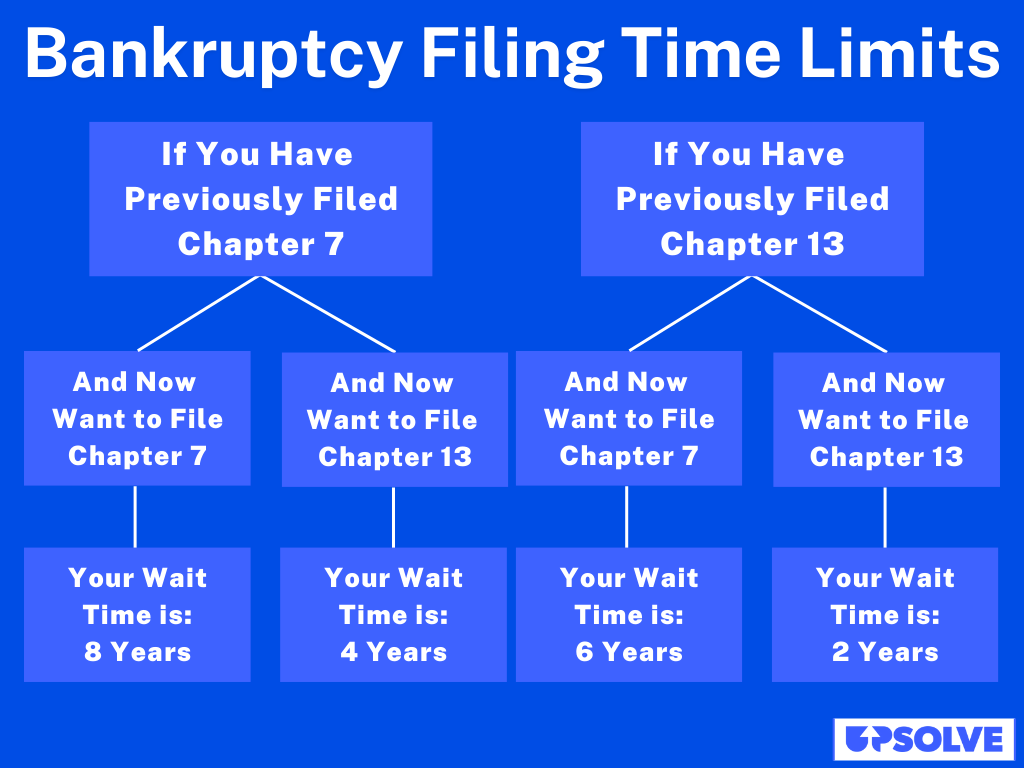
If you have previously filed for bankruptcy and received a discharge, you must wait a specific number of years before you can file again under Chapter 7.
- Chapter 7 to Chapter 7: You must wait eight years from the date your previous case was filed.
- Chapter 13 to Chapter 7: You generally must wait six years from the date the Chapter 13 case was filed, though there are exceptions if you paid at least 70% of your unsecured claims in the prior case.
It is vital to distinguish between a "discharge" and a "dismissal." A discharge is a successful conclusion where debts are wiped out. A dismissal means the case was thrown out before completion. If your previous case was dismissed, you might be able to file again much sooner, though there may be limitations on the "automatic stay" (the legal protection that stops creditors from collecting) if you have had multiple dismissed cases within a single year.
Rule 4: Total Asset Disclosure and the Role of Exemptions
The fourth rule is arguably the most critical for protecting your property: you must provide a transparent, exhaustive list of everything you own and every debt you owe. Chapter 7 is technically a liquidation, meaning a court-appointed trustee has the authority to sell your non-exempt assets to pay back your creditors.
The Duty of Candor
When you sign your bankruptcy petition, you are doing so under penalty of perjury. You must list all real estate, personal property (from jewelry to electronics), bank accounts, retirement funds, and even potential legal claims (like a personal injury lawsuit you might file). Attempting to hide assets is a federal crime and is the fastest way to lose your discharge and face criminal prosecution.
Utilizing Exemptions
Most people who file Chapter 7 do not actually lose their property. This is due to exemptions. Exemptions are laws that allow you to "exempt" or protect certain property from the bankruptcy trustee. In 2026, filers must determine whether they are required to use their state's exemption list or if they have the option to use the Federal Bankruptcy Exemptions.
Common exemptions include:
- Homestead Exemption: Protects a certain amount of equity in your primary residence.
- Motor Vehicle Exemption: Protects equity in a car.
- Wildcard Exemption: Can be applied to any property of your choosing.
- Retirement Accounts: Most 401(k)s and IRAs are fully protected under federal law.
If an asset is "non-exempt"—for example, a second vacation home or a luxury boat—the trustee may take it and sell it. Understanding your state's specific exemption limits is essential for predicting exactly what you will keep and what you might lose.
Comparison: Chapter 7 vs. Chapter 13 Eligibility
Choosing between Chapter 7 and Chapter 13 depends heavily on your income and your goals (such as saving a home from foreclosure). The following table outlines the key differences in eligibility and rules.
| Feature | Chapter 7 (Liquidation) | Chapter 13 (Reorganization) |
|---|---|---|
| Primary Eligibility Rule | Must pass the Means Test. | Must have stable income to fund a plan. |
| Debt Limits | No specific limit on unsecured debt. | Combined debt must be below roughly $2.75 million (as of 2026 adjustments). |
| Duration of Process | Usually 4 to 6 months. | 3 to 5 years. |
| Asset Retention | Only "exempt" assets are protected. | Keep all assets, but pay "liquidation value" to creditors. |
| Prior Filing Limit | 8 years since last Chapter 7 filing. | 2 years since last Chapter 13 filing. |
| Mandatory Counseling | Yes (Pre-filing and Post-filing). | Yes (Pre-filing and Post-filing). |
Common Pitfalls to Avoid When Filing
Filing for bankruptcy involves more than just following the four core rules; it requires careful timing and behavioral adjustments in the months leading up to the filing.
The 90-Day Preference Period
If you pay back a specific creditor (like a family member or a favored credit card) more than $600 within the 90 days before you file, the trustee can "claw back" that money. This is called a preferential transfer. The court wants to ensure all creditors are treated fairly, so you should avoid making large, unusual payments to anyone right before filing.
Fraudulent Transfers and Luxury Purchases
Avoid transferring property out of your name to "protect" it from the court. If you sell your car to a friend for $1.00 a month before filing, the trustee will view this as a fraudulent transfer and will likely sue the friend to get the car back. Similarly, taking out new credit or buying luxury goods on a credit card within 90 days of filing can be flagged as fraud, and those specific debts may not be discharged.
The 341 Meeting of Creditors
Approximately 30 to 45 days after filing, you must attend the Meeting of Creditors, also known as the 341 meeting. While it is rare for actual creditors to show up, the trustee will ask you a series of questions under oath regarding your petition and assets. Rule compliance is verified here; if your testimony contradicts your written filing, it can lead to significant legal complications.
Frequently Asked Questions
Can I file Chapter 7 if I own a business?
Yes, individuals who own businesses can file Chapter 7. If the business is a sole proprietorship, the business assets and debts are included in your personal filing. If the business is an LLC or Corporation, the business itself might need to file a separate Chapter 7, or your ownership interest in that entity will be treated as an asset that must be disclosed and potentially exempted.
What happens to my credit score after filing?
Filing for Chapter 7 will cause a significant drop in your credit score, often between 100 and 200 points depending on your starting position. The bankruptcy will remain on your credit report for 10 years from the filing date. However, many people find that because their debt-to-income ratio improves instantly, they can begin rebuilding their credit within months of the discharge.
Are all debts wiped out in Chapter 7?
No. Certain "non-dischargeable" debts remain even after a successful Chapter 7 case. These typically include student loans (unless you can prove "undue hardship"), most recent taxes, child support, alimony, and debts resulting from fraud or personal injury caused by driving while intoxicated.
Do I need a lawyer to file for Chapter 7?
While you are legally allowed to file "pro se" (representing yourself), it is highly discouraged. The procedural rules are complex, and a single mistake in applying exemptions can cost you your home or car. A qualified bankruptcy attorney ensures that you meet the Means Test requirements and helps maximize the protection of your assets.
How much does it cost to file in 2026?
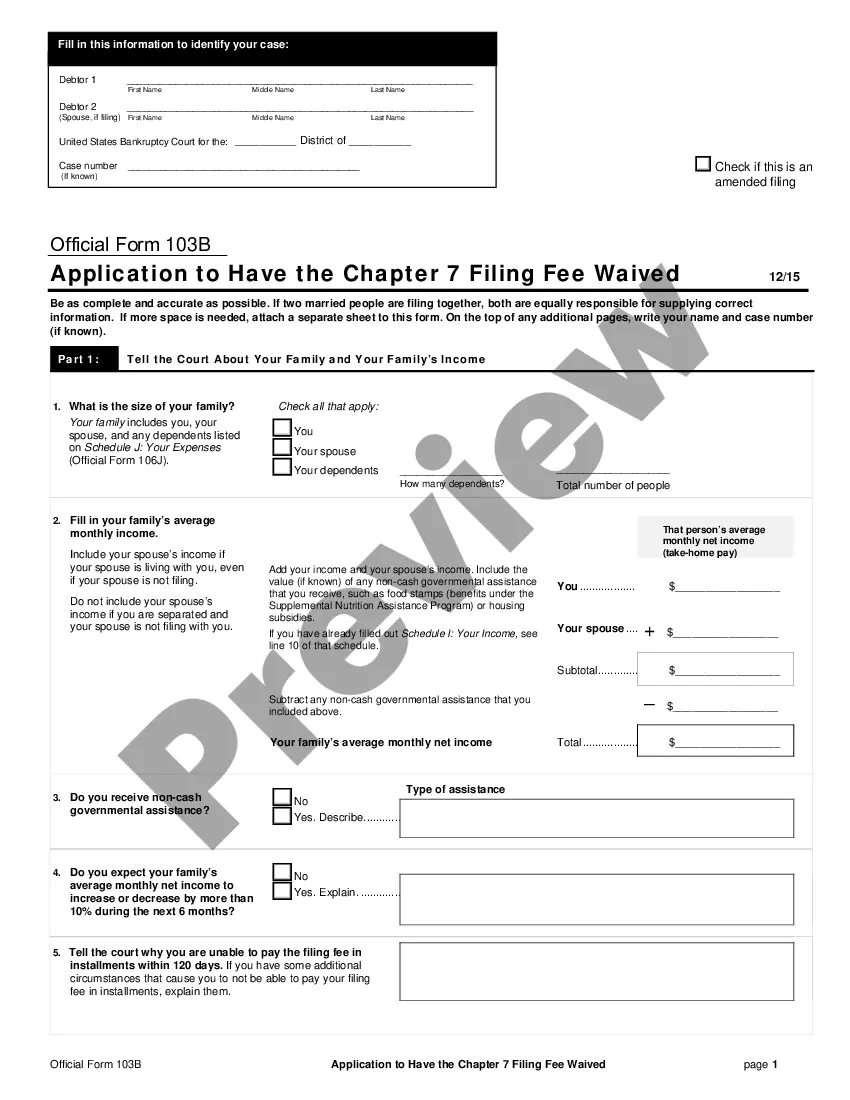
The court filing fee for Chapter 7 is approximately $338, though this can vary slightly by district or be waived for very low-income filers. Attorney fees vary based on the complexity of the case but typically range from $1,200 to $2,500. You must also factor in the costs of the two mandatory education courses, which usually cost between $20 and $50 each.
Practical Next Actions
If you are considering filing for Chapter 7, your first step should be to gather your financial documents for the last six months, including pay stubs, bank statements, and tax returns. Use these to perform a preliminary Means Test calculation. Next, visit the Department of Justice website to find an approved credit counseling agency and complete your first required briefing. Finally, consult with a bankruptcy professional to review your assets and ensure that your property is fully protected by applicable exemptions before submitting your petition to the court.