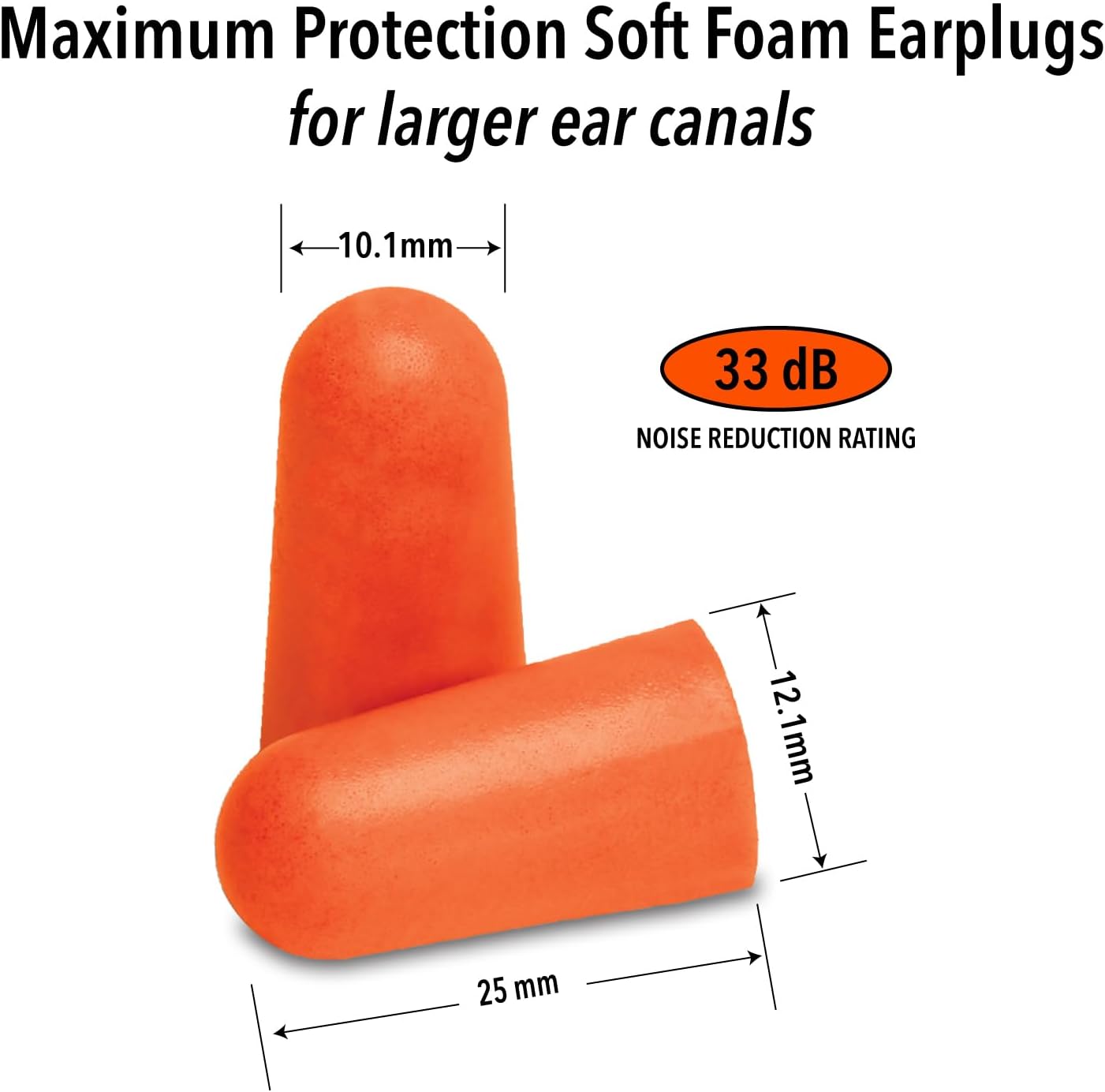
When selecting hearing protection for industrial environments, shooting ranges, or loud recreational activities, understanding the exact Noise Reduction Rating (NRR) of 3M tapered foam earplugs is essential for ensuring proper attenuation and occupational safety.
3M tapered foam earplugs are designed to fit the varying geometry of human ear canals, offering high-level protection against continuous and impulse noise. Across popular models like the 3M 1100, 3M E-A-R Classic (tapered variants), and 3M E-A-Rsoft Yellow Neons, Noise Reduction Ratings typically range from 29 dB to 33 dB when properly inserted. Achieving these certified attenuation levels, however, relies entirely on correct rolling, compression, and insertion techniques.
Understanding Noise Reduction Ratings (NRR) in Hearing Protection
The Noise Reduction Rating is a standardized measurement mandated by regulatory bodies such as the U.S. Occupational Safety and Health Administration (OSHA) and the Environmental Protection Agency (EPA). It indicates the maximum theoretical reduction in decibels (dB) a hearing protection device can provide when worn correctly.
How NRR is Calculated and Tested
NRR ratings are determined through controlled laboratory testing according to ANSI standards (such as ANSI S3.19-1974). A panel of test subjects is fitted with the earplugs, and their hearing thresholds are measured with and without the protection in place across various frequencies.
However, real-world attenuation often falls short of laboratory ratings. OSHA recognizes this discrepancy and applies specific de-rating guidelines for compliance purposes. For example, OSHA often requires employers to de-rate the manufacturer's NRR by 50% or more to estimate real-world protection accurately, accounting for user error, improper insertion, and variations in individual ear canal anatomy.
The Role of Decibels and Frequency
Human hearing does not perceive all frequencies equally, and industrial noise covers a broad spectrum of low, mid, and high frequencies. Tapered foam earplugs generally provide superior attenuation at higher frequencies (such as machinery whines, pneumatic tools, and gunshots) compared to lower frequencies (such as heavy diesel engines or deep bass hums). Understanding this limitation helps safety managers determine whether foam plugs alone are sufficient or if electronic or custom-molded alternatives are necessary.
Anatomy and Design Features of 3M Tapered Earplugs
The 3M portfolio features numerous tapered foam earplug designs, each engineered with specific material compositions, expansion rates, and firmness levels.
Slow-Recovery Polyurethane Foam
Most modern 3M tapered earplugs, including the popular 3M 1100 and E-A-Rsoft series, are manufactured from slow-recovery PVC or polyurethane foam. This material allows the user to compress the plug into a thin, cylindrical cylinder that easily slides into the ear canal. Once inside, the foam gently expands, conforming to the unique contours of the ear canal to create an acoustic seal.
Tapered vs. Bullet-Shaped vs. Flanged Designs
The taper geometry is specifically chosen to ease insertion into smaller or angled ear canals. Unlike straight cylindrical plugs, which can cause discomfort or fail to seat deeply enough, tapered tips allow for progressive insertion. They transition smoothly from a narrow tip to a wider base, accommodating the natural narrowing of the outer ear canal while providing enough bulk at the rear to block sound waves and allow for easy removal.
Overview of Popular 3M Tapered Earplug Models and Ratings
Different 3M models offer distinct combinations of comfort, visibility, and NRR performance. The table below outlines key specifications for standard 3M tapered foam earplugs.
| Product Model | Material Type | Corded Option Available | Tested NRR (dB) | Key Characteristics |
|---|---|---|---|---|
| 3M 1100 / 1110 | Polyurethane Foam | Yes (1110) | 29 dB | Smooth, dirt-resistant surface; soft hypoallergenic foam for comfort. |
| 3M E-A-Rsoft Yellow Neons | Advanced Polyurethane | Yes (Blast) | 33 dB | High-visibility neon yellow-green color; firm yet pliable texture. |
| 3M E-A-Rsoft FX | Polyurethane Foam | Yes | 33 dB | Extra-large design with a flared base for effortless removal and high attenuation. |
| 3M E-A-Rsoft Metal Detectable | Polyurethane Foam | Yes (with BB) | 32 dB | Embedded stainless steel ball bearing for food processing industry compliance. |
Note: NRR values are based on laboratory testing under standard conditions. Real-world protection depends heavily on insertion technique.
Proper Insertion Technique: Maximizing NRR Performance
Even the highest-rated earplug will provide near-zero protection if inserted incorrectly. Laboratory NRR ratings assume a textbook insertion process that many casual users fail to execute.
The Roll-Compress-Insert Method
To achieve the rated NRR, follow these verified steps:
- Clean Hands: Ensure your hands are clean before touching the earplugs to prevent introducing dirt or bacteria into the ear canal.
- Roll and Compress: Between your thumb and forefinger, roll the earplug tightly into a small, crease-free cylinder. The narrower and firmer the cylinder, the easier the insertion.
- Reach and Open the Canal: With your opposite hand, reach over your head and pull upward and outward on your outer ear (pinna). This straightens the ear canal, allowing the plug to enter deeply.
- Insert: Gently push the compressed earplug into the straightened ear canal until about half of the plug remains visible for later removal.
- Hold and Expand: Hold the plug in place with a finger for 15 to 30 seconds while the foam expands and creates a seal against the canal walls.
Verifying the Seal
A proper seal can be tested quickly. Cup your hands tightly over your ears and release them. Ambient sounds should sound significantly muffled, and you should notice a distinct change in acoustic pressure as the seal blocks outside air. If sounds do not change noticeably, remove the plug and repeat the insertion process.
Factors Affecting Real-World Attenuation
Laboratory ratings provide a baseline, but operational variables drastically influence how much protection a worker or shooter actually receives.
Ear Canal Anatomy and Sizing
Human ear canals vary significantly in diameter, curvature, and length. Standard tapered foam earplugs fit a vast majority of the population, but individuals with exceptionally narrow or unusually wide ear canals may experience seal failure. If a tapered plug expands too quickly before full insertion, or fails to expand wide enough to contact canal walls, sound leaks through the gaps, rendering the high NRR ineffective.
Hygiene, Reusability, and Degradation
Most foam earplugs are designed for single-use or limited reuse. Over time, earwax, skin oils, and environmental dust accumulate on the porous surface of polyurethane foam. Washing foam earplugs with water or harsh chemicals can degrade the cellular structure, altering their recovery time and stiffness. If a foam earplug loses its elasticity, hardens, or fails to spring back into shape promptly, it must be discarded immediately.
Limitations and Safety Considerations
Hearing protection devices are subject to strict regulatory frameworks and physical limitations.
Over-Protection vs. Under-Protection
While maximizing NRR is the primary goal in extremely loud environments (such as stamping plants or firing ranges), excessive attenuation—often called "over-protection"—can create safety hazards. If an earplug reduces sound levels below safe thresholds where speech, warning shouts, or machinery feedback cannot be heard, workers may remove their protection entirely, exposing themselves to sudden hazardous noise spikes.
Professional Guidance and Occupational Standards
For workplace compliance, employers must conduct industrial hygiene noise surveys to determine Time-Weighted Averages (TWAs). Under OSHA standard 29 CFR 1910.95, a hearing conservation program is triggered when noise exposure equals or exceeds an 8-hour TWA of 85 decibels. Safety professionals should consult certified industrial hygienists (CIHs) or occupational safety specialists to match specific 3M NRR ratings with measured workplace noise profiles.
Frequently Asked Questions
What is the highest NRR available for 3M tapered earplugs?
The highest standard NRR ratings for 3M tapered foam earplugs, such as the E-A-Rsoft Yellow Neons and E-A-Rsoft FX models, reach 33 dB. This represents one of the highest attenuation levels commercially available for disposable foam earplugs.
Can 3M tapered foam earplugs be washed and reused?
Most 3M disposable tapered foam earplugs are engineered for single use. While some workers attempt to reuse them for a few shifts, body oils and earwax degrade the foam's cell walls and hygiene. If they become soiled, lose their slow-recovery elasticity, or no longer compress smoothly, they should be discarded.
Why am I not getting the full NRR protection listed on the package?
The NRR printed on the package is derived from strict laboratory tests using ideal insertions. In practice, users often fail to roll the plugs tightly enough, neglect to pull the outer ear upward to straighten the canal, or do not insert them deeply enough, leading to acoustic leaks that reduce real-world attenuation.
Are corded and uncorded 3M tapered earplugs rated differently?
Generally, corded and uncorded versions of the exact same foam plug model (such as the 3M 1100 uncorded and 3M 1110 corded) share identical foam composition and carry the exact same laboratory-tested NRR rating. The cord adds convenience and prevents loss but does not alter acoustic performance.
How often should foam earplugs be replaced during a work shift?
Disposable foam earplugs should be replaced whenever they become dirty, damaged, or lose their structural resilience. In dusty or heavy perspiration environments, this may require replacement multiple times per day to maintain hygiene and a secure acoustic seal.
Conclusion and Next Actions
Selecting and using 3M tapered earplugs effectively requires more than simply checking the box for a 29 dB or 33 dB Noise Reduction Rating. Because real-world performance depends heavily on correct insertion technique and proper sizing, users and safety coordinators must prioritize training alongside equipment selection. To ensure optimal hearing protection, verify your environment's noise levels against OSHA or relevant local safety standards, practice the roll-compress-insert method rigorously, and establish a routine schedule for inspecting and replacing worn foam plugs.