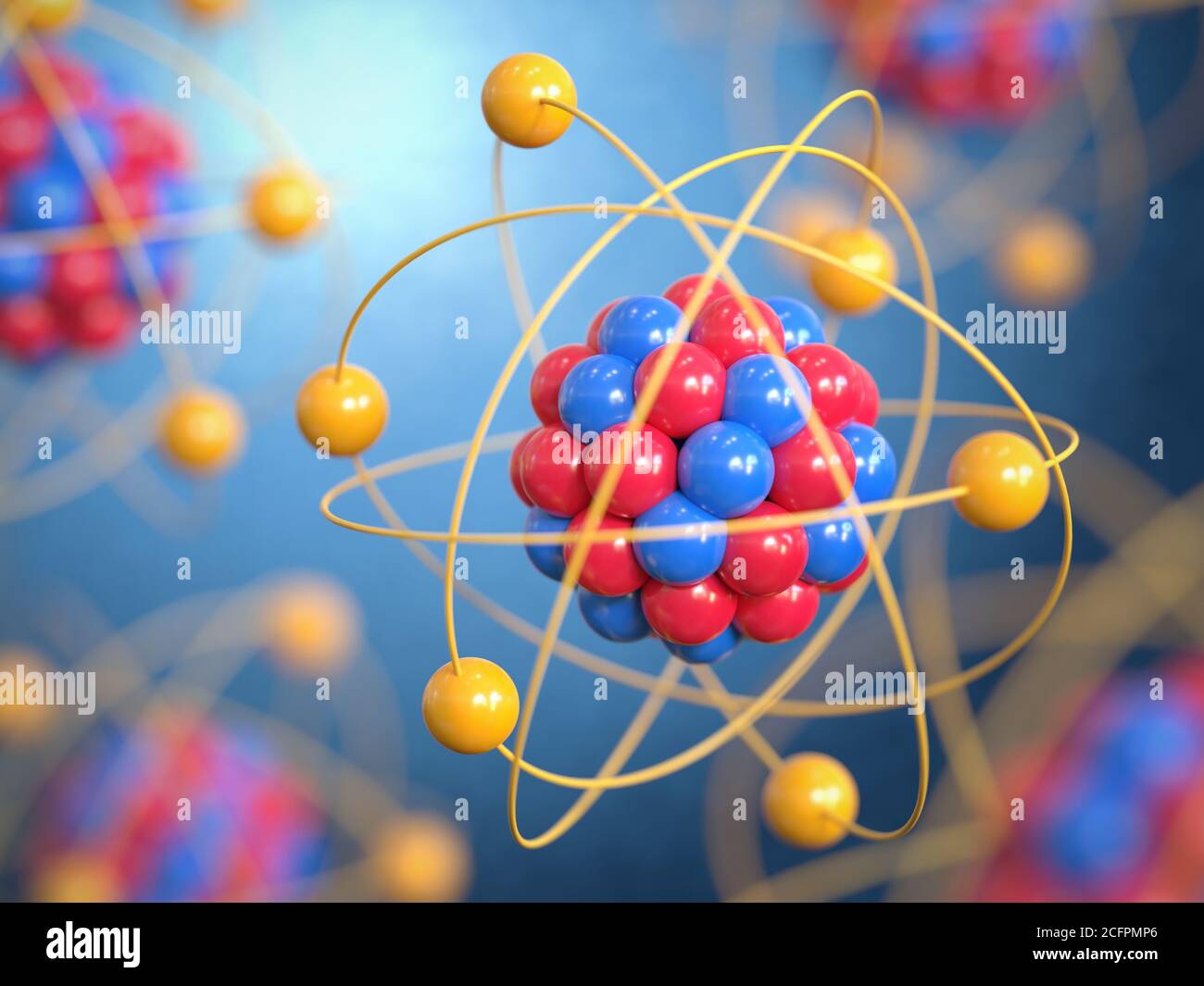
An atomic structure defined by 3 protons, 4 neutrons, and 3 electrons corresponds to the lithium-7 isotope ($^7\text{Li}$). This configuration features a positively charged nucleus made of three protons and four neutrons, balanced by a stable cloud of three negatively orbiting electrons, representing one of the two stable naturally occurring isotopes of lithium.
Introduction to Subatomic Composition and Atomic Anatomy
At the foundational level of matter, every element on the periodic table is defined by the number of protons contained within its nucleus. When examining an atomic species characterized by 3 protons, 4 neutrons, and 3 electrons, we are looking at a precise subatomic architecture that dictates both its chemical identity and its physical behavior. Understanding this specific configuration requires breaking down the roles of each subatomic particle—protons, neutrons, and electrons—and seeing how they interact to form a stable, neutral atom of lithium.
In chemistry and physics, atoms are not static, monolithic blocks of matter. Instead, they are dynamic systems governed by electromagnetic forces, the strong nuclear force, and quantum mechanical rules. By analyzing an atom with three protons, we immediately identify the atomic number, which anchors the element's position on the periodic table. From there, the interplay of mass, charge, and nuclear stability unfolds through the exact count of its neutrons and electrons.
Defining the Core Components: Protons, Neutrons, and Electrons
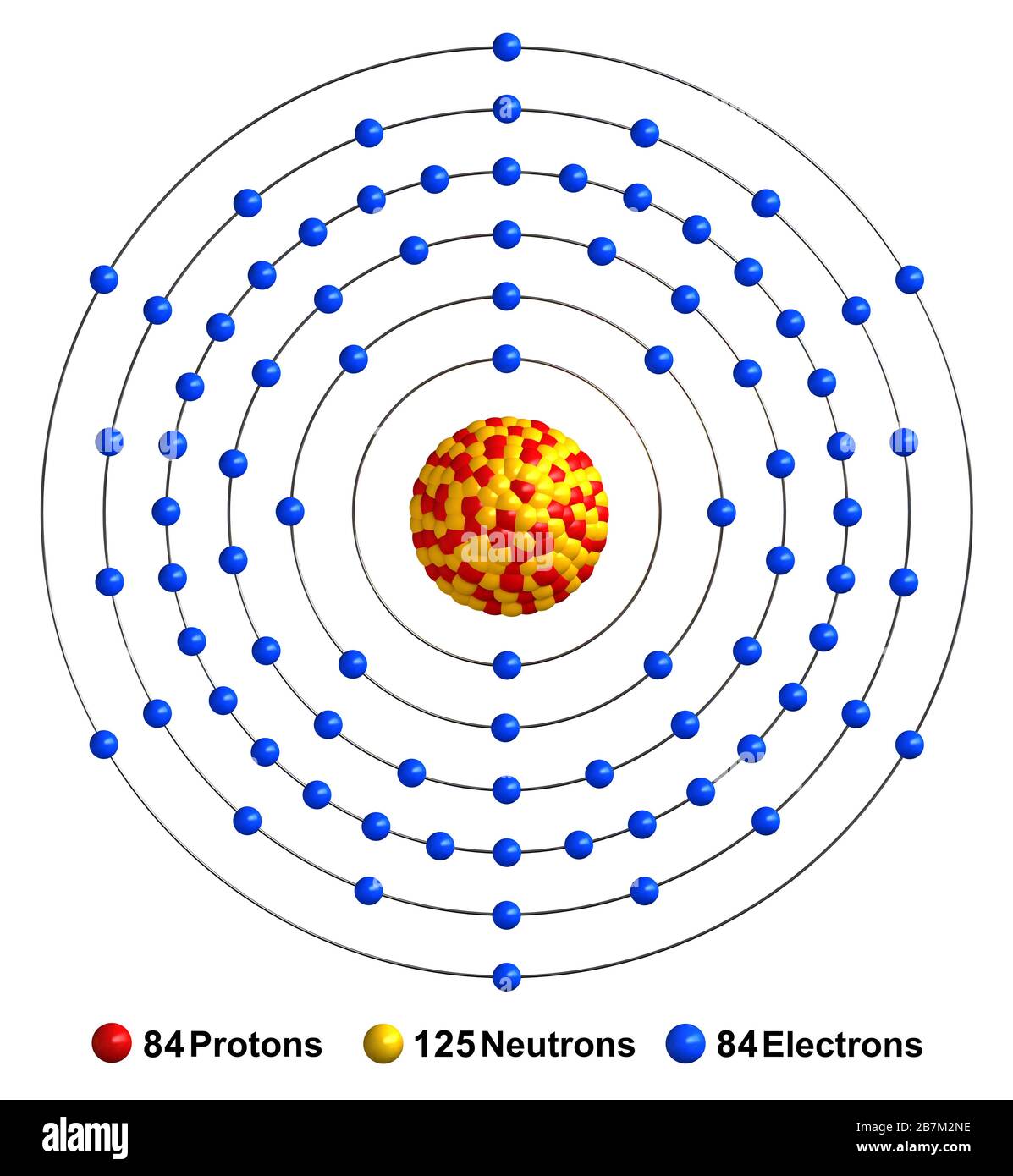
To fully comprehend the nature of an atom with 3 protons, 4 neutrons, and 3 electrons, one must examine the distinct properties and responsibilities of the three primary subatomic particles. Each particle contributes uniquely to the atom's mass, electrical charge, and chemical reactivity.
Protons and the Atomic Number
Protons are positively charged subatomic particles residing tightly packed inside the atomic nucleus. The number of protons an atom possesses is known as its atomic number ($Z$). This number is absolute and immutable for any given element; changing the number of protons transforms the atom into an entirely different chemical element.
- Charge: Positive ($+1$ elementary charge per proton).
- Location: Atomic nucleus.
- Role: Determines the element's identity and governs the number of electrons in a neutral atom.
For our specific subject, the presence of exactly 3 protons means the atomic number is 3. Consulting the periodic table reveals that element number 3 is lithium.
Neutrons and Atomic Mass
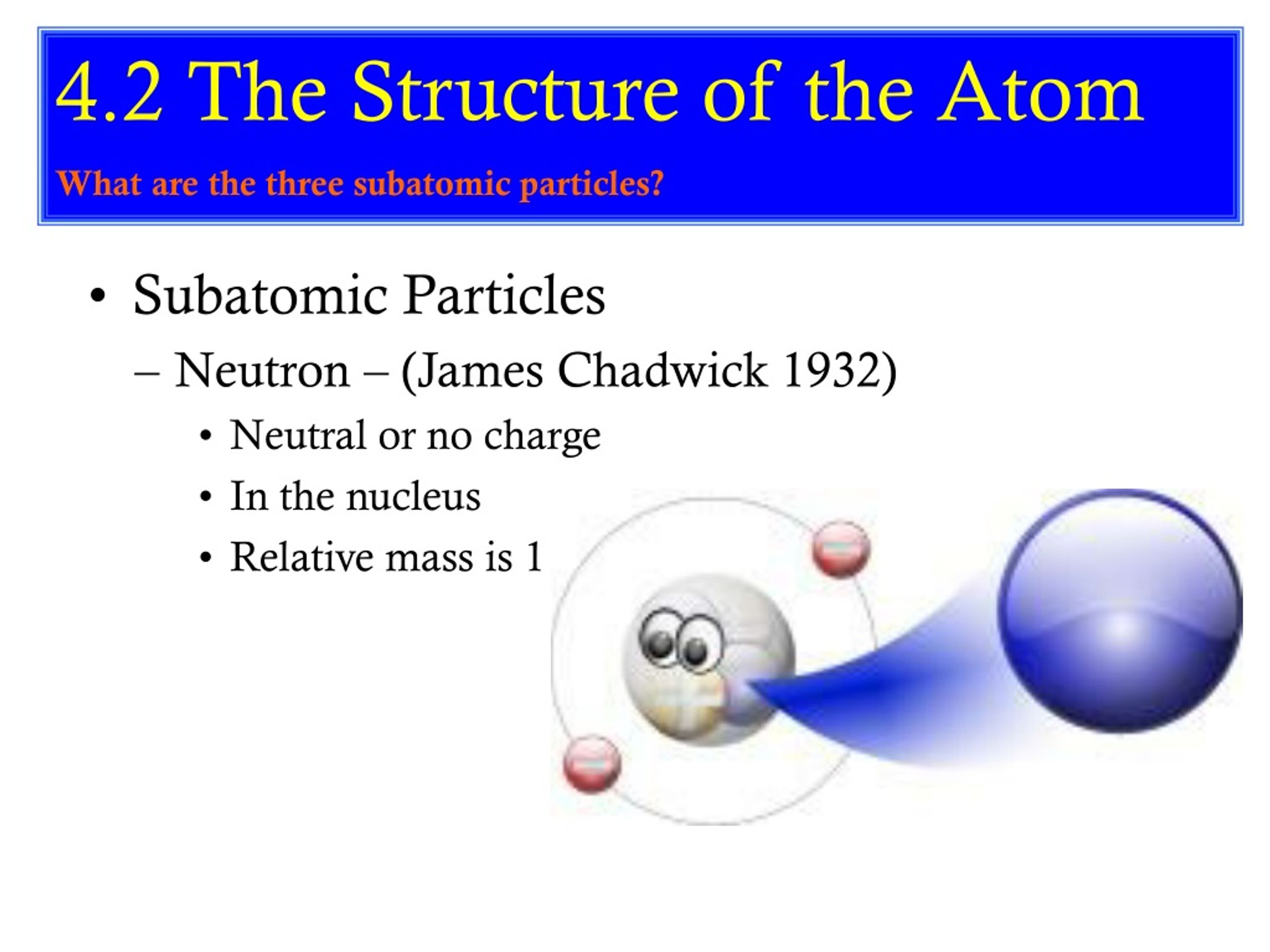
Neutrons are neutral subatomic particles, carrying no electrical charge, and they reside alongside protons within the nucleus. While protons determine what element an atom is, neutrons largely determine which isotope of that element we are observing.
- Charge: Neutral ($0$).
- Location: Atomic nucleus.
- Role: Adds nuclear mass and provides the strong nuclear force buffer required to keep positively charged protons from repelling one another apart.
The total number of protons and neutrons combined is called the mass number ($A$). In this scenario, we have 3 protons and 4 neutrons, yielding a mass number of 7 ($3 + 4 = 7$). This specific variant is designated as lithium-7, written notationally as $^7\text{Li}$ or $^7_3\text{Li}$.
Electrons and Electrical Neutrality
Electrons are extremely lightweight, negatively charged subatomic particles that orbit the nucleus at varying energy levels or shells. In a standard, electrically neutral atom, the number of negatively charged electrons equals the number of positively charged protons.
- Charge: Negative ($-1$ elementary charge per electron).
- Location: Electron cloud surrounding the nucleus.
- Role: Drives chemical bonding, electrical conductivity, and interactions with other atoms.
With 3 protons providing a $+3$ charge and 3 electrons providing a $-3$ charge, the net electrical charge of this atom is zero. It is electrically neutral.
| Subatomic Particle | Quantity | Electrical Charge | Mass (approximate) | Location |
|---|---|---|---|---|
| Proton | 3 | Positive ($+1$) | $1.0073\text{ u}$ | Nucleus |
| Neutron | 4 | Neutral ($0$) | $1.0087\text{ u}$ | Nucleus |
| Electron | 3 | Negative ($-1$) | $0.00055\text{ u}$ | Electron Cloud |
Chemical Identity: The Element Lithium
Because the defining characteristic of an atom is its proton count, an atom with 3 protons is definitively an atom of lithium. Lithium is the lightest of all alkali metals and the least dense of all solid elements under standard conditions.
In nature, lithium exists primarily as a mixture of two stable isotopes: lithium-6 ($^6\text{Li}$, containing 3 protons and 3 neutrons) and lithium-7 ($^7\text{Li}$, containing 3 protons and 4 neutrons). Lithium-7 is by far the more abundant isotope, making up approximately 92.41% of all naturally occurring lithium on Earth, while lithium-6 accounts for the remaining 7.59%. Therefore, an atom with 3 protons and 4 neutrons represents the most common, naturally occurring form of lithium.
Electron Configuration and Shell Structure
The three electrons in this atom occupy the space surrounding the nucleus in specific quantum shells governed by the Pauli exclusion principle and Aufbau principles.
- Innermost Shell ($1s$): Can hold a maximum of 2 electrons. In a lithium atom, both the first and second electrons fill this lowest energy level.
- Valence Shell ($2s$): The third electron must occupy the next higher energy level, the second shell.
This gives lithium the electron configuration of $1s^2 2s^1$. That single valence electron in the outermost shell dictates lithium's chemistry. It is loosely held compared to the inner-shell electrons, making lithium highly reactive. It readily sheds that single electron during chemical reactions to achieve a stable, noble-gas electron configuration similar to helium, forming a positively charged lithium ion ($\text{Li}^+$).
Physical and Nuclear Properties of Lithium-7
An atom with 3 protons and 4 neutrons possesses specific nuclear and physical characteristics that distinguish it from its lighter isotope sibling, lithium-6.
Nuclear Stability and Binding Energy
Nuclei must balance the repulsive electrostatic forces pushing protons apart with the attractive strong nuclear force operating between nucleons (protons and neutrons). With 3 protons and 4 neutrons, lithium-7 achieves a remarkably stable nuclear configuration. Its nuclear binding energy per nucleon is high enough to ensure that lithium-7 is non-radioactive and completely stable over geological timescales.
Interaction with Neutrons
Lithium-7 has a relatively low cross-section for absorbing thermal neutrons. This property makes lithium-7 hydroxide a valuable compound used in the cooling water of pressurized water nuclear reactors to control pH and minimize corrosion without heavily absorbing the neutrons required to sustain the nuclear fission chain reaction. Conversely, lithium-6 has a high neutron absorption cross-section and is often separated for specialized nuclear applications.
Frequently Asked Questions
What element does an atom with 3 protons represent?
An atom with 3 protons is always lithium. The atomic number of an element is strictly defined by its proton count, and element number 3 on the periodic table is lithium.
Why does this atom have 4 neutrons if it has 3 protons?
Neutron counts can vary among atoms of the same element, creating different isotopes. While some lithium atoms have 3 neutrons (lithium-6), the version with 4 neutrons (lithium-7) is natural, stable, and constitutes the vast majority of lithium found on Earth.
Is an atom with 3 protons and 3 electrons electrically stable?
Yes. An atom with 3 protons ($+3$ charge) and 3 electrons ($-3$ charge) has a net electrical charge of zero, meaning it is electrically neutral. However, its single valence electron makes it chemically reactive as it tends to lose that electron to form compounds.
How do electrons arrange themselves in a lithium atom?
The three electrons arrange themselves in two energy shells. The first, innermost shell holds 2 electrons in the $1s$ orbital, while the third electron occupies the outer shell as a single valence electron in the $2s$ orbital ($1s^2 2s^1$).
What is the mass number of an atom with 3 protons and 4 neutrons?
The mass number is 7. The mass number is calculated by adding the total number of protons and neutrons together ($3 + 4 = 7$), which gives this specific isotope the name lithium-7.
Practical Summary and Contextual Significance
Recognizing an atomic structure by its subatomic tally—3 protons, 4 neutrons, and 3 electrons—offers a clear window into fundamental chemistry and nuclear physics. It bridges the gap between abstract atomic theory and tangible physical reality, pointing directly to lithium-7, a stable isotope foundational to modern energy storage, chemical synthesis, and nuclear engineering. Whether examining its single reactive valence electron or its tightly bound nuclear core, this specific configuration exemplifies the delicate balance of forces that construct the material universe.