Three-phase wiring is an efficient method of alternating current (AC) electrical power generation, transmission, and distribution that uses three distinct live conductors to deliver a continuous, balanced stream of energy to heavy-duty equipment and large commercial or industrial facilities.
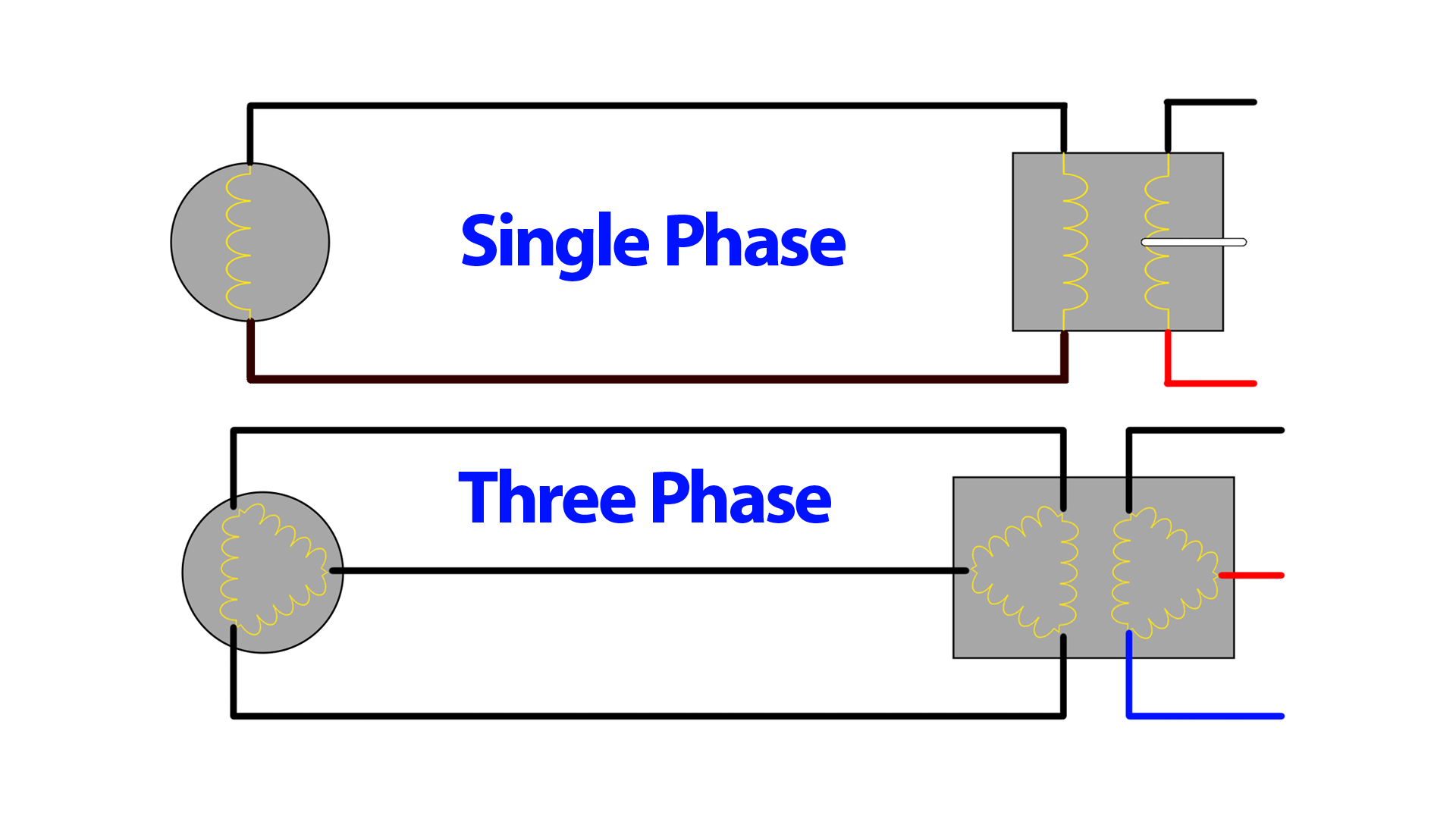
When people first encounter electricity, they usually think of single-phase power. It is the standard format that powers domestic homes, standard household appliances, and residential lighting systems. A single-phase circuit uses one alternating voltage wave that cycles back and forth, which experiences a brief drop to zero volts multiple times every second. While this is entirely sufficient for running a refrigerator, television, or laptop, it falls drastically short when attempting to power heavy industrial machinery, large HVAC compressors, or commercial manufacturing equipment. This is where three-phase wiring enters the picture.
Understanding three-phase wiring does not require an advanced degree in electrical engineering, but it does demand a grasp of how multiple alternating currents interact with one another. This guide strips away the intimidating jargon to explain how three-phase systems work, why they are essential for heavy power needs, how they are configured, and what you need to consider from a safety and practical standpoint.
Core Concepts of Electrical Power: Single-Phase vs. Three-Phase
To truly understand three-phase wiring, you must first understand the limitations of single-phase power. In a standard single-phase residential electrical system, you typically have two main wires supplying power: a hot wire and a neutral wire (plus a ground wire for safety). The voltage travels in a single sinusoidal wave. Because the wave crosses the zero point 120 times per second (in a 60 Hz system), the power delivery pulses slightly. For small electronics and motors, these microscopic drops in power delivery go entirely unnoticed.
However, when you scale up to industrial loads, those power drops create massive inefficiencies. A single-phase motor struggles to start under heavy loads because there is no rotational force pushing it in a specific direction instantly; it requires external components like start capacitors to get moving.
| Feature | Single-Phase Power | Three-Phase Power |
|---|---|---|
| Standard Application | Residential homes, small offices | Industrial plants, large HVAC, data centers |
| Number of Live Wires | 1 Hot Wire | 3 Hot Wires |
| Power Delivery | Pulsating (drops to zero often) | Continuous, constant power flow |
| Efficiency | Lower for high-load equipment | Exceptionally high efficiency |
| Conductor Requirements | Thinner wiring, fewer total lines | Heavier wiring, more conductors |
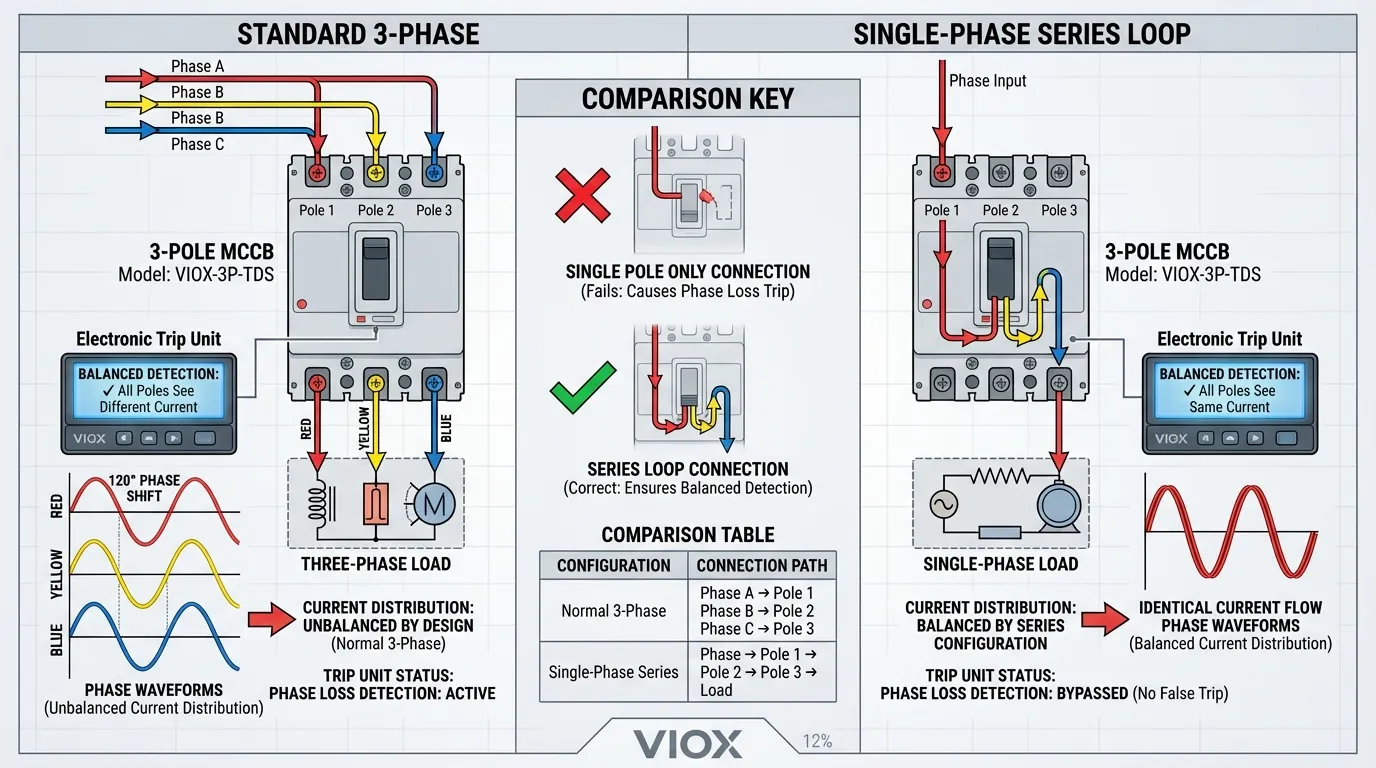
Three-phase power solves this problem by using three separate conductors, each carrying an alternating current of the same frequency and voltage amplitude. Crucially, these three waves are separated by a phase angle of 120 electrical degrees. This means that as one wave peaks, another is rising, and the third is falling. The net result is that the power delivery never drops to zero. It provides a constant, uninterrupted stream of energy that can effortlessly drive large electric motors and heavy industrial loads.
How Three-Phase Wiring Works: Wye and Delta Configurations
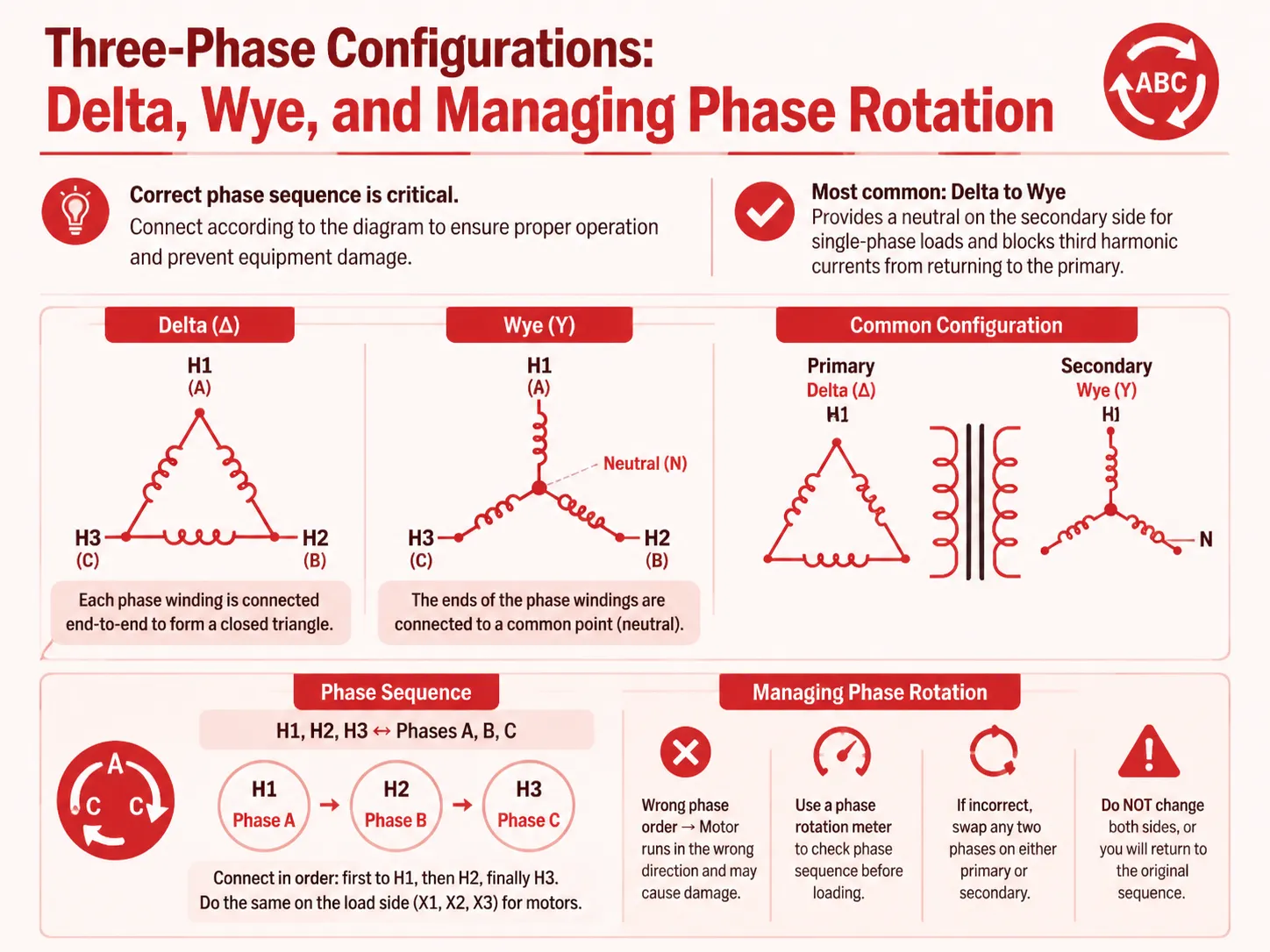
When looking at three-phase systems, you will quickly encounter two primary wiring configurations: Wye (Star) and Delta. These terms describe how the three live wires are interconnected at the transformer or the load. Understanding the difference between these two setups is critical for safe installation and appliance compatibility.
1. The Wye (Star) Configuration
The Wye configuration—often referred to as a Y or star connection—gets its name from the schematic shape it creates, which resembles the letter "Y."
- The Setup: In a Wye system, one end of each of the three phase windings is connected to a common central point, known as the neutral point. The other three ends connect to the three separate live conductors (Phase A, Phase B, and Phase C).
- Dual Voltages: A major advantage of the Wye system is that it provides two different voltages from the same source. You can tap into any single phase and the neutral wire to get standard lower voltage (e.g., 120V for lighting and small electronics), or you can tap across two phase wires to get high voltage (e.g., 208V or 400V for heavy equipment).
- Common Uses: Commercial buildings, office complexes, and mixed-use facilities where both standard office equipment and heavy-duty machinery need power simultaneously.
2. The Delta Configuration
The Delta configuration is named after the Greek letter Delta ($\Delta$), because its schematic diagram forms a closed triangle.
- The Setup: In a Delta system, the three phase windings are connected end-to-end in a closed loop, with each phase connected to the junction point between two windings. There is no neutral wire in a pure three-wire Delta system, though center-tapped variations (like the High-Leg Delta) do exist to provide standard single-phase power alongside three-phase power.
- Power Stability: Delta systems are exceptionally robust. If one phase winding were to theoretically experience issues, an open-delta configuration can sometimes continue operating at a reduced capacity, making it historically popular in heavy industrial environments.
- Common Uses: Heavy manufacturing plants, large electric motors, pumps, and industrial machinery that require massive, uninterrupted raw power without the need for a standard neutral line.
Understanding Wire Colors and Voltage Classifications
Working with three-phase wiring requires strict adherence to color-coding standards. Mixing up phase wires can cause motors to run backward, potentially destroying machinery or injuring personnel. Because electrical codes vary by region (such as the National Electrical Code in the United States versus the International Electrotechnical Commission standards in Europe), you must always verify local regulatory guidelines before touching any electrical panel.
Typical US Color Coding (NEC Standards for 208Y/120V and 480Y/277V)
- Phase A: Black (or Brown for 480V systems)
- Phase B: Red (or Orange for high-leg delta systems)
- Phase C: Blue (or Yellow for 480V systems)
- Neutral: White or Gray
- Ground: Bare copper, green, or green with yellow stripes
Typical International Color Coding (IEC Standards)
- Phase 1 (L1): Brown
- Phase 2 (L2): Black
- Phase 3 (L3): Grey
- Neutral: Blue
- Ground: Green-and-Yellow
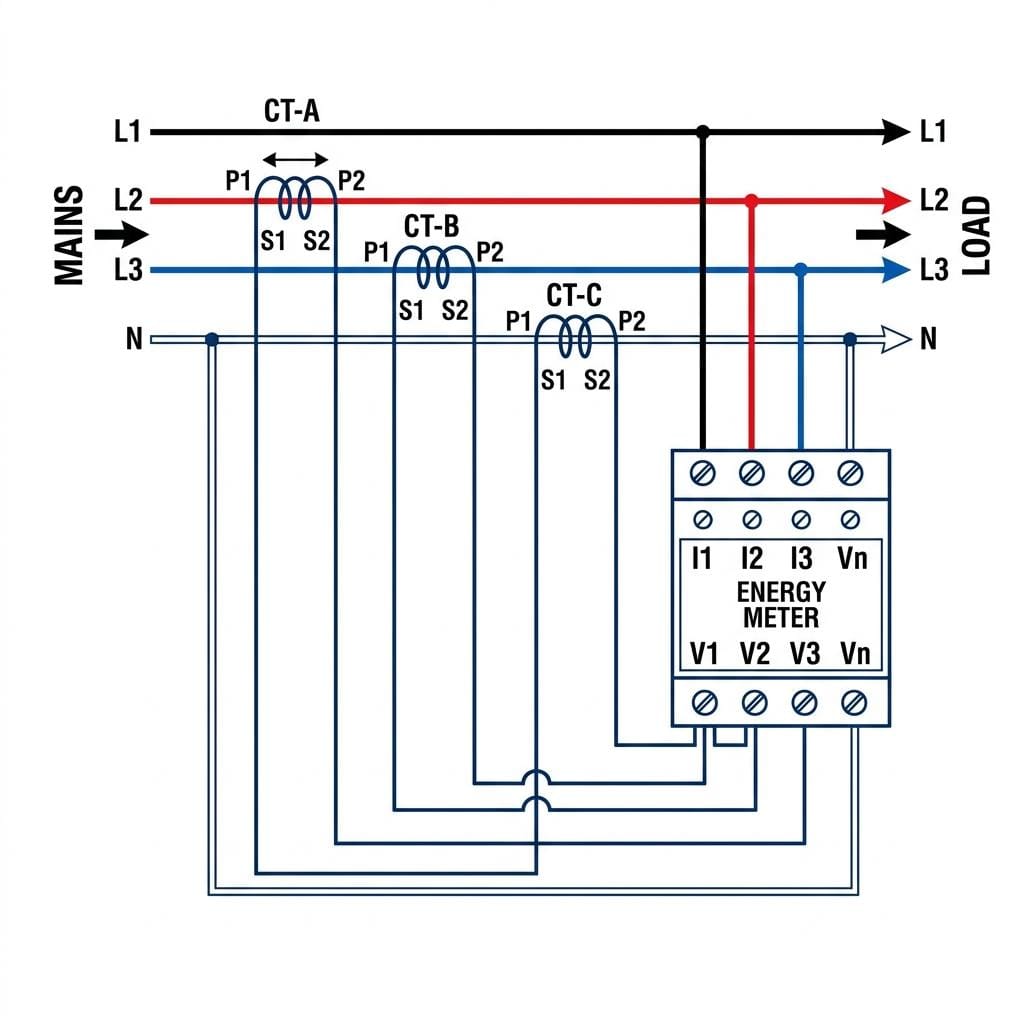
When measuring voltages in a three-phase system, electricians look at two distinct metrics: phase-to-neutral voltage (the voltage between any single hot wire and the neutral wire) and phase-to-phase voltage (the voltage measured between any two live hot wires). For example, in a standard North American 208Y/120V system, measuring from any phase to neutral yields 120 volts, while measuring between Phase A and Phase B yields 208 volts.
Practical Applications and Advantages of Three-Phase Systems
Why go through the complexity of installing three-phase wiring instead of sticking with simpler single-phase options? The advantages become clear when evaluating efficiency, cost, and mechanical performance.
1. Superior Efficiency and Material Savings
Three-phase power transmits more power per pound of copper conductor wire than single-phase power. Because the power delivery is continuous rather than pulsating, smaller-gauge wires can be used to transmit the same amount of usable energy over long distances. This translates to massive cost savings in large commercial buildings and industrial complexes where miles of electrical cabling are installed.
2. Self-Starting Motors
As noted earlier, single-phase motors require auxiliary mechanical or electrical assistance (like start capacitors) to create a rotating magnetic field. Three-phase motors, by contrast, are inherently self-starting. The 120-degree phase separation naturally creates a rotating magnetic field inside the motor stator the moment power is applied. This makes three-phase motors simpler, cheaper to manufacture, highly reliable, and far more durable under heavy workloads.
3. Reduced Vibration and Smoother Operation
Because the power delivery wave never drops to zero, three-phase equipment runs much smoother. Single-phase motors experience tiny torque pulses that cause mechanical vibration and wear over time. Three-phase motors provide steady, uniform torque, which drastically extends the operational lifespan of industrial compressors, pumps, and conveyors.
Safety Guidelines, Common Mistakes, and Professional Oversight
Electricity at commercial and industrial scales is inherently dangerous. Mishandling three-phase circuits can result in severe arc flashes, electrocution, catastrophic equipment failure, and electrical fires.
Critical Safety Principles
- Never Work Live: Always shut off the main breaker and use a verified digital multimeter or non-contact voltage tester to ensure circuits are completely dead before opening junction boxes or panels.
- Understand Phase Rotation: If you connect a three-phase motor and notice it spinning in the reverse direction, it means two of the live phase wires have been swapped (a condition known as reversed phase rotation). While correctable, doing this on sensitive computer hardware or fluid pumps can cause catastrophic damage.
- Personal Protective Equipment (PPE): Always wear rated arc-flash safety gear, insulated tools, and safety glasses when inspecting commercial distribution panels.
Because of the high voltages and amperage involved, three-phase wiring installations, breaker additions, and panel upgrades must always be performed by licensed, qualified electricians who adhere strictly to local building codes and standards established by organizations like the National Fire Protection Association (NFPA).
Frequently Asked Questions
Can I run three-phase power in a standard residential home?
Standard residential homes are almost exclusively supplied with single-phase power, which is more than adequate for household appliances. While it is technically possible to request a three-phase service drop from your utility provider, the installation costs are usually prohibitively expensive and unnecessary unless you operate heavy industrial equipment from a home workshop.
What is a "High-Leg Delta" system?
A High-Leg Delta is a specialized three-phase transformer setup where the center tap of one transformer winding is grounded to act as a neutral. This provides standard single-phase 120V power between the neutral and two of the phases, while one specific phase (the "high leg," typically colored orange) has a much higher voltage to ground (usually 208V). Extreme caution is required when working on these panels to avoid connecting 120V equipment to the high leg.
Why do three-phase motors run backward sometimes?
Three-phase motors run backward when the sequence of the three live wires (Phase A, B, and C) is reversed at the terminals. To fix this, a qualified electrician simply needs to power down the system and swap the connections of any two of the three live phase wires.
Do I need a neutral wire for a three-phase circuit?
It depends entirely on the configuration and the load. Pure three-wire Delta systems do not require a neutral wire because the loads are balanced across the phases. Wye systems typically utilize a neutral wire to handle any unbalanced return current or to supply lower-voltage single-phase circuits alongside the heavy three-phase power.
Conclusion
Three-phase wiring is the unseen engine driving modern industry, commerce, and large-scale infrastructure. By understanding the core mechanics of Wye and Delta configurations, phase separation, and wire classifications, you can better grasp how heavy equipment receives its power. While complex machinery requires professional oversight and licensed electricians for installation, mastering these foundational concepts demystifies how electricity scales up from a simple household outlet to power the modern world.