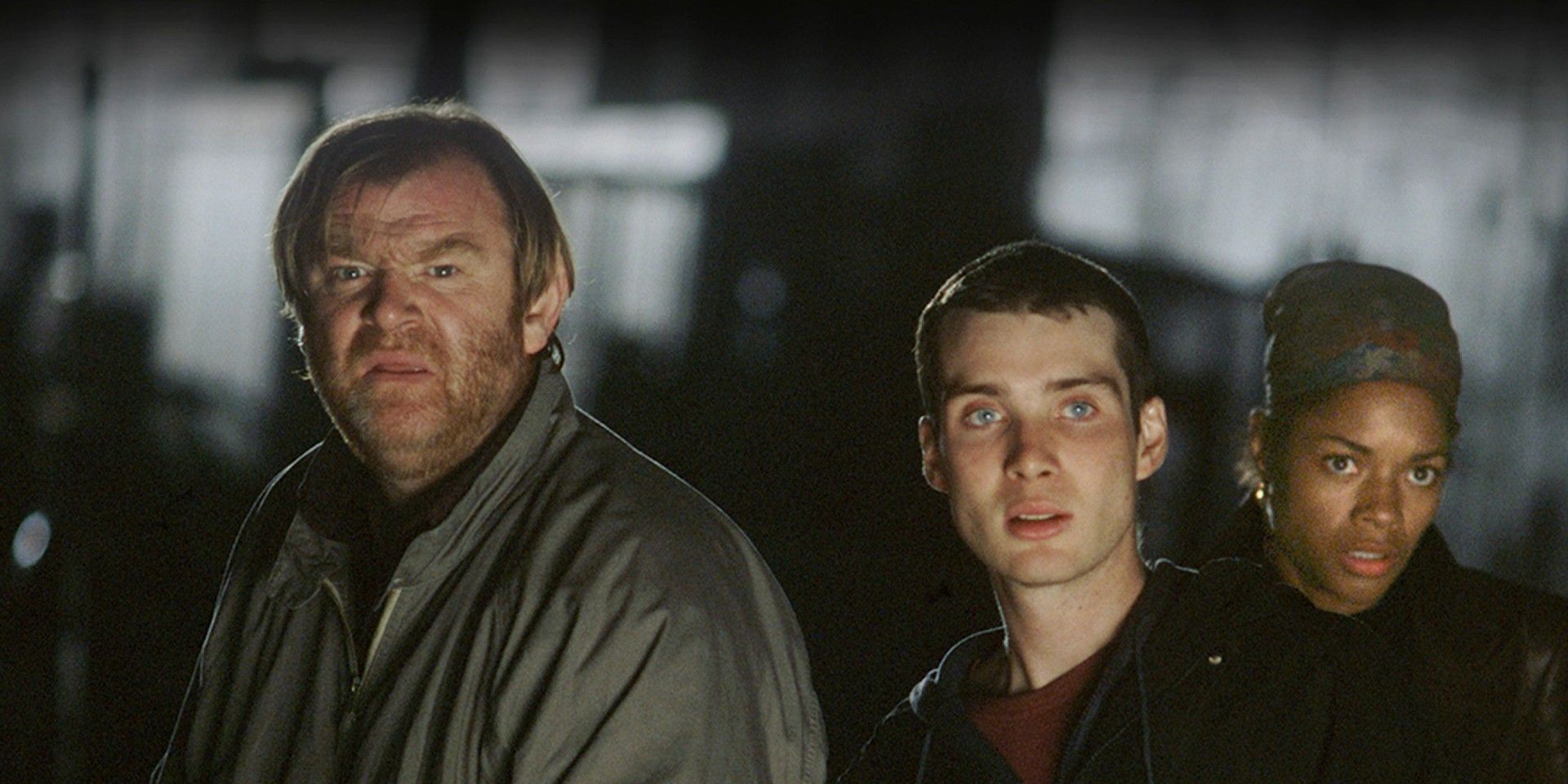
The 28 Days Later universe is a seminal post-apocalyptic franchise centered on the "Rage Virus," a pathogen that induces permanent, homicidal aggression in humans. Spanning multiple films, graphic novels, and a major 2025-2026 revival trilogy, the series is credited with reinventing the zombie subgenre by introducing "fast" infected and focusing on societal collapse.
The franchise began as a low-budget British horror experiment and evolved into a multi-media property that explores the fragility of civilization. Unlike traditional supernatural zombie lore, the 28 Days Later universe is grounded in pseudo-scientific biological horror, positioning the "infected" not as the walking dead, but as living humans driven by an unstoppable, neurologically-rooted fury. As of 2026, the series remains a cornerstone of modern horror, particularly with the return of original creators Danny Boyle and Alex Garland to helm the "28 Years" expansion.
The Biological Foundation: Understanding the Rage Virus
The central antagonist of the franchise is not a person or a monster, but the Rage Virus. To understand the universe, one must first understand the mechanics of this contagion. Within the lore, the virus was a result of medical research into inhibitors for extreme aggression. Scientists at a laboratory in Cambridge used a modified version of a viral hemorrhagic fever (likely an Ebola variant) to carry genetic material intended to suppress anger. However, the virus mutated, becoming an airborne and blood-borne pathogen that amplified rage to an uncontrollable degree.
Transmission and Incubation
The Rage Virus is arguably the most efficient pathogen in cinematic history. Transmission occurs through the exchange of bodily fluids—primarily blood and saliva—entering the bloodstream or mucous membranes. A single drop of infected blood in the eye or mouth is sufficient for infection.
The incubation period is extraordinarily brief, typically lasting between 10 and 20 seconds. This rapid "turn" is a narrative engine for the franchise, as it prevents any meaningful quarantine or medical intervention once a person is exposed. Unlike traditional zombie media where victims might hide a bite for hours, the Rage Virus transforms the host almost instantly into a screaming, sprinting predator.
Symptomatology and Host Behavior
The infected are not "undead." They retain their basic human physiology but lose all cognitive function and self-preservation instincts, replaced by a singular drive to attack non-infected individuals. Key characteristics include:
- Hyper-Aggression: The host experiences a total loss of empathy and logic, resulting in immediate physical assault upon seeing or hearing a healthy human.
- Physical Stamina: While the infected do not possess supernatural strength, they are unburdened by the brain's natural "safety" limiters. This allows them to run at full sprint until their muscles fail or they die of exhaustion/starvation.
- Vulnerability: Because they are still living humans, the infected can be killed by standard means: trauma to the head, heart, or major organs, as well as fire or blood loss. Crucially, they are also susceptible to starvation, a fact that plays a major role in the de-escalation of the initial UK outbreak.
The Cinematic Timeline: From Outbreak to Rebuilding
The franchise's narrative is divided into distinct eras, tracing the fall of the United Kingdom and the subsequent global implications.
28 Days Later (2002)
The original film, directed by Danny Boyle, introduced Jim (Cillian Murphy), a bicycle courier who wakes up from a coma in a deserted London hospital. The world he knew has vanished; the "Rage" has decimated the British population in less than a month. Jim joins a small band of survivors—Selena, Mark, Hannah, and Frank—as they navigate the ruins of society.
This installment established the aesthetic of the universe: grainy, digital cinematography that captured the desolation of an empty London. It also introduced the concept that the "monsters" are not just the infected, but the surviving humans who abandon morality for power, as seen in the breakdown of the military unit led by Major Henry West.
28 Weeks Later (2007)
Directed by Juan Carlos Fresnadillo, the sequel takes place roughly six months after the initial outbreak. The infected in Britain have largely died out due to starvation, and the United States military (under NATO) has moved in to oversee a "Green Zone" in London’s Isle of Dogs.
The film explores the logistical and moral failures of reconstruction. When the virus is reintroduced through an asymptomatic carrier, the military's "Code Red" protocols result in the indiscriminate slaughter of civilians. The film ends with the terrifying revelation that the virus has breached the English Channel, reaching mainland Europe via the Paris Metro.
The 28 Years Later Trilogy (2025–2026)
In 2025, the franchise returned to its roots with 28 Years Later, the first part of a planned trilogy. With Danny Boyle returning to direct and Alex Garland writing, this era explores a world that has lived with the threat or the reality of Rage for nearly three decades. The narrative shifts from immediate survival to the long-term adaptation of human culture and the potential evolution of the virus itself. The trilogy, which includes the 2026 follow-up 28 Years Later: Part II: The Bone Temple (directed by Nia DaCosta), examines how different global enclaves have developed unique social structures to endure the "Long Rage."
The Expanded Universe: Comics and Graphic Novels
To fully grasp the scope of the 28 Days Later universe, one must look toward the literary expansions published by Fox Atomic and BOOM! Studios. These works fill the significant gaps between the major films.
28 Days Later: The Aftermath
This graphic novel serves as a bridge between the first and second films. It provides the definitive origin story for the Rage Virus, detailing the "Manchester Outbreak" and the specific scientist responsible for the Cambridge lab leak. It also explores the various stages of the initial 28-day collapse, showing how different segments of society—from families to low-level criminals—responded to the sudden end of the world.
The BOOM! Studios Series (2009–2011)
This comic series, consisting of 24 issues, follows the character Selena (from the original film) as she is recruited by a journalist to return to the quarantined British Isles. Set roughly two months after the first movie, it provides essential context for what happened to the survivors of the 2002 film and details the harrowing conditions inside the "infected zone" before the NATO intervention. It remains the most significant piece of lore regarding the survival strategies employed by the British populace during the starvation period.
Comparison of Threat Profiles: Rage Infected vs. Traditional Zombies
The 28 Days Later universe is often categorized as a "zombie" franchise, but there are critical technical differences that dictate the survival strategies required in this universe versus a Romero-style apocalypse.
| Feature | Rage Infected (28 Days Later) | Traditional Zombies (Romero/Walking Dead) |
|---|---|---|
| State of Life | Living (Infected Human) | Undead (Reanimated Corpse) |
| Movement Speed | High (Sprinting/Climbing) | Low (Shuffling/Walking) |
| Causative Agent | Pathogenic Virus (Rage) | Supernatural or Biological Reanimation |
| Incubation Time | 10–20 Seconds | Hours to Days |
| Primary Weakness | Starvation, Standard Physical Trauma | Destruction of the Brain |
| Cognition | Minimal (Instinctual Rage) | Non-existent |
| Infectivity | Blood, Saliva (Extremely High) | Bite, Scratch (Moderate) |
Sociopolitical Themes and Narrative Impact
The 28 Days Later universe is lauded for its pointed social commentary. The franchise consistently uses the Rage Virus as a mirror for contemporary anxieties.
- Government and Military Failure: Throughout the films, organized authority is depicted as either incompetent or predatory. In 28 Days Later, the soldiers create a "harem" system to ensure their own reproductive future. In 28 Weeks Later, the NATO response prioritizes containment over human life, eventually opting for the firebombing of civilians.
- The Fragility of the "Thin Blue Line": The franchise posits that the gap between a functioning city and a murderous wasteland is only 28 days. The speed of the Rage Virus is a metaphor for how quickly social contracts can dissolve when fear replaces logic.
- Isolationism vs. Intervention: The later installments explore the ethics of quarantining entire nations. The UK is abandoned by the world, left to rot until the infected starve, raising questions about the responsibility of neighboring states during a biological catastrophe.
Essential Viewing and Reading Order
For those looking to engage with the universe in 2026, the chronological order of events is slightly different from the release order. For the best narrative experience, the following sequence is recommended:
- 28 Days Later: The Aftermath (Graphic Novel): Covers the origin and the first few weeks.
- 28 Days Later (2002 Film): The core introduction to the post-outbreak world.
- 28 Days Later Comics (BOOM! Studios): Follows Selena’s journey back to the UK.
- 28 Weeks Later (2007 Film): The failed reconstruction of London.
- 28 Years Later (2025 Film): The start of the modern trilogy and long-term world-building.
- 28 Years Later: Part II: The Bone Temple (2026 Film): The ongoing expansion of the lore.
Frequently Asked Questions
Is the Rage Virus airborne?
In the original 2002 film, the virus is primarily shown to be blood-borne. However, in the comics and various production notes, it is suggested that in confined, unventilated spaces with a high concentration of infected, the virus can be transmitted via aerosolized droplets (coughing or screaming). In 28 Weeks Later, the re-outbreak occurs so rapidly in the crowds that it implies a very high level of transmissibility beyond just direct biting.
Why are the infected in 28 Days Later called "fast zombies"?
While they are technically living humans, the term "fast zombie" was coined by film critics and fans because the infected occupy the same narrative role as zombies. Before 2002, most zombies in media were slow-moving. 28 Days Later revolutionized the genre by showing that the loss of humanity could result in a terrifyingly agile and fast predator, which significantly increased the stakes for survivors.
Does anyone ever find a cure for the Rage Virus?
As of the 2026 timeline, there is no known medical cure that can reverse the infection once the Rage has taken hold of the brain. The neurological damage occurs too rapidly. However, 28 Weeks Later introduced the concept of genetic immunity. The character Alice Harris and her children possess a rare heterochromia-linked genetic trait that allows them to carry the virus without succumbing to the symptoms, though they can still infect others.
What happened to Jim after the first movie?
The original film had several endings. The theatrical ending shows Jim, Selena, and Hannah surviving in a cottage in the Lake District, successfully signaling a Finnish fighter jet for rescue. However, an "alternate ending" exists where Jim dies in the hospital. The BOOM! Studios comics and the 2025 28 Years Later film treat Jim's survival as the primary canon, exploring his legacy decades after his initial awakening.
Can the Rage Virus infect animals?
The franchise has been somewhat inconsistent on this. In the original film, it is mentioned that the virus was being tested on chimpanzees, and a crow is seen eating infected blood without immediate transformation. However, later lore suggests that primates are the primary animal susceptible to the specific strain, while other mammals may act as carriers or remains unaffected.
Strategic Recommendation for New Viewers
To experience the 28 Days Later universe effectively in 2026, prioritize the original 2002 film for its atmosphere and the 2025 28 Years Later for its modern relevance. If you are interested in the "hard science" and origin of the virus, the Aftermath graphic novel is an essential prerequisite. Avoid starting with 28 Weeks Later, as it relies heavily on the tonal and mechanical groundwork laid by its predecessor.